Georgia

I had planned my journey to Georgia mainly out of geopolitical interest. After visiting Ukraine in February 2024 and Moldova in April 2023, I felt compelled to visit the third country with Russian-occupied territory. With the Russian-backed separatist regions of South Ossetia and Abkhazia, roughly 20% of Georgia’s territory has been under Russian influence since 2008.

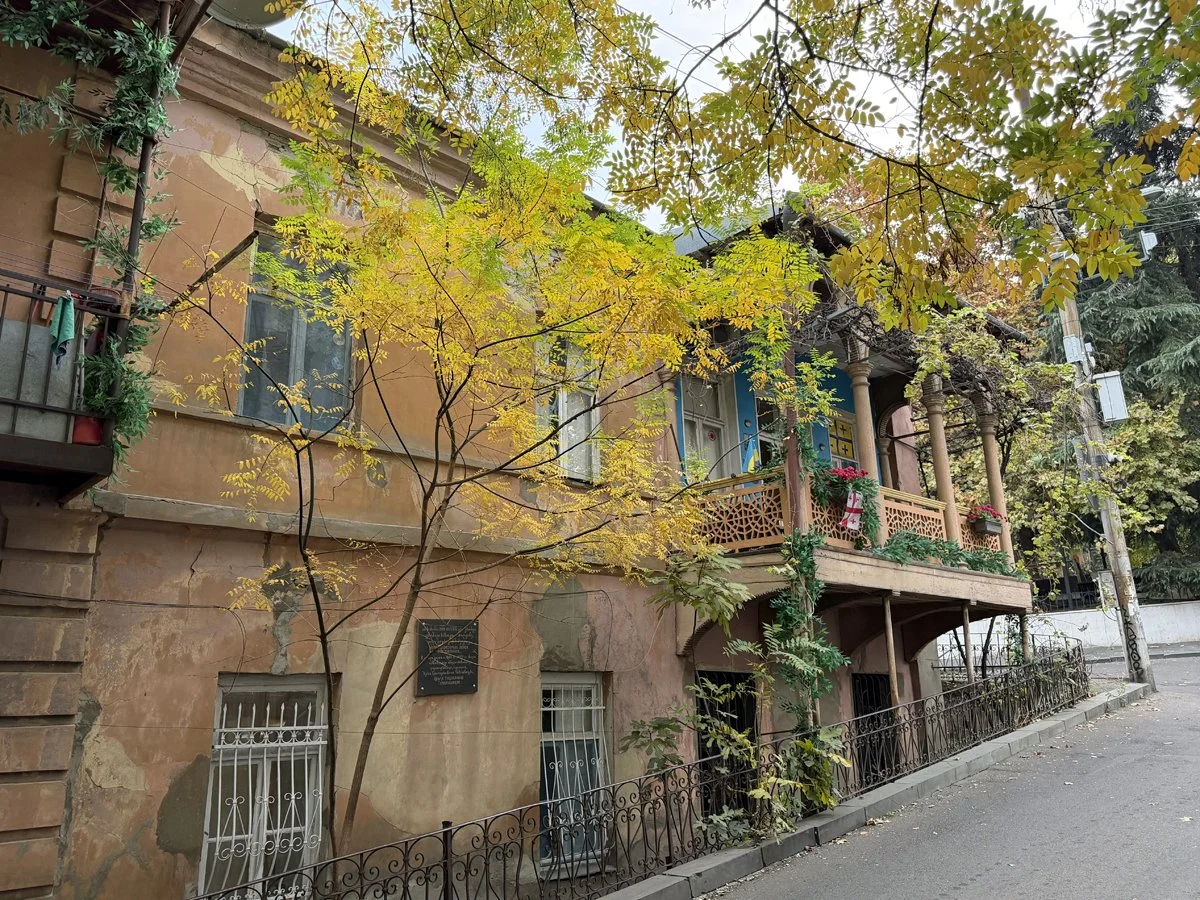
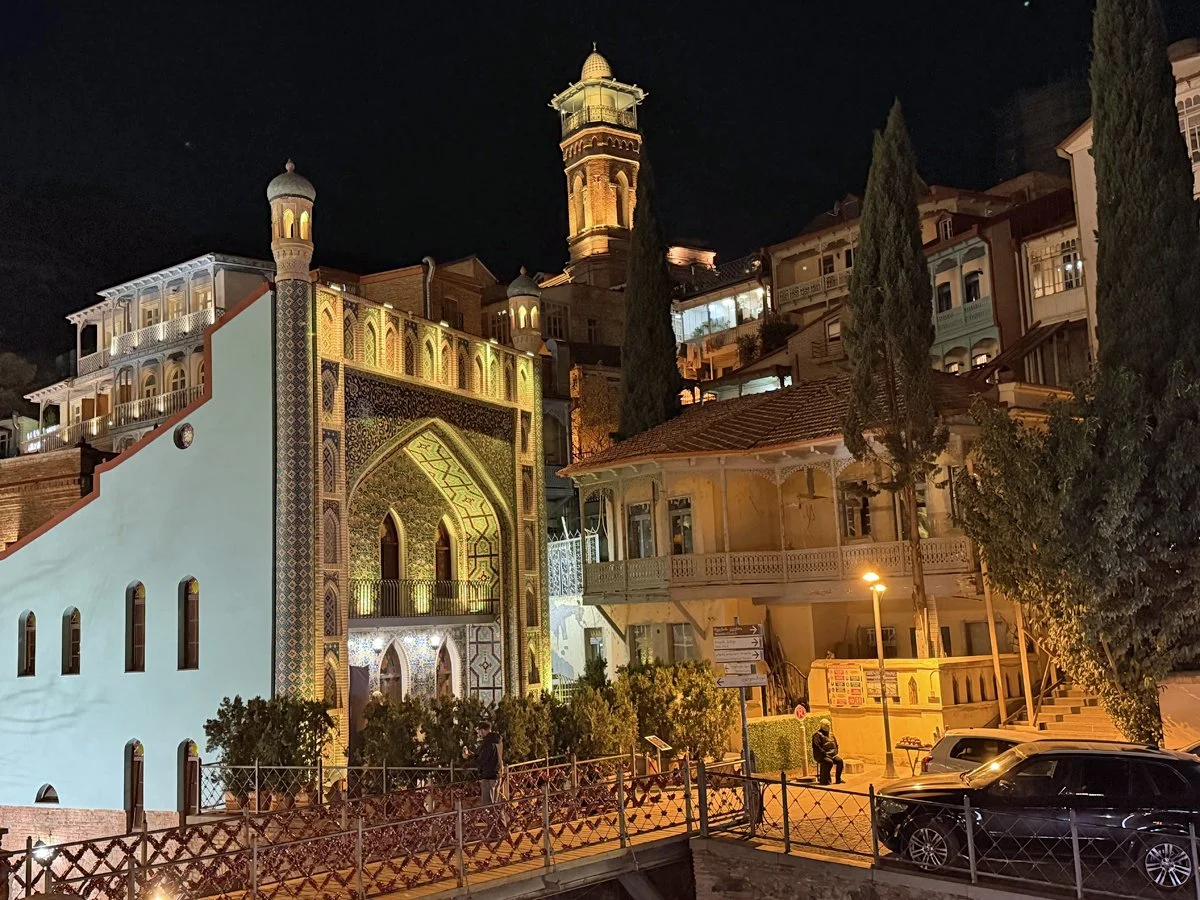
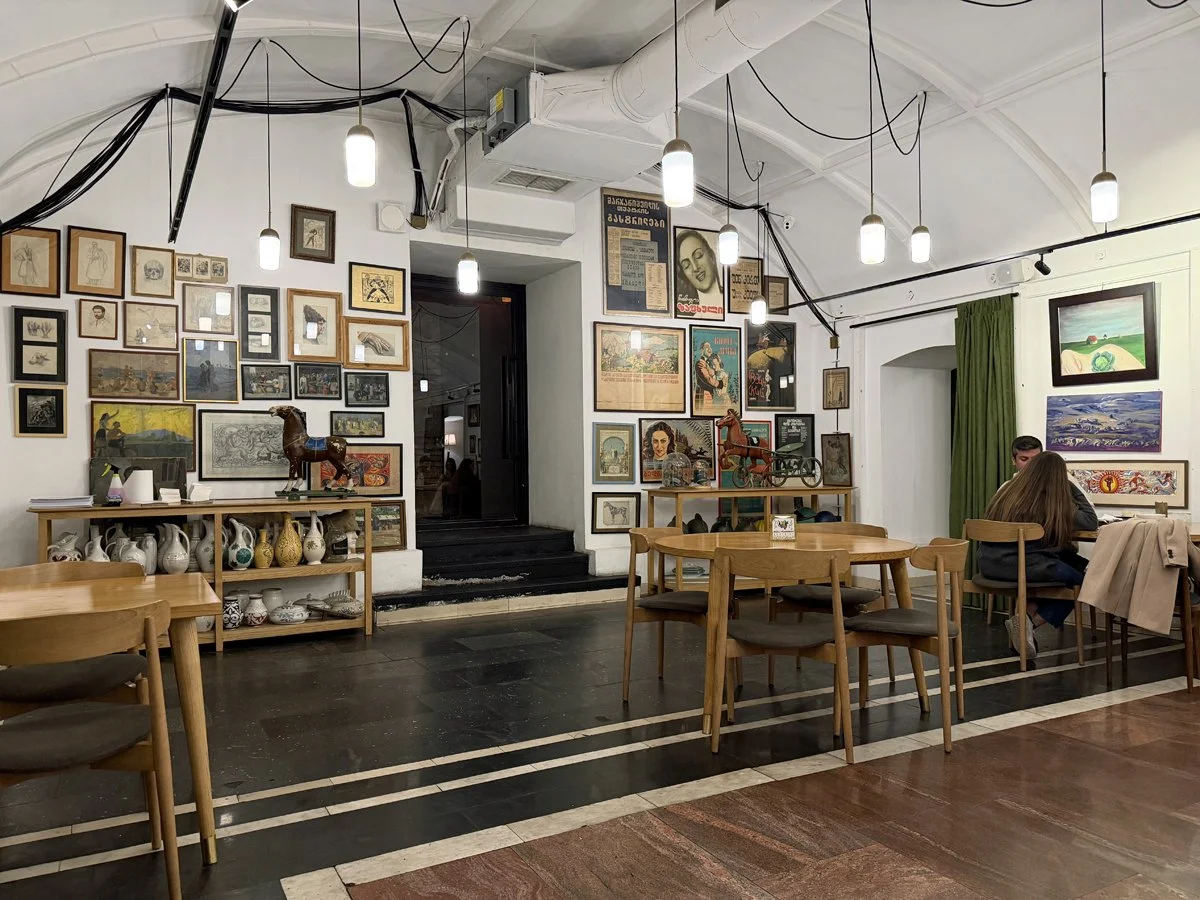
I booked an apartment in the center of the capital, Tbilisi, for the full eight nights because I hadn’t yet figured out which parts of Georgia I could—or wanted—to visit. I arrived in the dark, and a Bolt Tesla quickly brought me to the “Old Town” of Tbilisi. According to Booking.com, my apartment had a synagogue view, which was almost true.
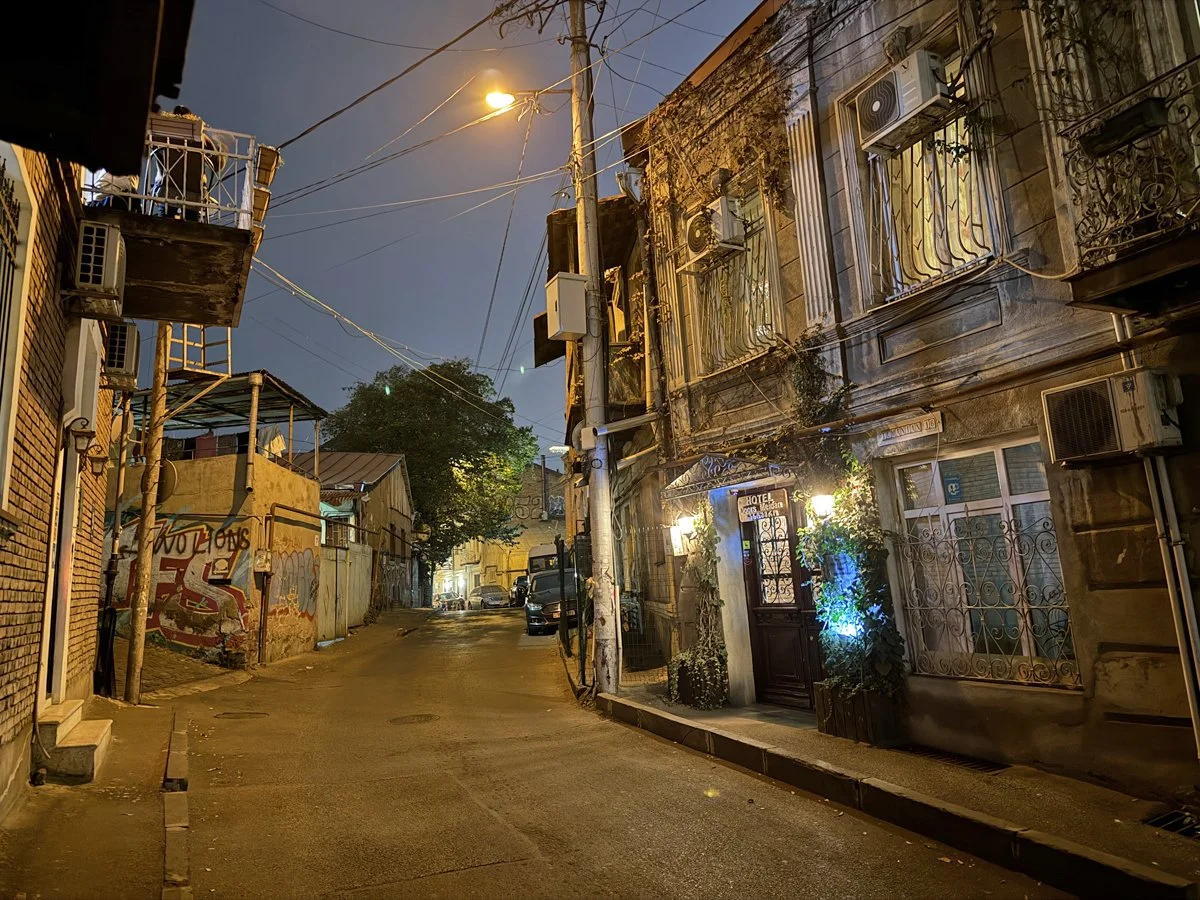
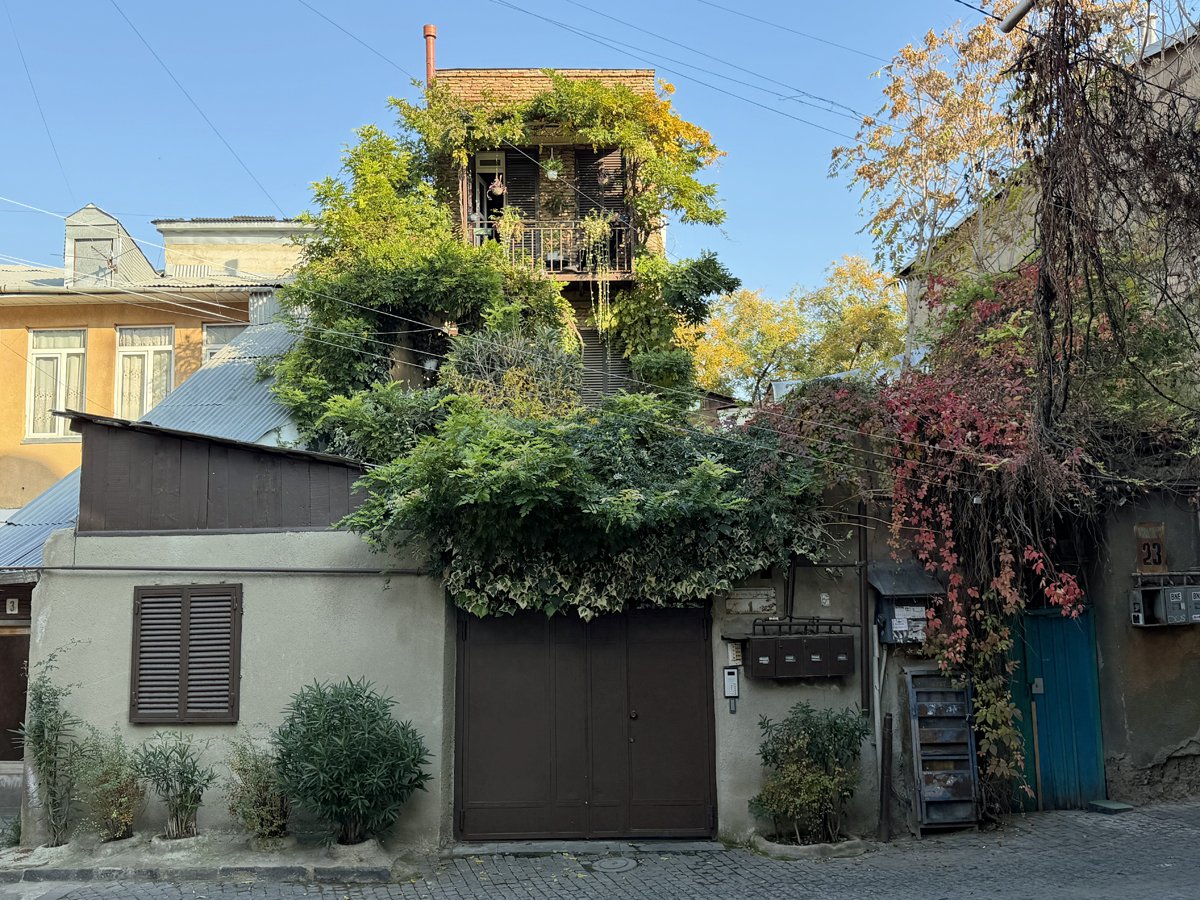
Ovanes Tumaniani St, Tbilisi
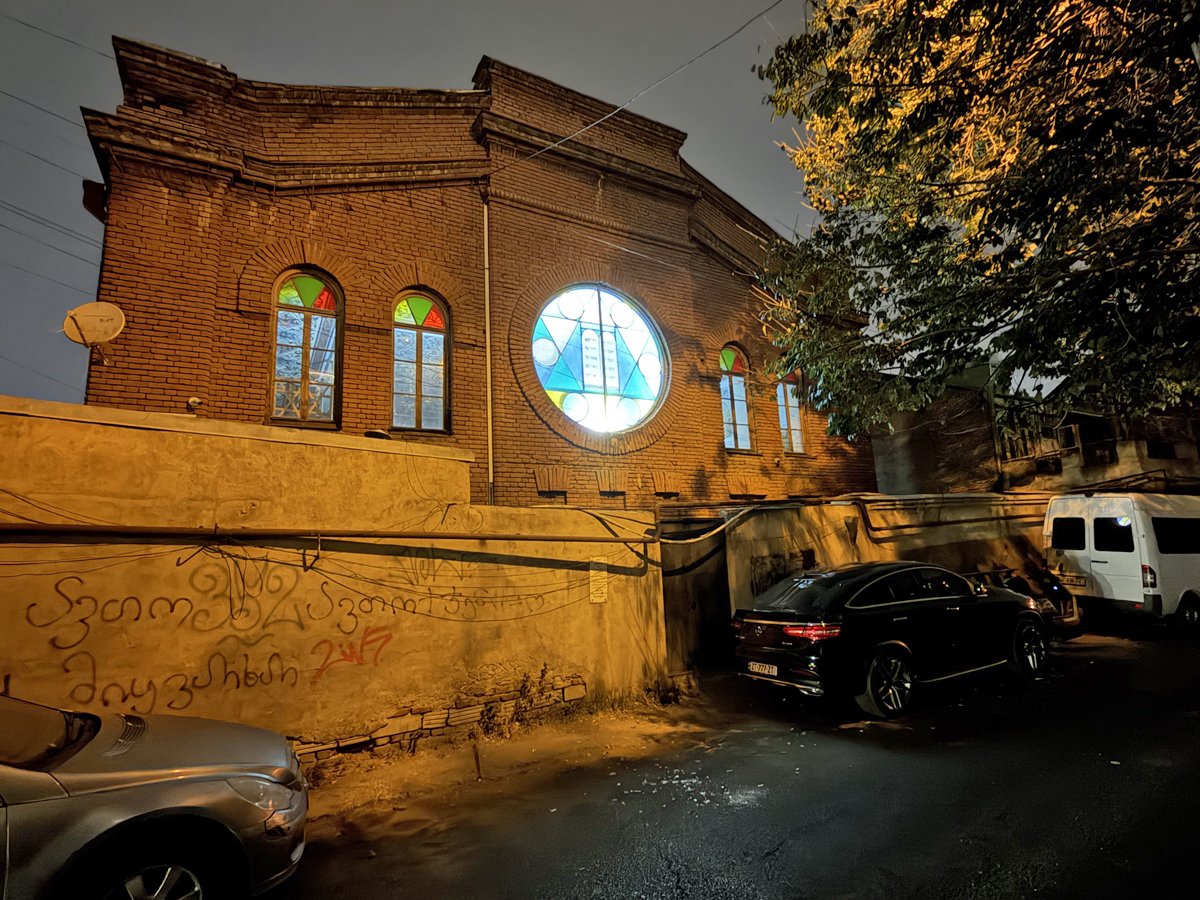
The back of the Great Synagogue.

Day 353 of uninterrupted protests in Georgia

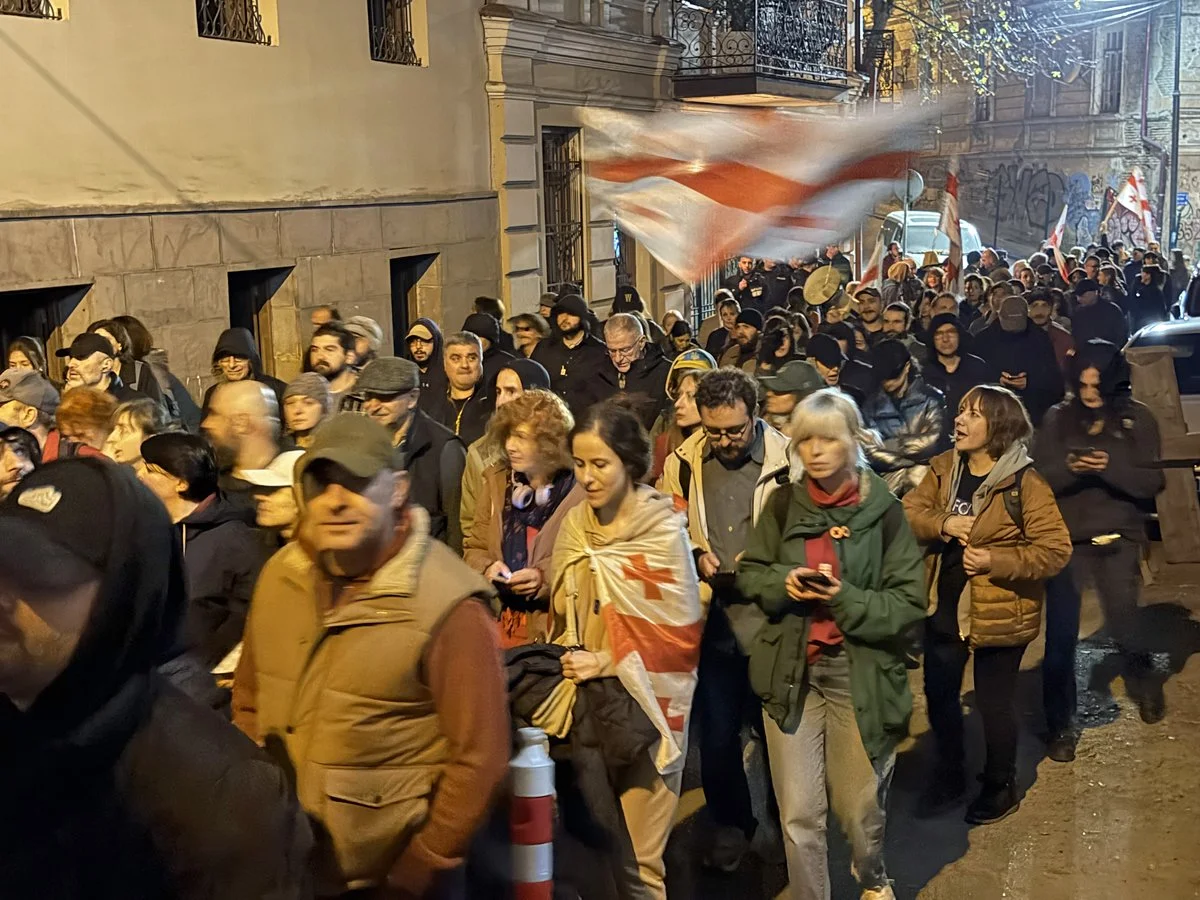
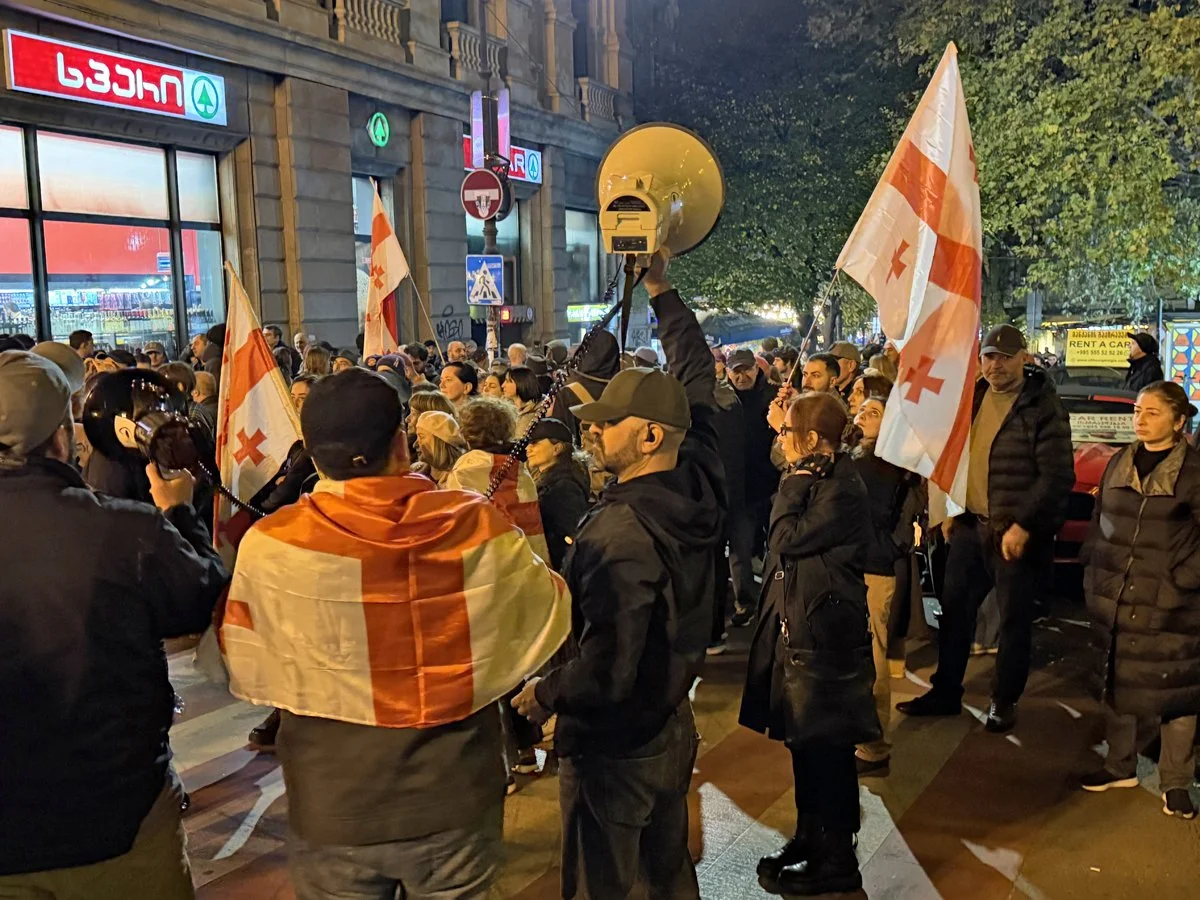
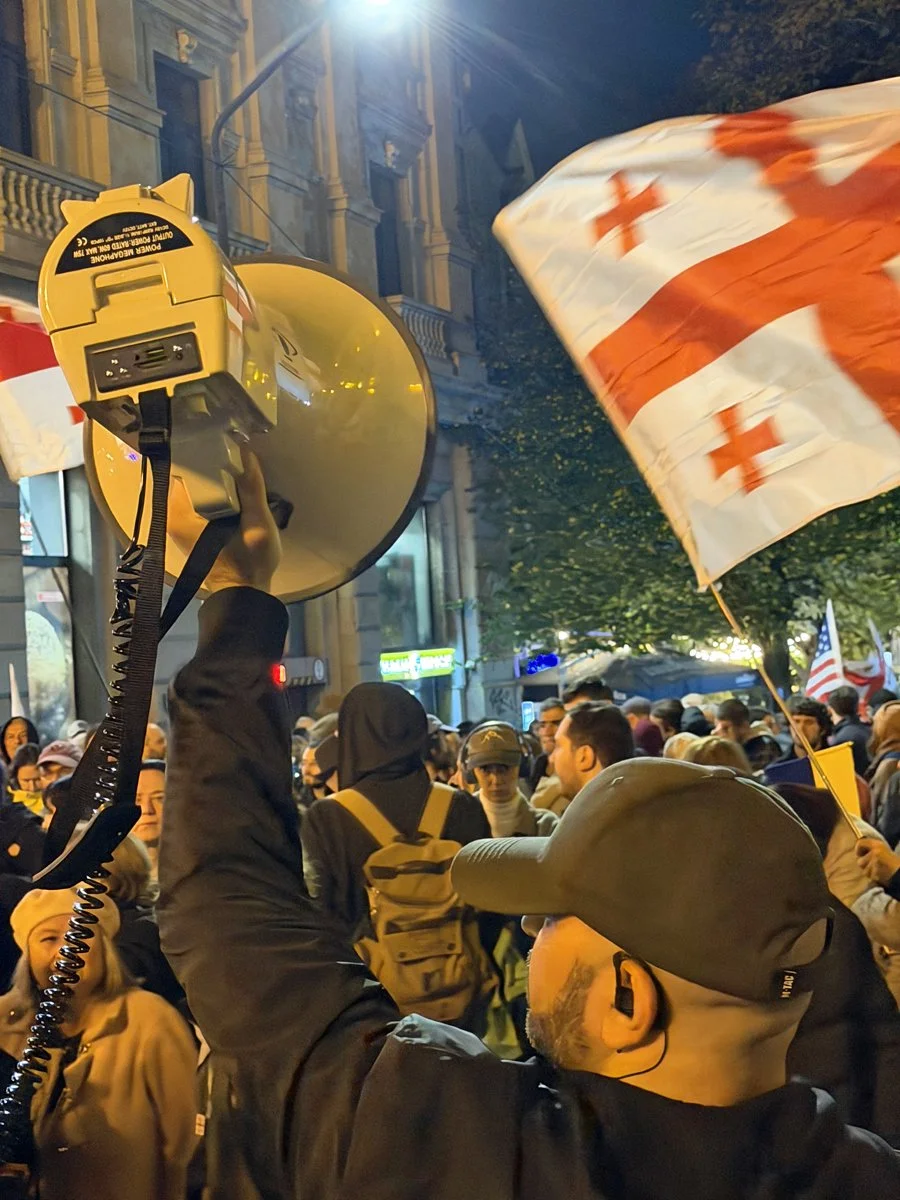
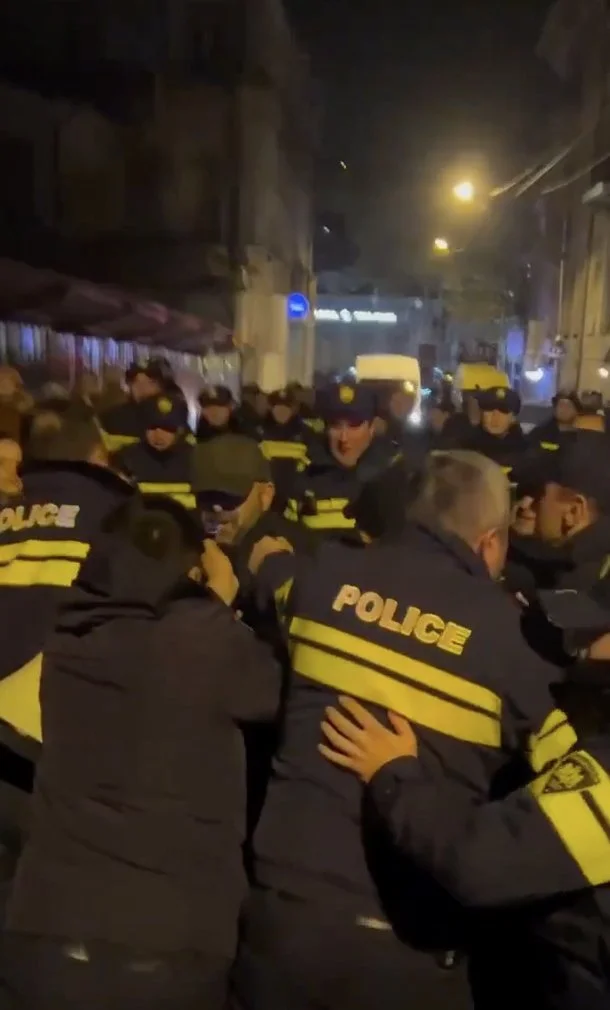
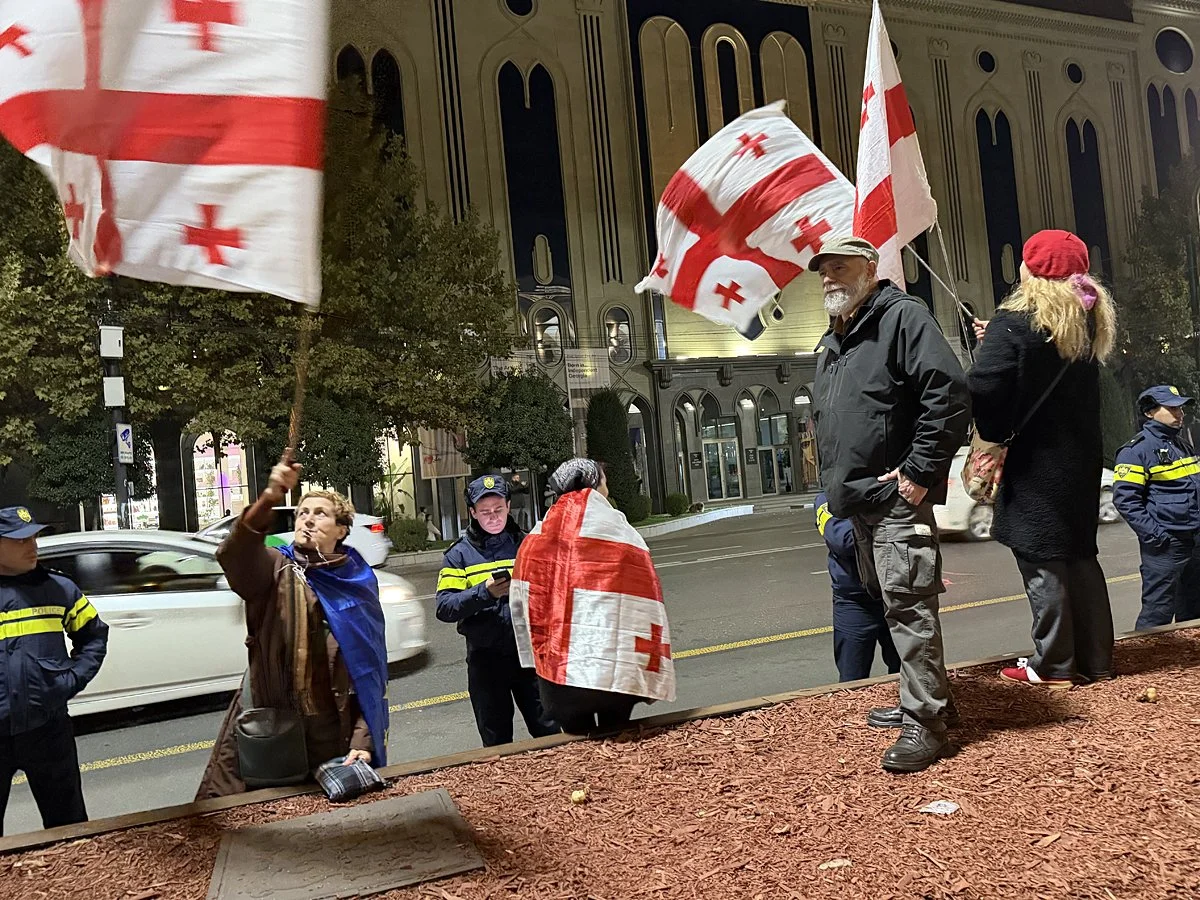
I was really in a hurry to join the daily protests. I dropped my bag, unwisely skipped dinner, and walked toward Rustaveli Avenue. People were already gathering, waving Georgian, Ukrainian, US, and EU flags. A few dozen police officers were blocking Rustaveli Avenue. The night before, protesters had wandered onto the avenue and blocked traffic.

The protests were a direct result of the 2024 elections. On 28 October 2024, after the preliminary official results were released, the ruling Georgian Dream party declared victory. That same night, a large crowd assembled, accusing the government of election fraud. Ballot stuffing, multiple voting, widespread voter bribery, intimidation, and voter control were documented by the local watchdog ISFED. The OSCE Office for Democratic Institutions and Human Rights (ODIHR) stated: “On election day, frequent compromises to the secrecy of the vote, several procedural inconsistencies, and reports of pressure and intimidation, including through the recording of the process, negatively impacted public trust in the process and an otherwise generally procedurally orderly election day.” [source]

On 28 November 2024, the European Parliament adopted a resolution that explicitly rejected the outcome of the 26 October elections and called for new elections within a year. That obviously didn’t happen. The people of Tbilisi have been protesting in large crowds every single night since 8 October 2024.

But even before the elections, tensions were already brewing. In the spring of 2024, the Russian-style “foreign agents” law was passed. The law requires media outlets, NGOs, and civil society organizations to register as “organizations pursuing the interests of a foreign power” if more than 20% of their funding comes from abroad. Registered organizations must then publicly label themselves as “foreign agents.”

I had skipped breakfast in anticipation of the lunch served during the flight. That lunch turned out to be little more than a bread roll with a sliver of ham. After an hour at the protest, I was too hungry to keep hanging around. The day was almost turning into a one-day fast, and I began to feel dizzy.

Once again, a large crowd of protesters is marching through Tbilisi streets for day 353 of uninterrupted, nationwide demonstrations in Georgia. 🇬🇪 🎥 Mo Se

[image or embed]

— Rusudan Djakeli (@rusudandjakeli.bsky.social) 15 November 2025 at 18:58

Sunday 16 November

I had reserved the first day to explore a city I knew almost nothing about. It was autumn, yet midday temperatures reached a balmy 20 degrees Celsius.

At first, the city confused me. The architecture felt unfamiliar. The UNESCO World Heritage Convention refers to a unique “Tbilisian spirit.” Situated on historic Silk Road trade routes between Europe and Asia, Tbilisi’s historic center is a visual record of those who passed through or ruled it. The local Georgian character is visible in native masonry, wooden construction, and the social culture of balconies and courtyards. The sulphur baths reveal strong Sasanian and Persian bathhouse traditions. Ottoman dominance influenced both the street layout and the wooden house culture. From the early 1800s onward, as Tbilisi became a key city of the Russian Empire, it absorbed Russian provincial classicism, followed later by neoclassical boulevards and Art Nouveau mansions.
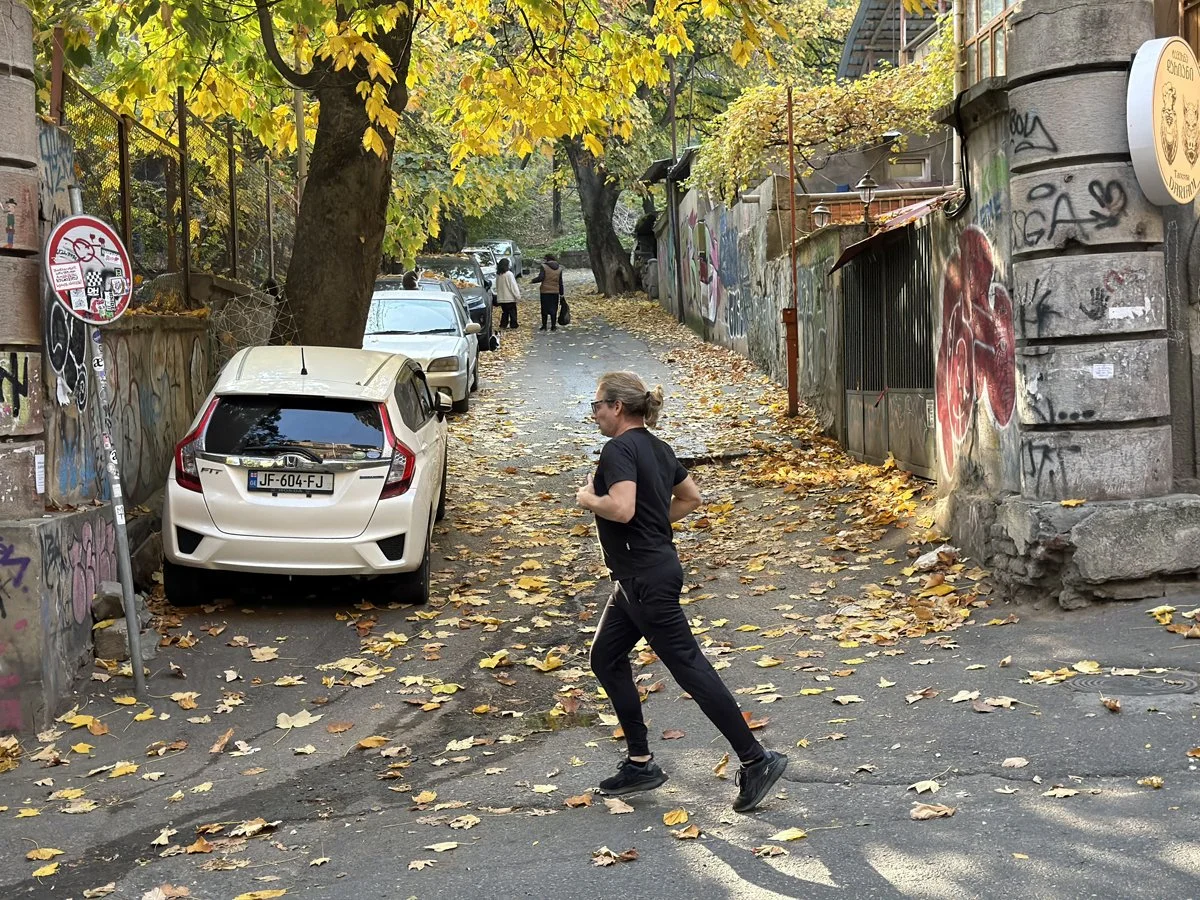
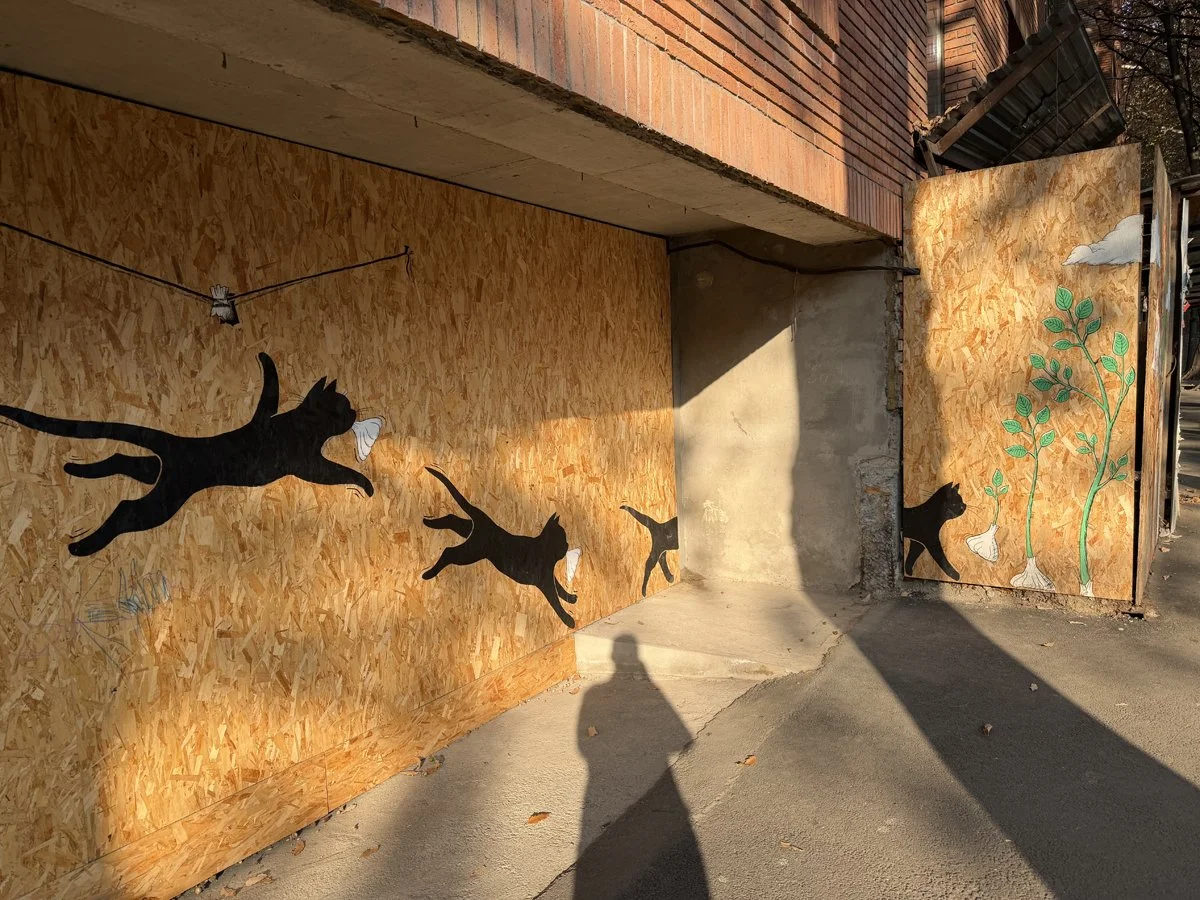
In the afternoon, I hiked up to Mtatsminda Park. On the very first day, I realized how hilly Tbilisi is—and how little mountain walking I’d done in recent years, having spent almost every weekend at my parents’ place since 2018. Could I turn my city trip into a mountain hiking vacation?

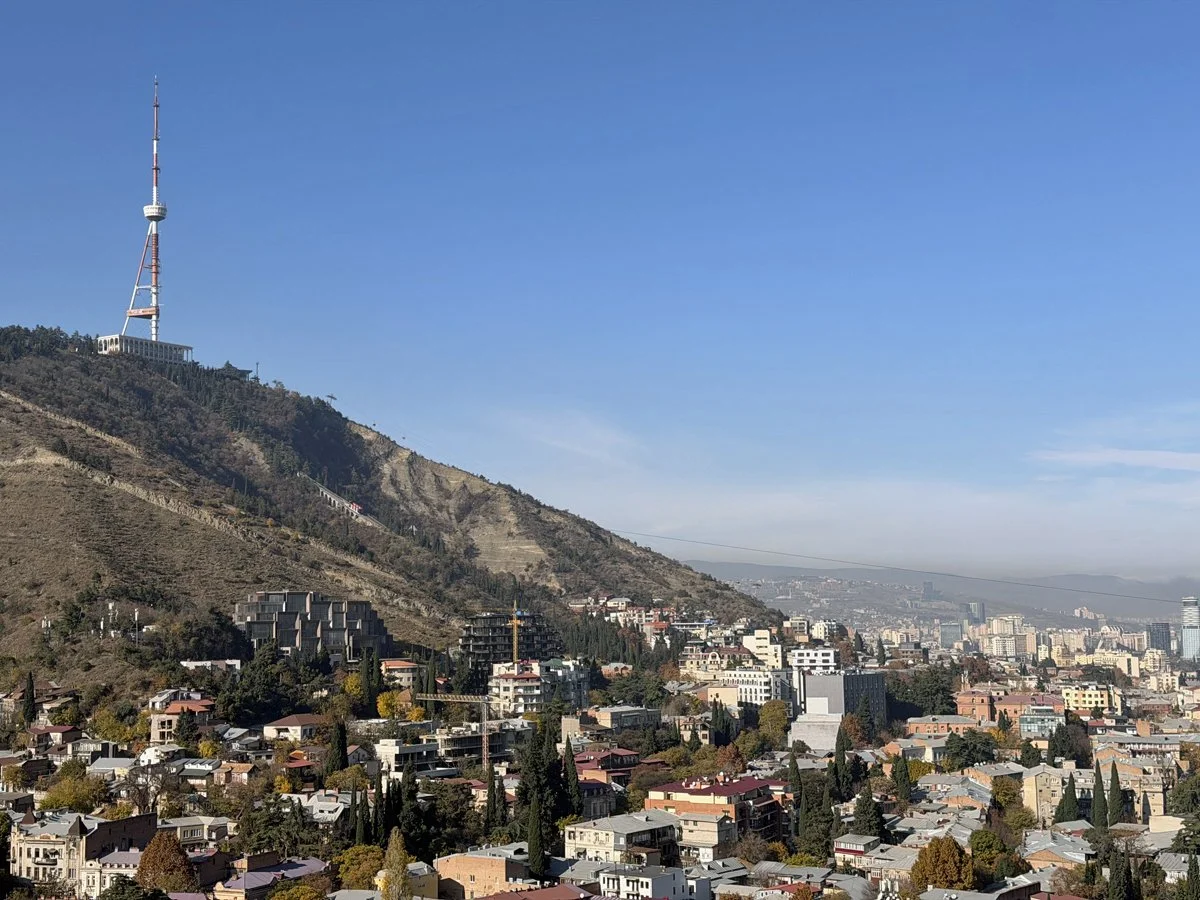
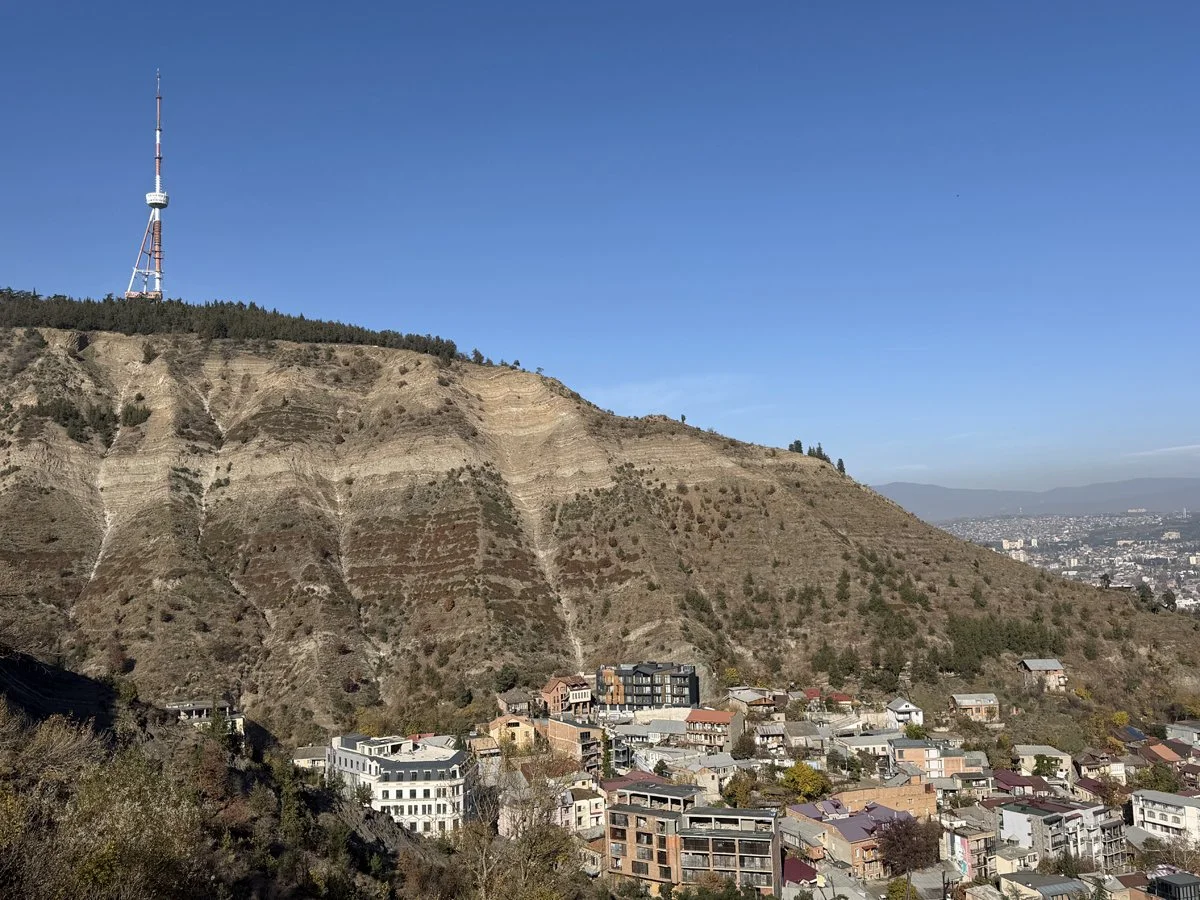
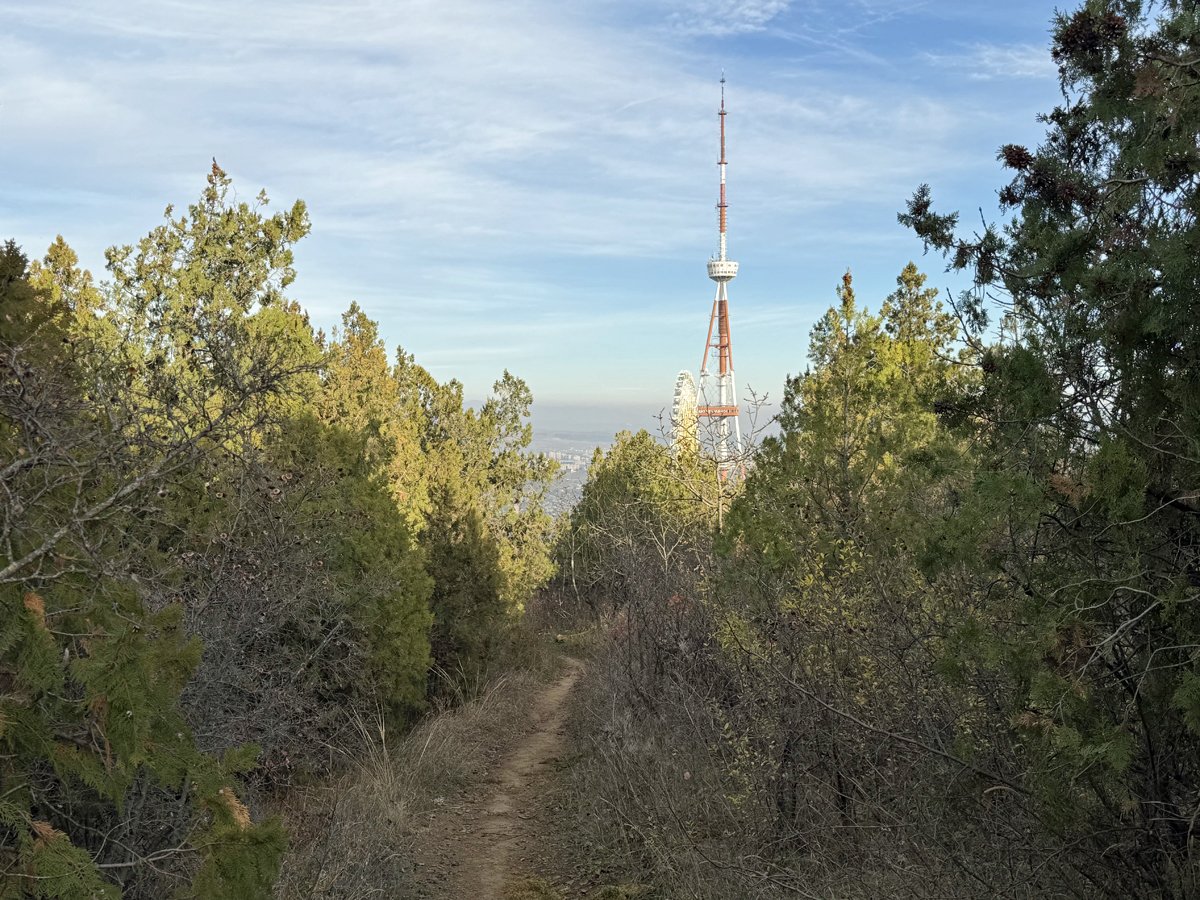
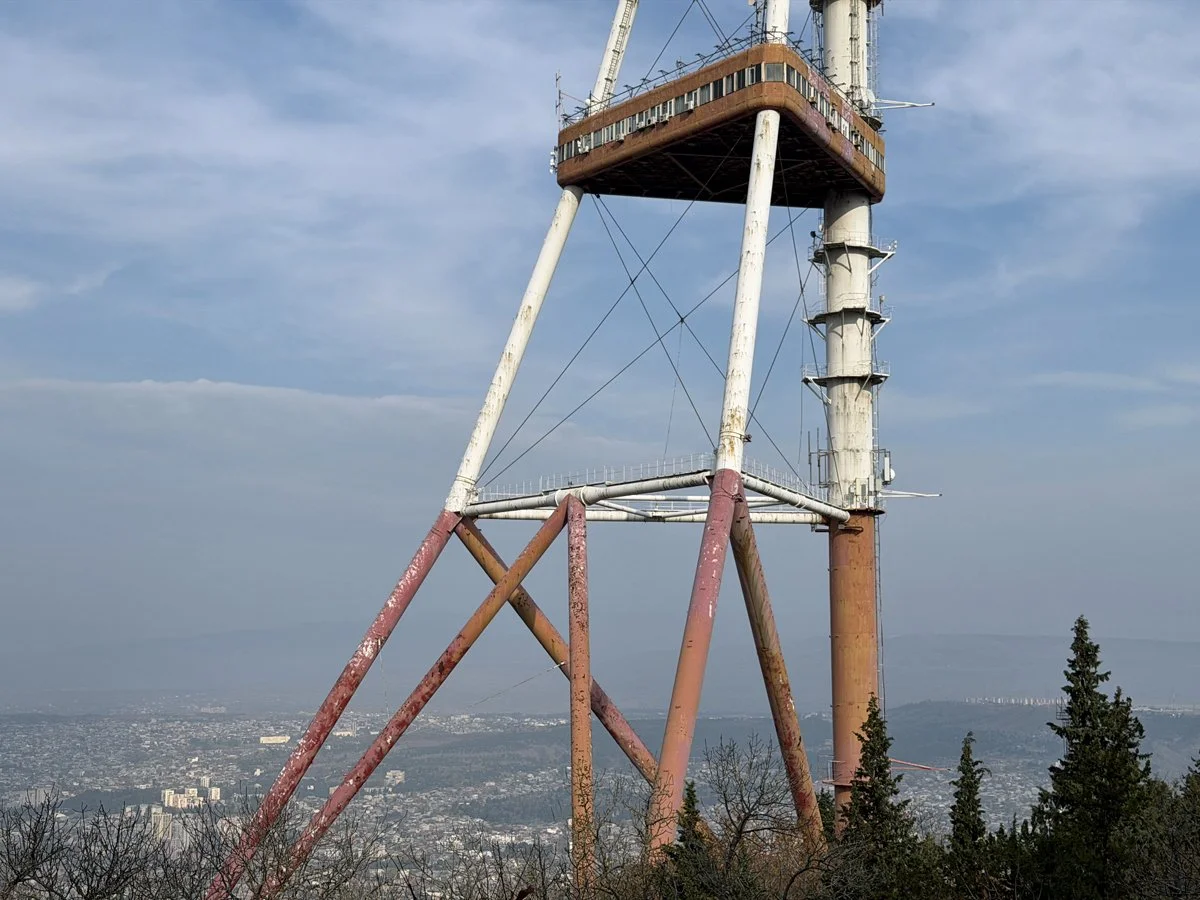
The hike took about an hour and consisted mostly of stairs. The Tbilisi TV Broadcasting Tower is also located on Mount Mtatsminda. Built in 1972, the entire structure is rusty, but it is also an intriguing feat of mid-Soviet-era engineering.
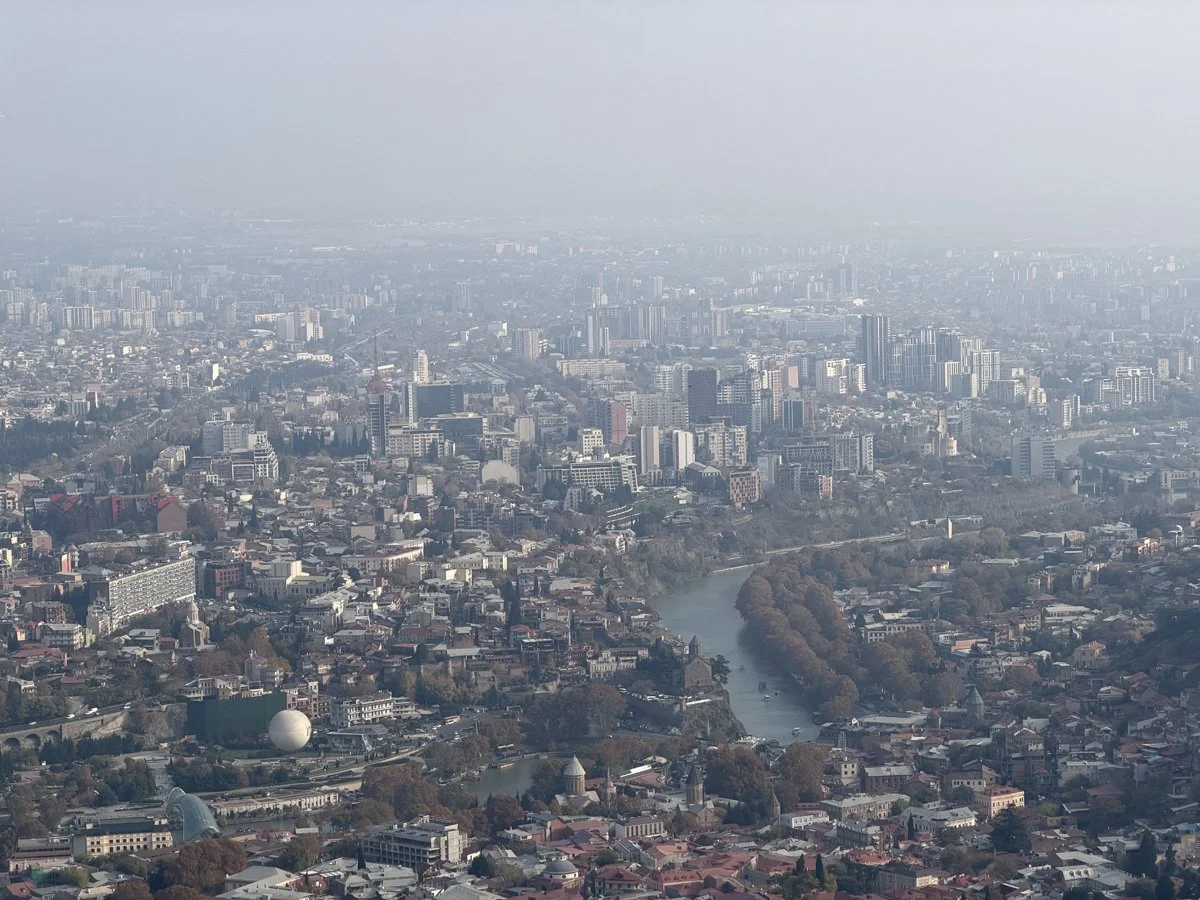
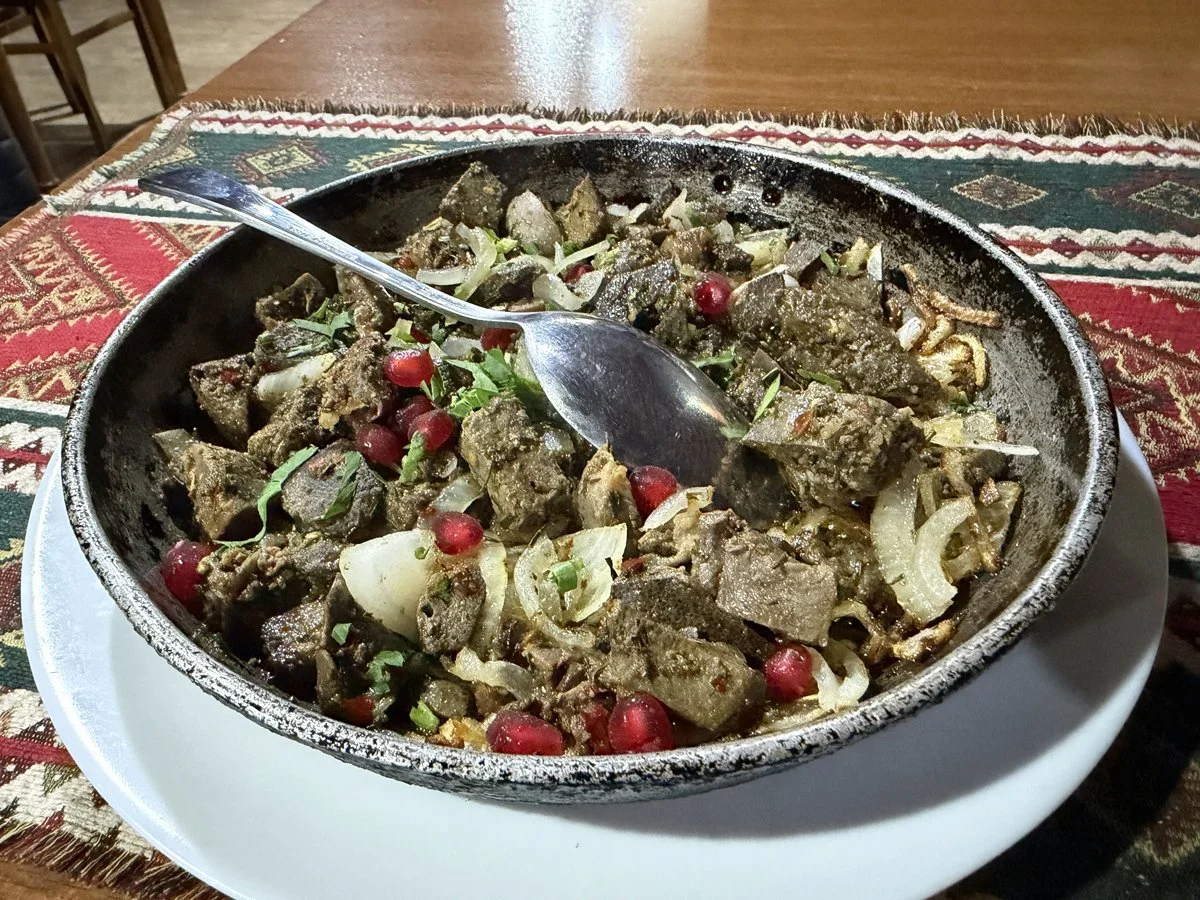
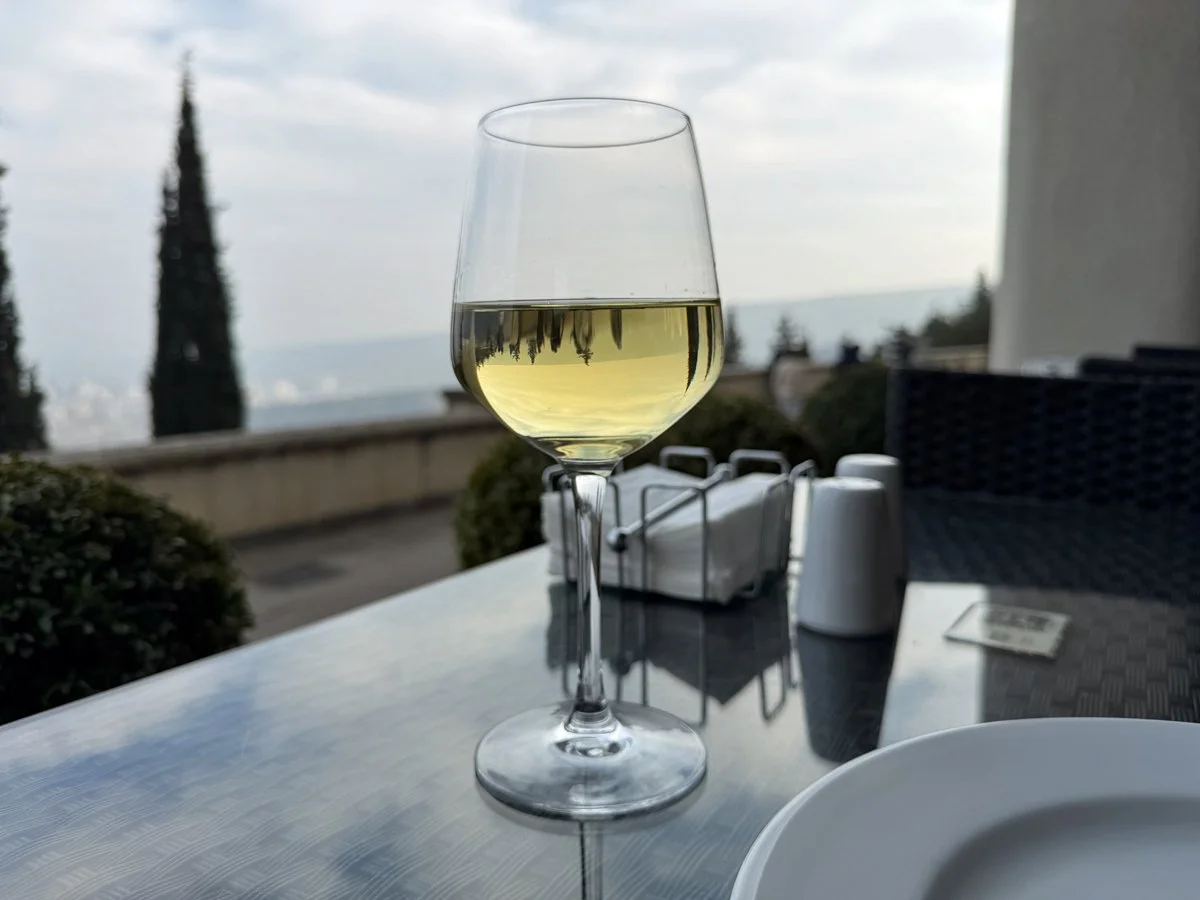
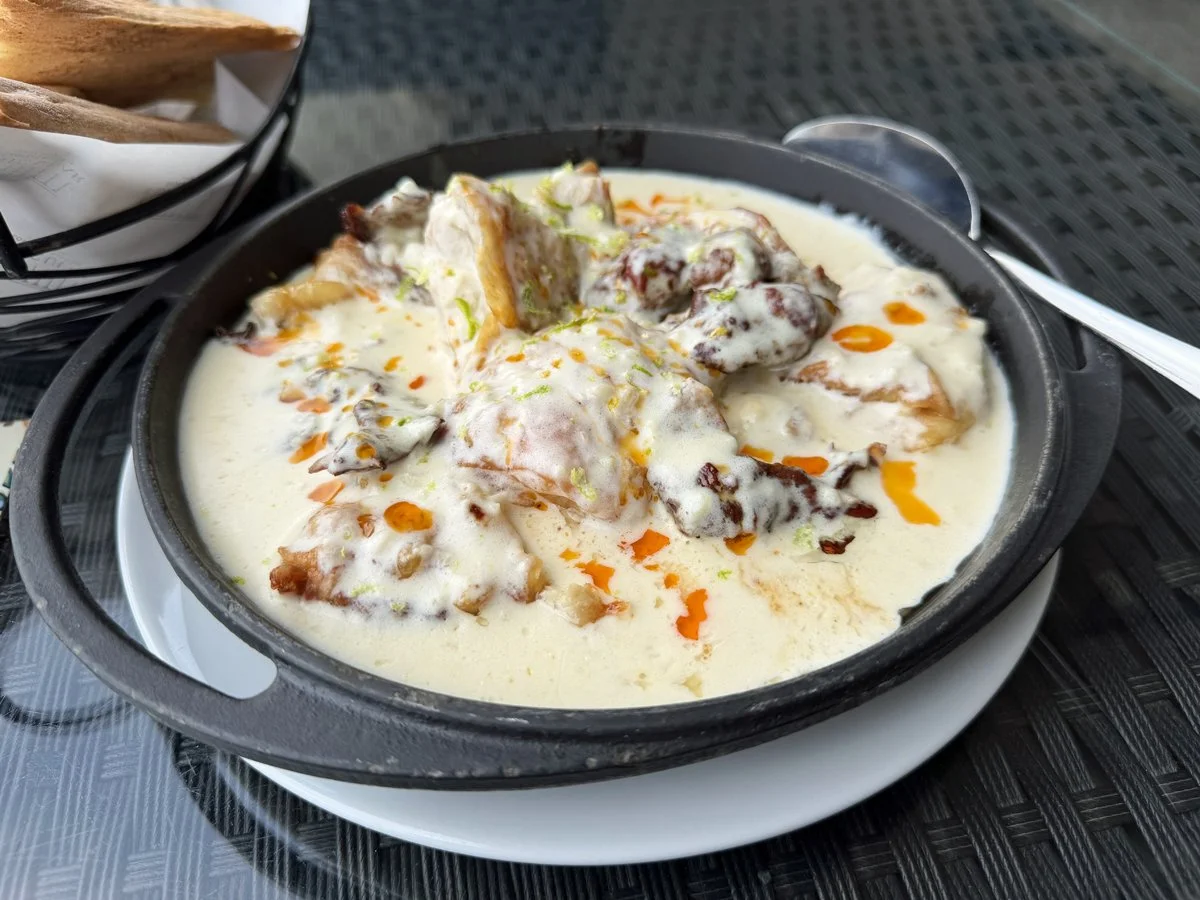
With a great view over the city, a restaurant is located on the mountain. The Funicular Complex building dates back to 1938. I ordered shkmeruli (შქმერული), chicken and liver cooked in milk (or sour cream) and garlic—a dish from Georgia’s Racha region. I also had my first glass of Georgian wine, a full-bodied white that paired perfectly with the shkmeruli.

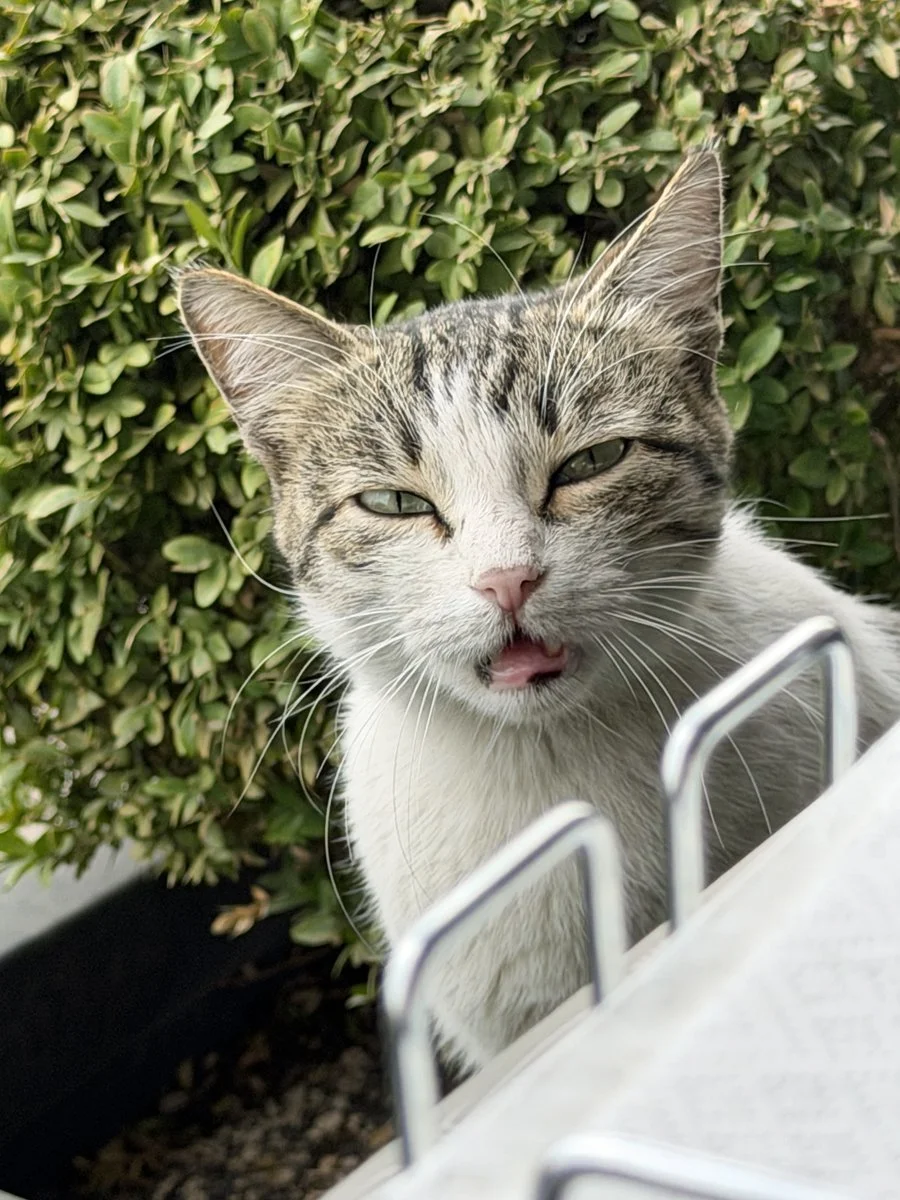
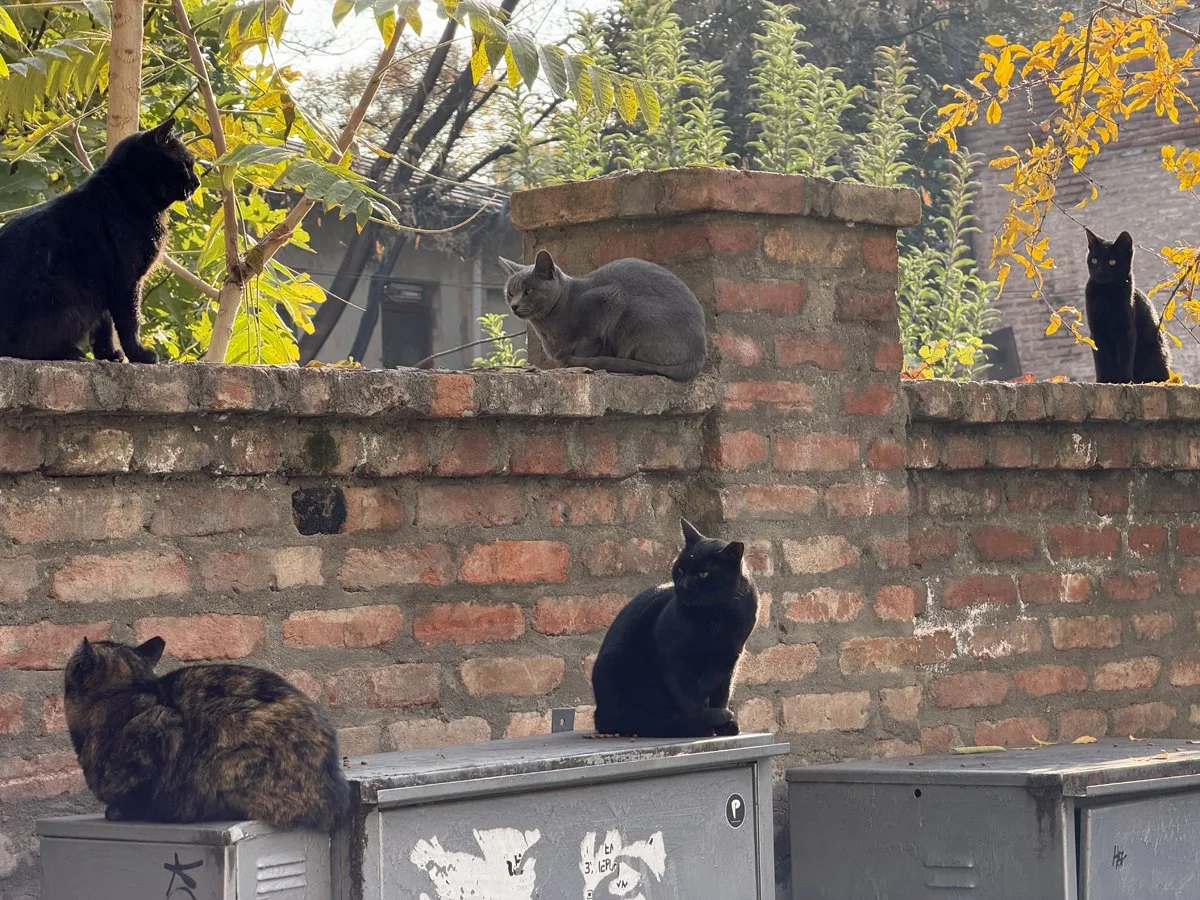
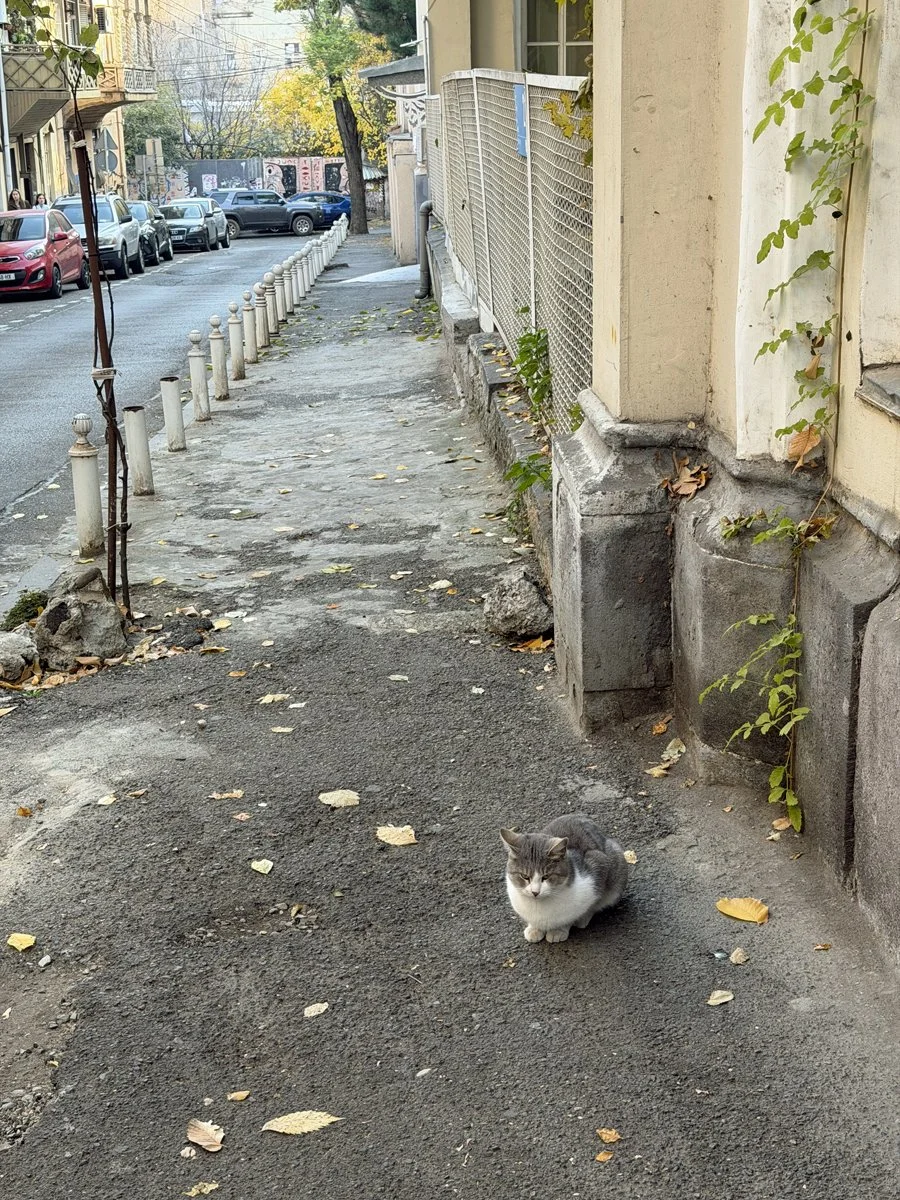
A street cat begged for a piece of liver. I pretended to have a heart of stone, but in the end I gave the poor cat some.
Monday 17 November: Stalin Museum

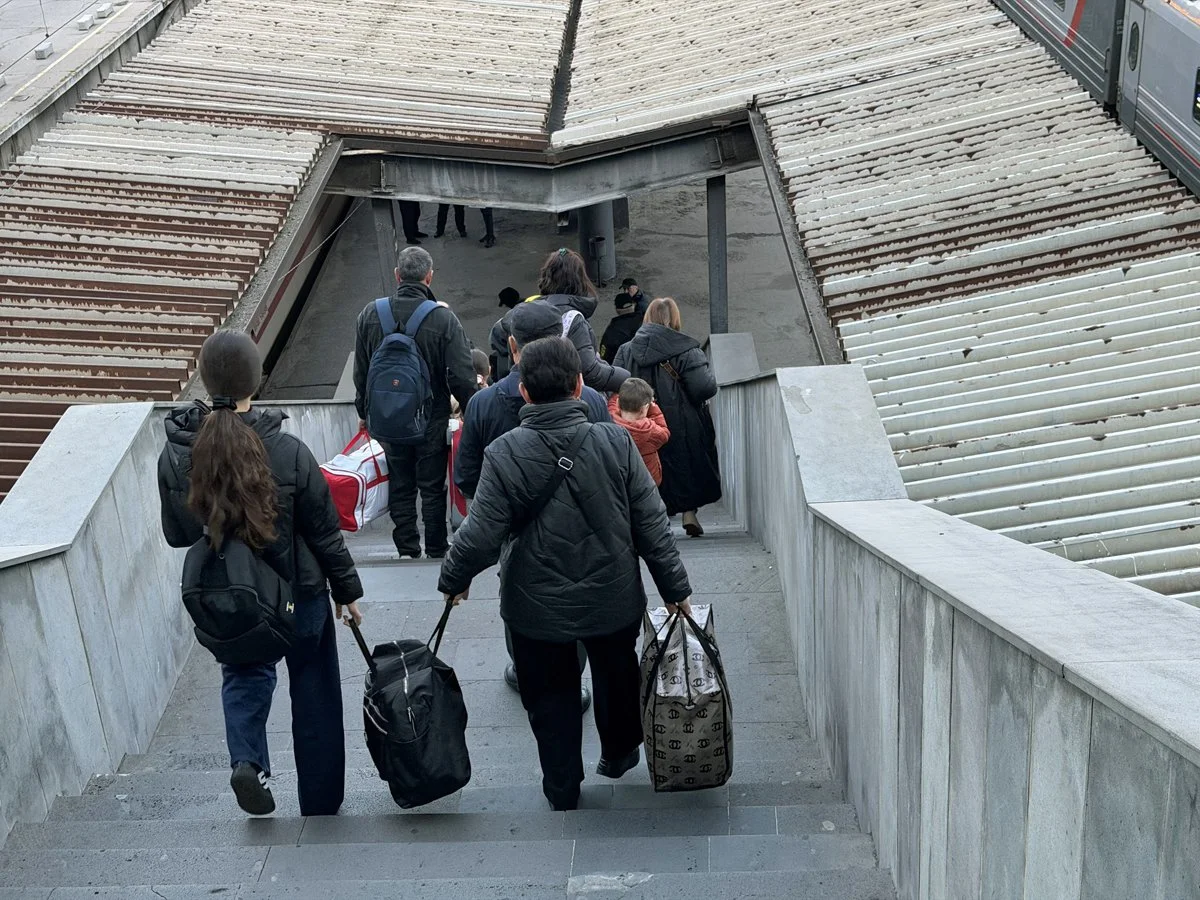
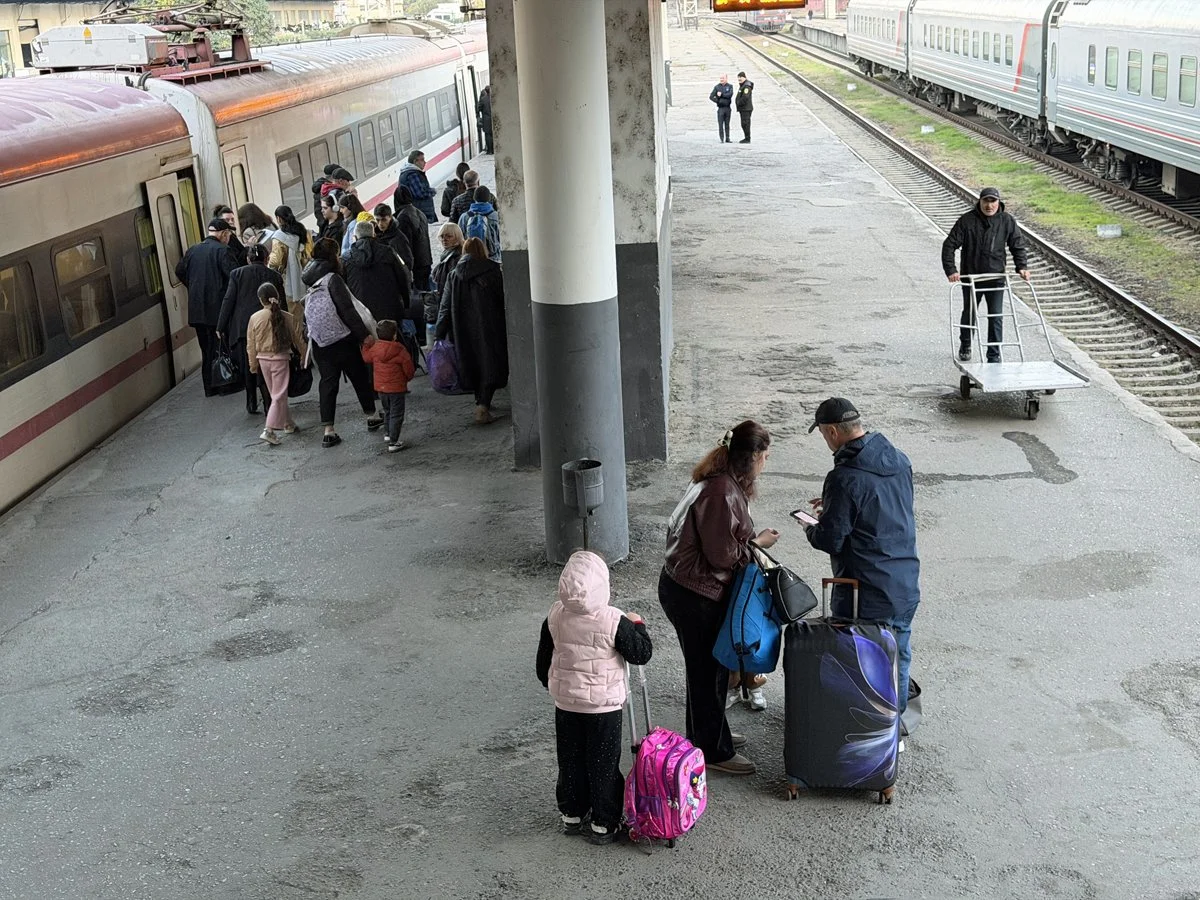
On the second day, I felt restless—I had to see what lay beyond the city. Nothing seemed easier than visiting the Stalin Museum in Gori. Minibuses run between Tbilisi and Gori, but I much preferred the fixed schedule of the train, even though only two trains a day serve the route. One departed conveniently at 8:20 a.m. The fare was 11 lari (€3.50) for the one-hour journey.
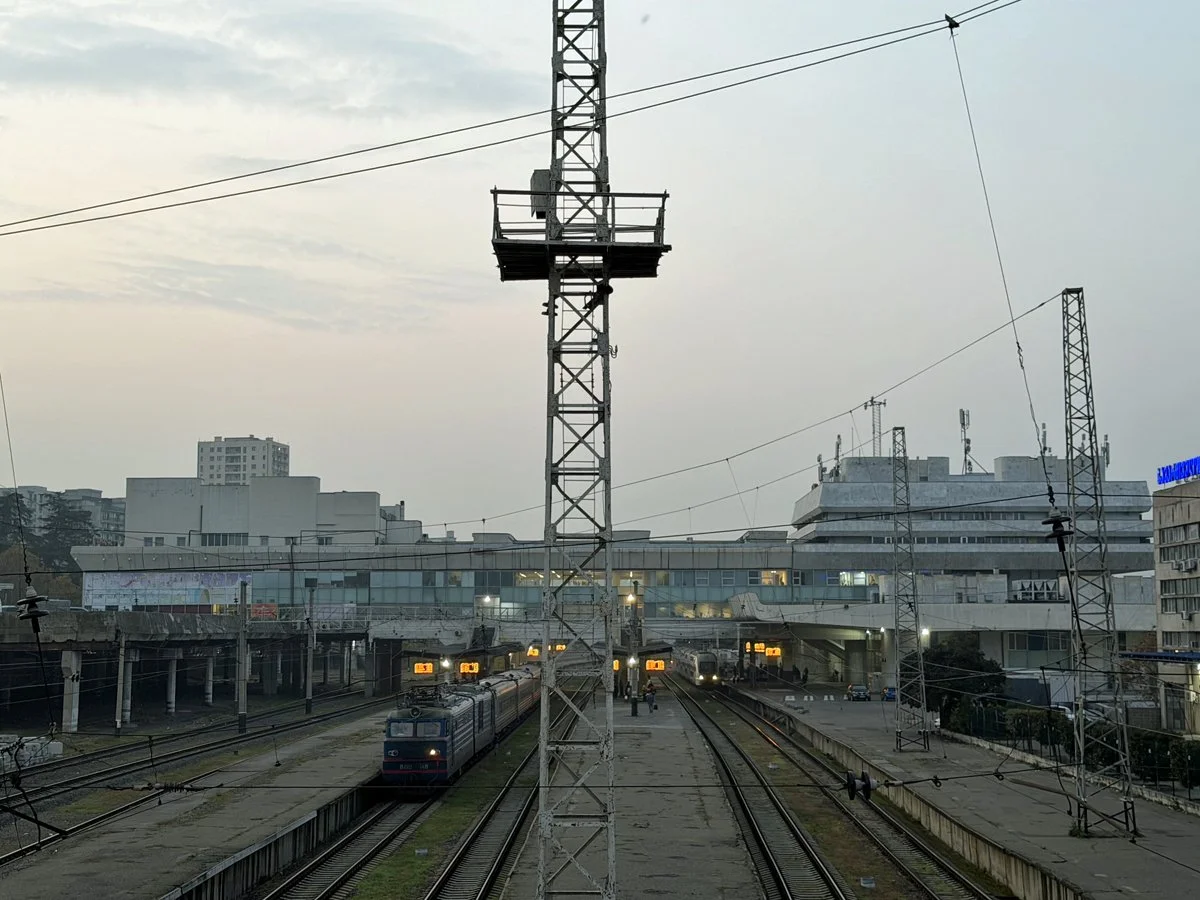
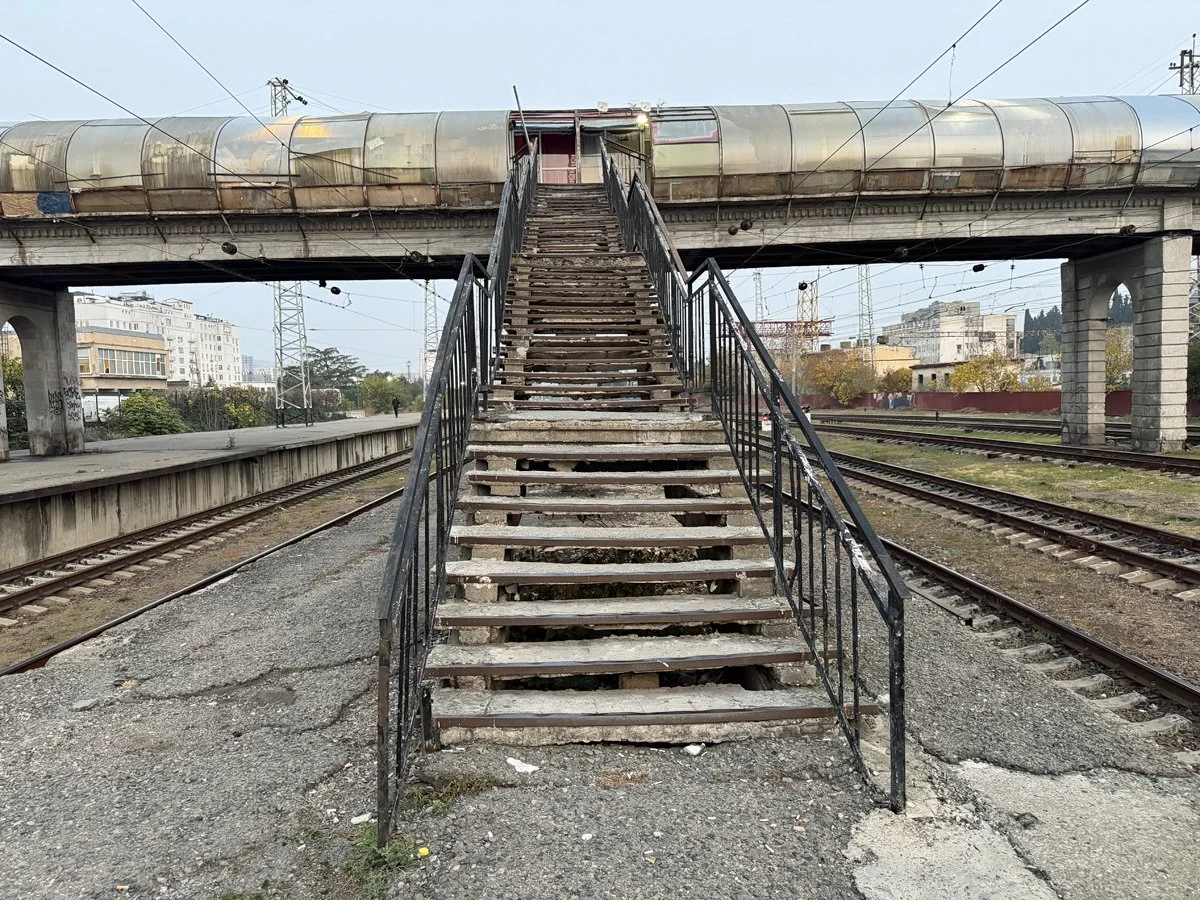
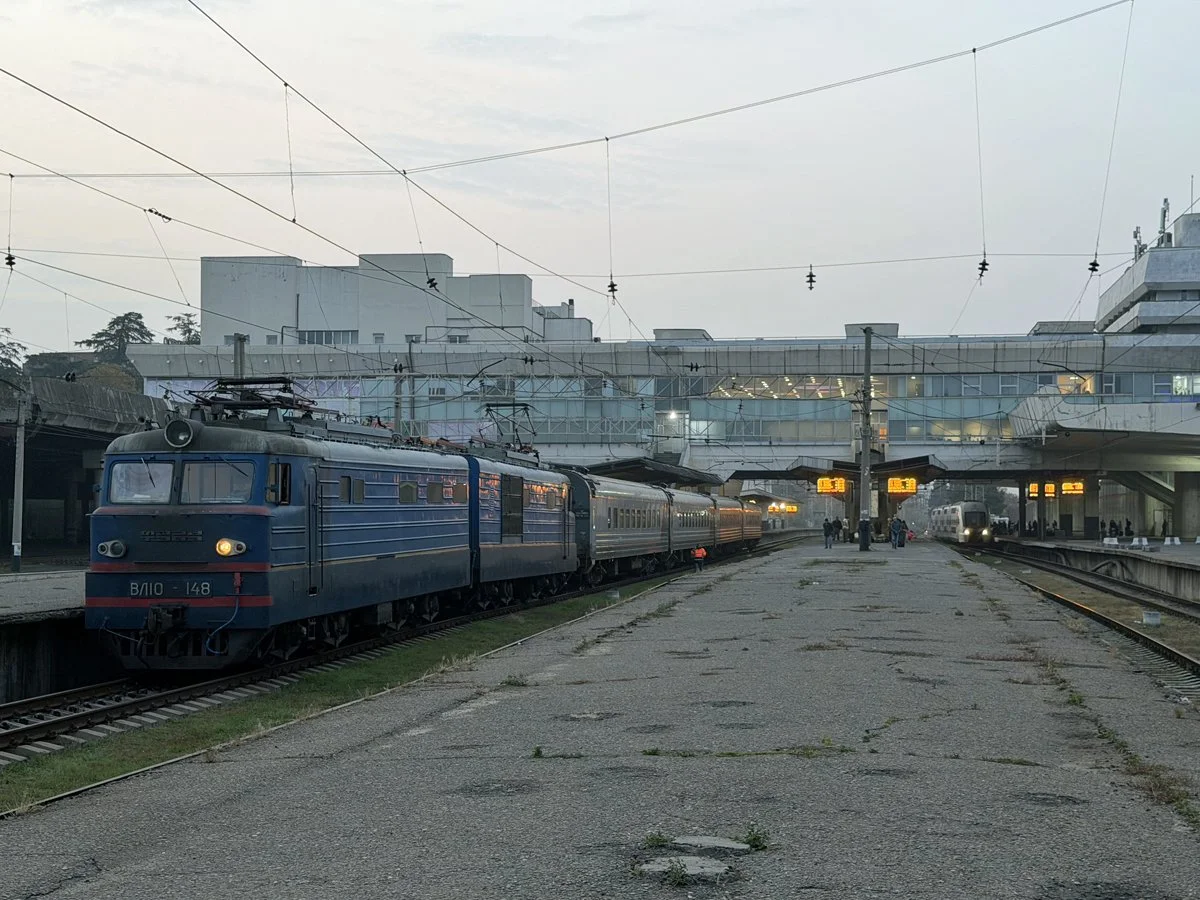
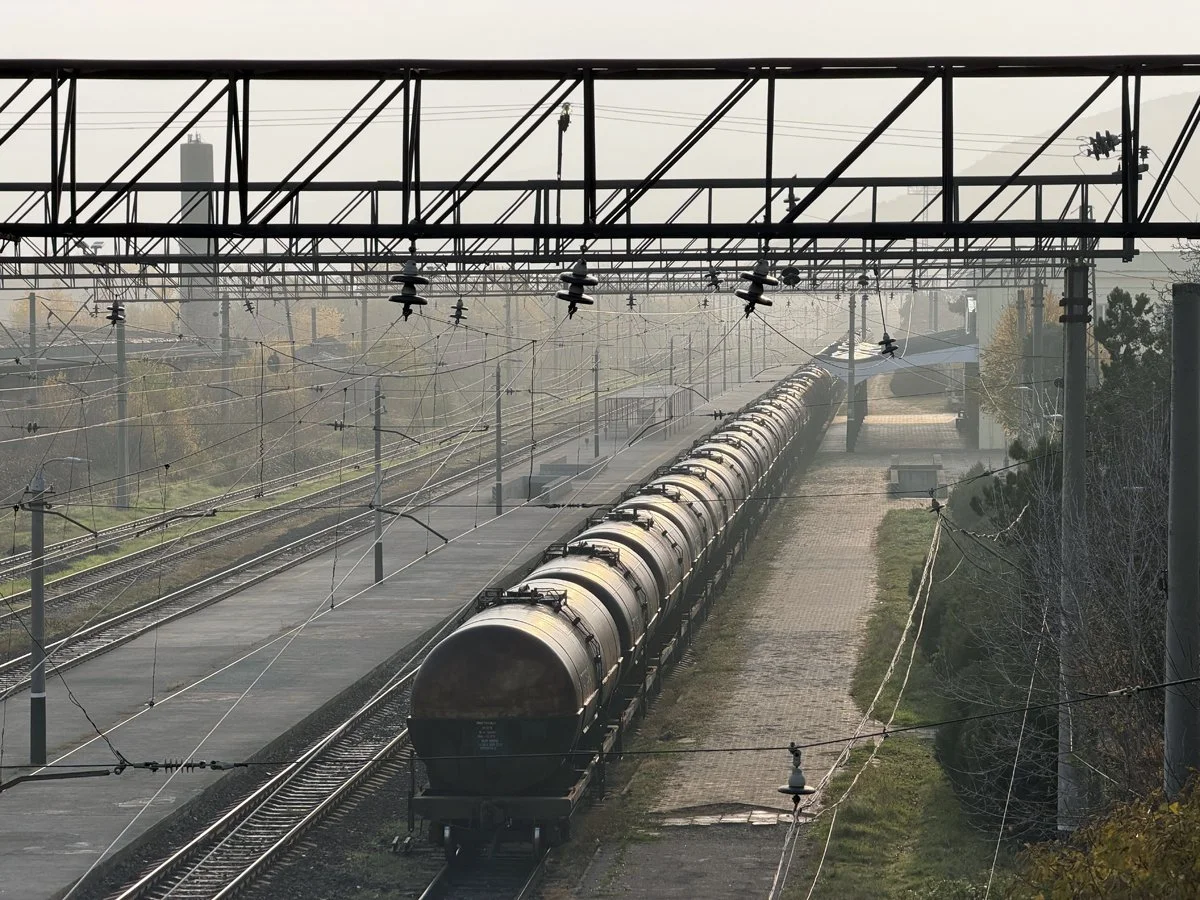
Judging by the overpass, it was clear that not much money has gone into the Georgian railways. The VL10 two-unit locomotive (not my train to Gori) was built in Tbilisi, but in its blue livery it belongs to the Armenian railways.
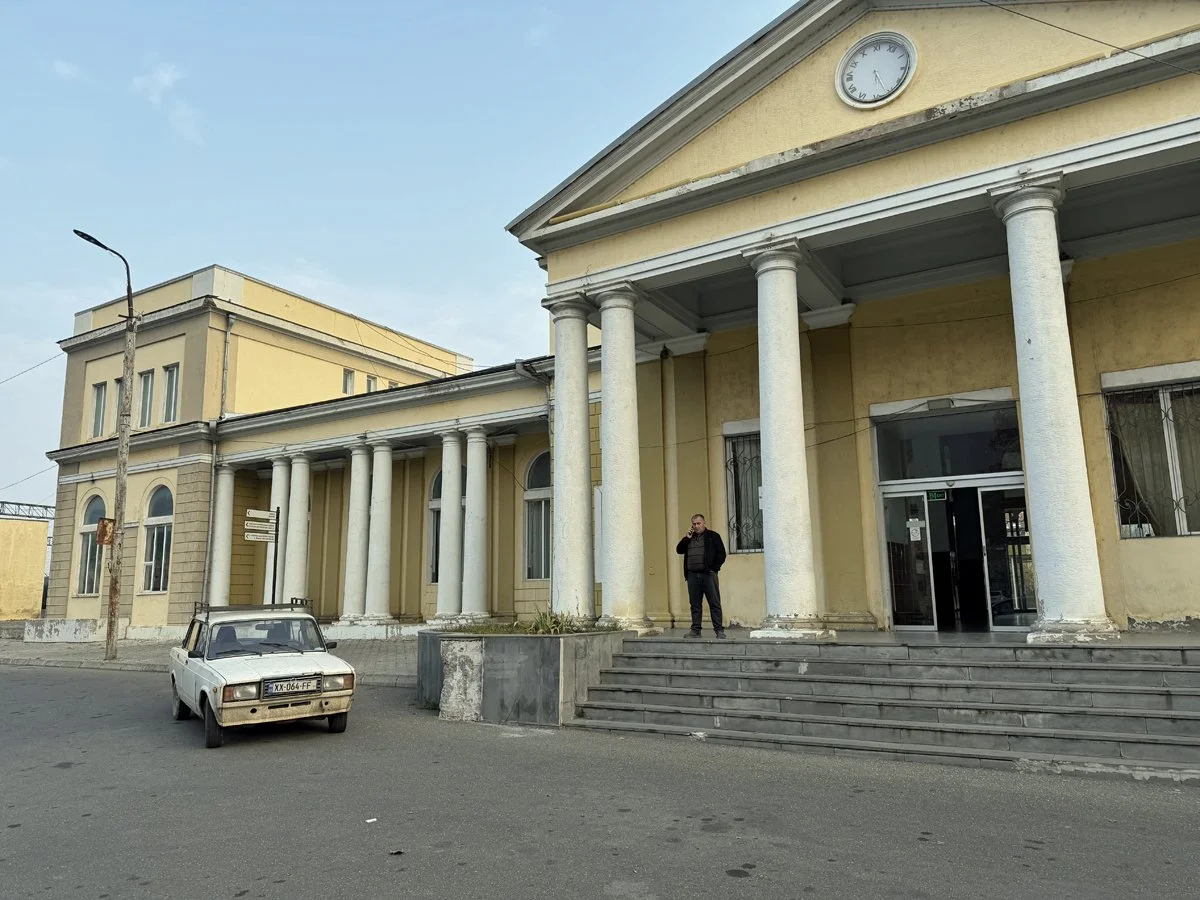
Gori’s Soviet classicist–style railway station is a 15-minute walk from the city center, on the other side of the Mtkvari River. The current building was likely constructed in 1953, while the railway line itself was established in the early 1870s.
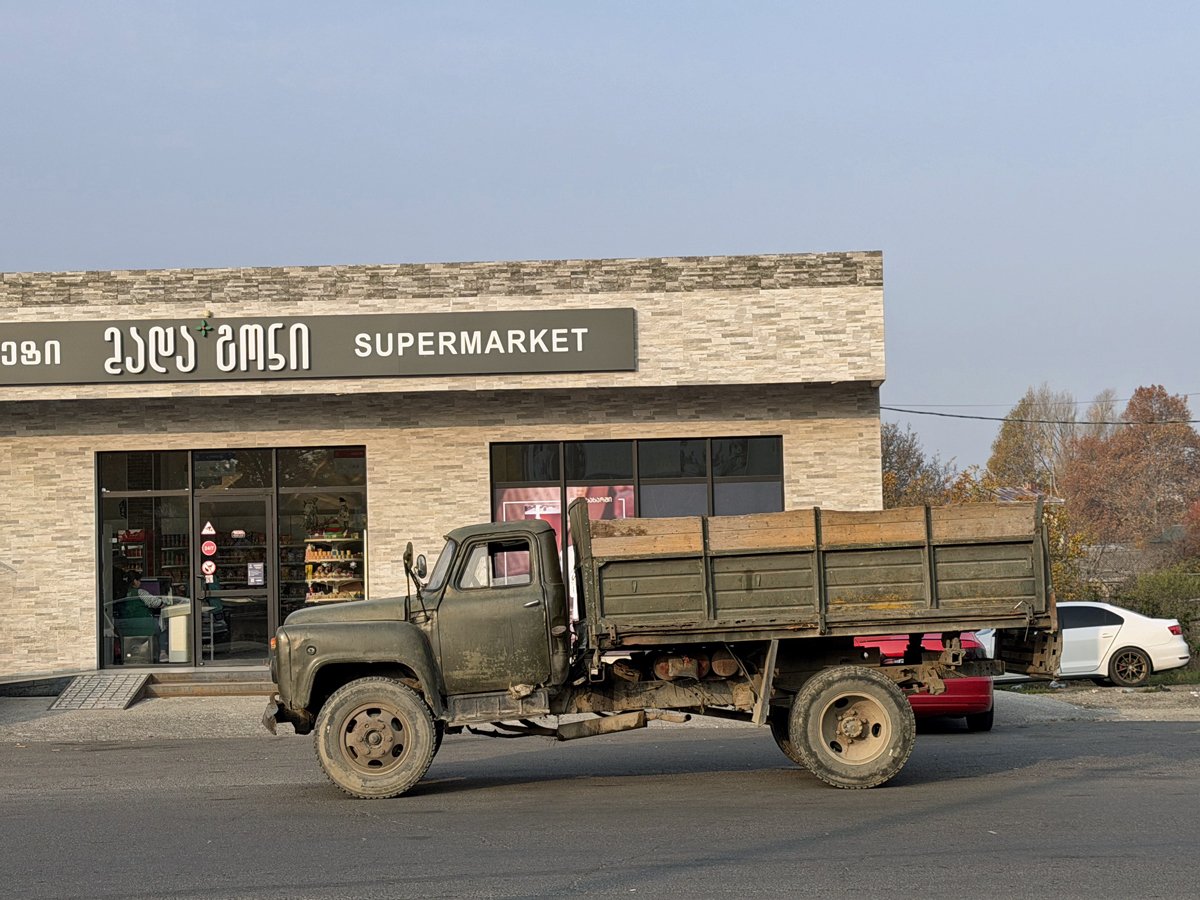
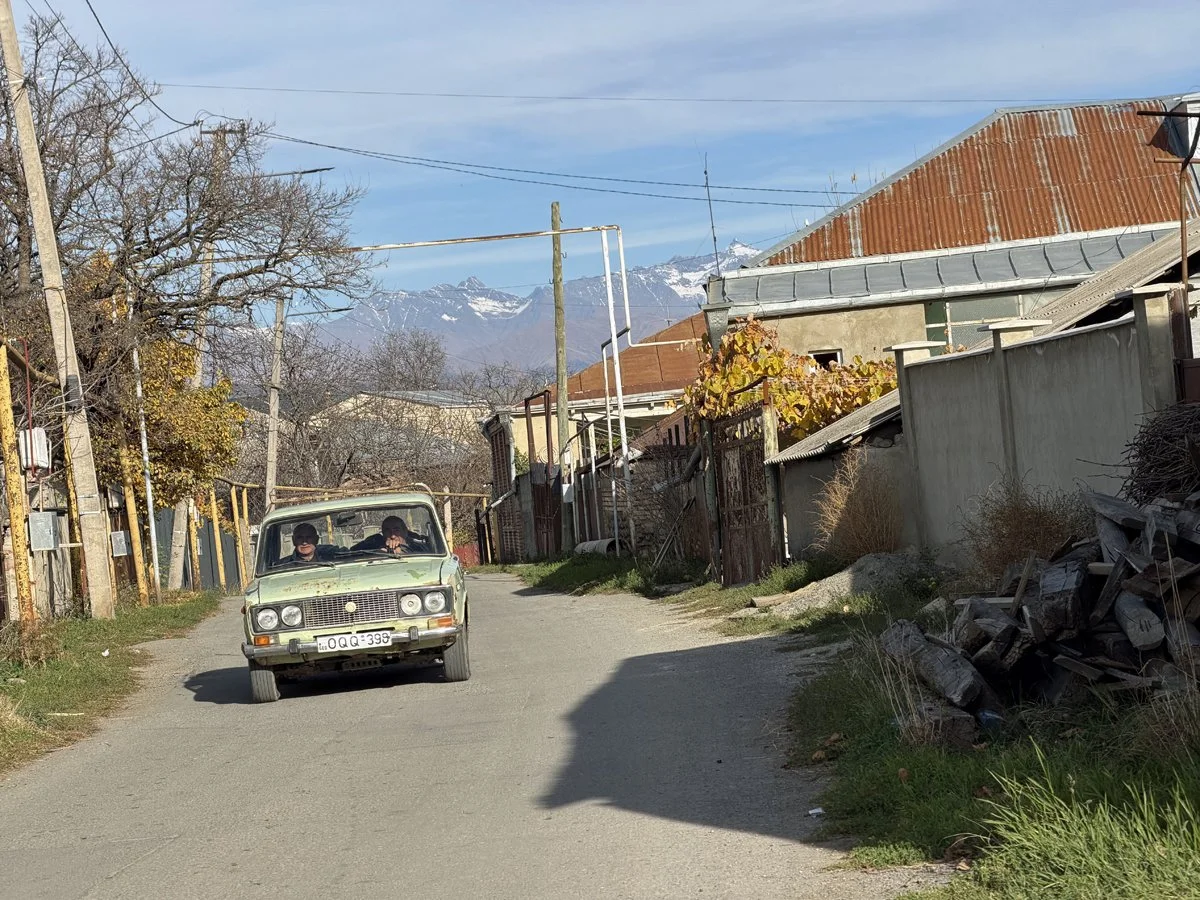
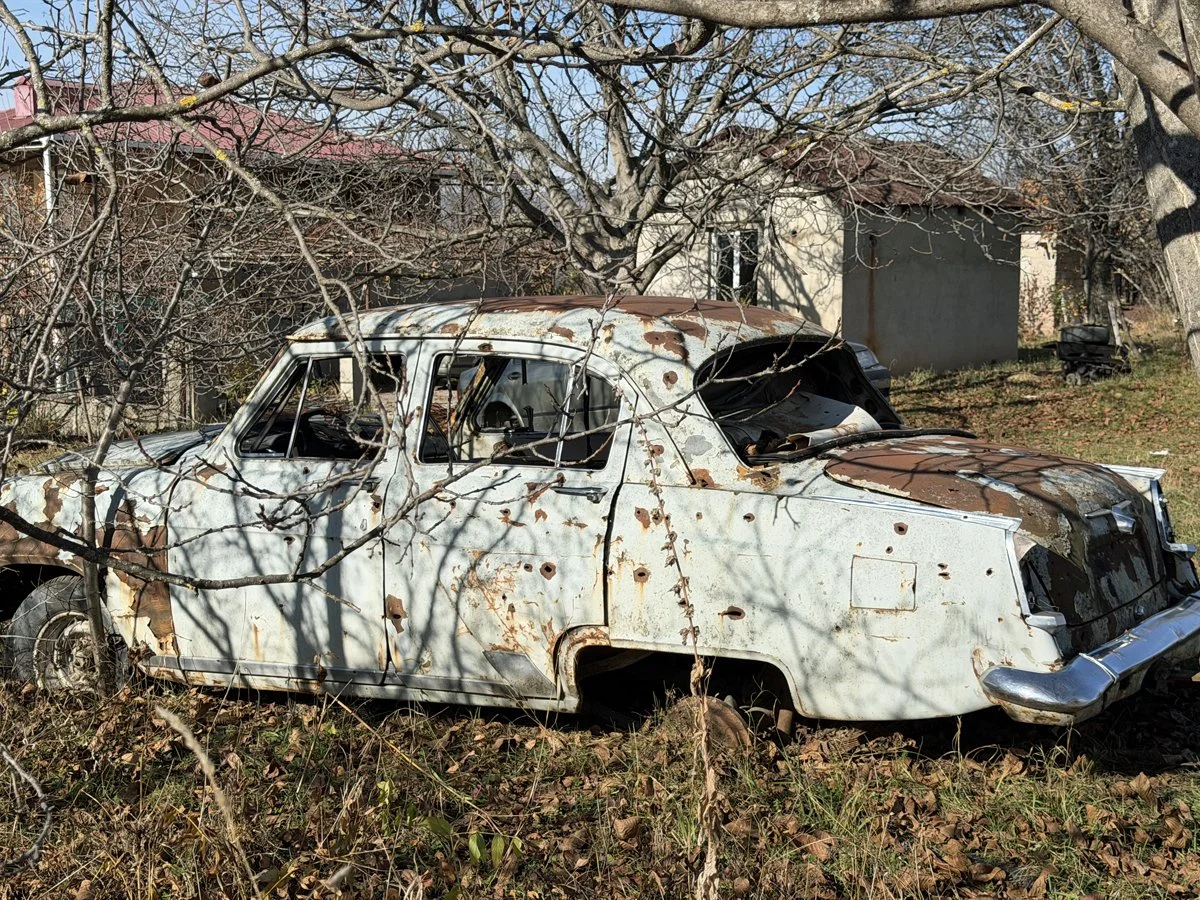
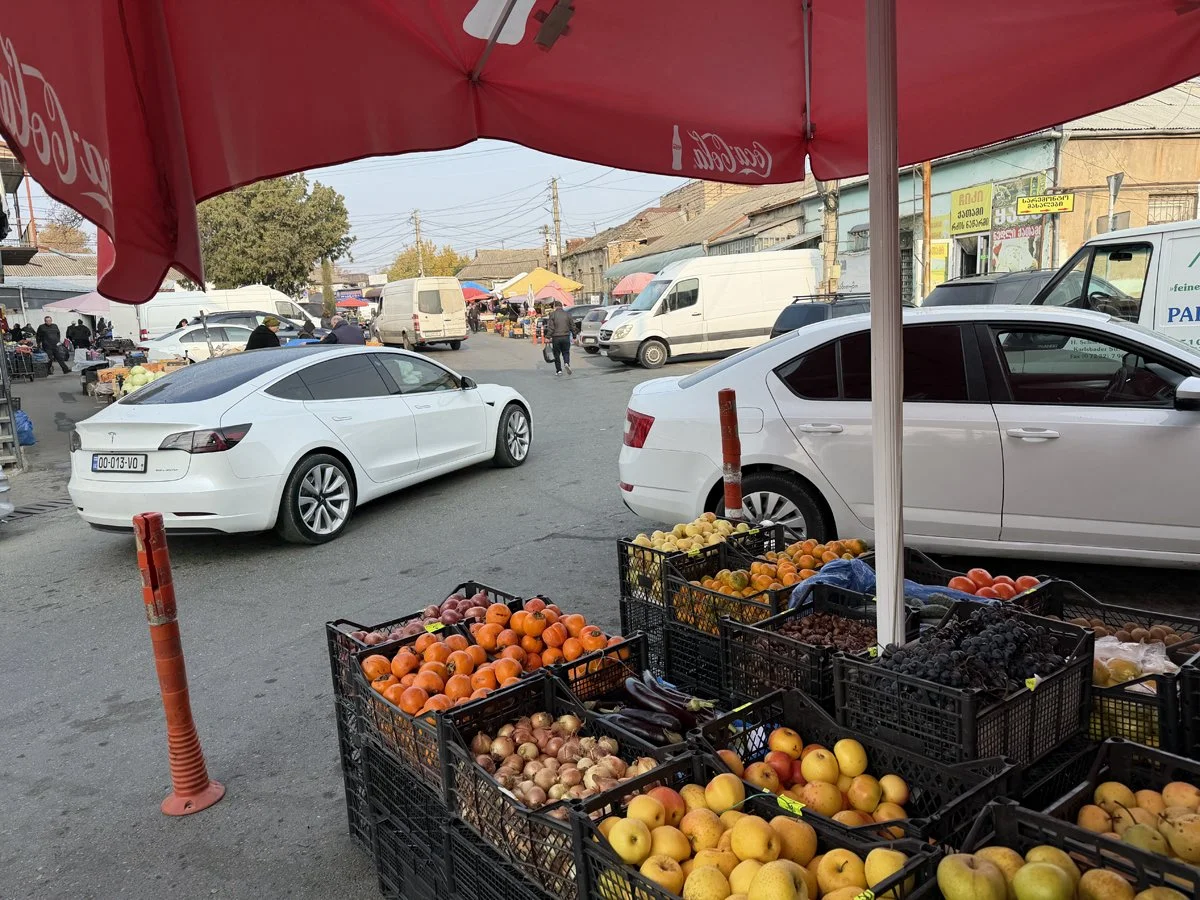
There are plenty of modern cars and Teslas in Georgia. Many are imported second-hand, often directly from left-hand-drive countries. Old Soviet-era vehicles are becoming increasingly rare.
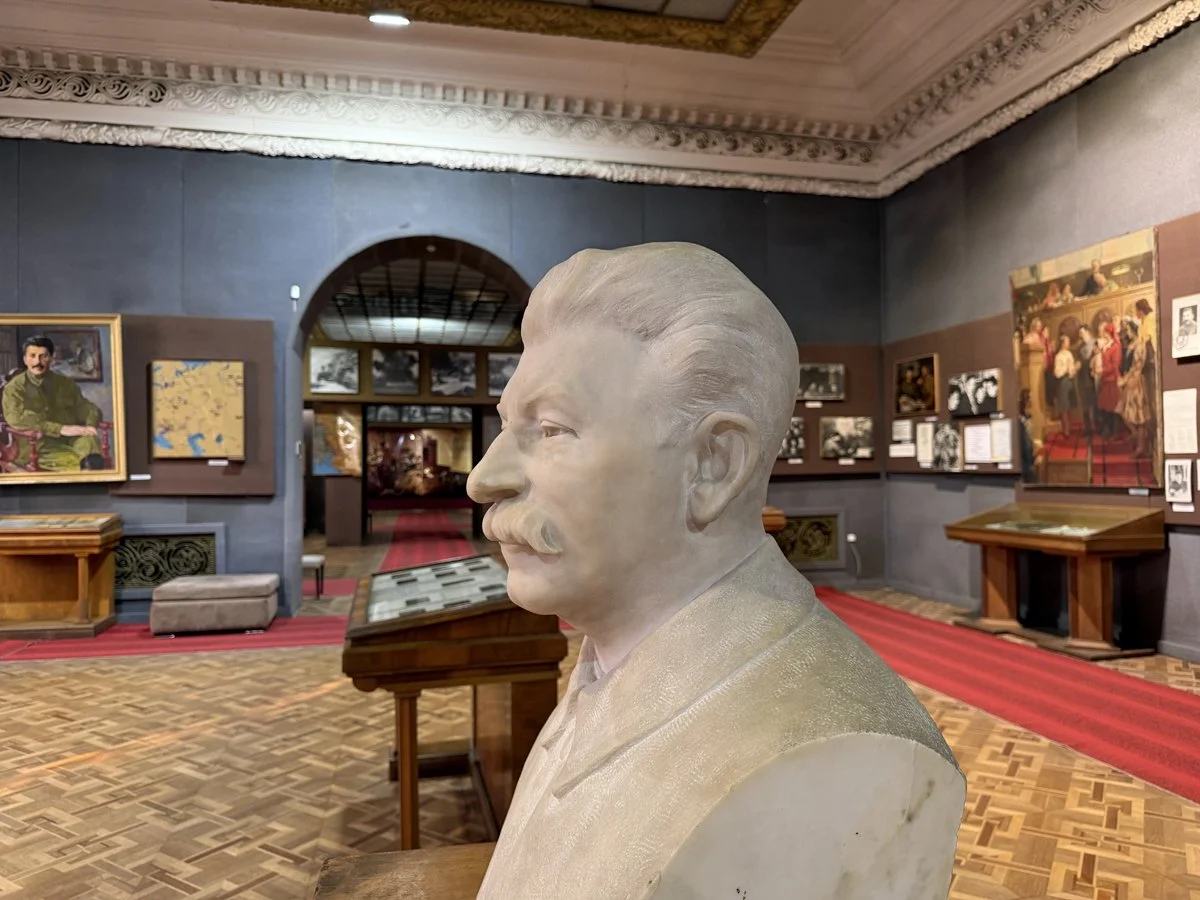
Before the Stalin Museum opened in 1957, the house in which Joseph Stalin was born had already been converted into a memorial museum in 1937, during Stalin’s own lifetime. The tiny house was not accessible to visitors when I was there.

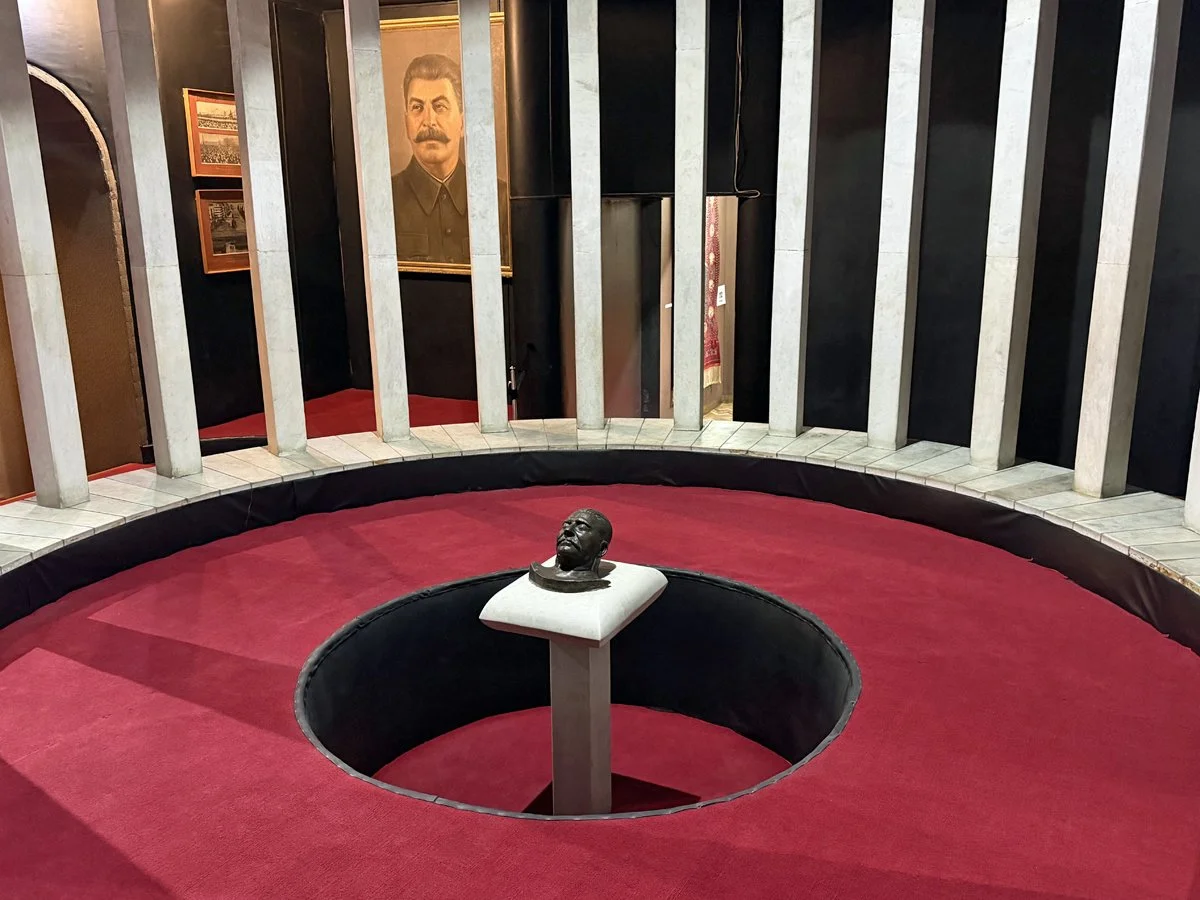
In 2025, the Stalin Museum feels like an anachronism. It should either have been dismantled or fundamentally reworked to focus on the brutal years of Stalin’s rule (1924–1953). At 24, he appeared as a strikingly handsome revolutionary; by the time of his death, Stalin was responsible for an estimated 10 to 20 million deaths. These include the Holodomor famine in Ukraine, famines in Kazakhstan and Russia, the Great Terror (1936–1938), the Gulag system, the mass deportations of Chechens, Crimean Tatars, Volga Germans, and others, as well as World War II–related repression.
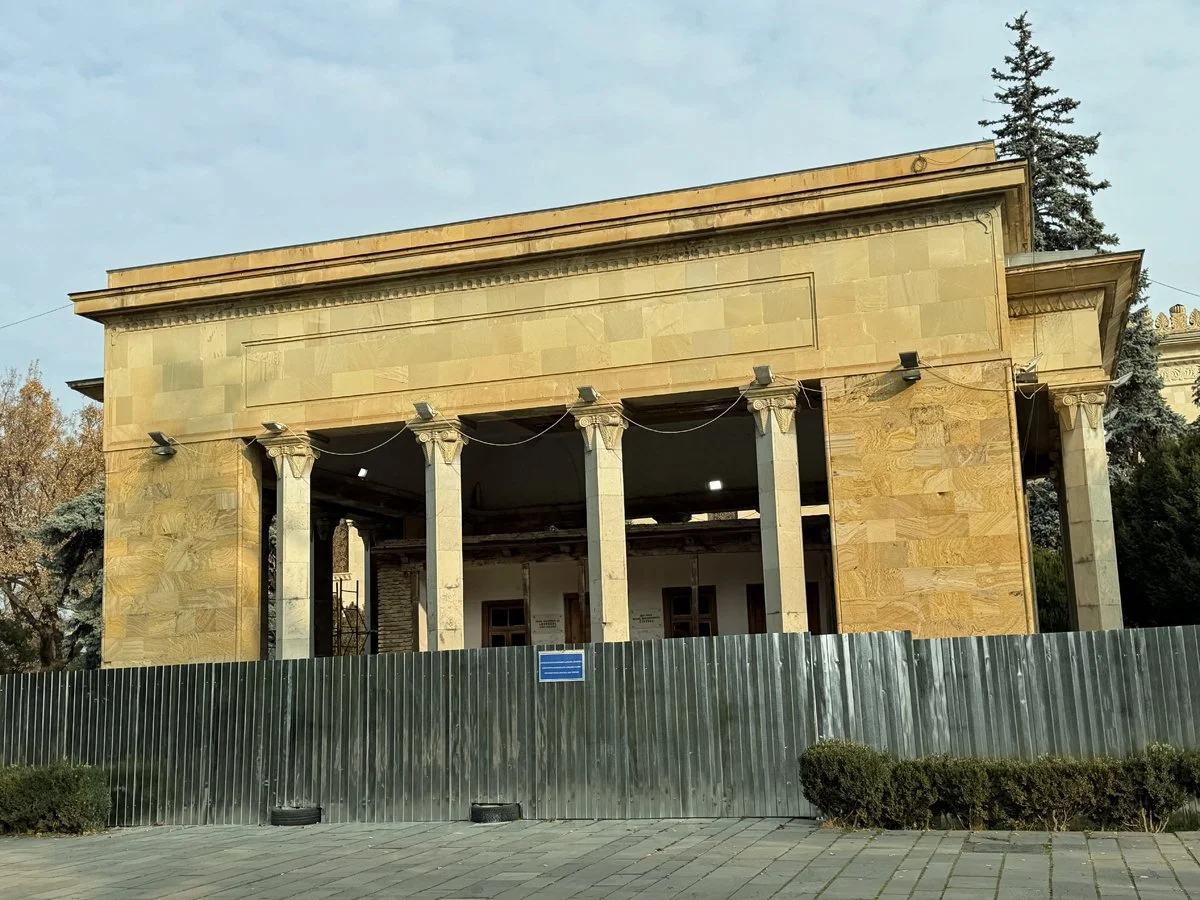
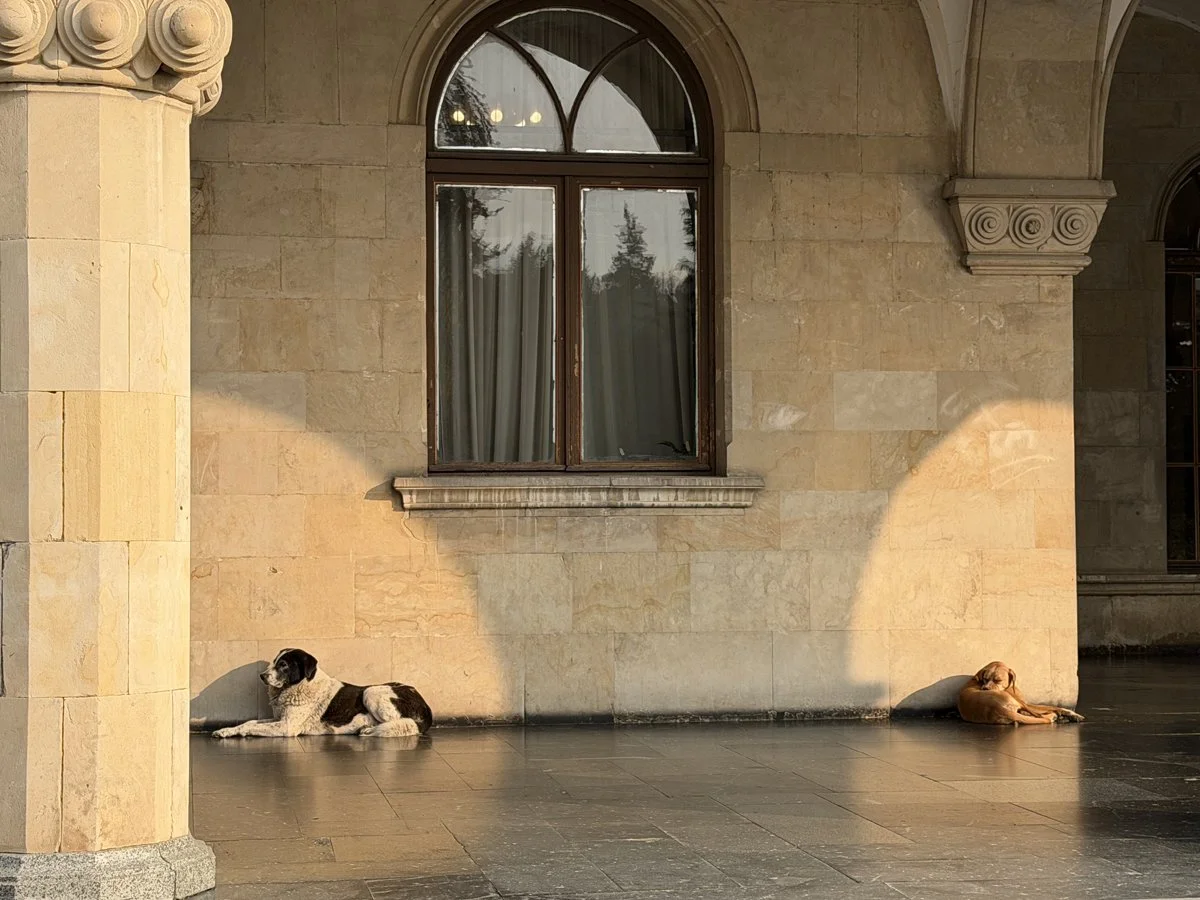
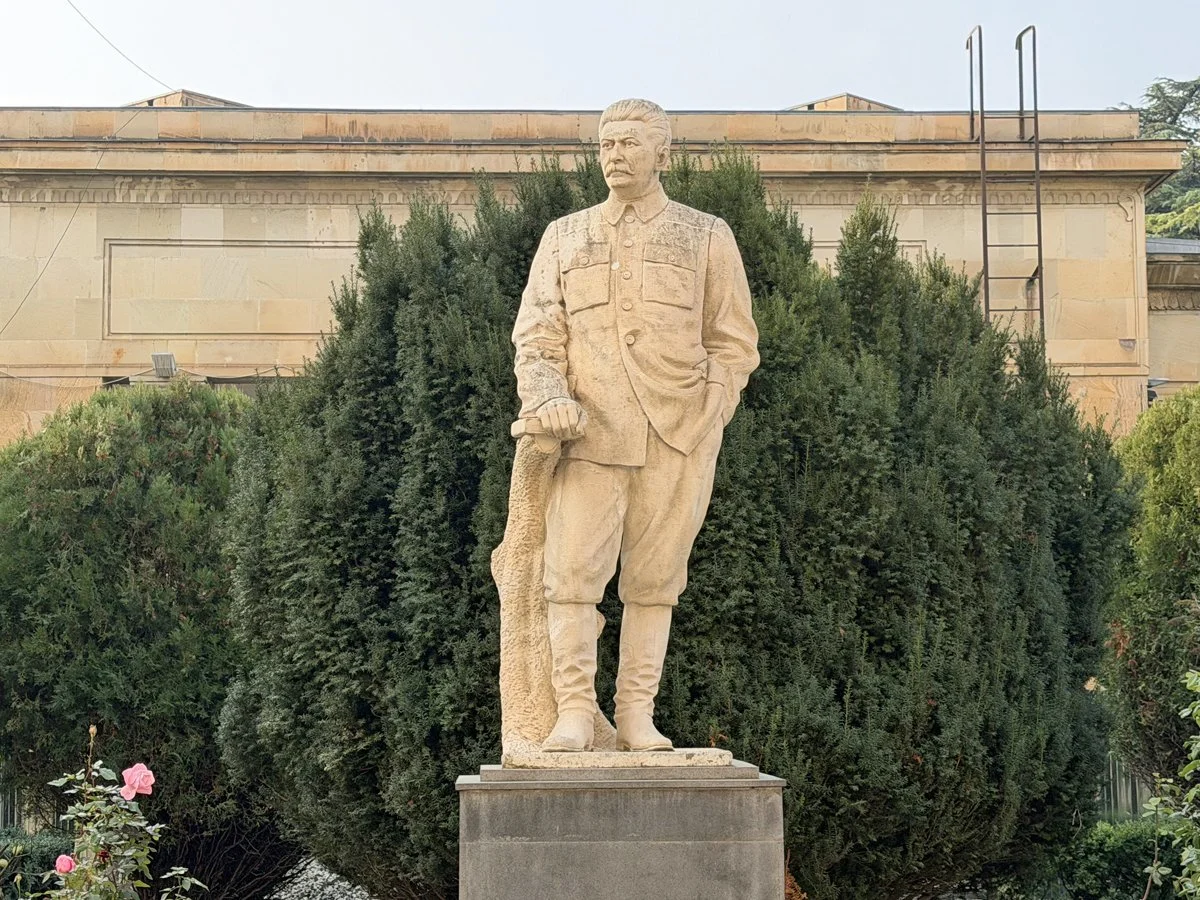
Stalin statue by sculptor Silovan Kakabadze.
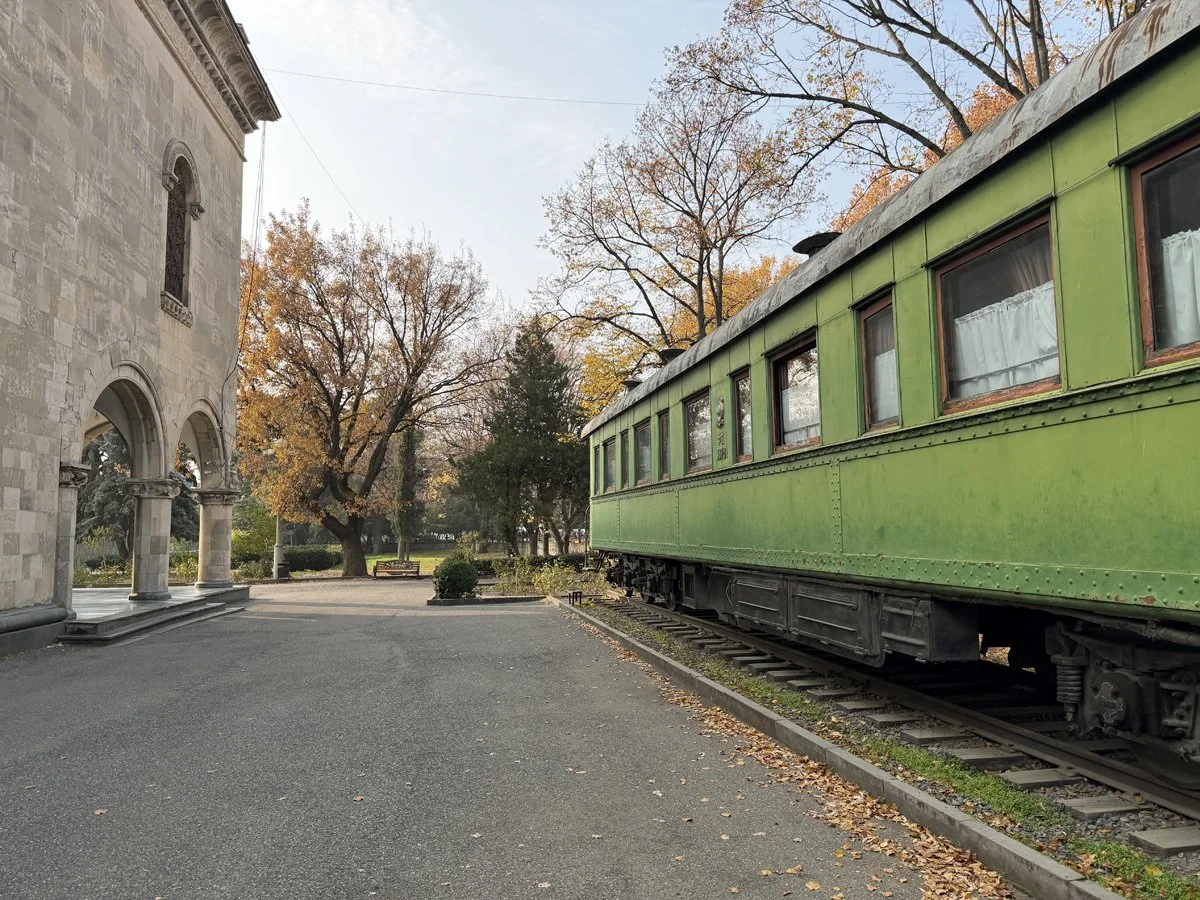
Out of the protest against jeering regime and Jesuitical methods existed in the seminary I was ready to become and I have really become a revolutionary.
— Stalin, talk with the German Author Emil Ludwig, 1931

Since the 2010s, there has been a “Stalin revival” in Georgia, especially among generations who remember the Soviet era. Despite the brutal reality of his totalitarian regime, some Georgians view the “local hero” Stalin as having done much good for the country. This perception is often intertwined with a desire for national pride and a deflection of present-day economic hardship—summed up in the sentiment that “in Soviet times, we had it better.”
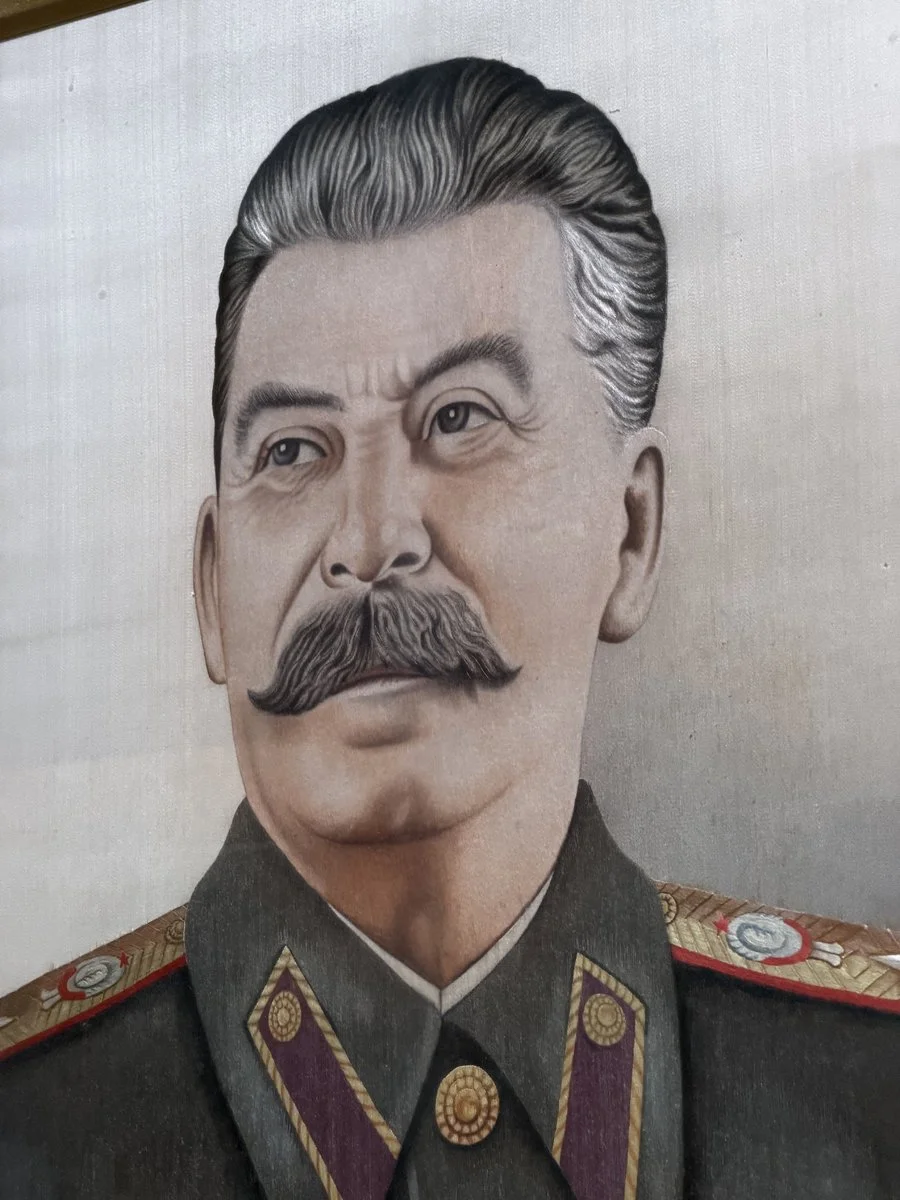
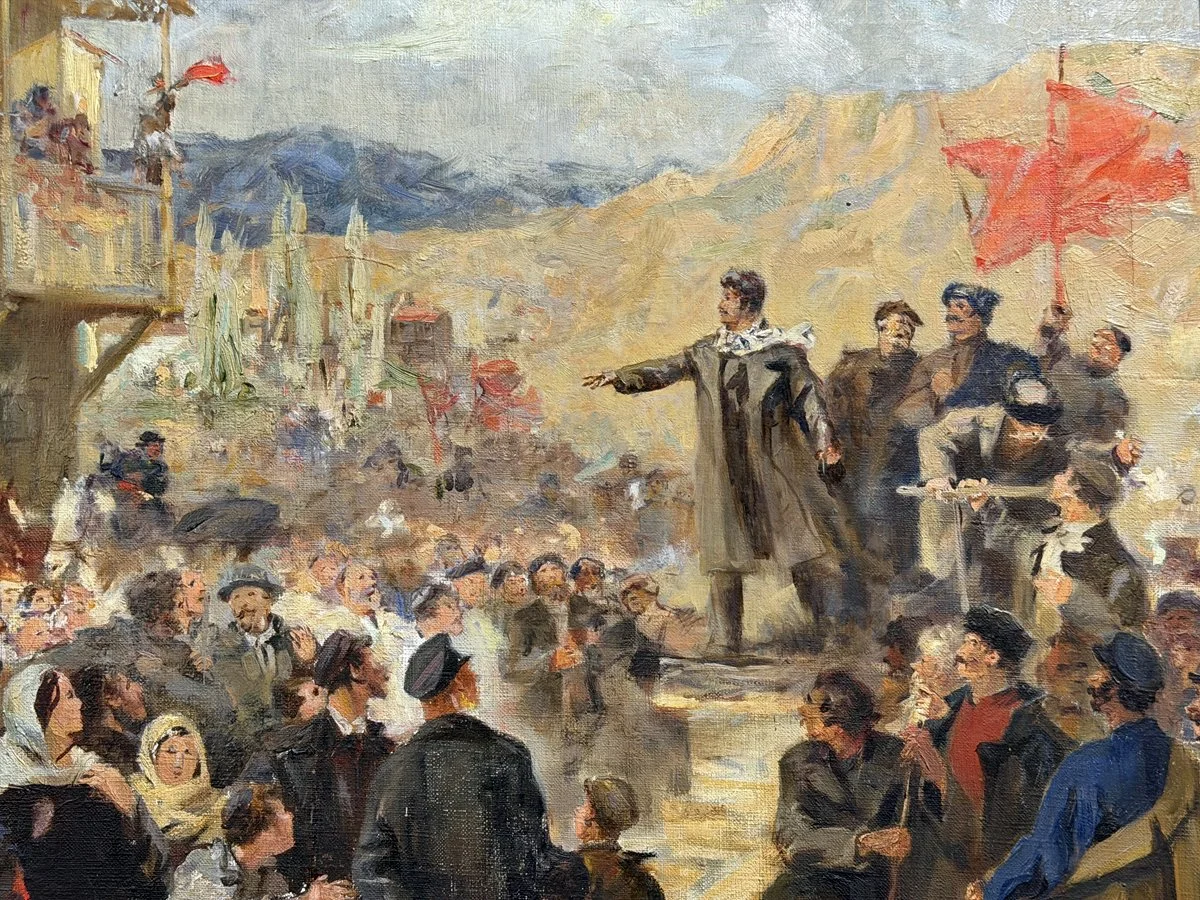
Not a painting, but silk embroidery.
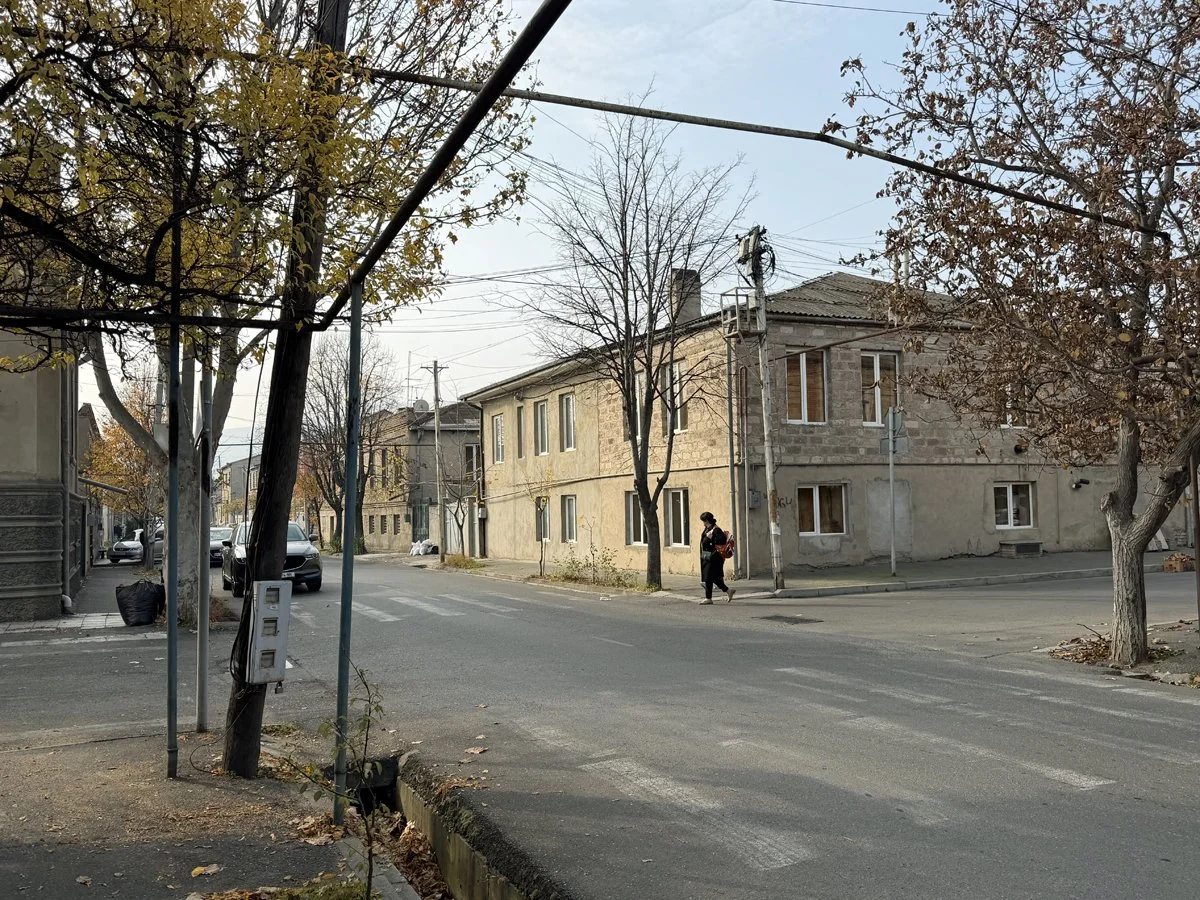
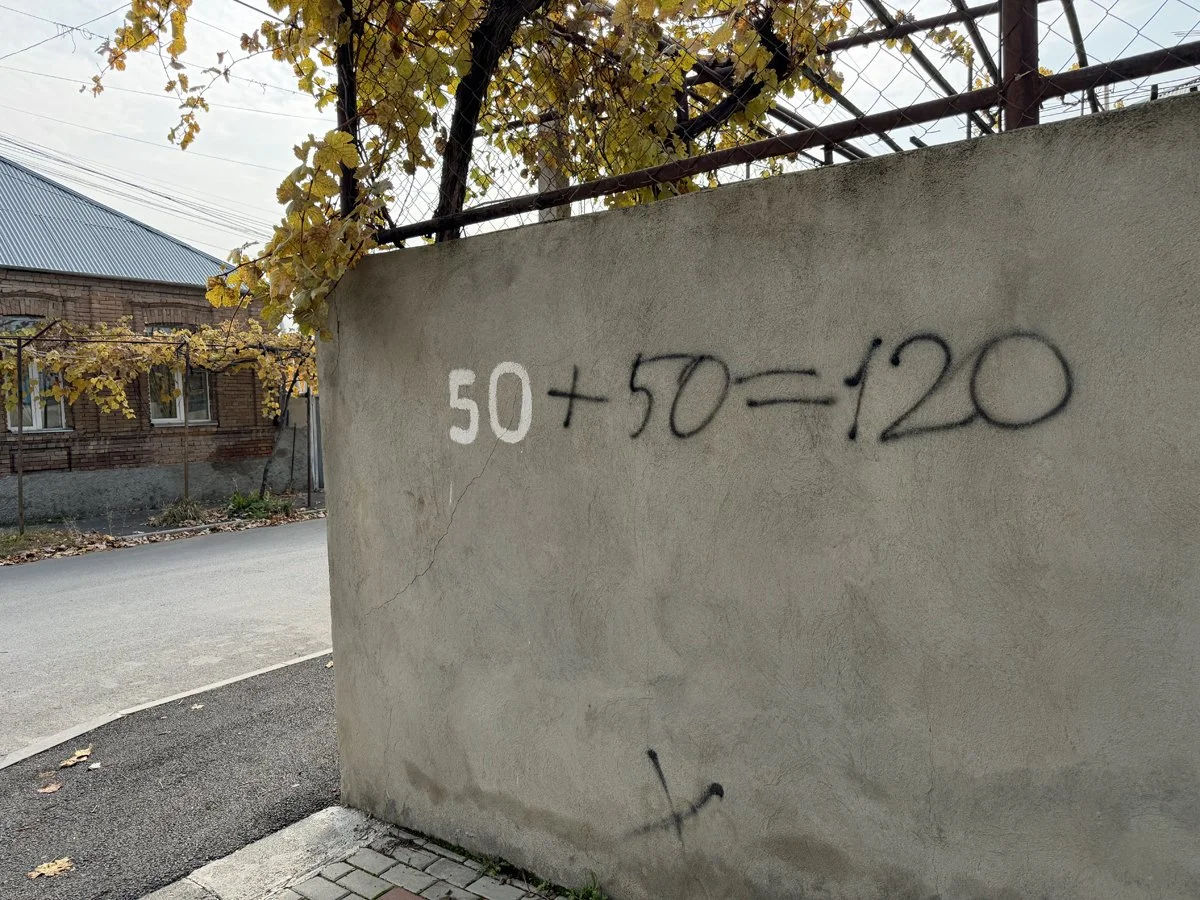
The 50+50=120-graffiti might be completely unrelated to the denial of reality by the Party in George Orwell’s 1984 but I immediately had to think of this book.

In the end the Party would announce that two and two made five, and you would have to believe it. It was inevitable that they should make that claim sooner or later: the logic of their position demanded it.
— George Orwell, 1984

“Freedom is the freedom to say that two plus two make four. If that is granted, all else follows.”
Brotherhood

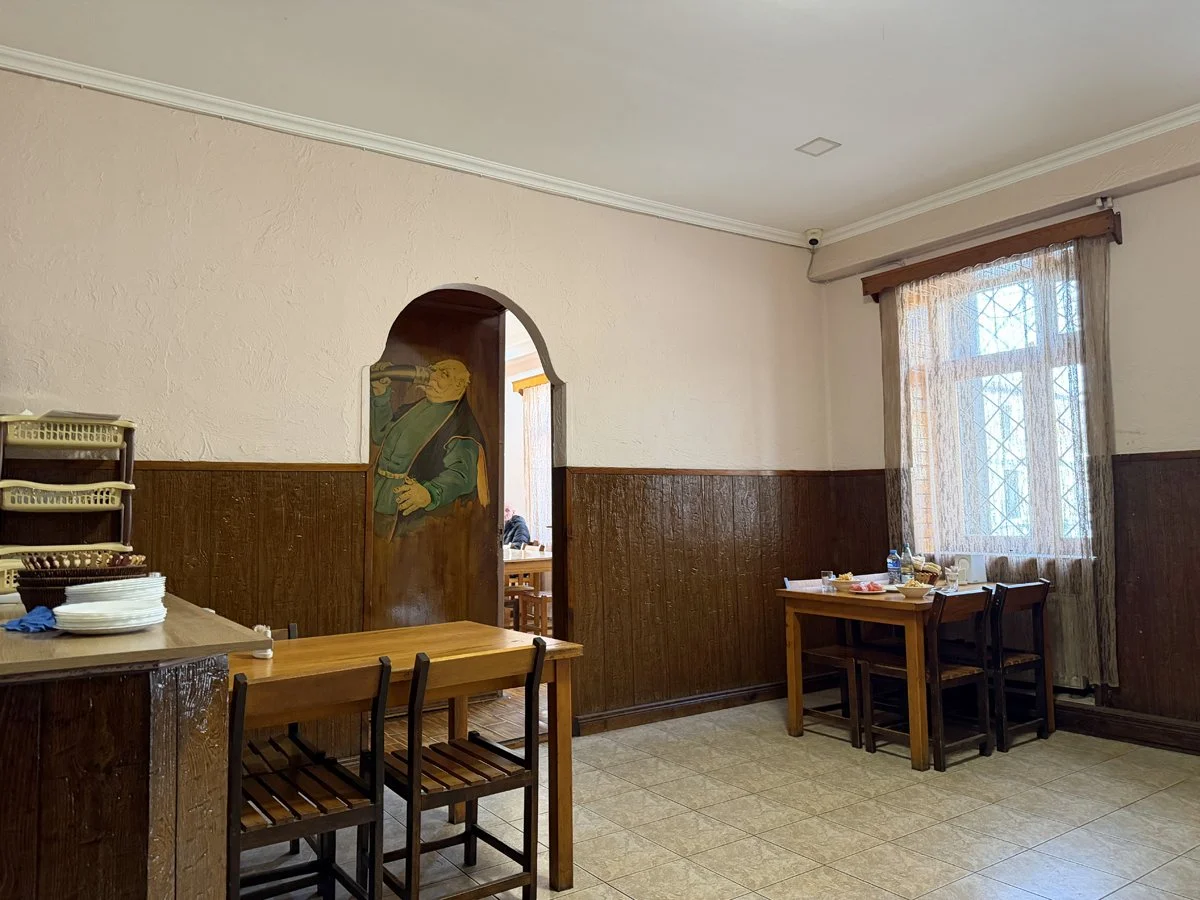
K. Tsamebuli Street, Gori. I was happy to find a traditional restaurant in Gori: the Brotherhood. I ordered chakapuli with veal and a glass of wine, which turned out to be filled right to the rim.
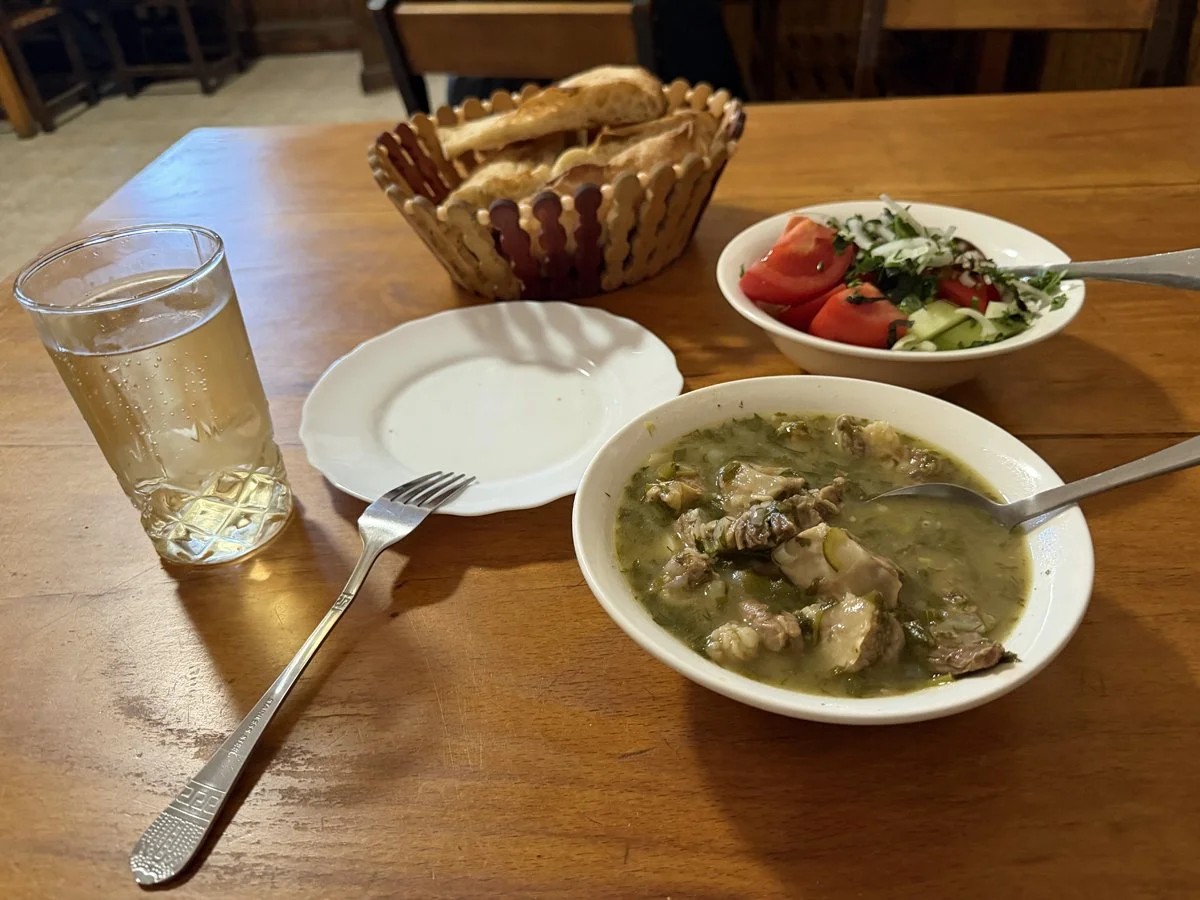
Chakapuli with veal and plenty of tarragon.
Back in Tbilisi, I found my way to a small restaurant that was said to serve excellent khinkali—dumplings filled with meat, usually pork or beef, and sometimes lamb or cheese. Inside each dumpling is a spoonful of broth, so you have to eat them carefully: take a small bite first and suck out the broth before taking a second bite, otherwise it will spill everywhere.

Khinkali alone didn’t seem quite enough for dinner, so I ordered khashlama, assuming there would be some vegetables involved. Instead, it turned out to be just boiled pieces of meat—very tasty, though.
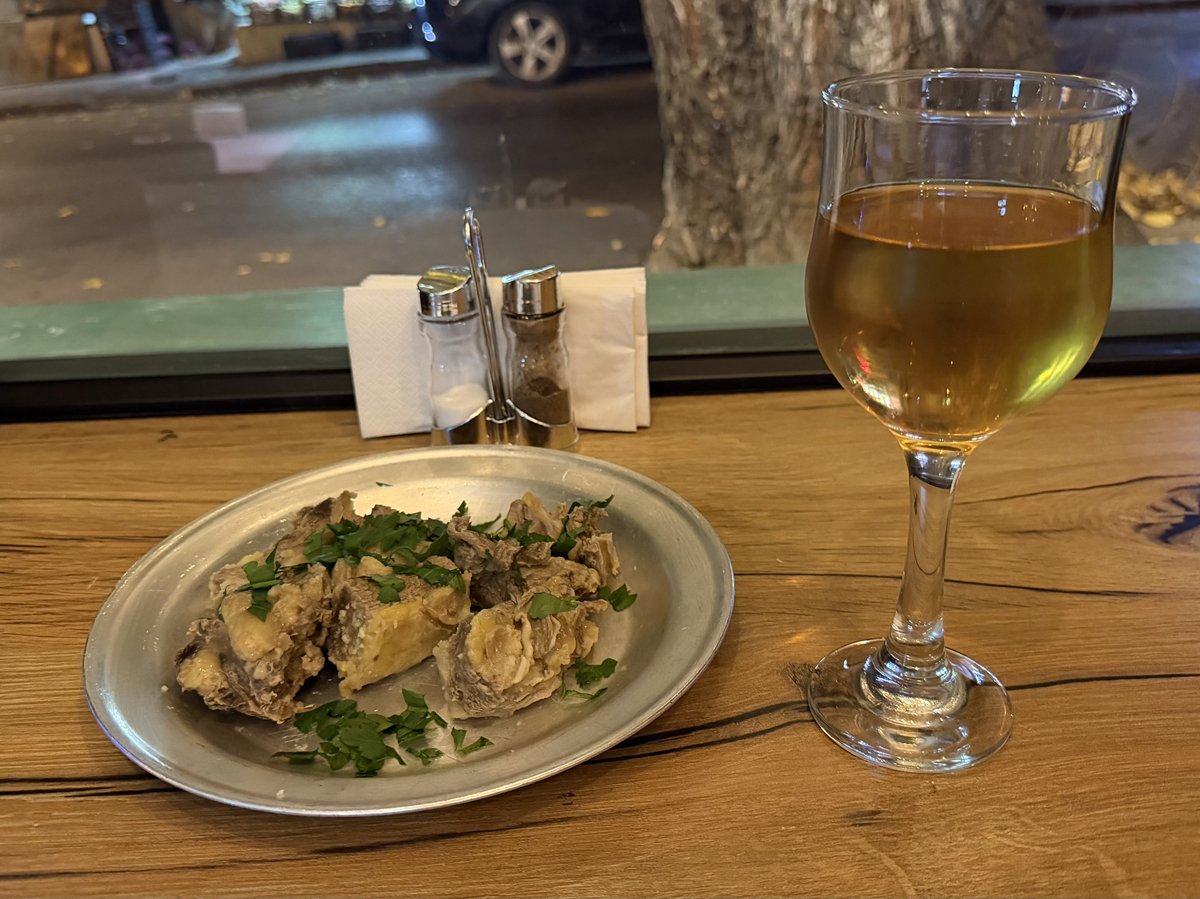
Khashlama (ხაშლამა): boiled beef.
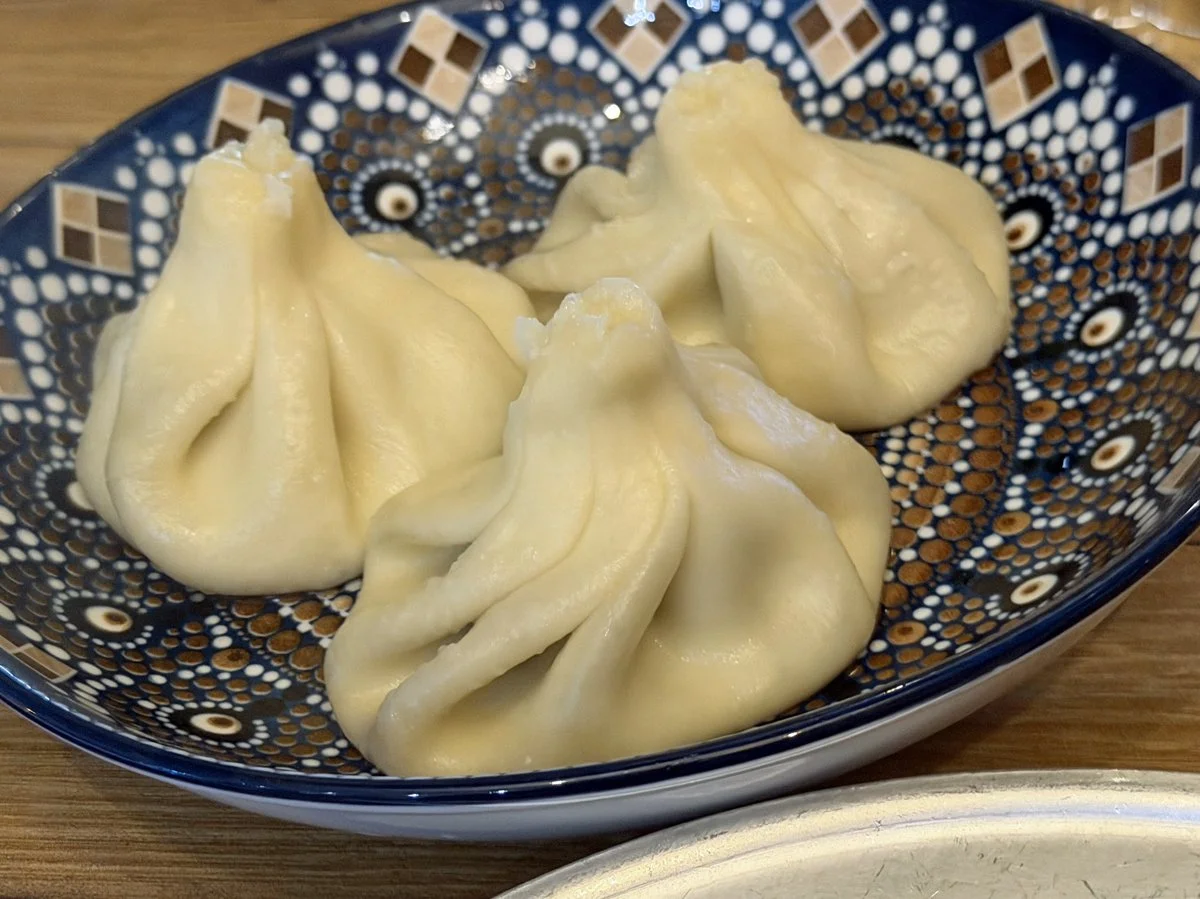
Khinkali (Georgian: ხინკალი))

Day 355 of uninterrupted protests in 8+ cities across Georgia. After making fools of themselves for days, police seem to have given up on chasing protesters through the streets and trying to block their every move.

[image or embed]

— Rusudan Djakeli (@rusudandjakeli.bsky.social) 17 November 2025 at 18:52

Hummus and sulphur baths
On Tuesday, I woke up with very sore calves. I immediately made some promises to myself: more long-distance walking and actively seeking out hills. Unfortunately, the closest place to both Amsterdam and my parents’ place where you can spend a full day on hilly single-track trails is along the Ahr River in Germany—about three hours away by car from either location. In the meantime, I decided that Tuesday would be a relaxing day in Tbilisi.

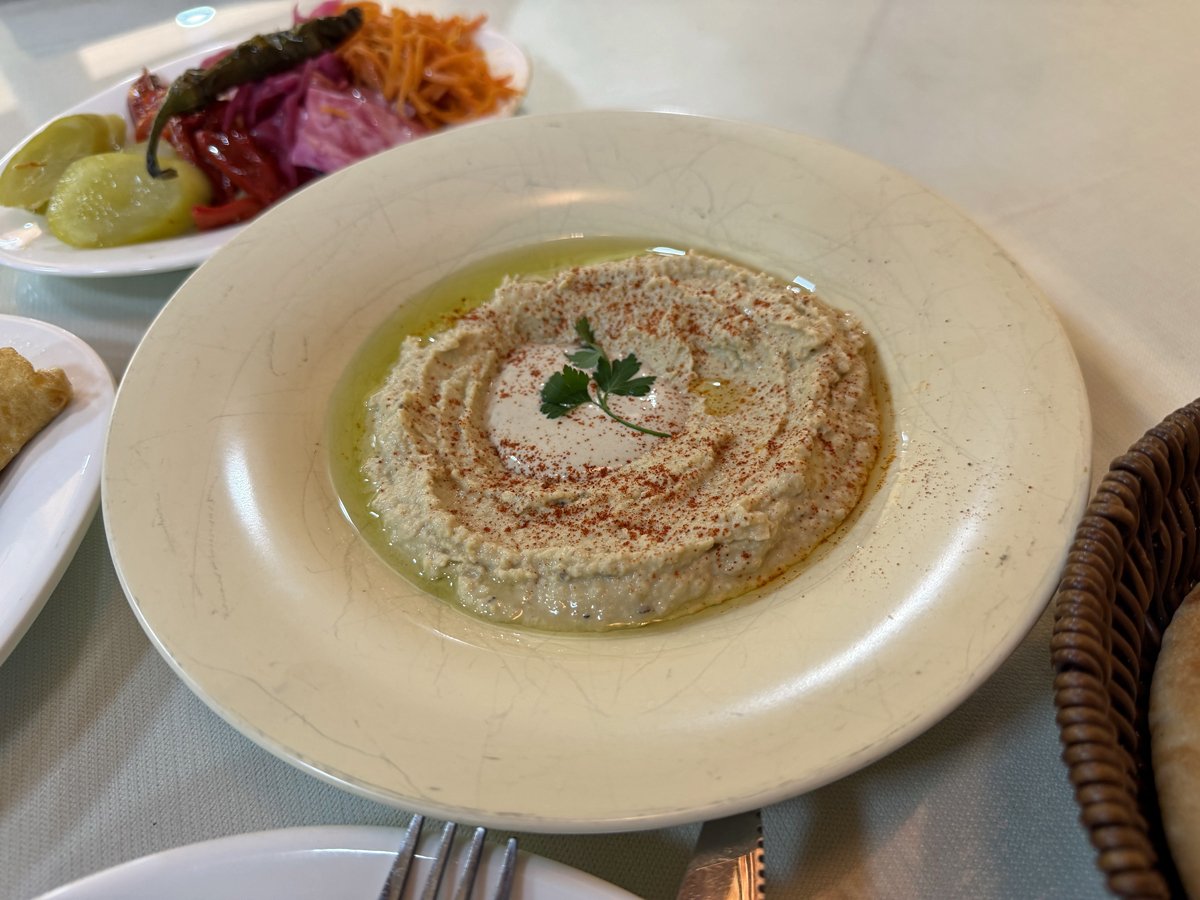
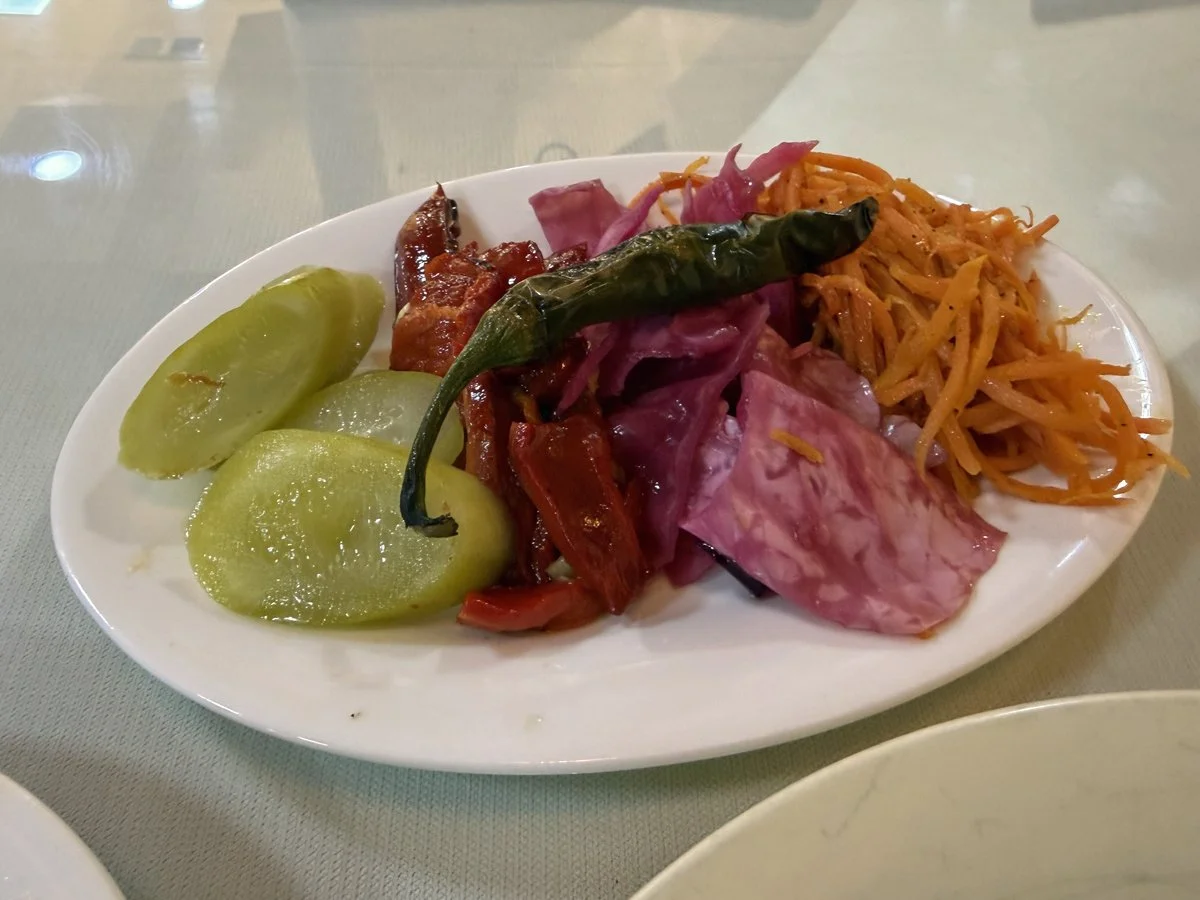
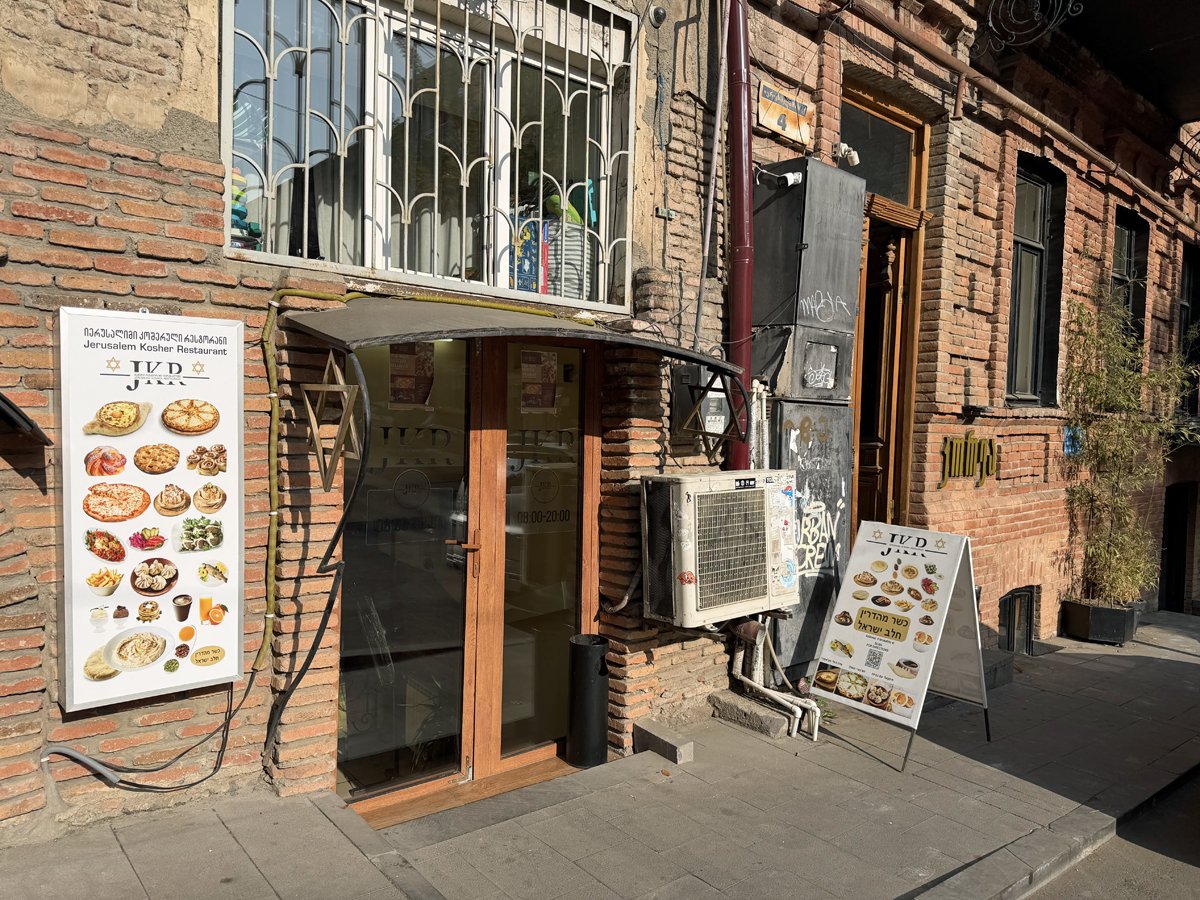
For a late breakfast, I was craving hummus, and since I was staying so close to the synagogue, there were many kosher restaurants to choose from. The Jews of old Tbilisi didn’t eat hummus—the earliest written recipes appear in 13th-century Arab cookbooks from what is now Egypt, Syria, and Iraq. However, fermenting vegetables in salt water is a simple, kosher way to add both flavor and vitamins.

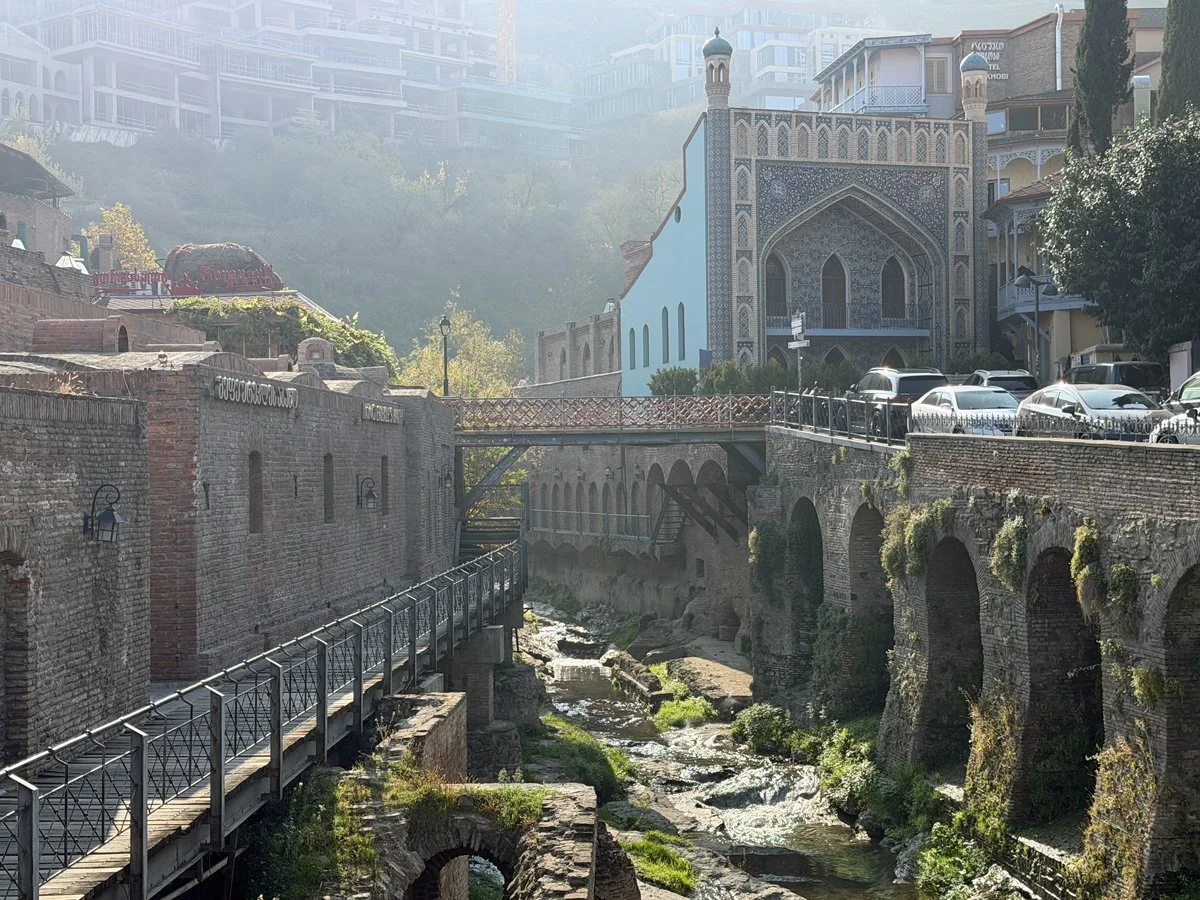
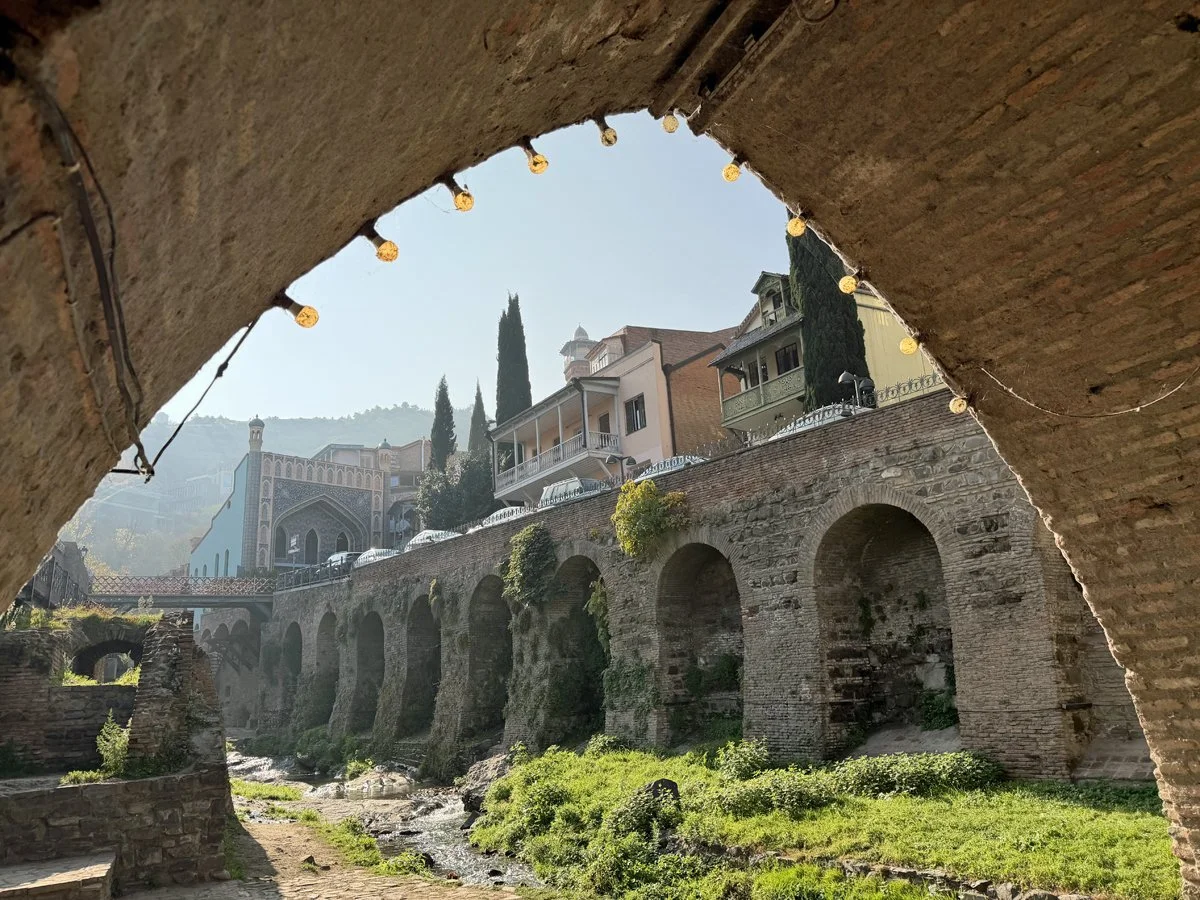
The name Tbilisi apparently means “hot water place,” and it can be inferred that the city was founded around these hot springs. The area around the sulphur sources feels distinctly non-European. The neighborhood surrounding the baths is called Abanotubani (აბანოთუბანი, literally “bath district”), and walking through it feels like being transported to Iran.
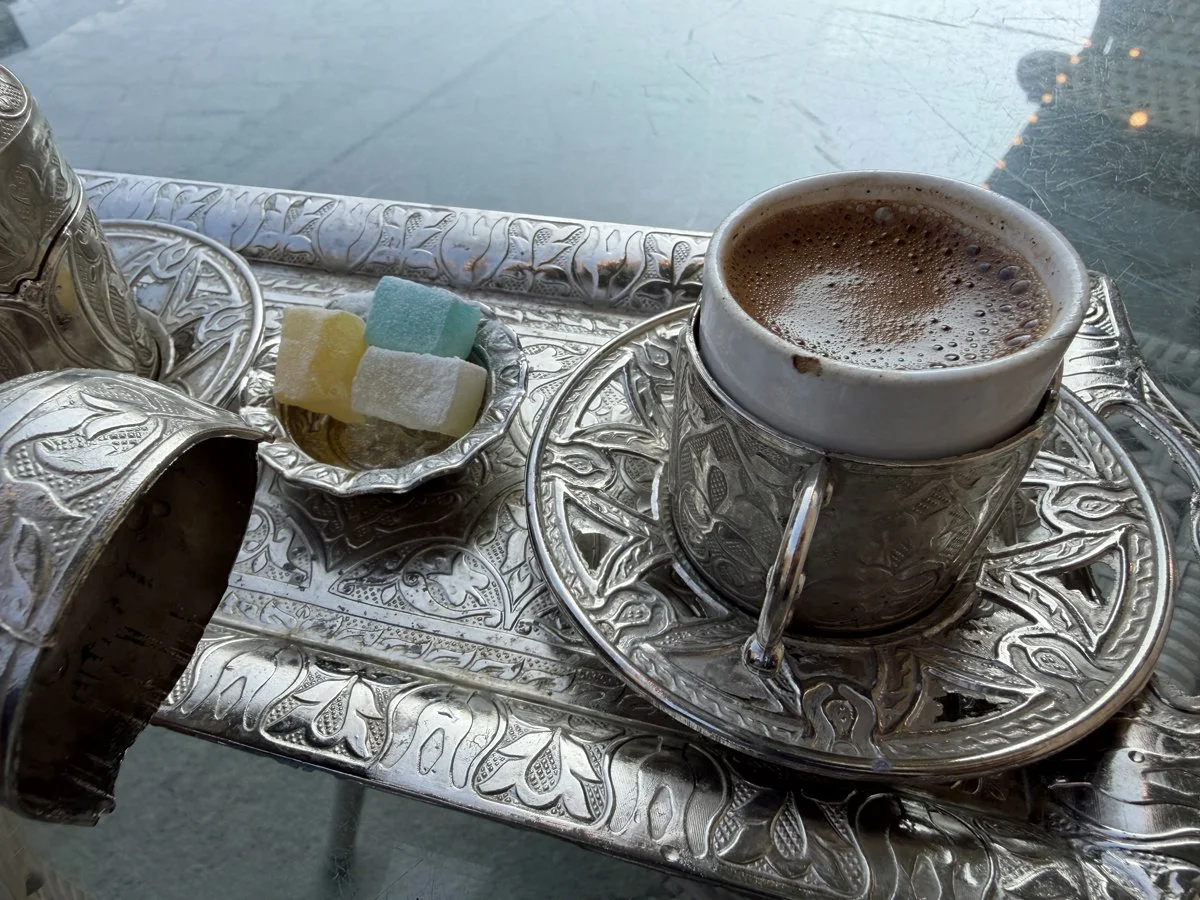
Turkish delight and coffee in Abanotubani.

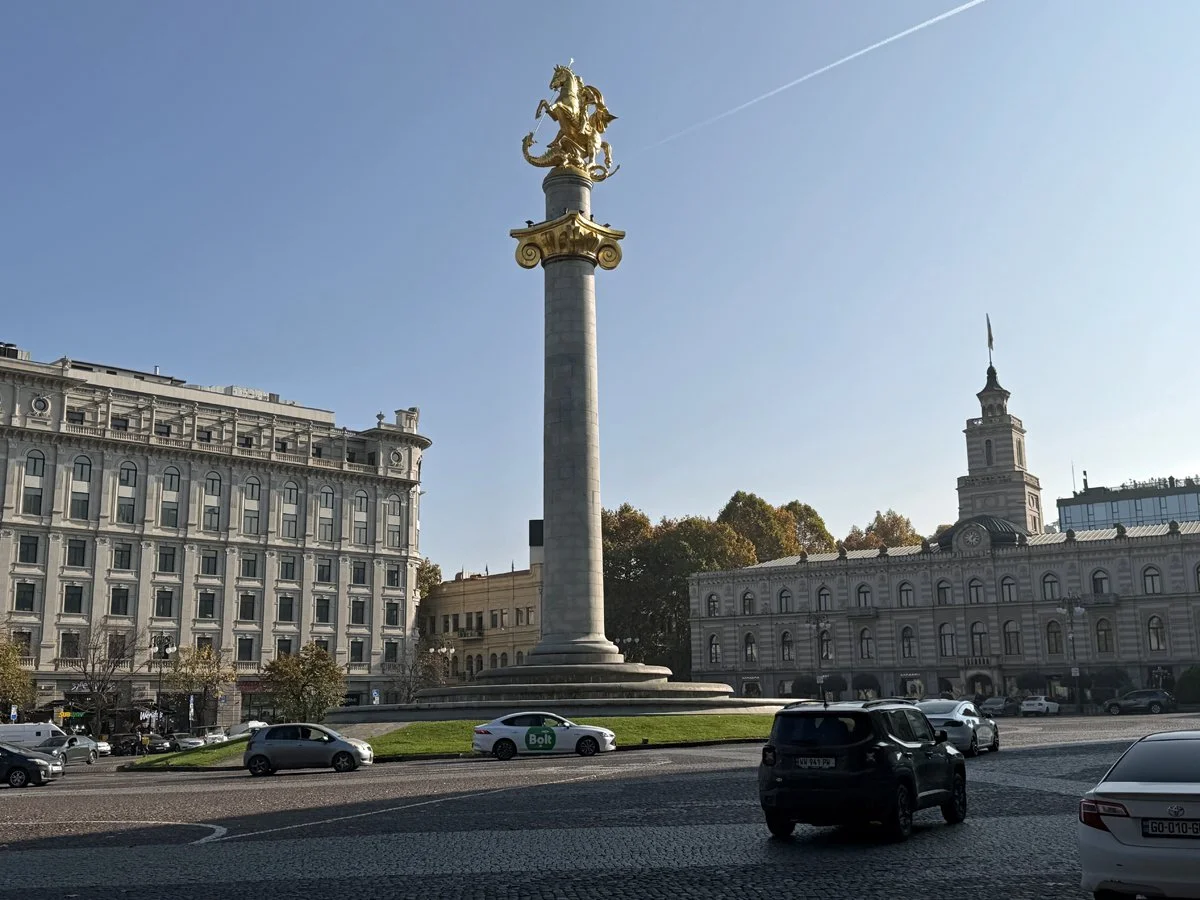
At the eastern end of Rustaveli Avenue lies Freedom Square. It’s hard not to pass through this square multiple times a day. Atop the column stands the golden Freedom Monument (2006), depicting St. George slaying the dragon, created by Georgian painter, sculptor, and architect Zurab Tsereteli.

Amber wine

Strangely, I had never heard of amber wine. Then again, Georgia has about 525 different indigenous grape varieties, so I knew there was a lot I didn’t know. Although only 30–40 varieties are commonly used in modern commercial wine production. Amber wine is made from white Georgian grapes such as Rkatsiteli, Kisi, Mtsvane, or Tsolikouri.

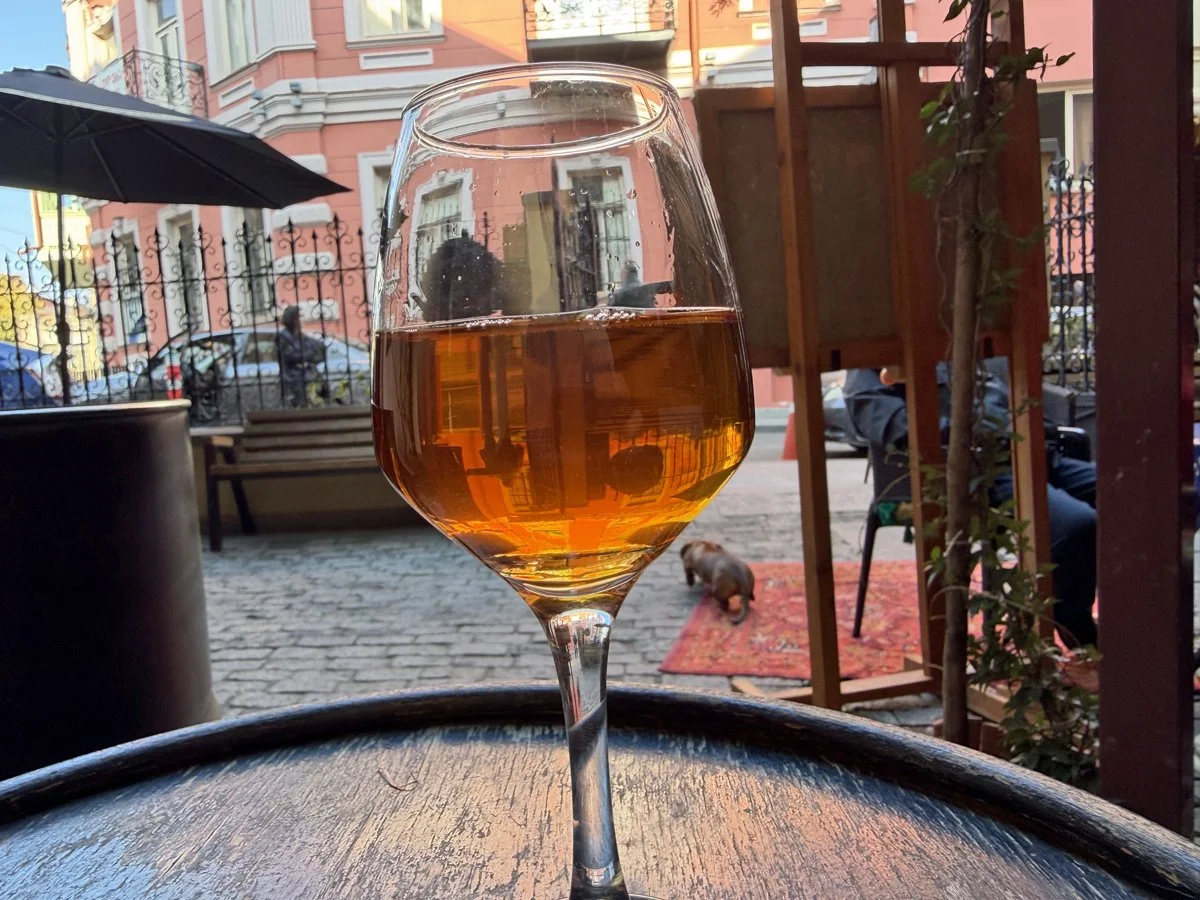
White grapes are fermented with their skins—and often with stems and pips as well. The maceration can last from a few days to several months and is traditionally done in qvevri, large clay amphorae buried in the ground. After fermentation, the vessel is sealed, and the wine continues to mature on the skins. This long contact extracts color pigments as well as tannins and phenolics. Qvevri winemaking is recognized by UNESCO as intangible cultural heritage.

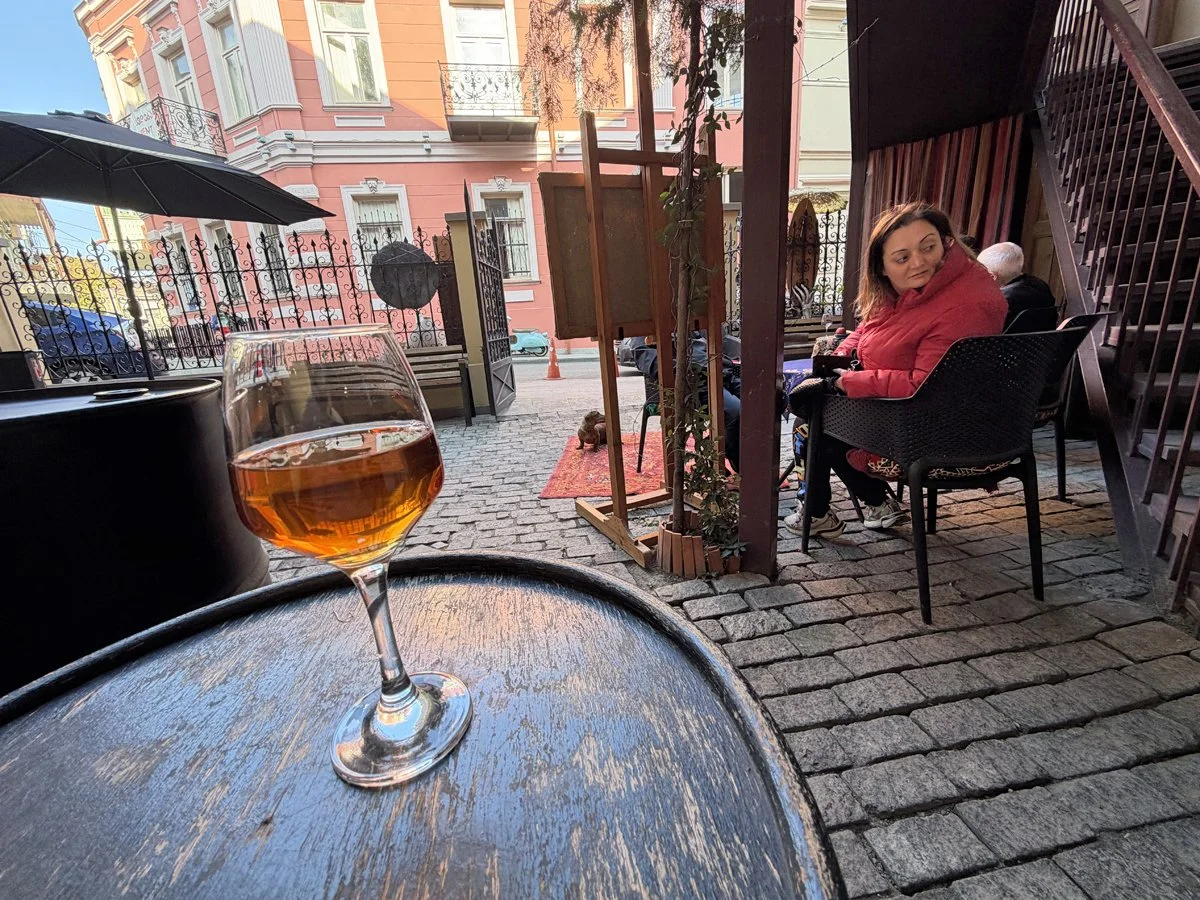
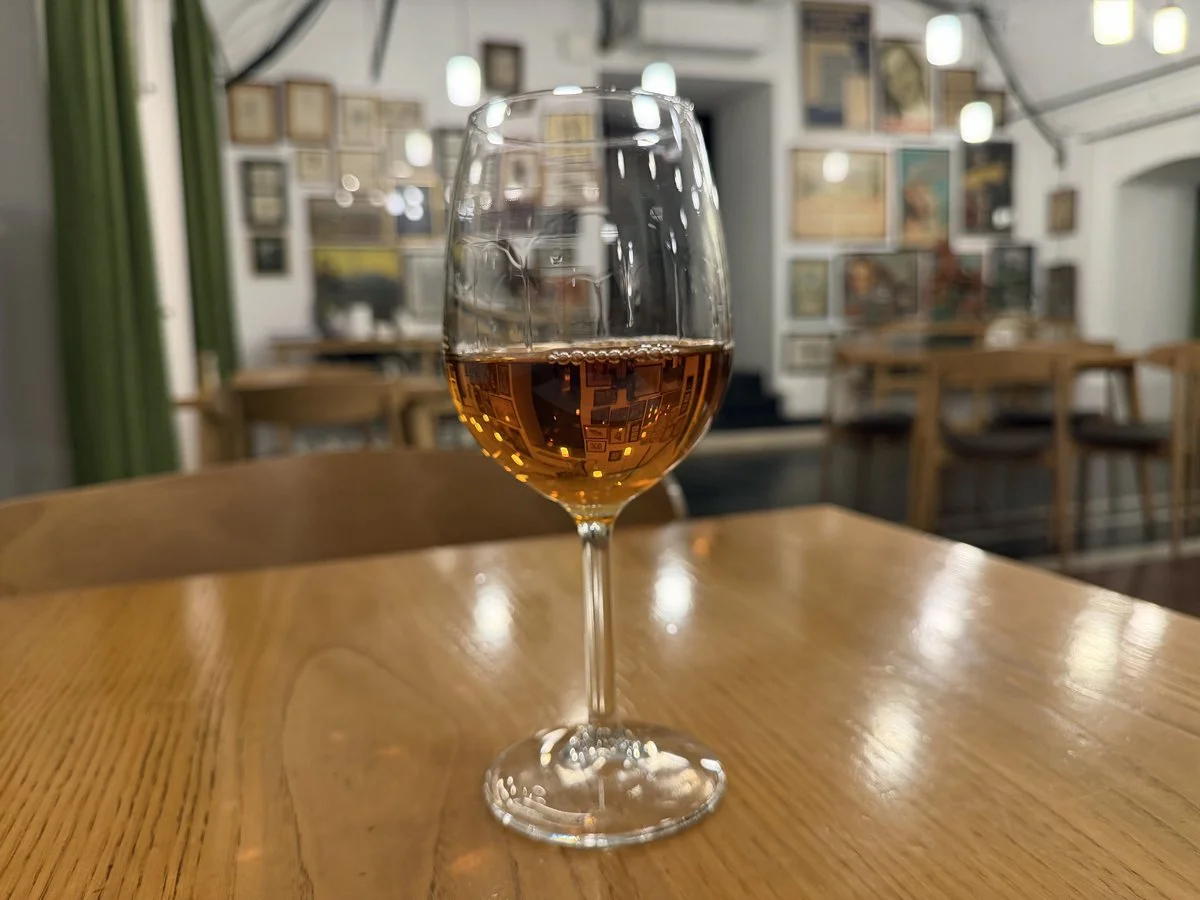
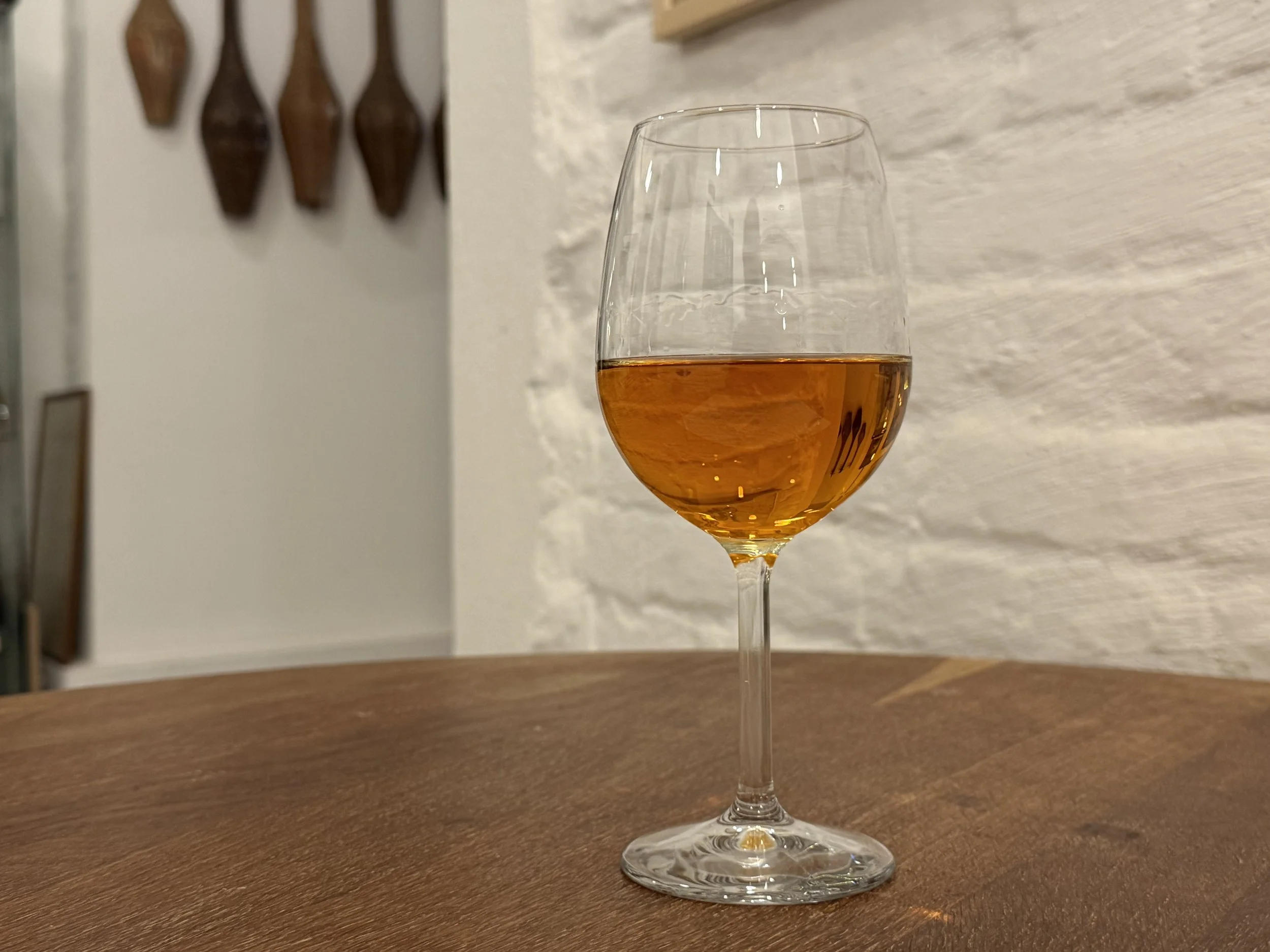
I found a little wine bar called Tbileli Bar & Restaurant on 1 Abo Tbileli Street and ordered a glass of organic amber wine aged in qvevri for 15 Gel. It was afternoon and I drank slowly.

The Georgian term „ქარვისფერი ღვინო“ (karvisperi ghvino, “amber wine”) was coined by Shanshiashvili in a poem titled Wine, published in 1920.

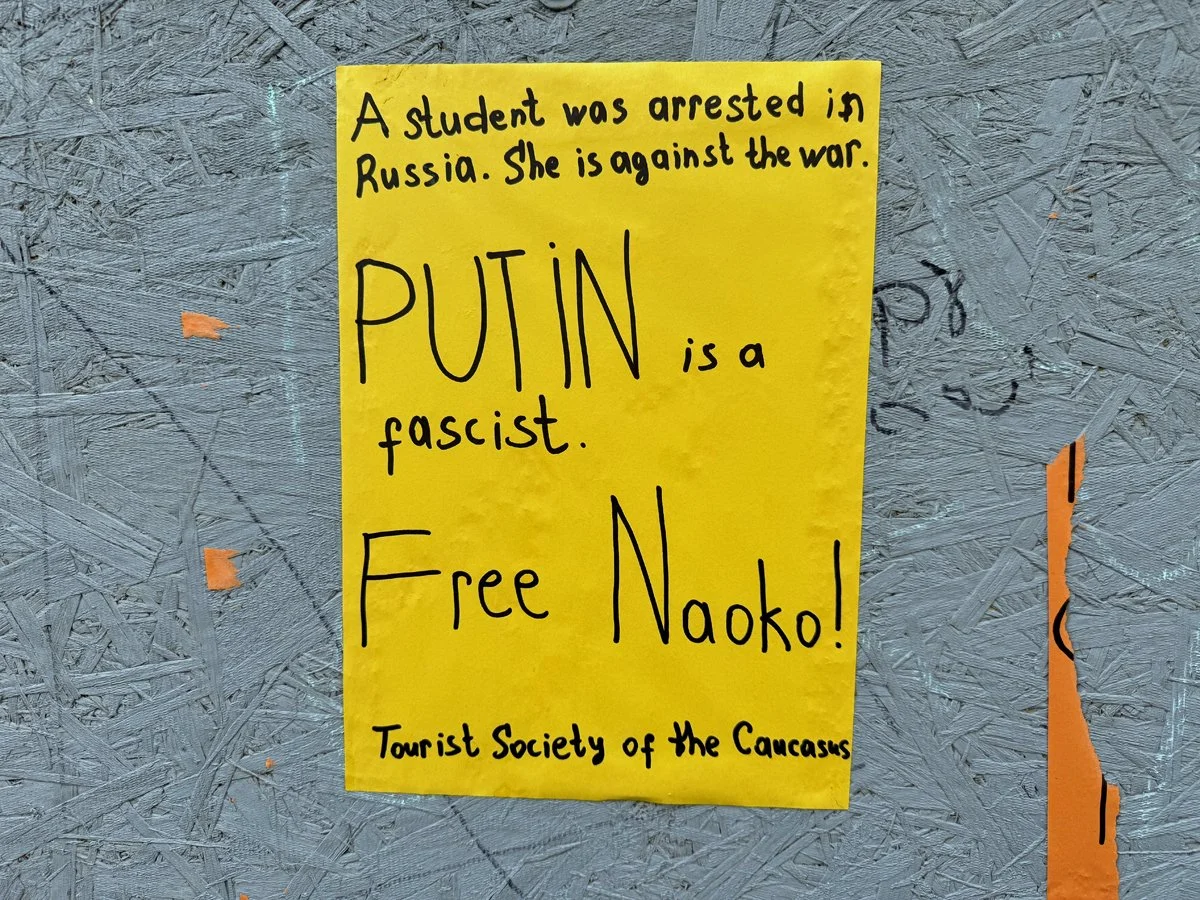
Tourist Society of the Caucasus

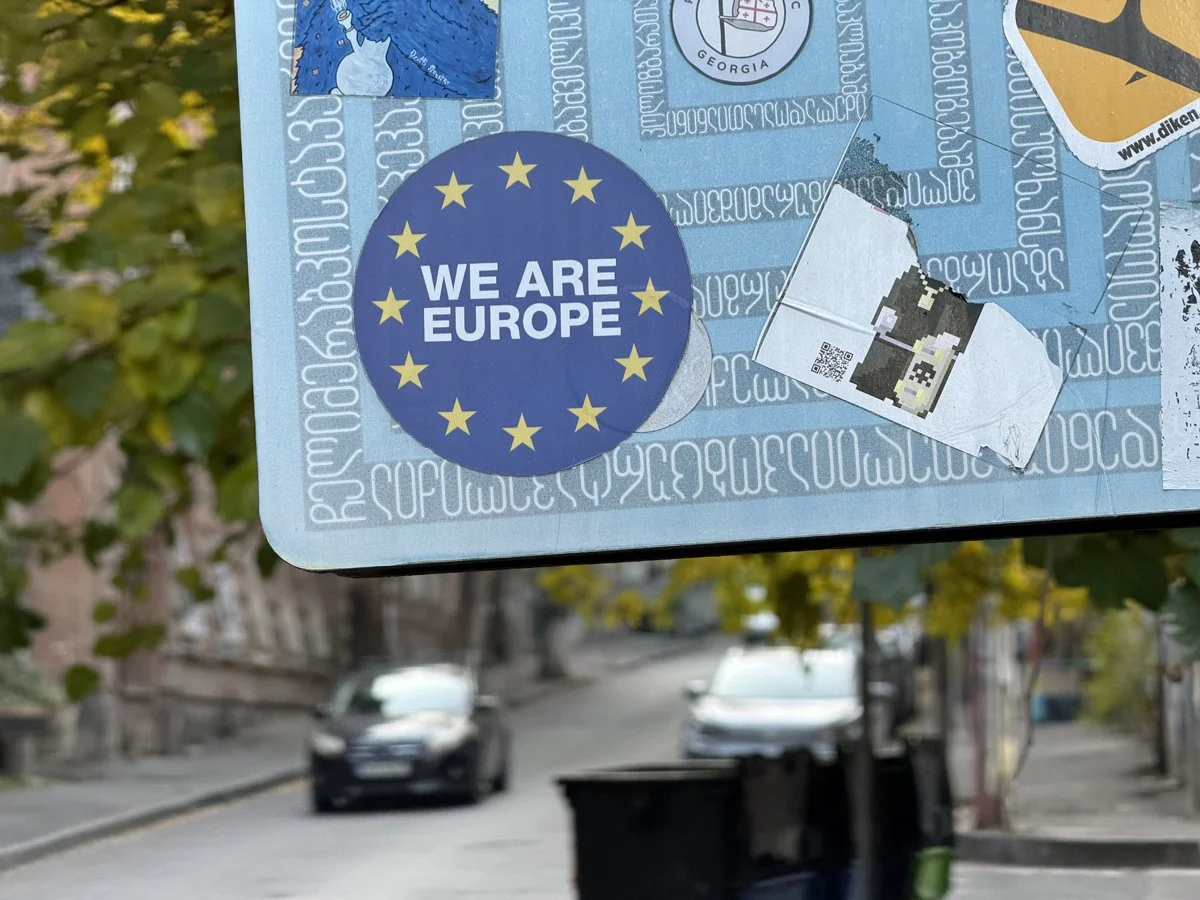
Most Western Europeans do not consider Georgia to be part of Europe, but geographically it is European, and post-Soviet generations of Georgians consider themselves European as well. The war against Ukraine has further cemented this European outlook among the people. It is tragic that a pro-Russian government has taken power.

After some walking around it was time for dinner. I walked into Racha on 4 Mikheil Lermontovi Street. This is a somewhat old fashion restaurant. You order at a counter and the lady uses a number rack to calculate the amount, only to be paid in cash. I opted not for the healthiest option: Jigari (ჯიგარი): entrails. According to the menu it was pork entrails, but it can also be made of veal intestines. The jigari at Racha was rather dry. I have also seen recipes simmered in white wine and tomato sauce and included herbs as: dried summer savory, caraway and black pepper.

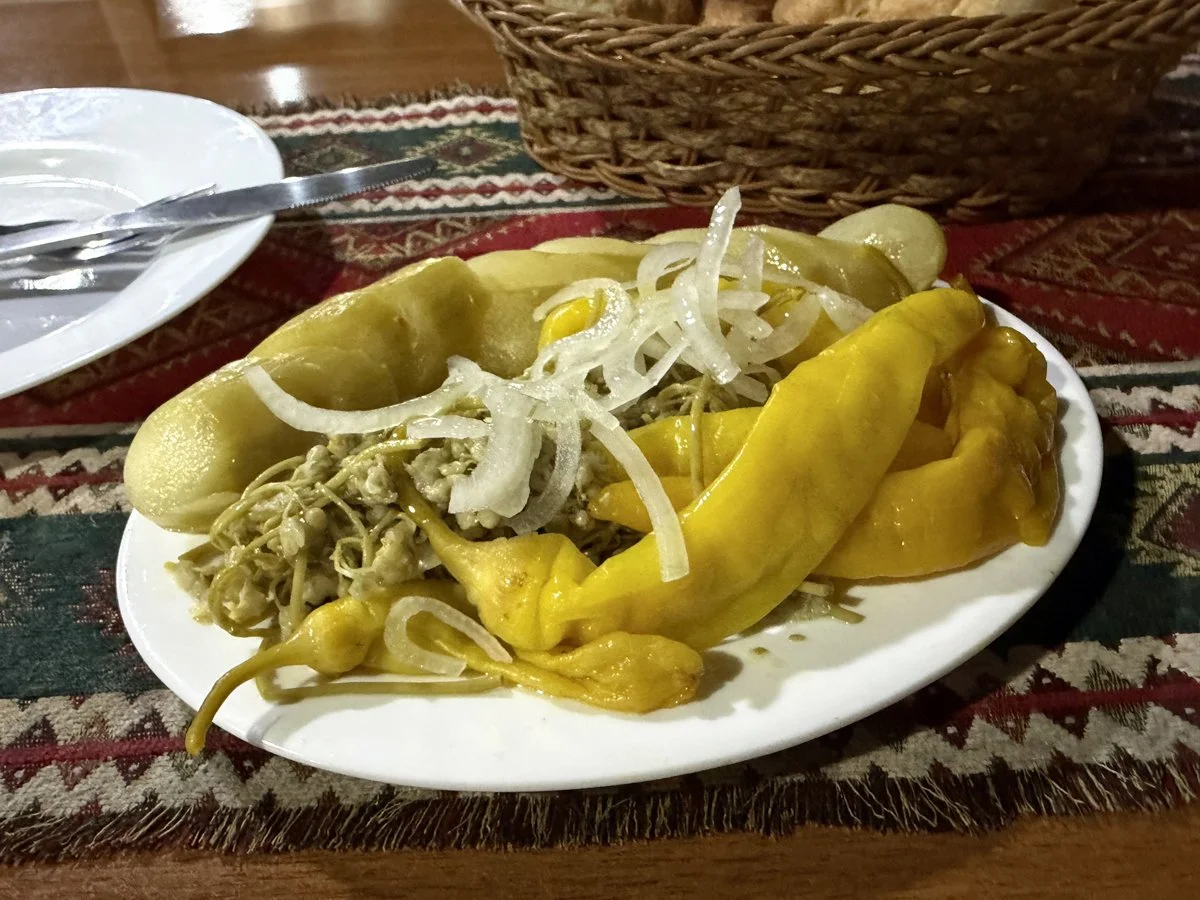
More pickles!

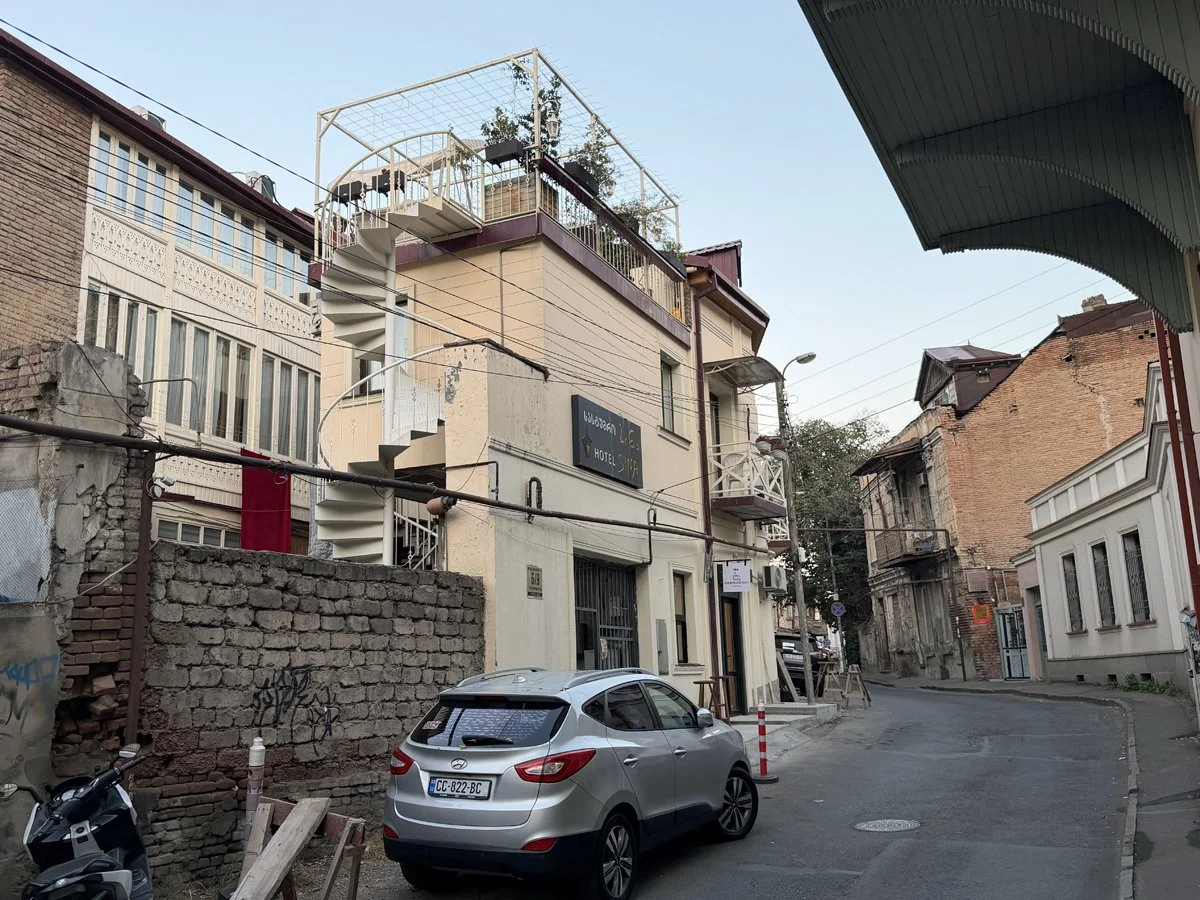
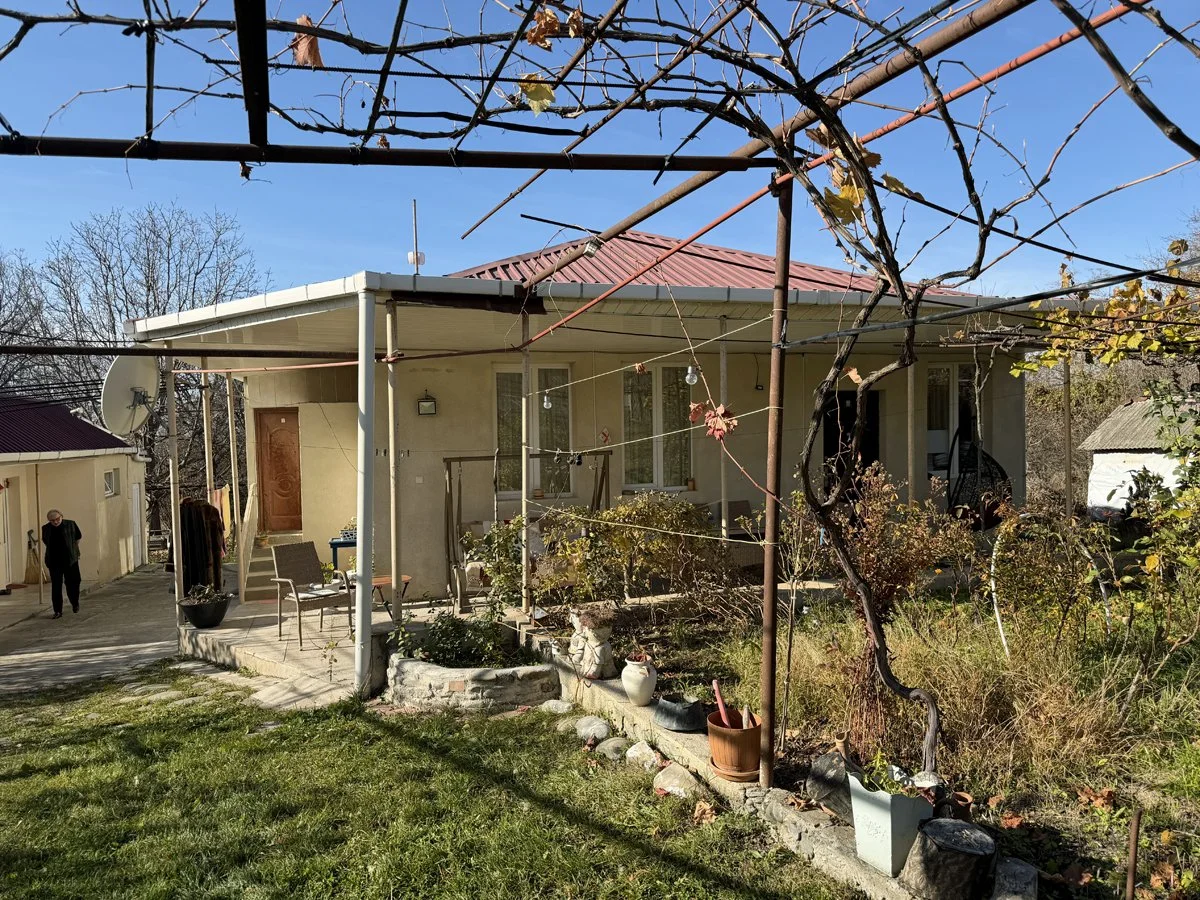
My apartment with “synagogue view” from the outside.

Chreli Abano Sulphur Baths
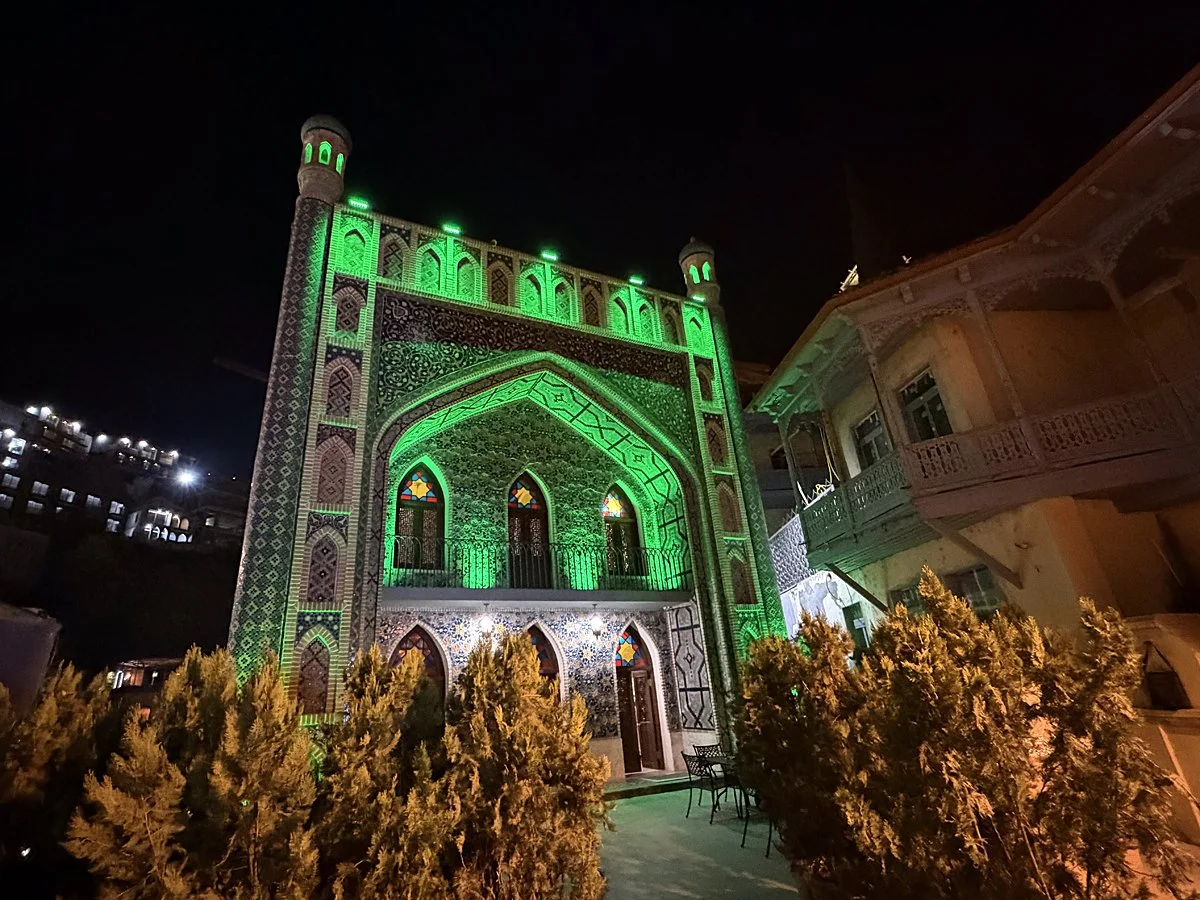
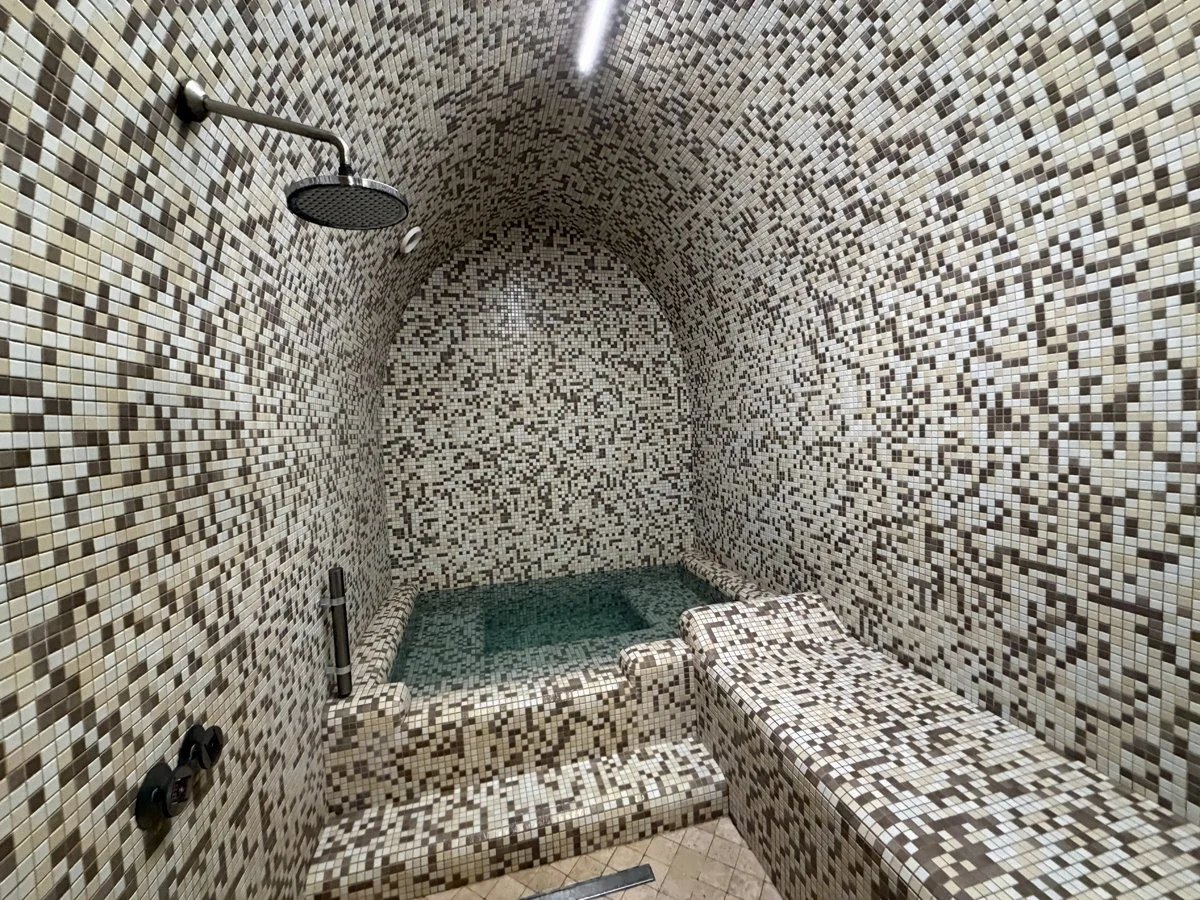
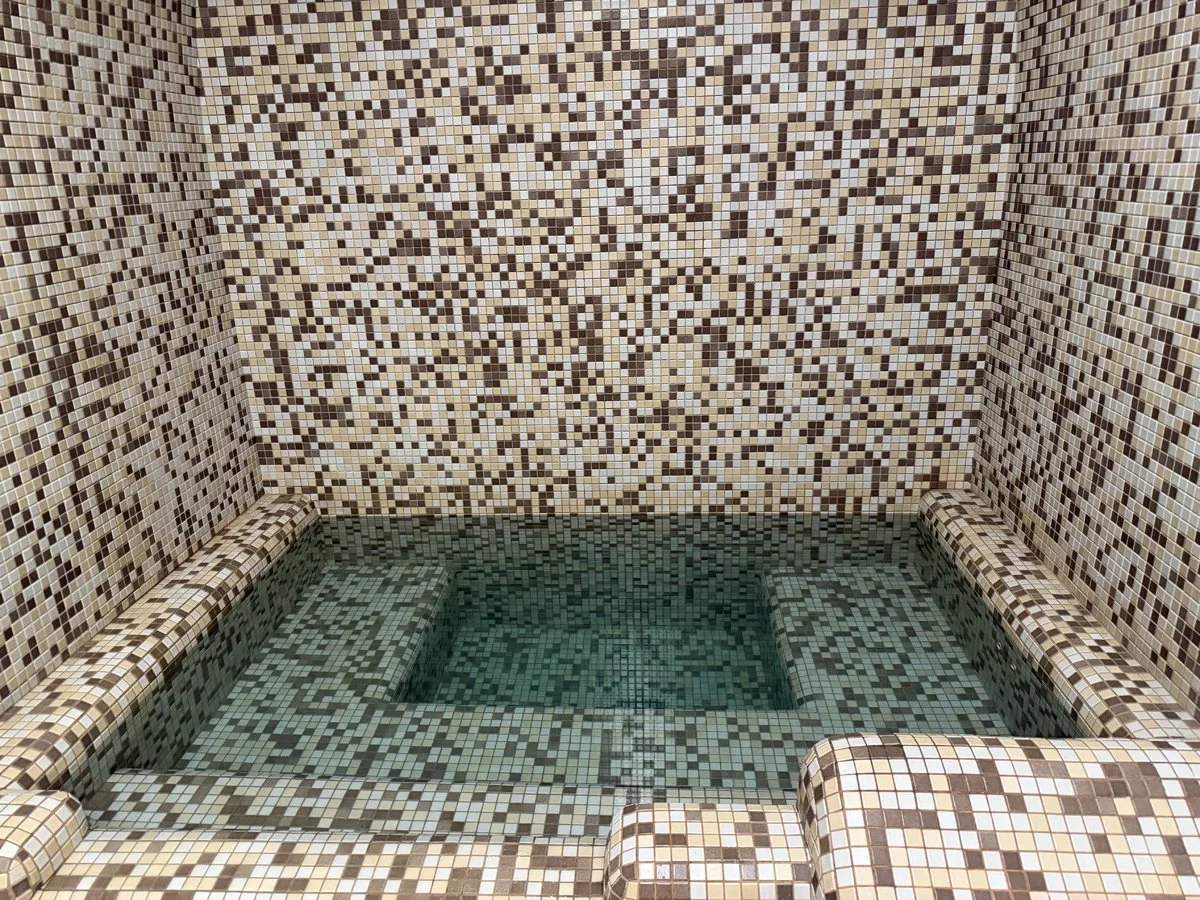
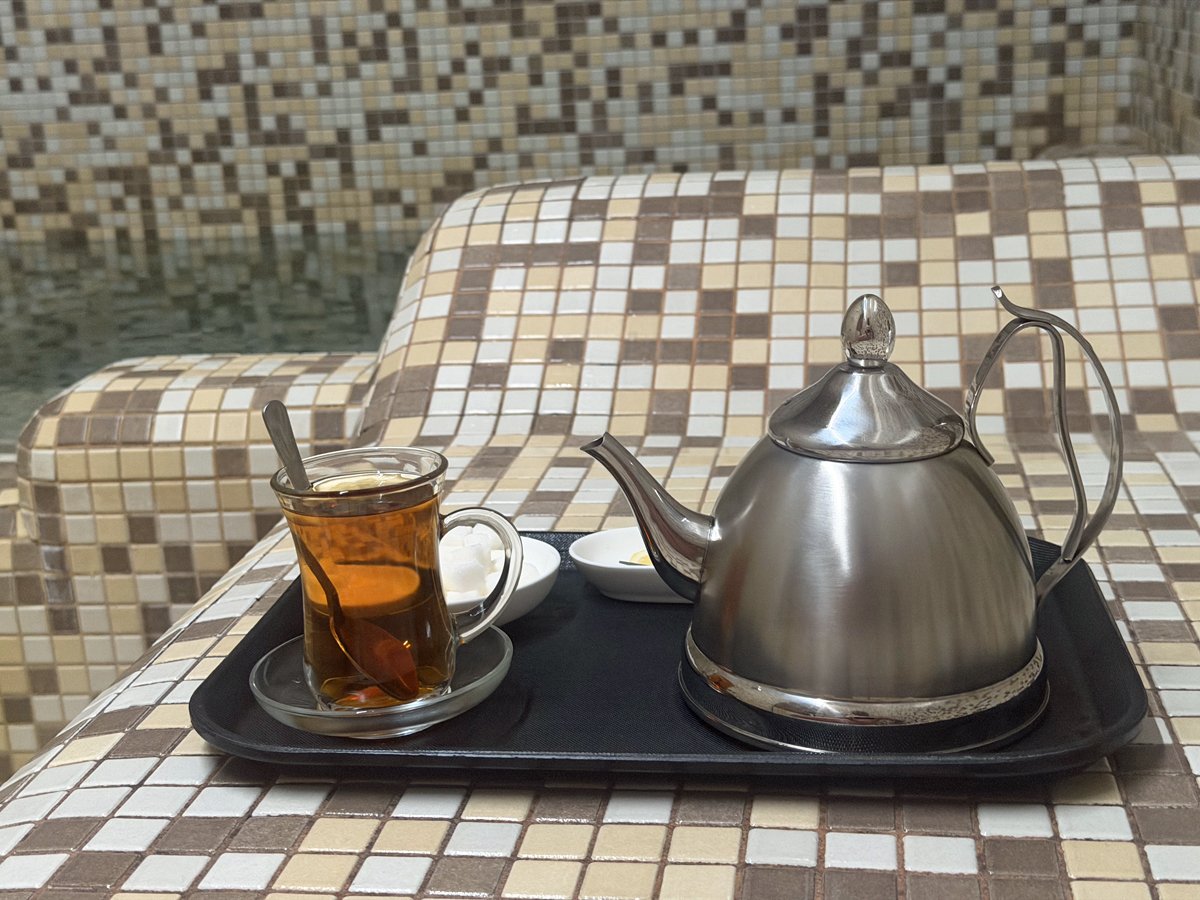
You can’t visit Tbilisi without going to a sulphur bath. Some are public, but the Google reviews were concerning: multiple visitors reported that the masseur seemed intent on killing them. Not out of fear, but out of preference, I opted for a private room, which was quite pleasant. I ordered tea, which was brought to me, and was advised to spend 15 minutes in the sulphur bath, take a cold shower, and repeat until the hour was over. The colorful Persian-style tiled façade of the Chreli Abano Sulphur Baths was constructed in the late 19th century, around the 1890s.
Since I was alone for a full hour and had time to reflect, I realized how rare it is for me to have a full hour without being online. When I’m not sleeping, my iPhone or iPad is always with me. I check the news at least a couple of times a day, and when I’m not reading the news, I watch 1990s music videos or people prepare Vietnamese or Indonesian recipes on Instagram—the more chilies or fermented fish sauce, the better. I rarely comment on social media.
It was hard to focus on nothing while submerged in the hot water. I imagined my father dying. A faint panic took hold, and it was time for the cold shower. After an hour, I did feel reborn.

After the baths, I went to bed early, but once back in my apartment I heard the loud noise of the protest—they were marching right down my street! I quickly got dressed again, locked the door, and joined the procession all the way to Freedom Square.

I didn’t know who the man in the green cap was, but he seemed to be one of the leaders that night. By the end of my journey, I would learn his name.

On Sunday, 23 November, the day I left Georgia, police crept up behind Davit Gunashvili and detained him while he was peacefully marching with other protesters. Davit had only recently been released from administrative detention. I can’t be completely certain, but Davit Gunashvili was wearing exactly the same outfit as the man I had been standing close to. I am confident that the man I photographed was Davit Gunashvili.

In Tbilisi, I started following @rusudandjakeli.bsky.social on Bluesky. Most online communication about the protests takes place in Georgian, mainly on Telegram or in Facebook groups, so I had to rely on this English-language Bluesky account. I’ve been following it ever since and have watched the police grow more oppressive week by week. Just this past week (the third week of December 2025), police began arresting bystanders standing on the sidewalk.

Not my photo.

Next post: Blue fenugreek

Blue fenugreek

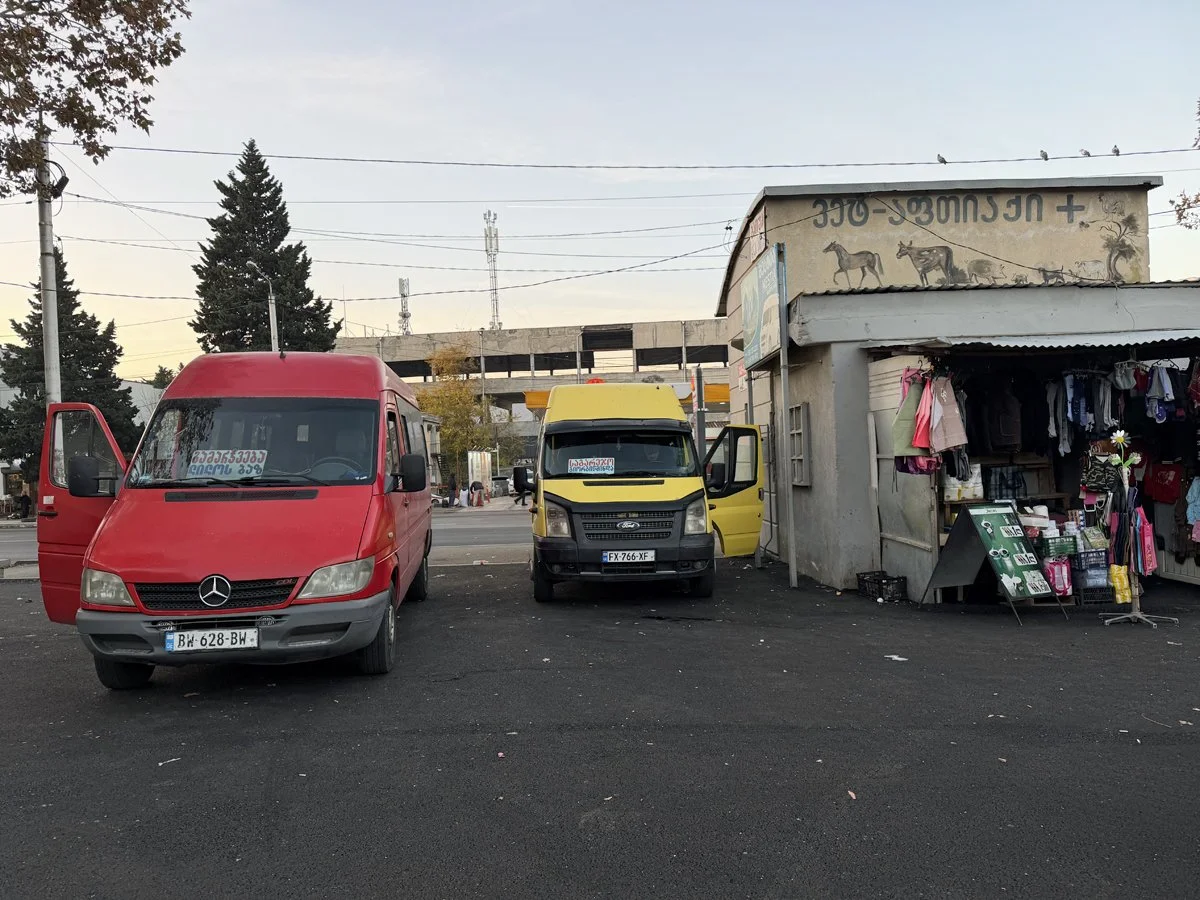
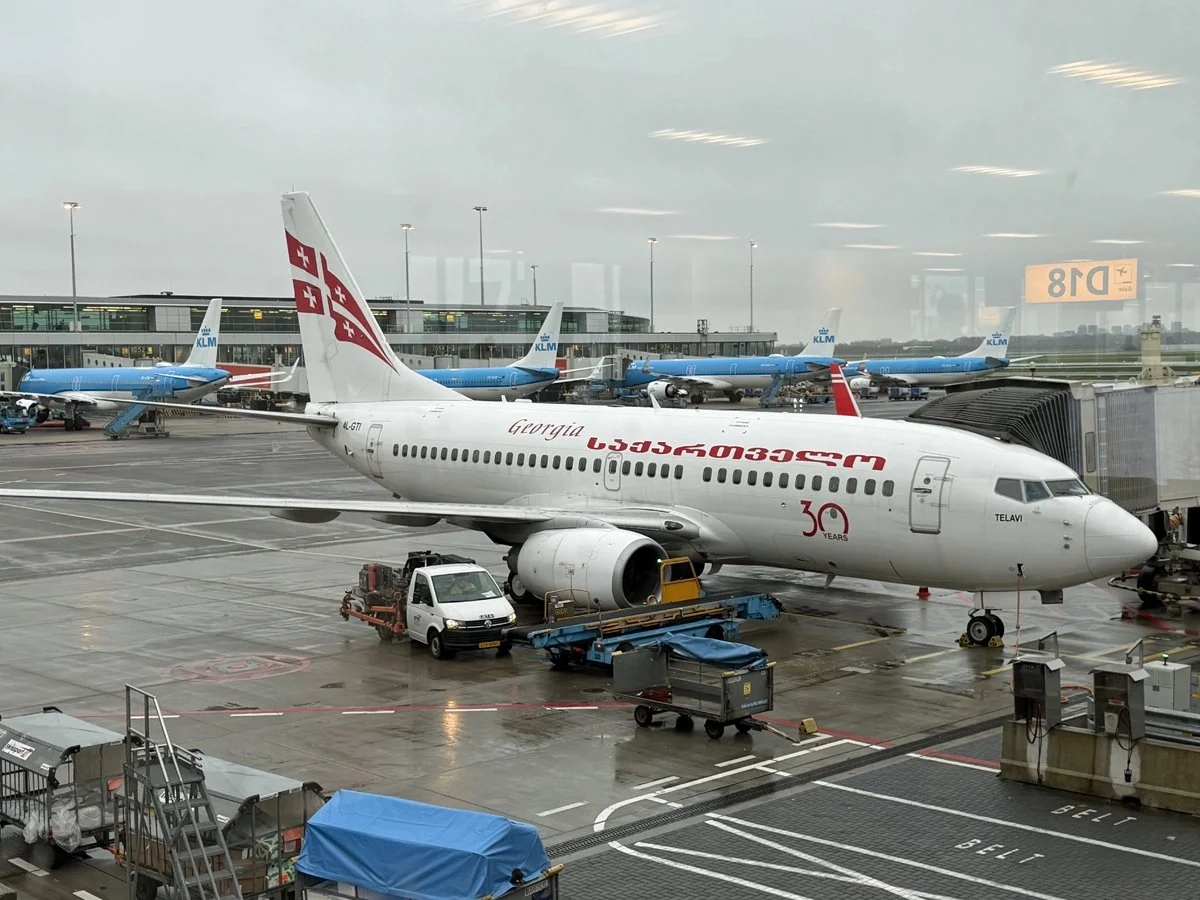
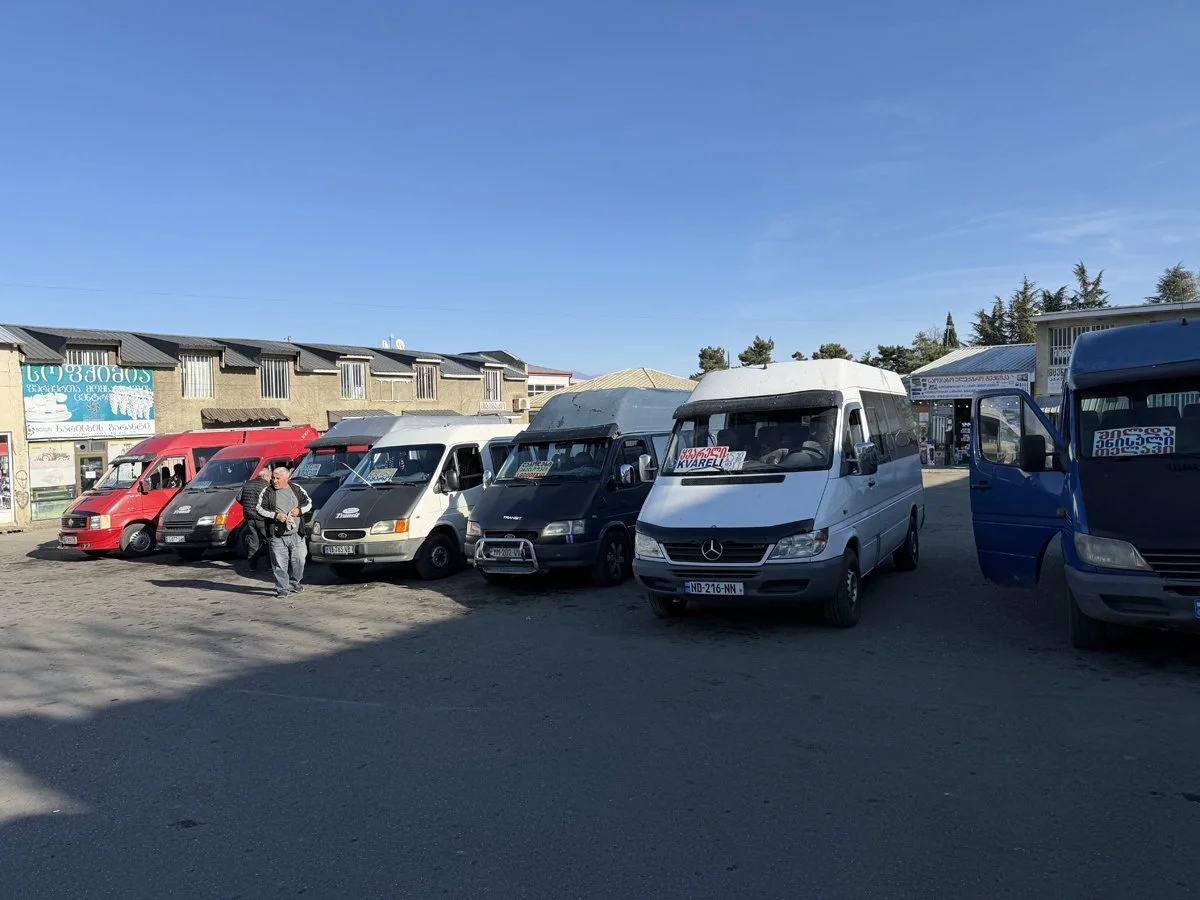
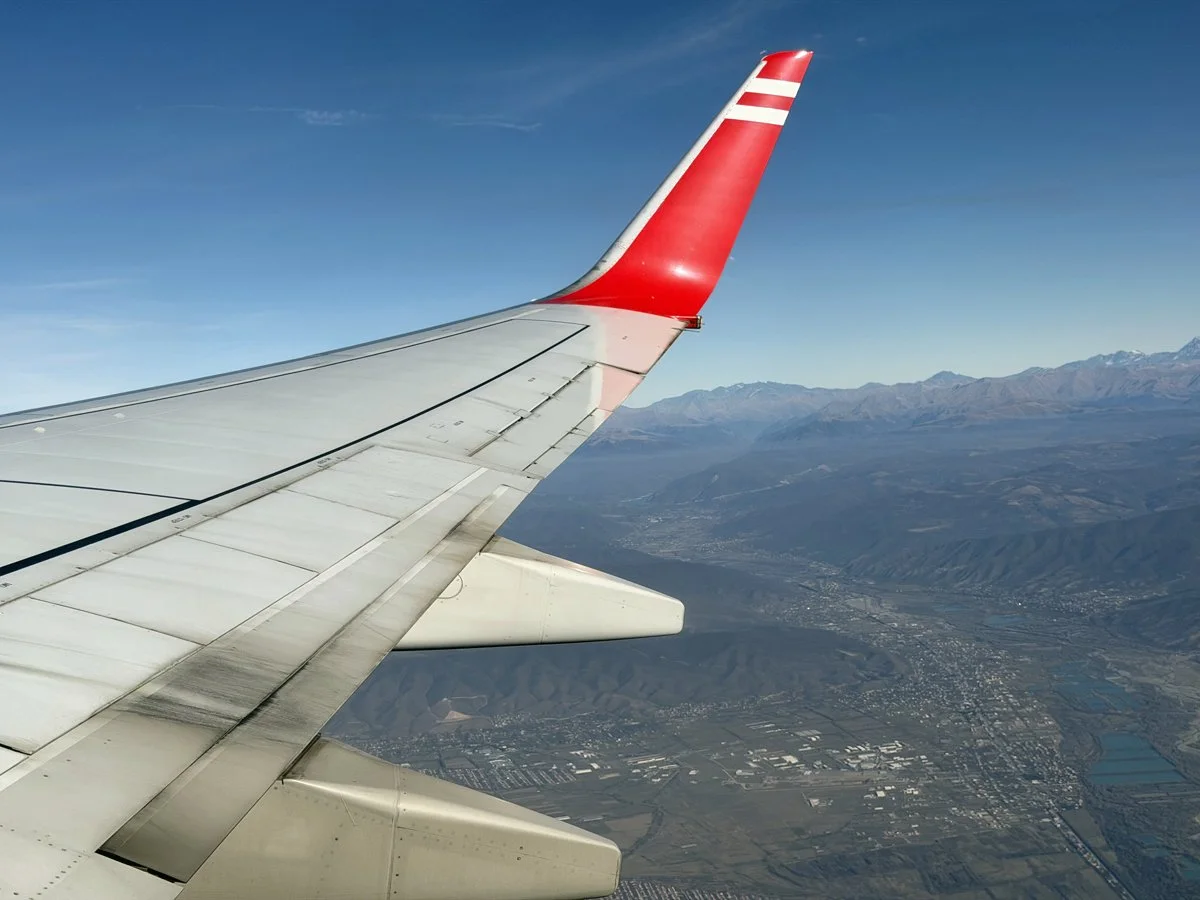
On Wednesday I took a day trip to Telavi. The main reason I ended up there was that my Georgian Airlines Boeing 737 was named Telavi. There was supposed to be a minibus leaving every hour from 8 o’clock in the morning. I arrived at 7:30, but it took almost two hours before a minibus with Telavi as its destination finally arrived. Then it took another half hour before the bus actually departed. My entire day’s schedule went out the window, and I didn’t really have a plan B.

This 737 has an interesting history. It was originally delivered to the Canadian airline WestJet in May 2008. Under the registration EK73786, it was operated by Aircompany Armenia from July 2016. In May 2017, it was re-registered as 4L-TGO and operated by Airzena/Georgian Airways, before being returned to Aircompany Armenia in July 2019. In June 2021, the aircraft was re-registered with Georgian Airways as 4L-GTI, where it remains in the fleet under the name Telavi.

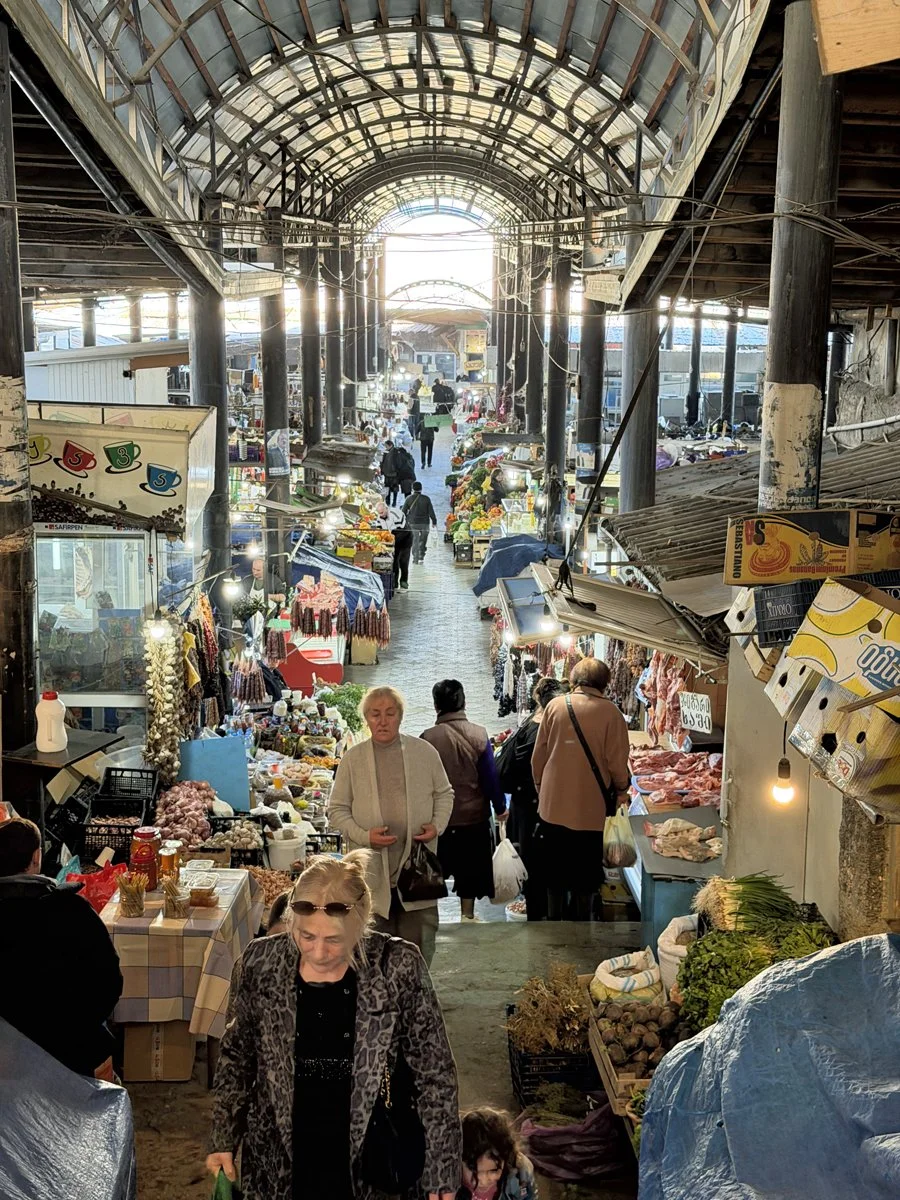
I arrived in Telavi after noon instead of early in the morning. Without having had breakfast, I was ravenously hungry. The minibus station was next to a market, which I found fascinating: cuts of meat I can only dream of. Dutch butchers don’t offer much meat I can use—I want bones and fat included. I don’t eat meat often, maybe twice a week, but when I do, I want it to taste good. Given the strong link between red meat consumption and heart disease, I started to wise up.

Driven by hunger, I walked into a restaurant more or less at random. After the first bite, I wasn’t pleased with the quality. I didn’t want to spoil my hunger by eating something mediocre, so I paid and left. I didn’t realize it would be evening before I ate again. I had no Plan A, and Plan B was still elusive.

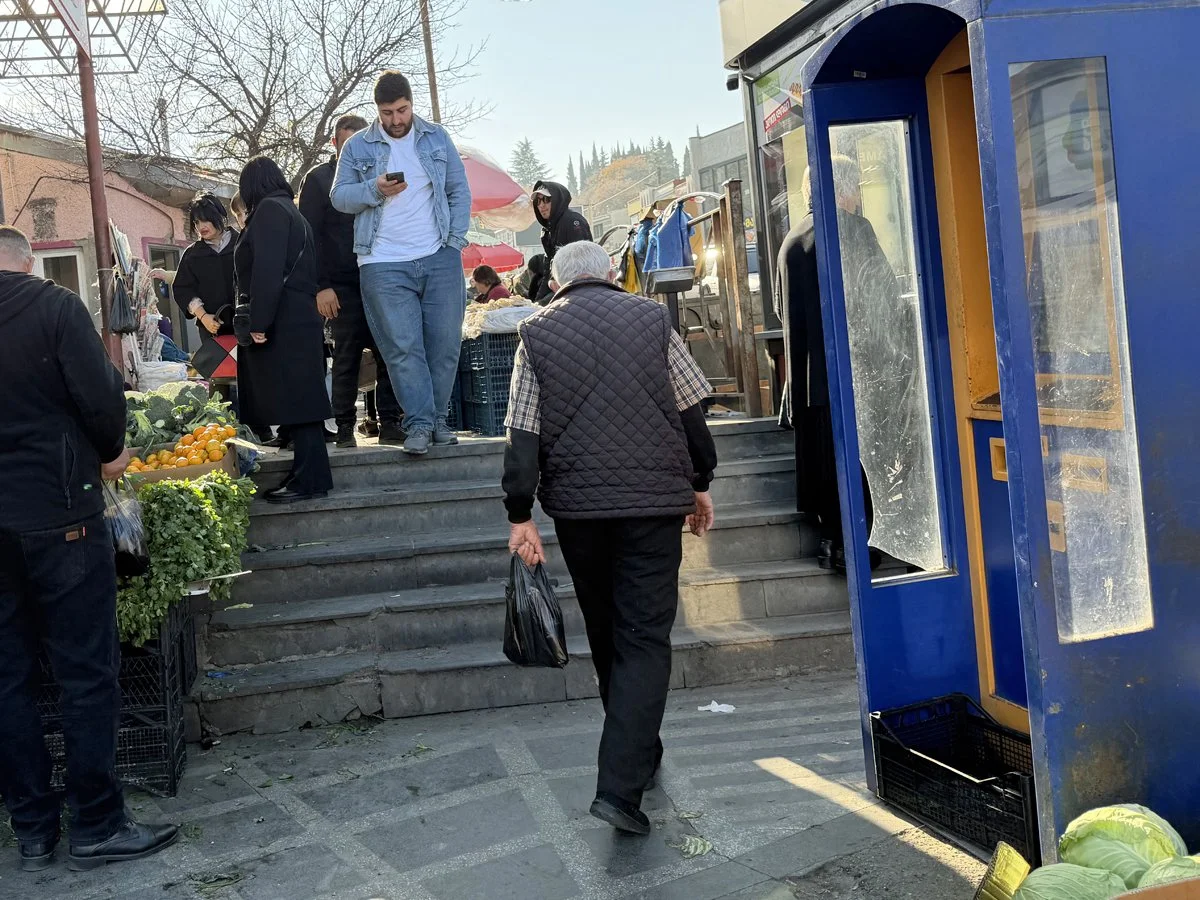
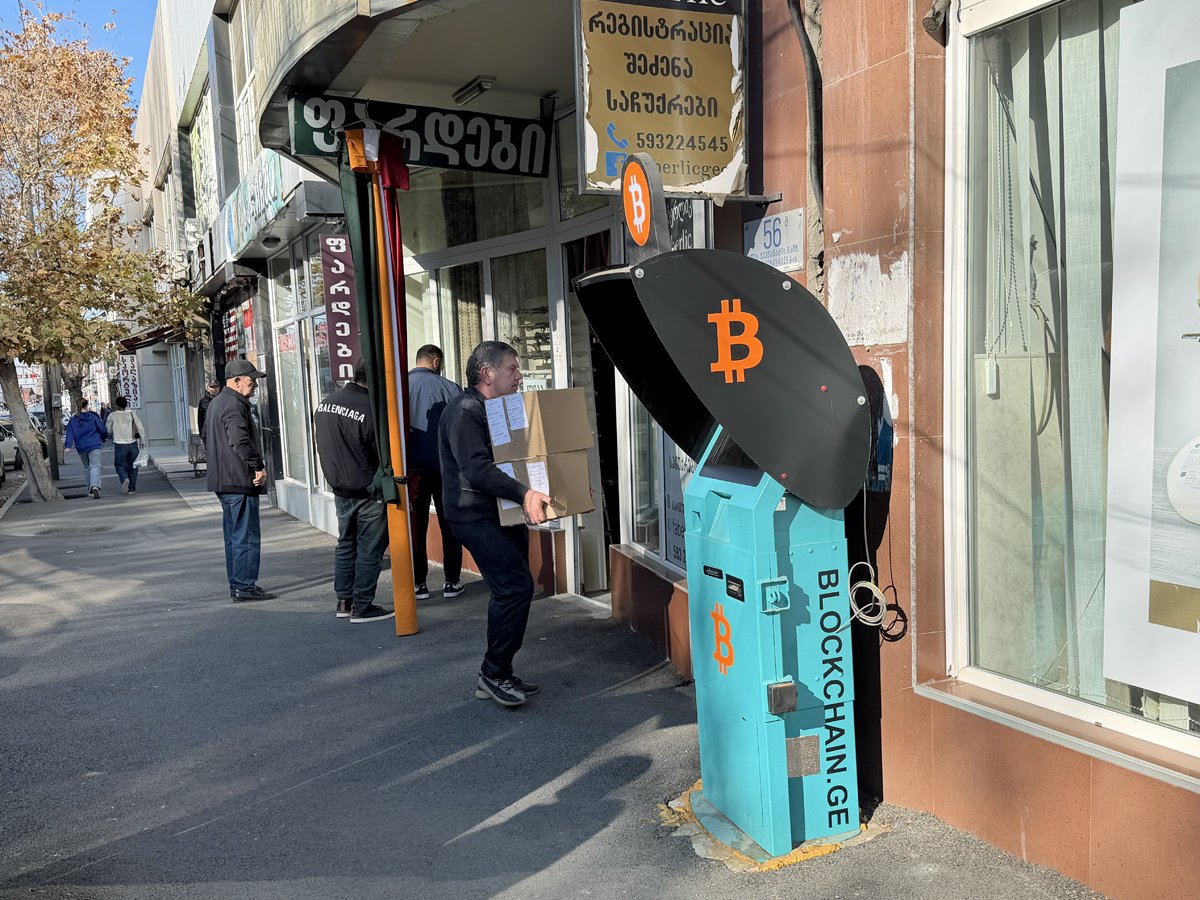
I had never seen an ATM with the Bitcoin logo before. Blockchain.ge is a cryptocurrency exchange and trading platform based in Tbilisi where users can buy, sell, and trade major cryptocurrencies like Bitcoin, Ethereum, and others. Georgia is considered crypto-friendly. It even attracts crypto businesses and mining due to low energy cost.

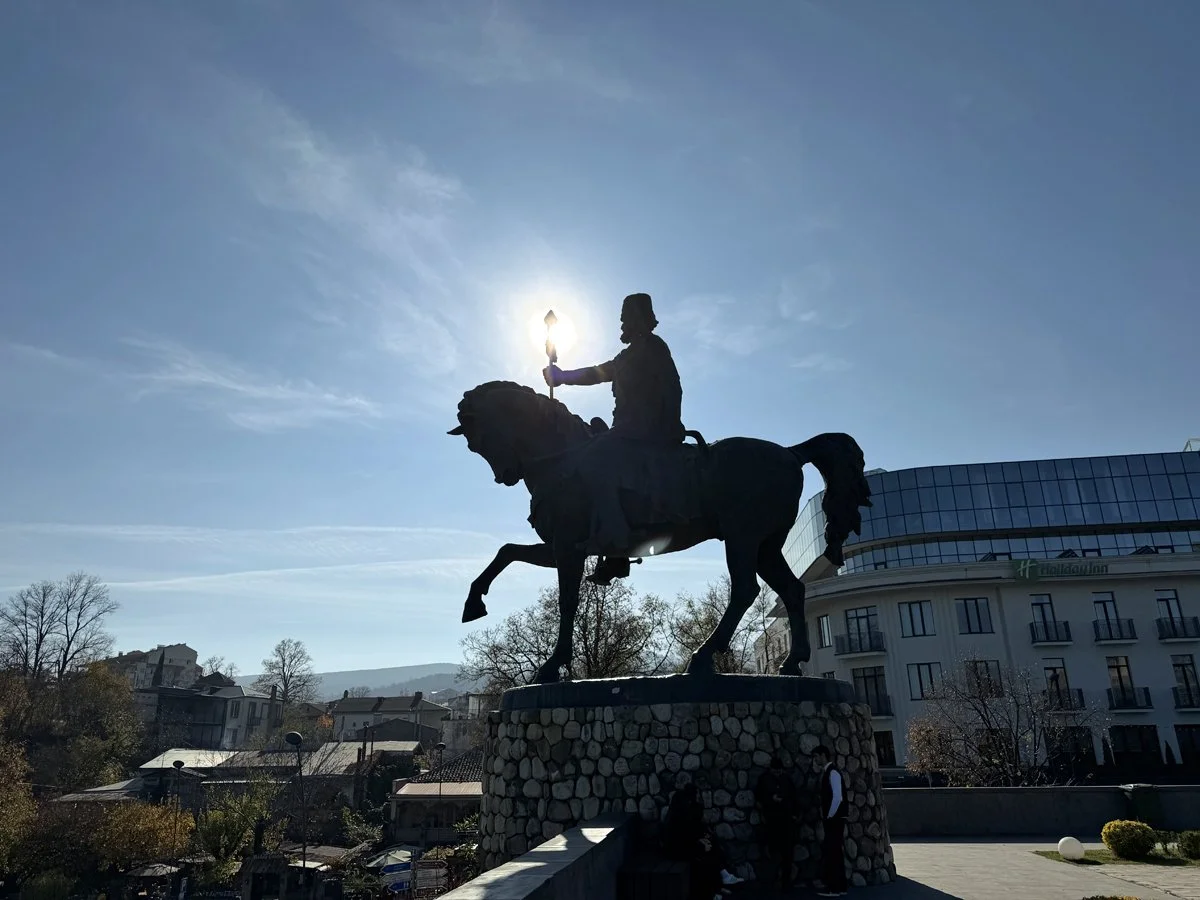
The statue of King Heraclius II (Erekle II). He ruled as King of Kakheti from 1744 and, after 1762, as the king of the united kingdoms of Kartli and Kakheti and attempted to strengthen Georgian independence amid pressure from Persia and the Ottoman Empire. In 1783 he placed his kingdom under Russian protection in hopes of safeguarding Georgia — a move that had complex long-term consequences for Georgian sovereignty.

I collected so many recipes and food ideas during all my travels that I was sure I wouldn’t go looking for another dish to try at home—until I read about blue fenugreek. I know fenugreek well and keep it in my kitchen, but I had never heard of blue fenugreek. The name alone was evocative.

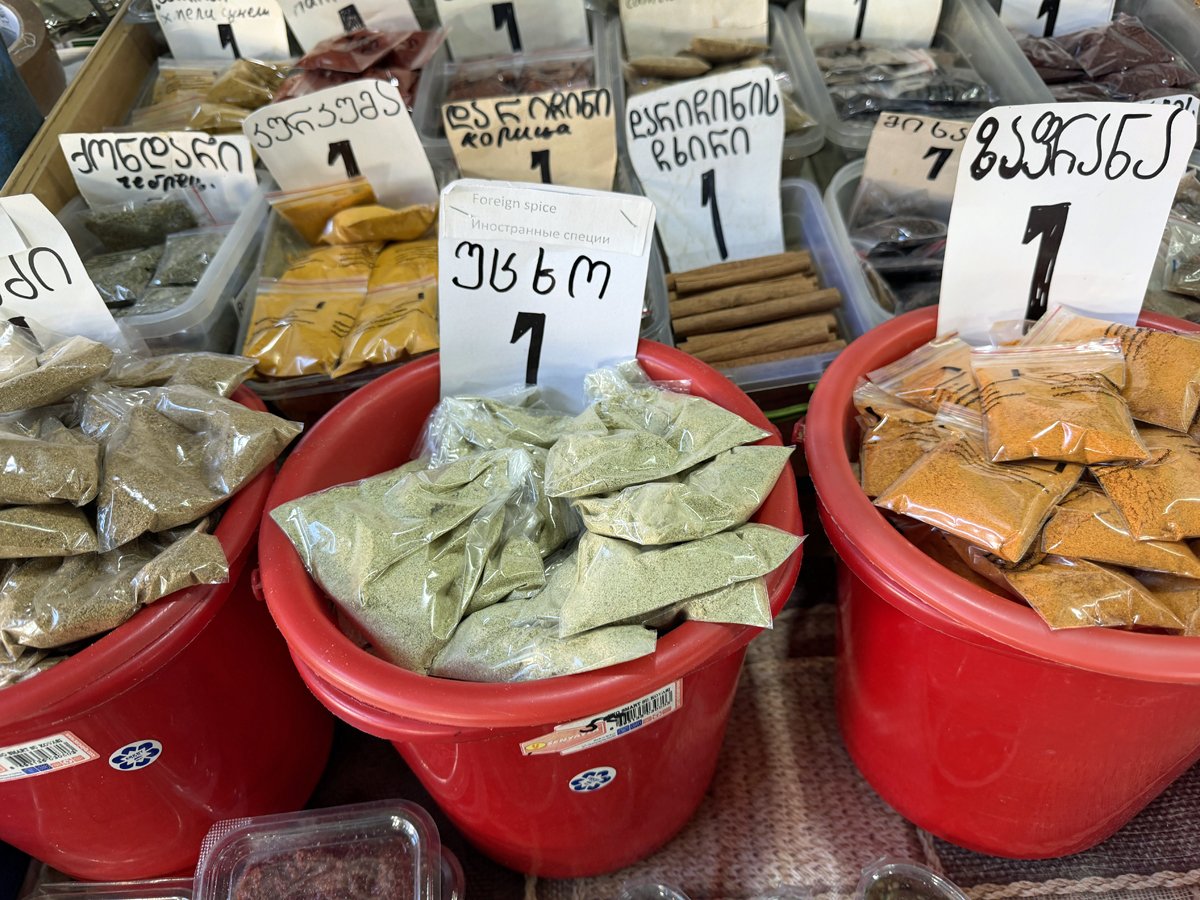
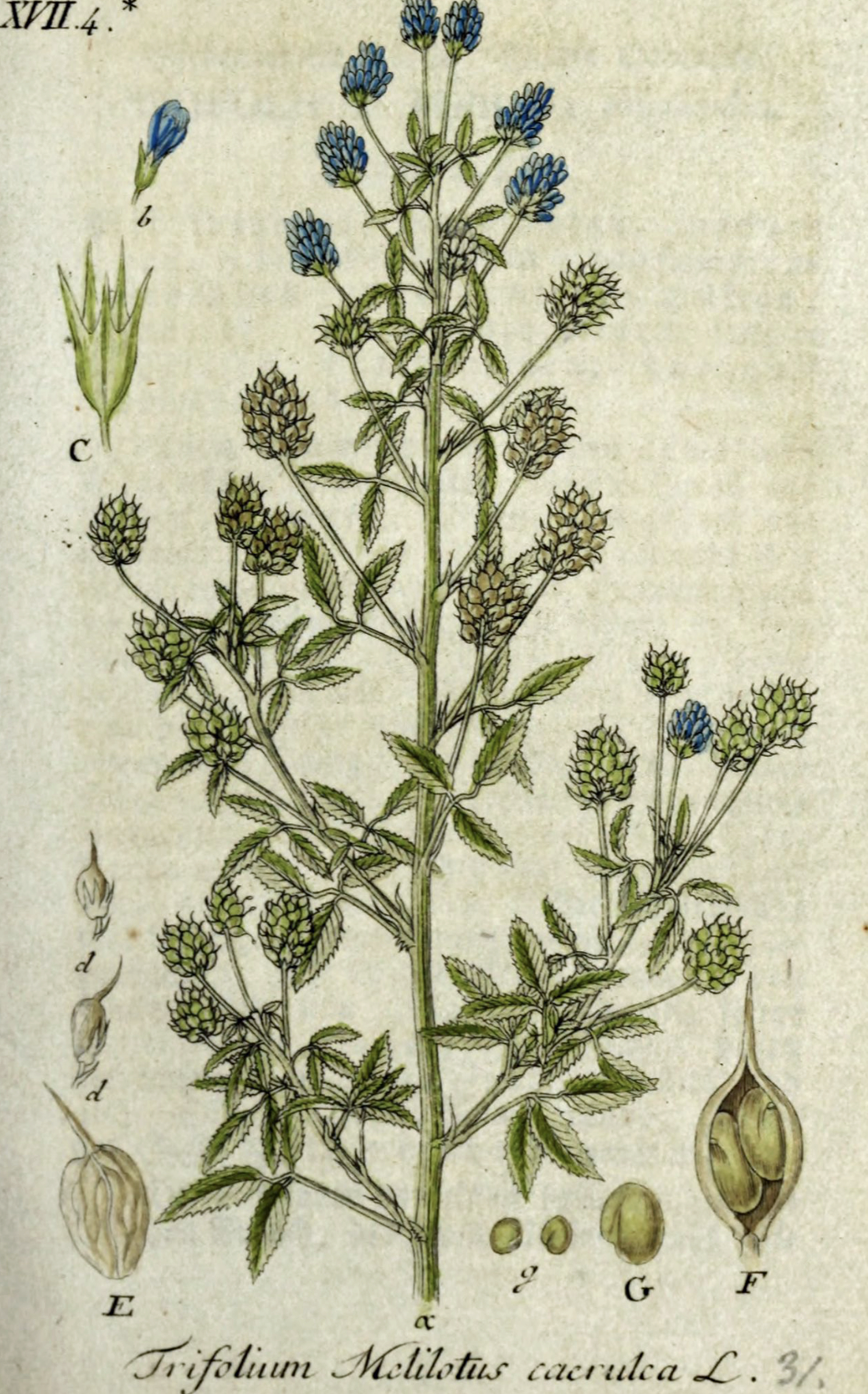
Blue fenugreek is the dried seed pod (and sometimes the leaf) of Trigonella caerulea, a plant related to common fenugreek but not the same species. In Georgian, it is called უცხო სუნელი (utskho suneli, literally foreign spice). Outside Georgia, it is used in the Swiss and Austrian Alps, where it is known as Blauschabziger or Schabzigerklee.

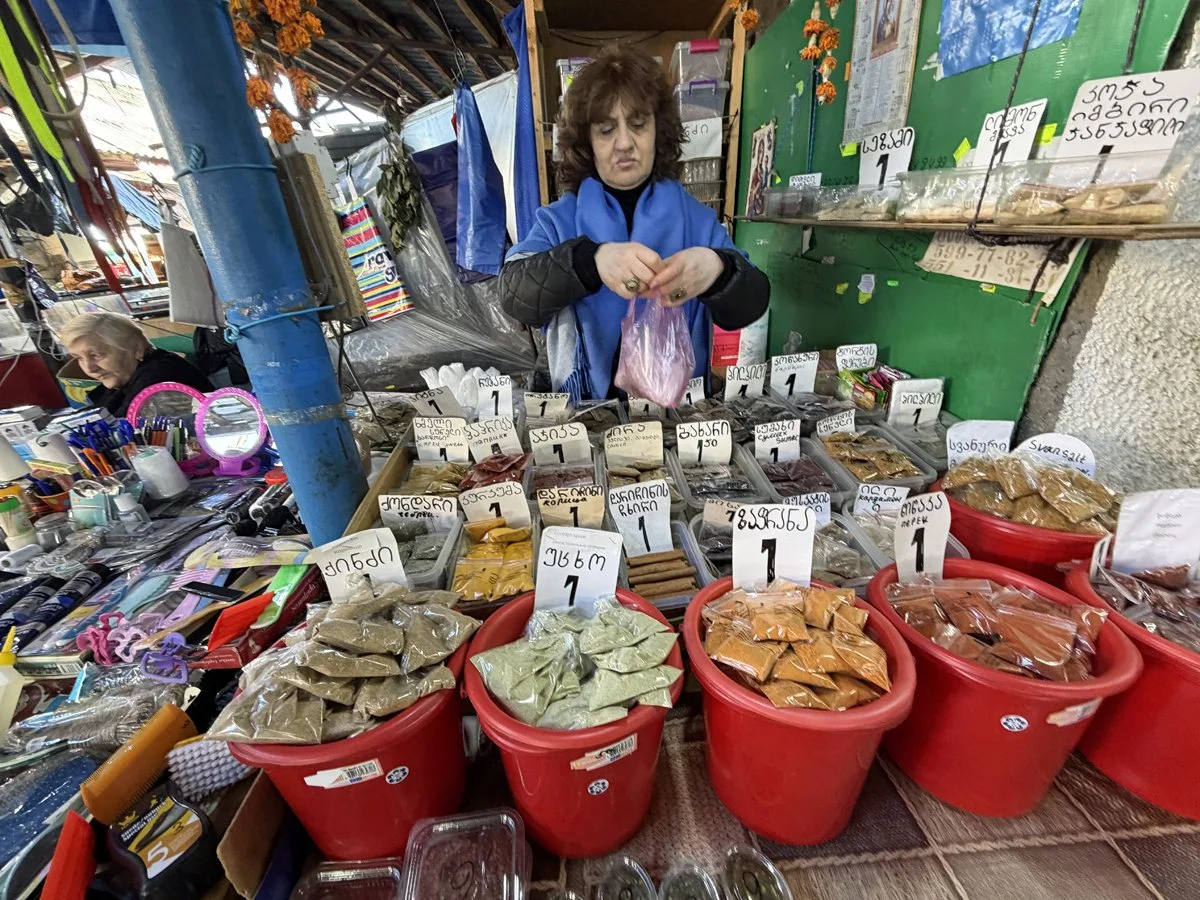
In Georgia, blue fenugreek is used in khmel-suneli (the country’s classic spice mix), lobio (bean dishes), adjika, satsivi, pkhali, chakapuli, and various walnut sauces and stews. I bought three packages and was given a fourth for free. Since then, I’ve been using it back in Amsterdam to flavor Georgian vegetable dishes and bean stews.

Deutschlands flora in abbildungen nach der natur" (1798).

The last minibus back to Tbilisi was supposed to leave before dark. I could have booked a hotel in Telavi, but I decided to head back to my apartment. I hadn’t had time to visit the vineyards, but you can’t have it all in life.

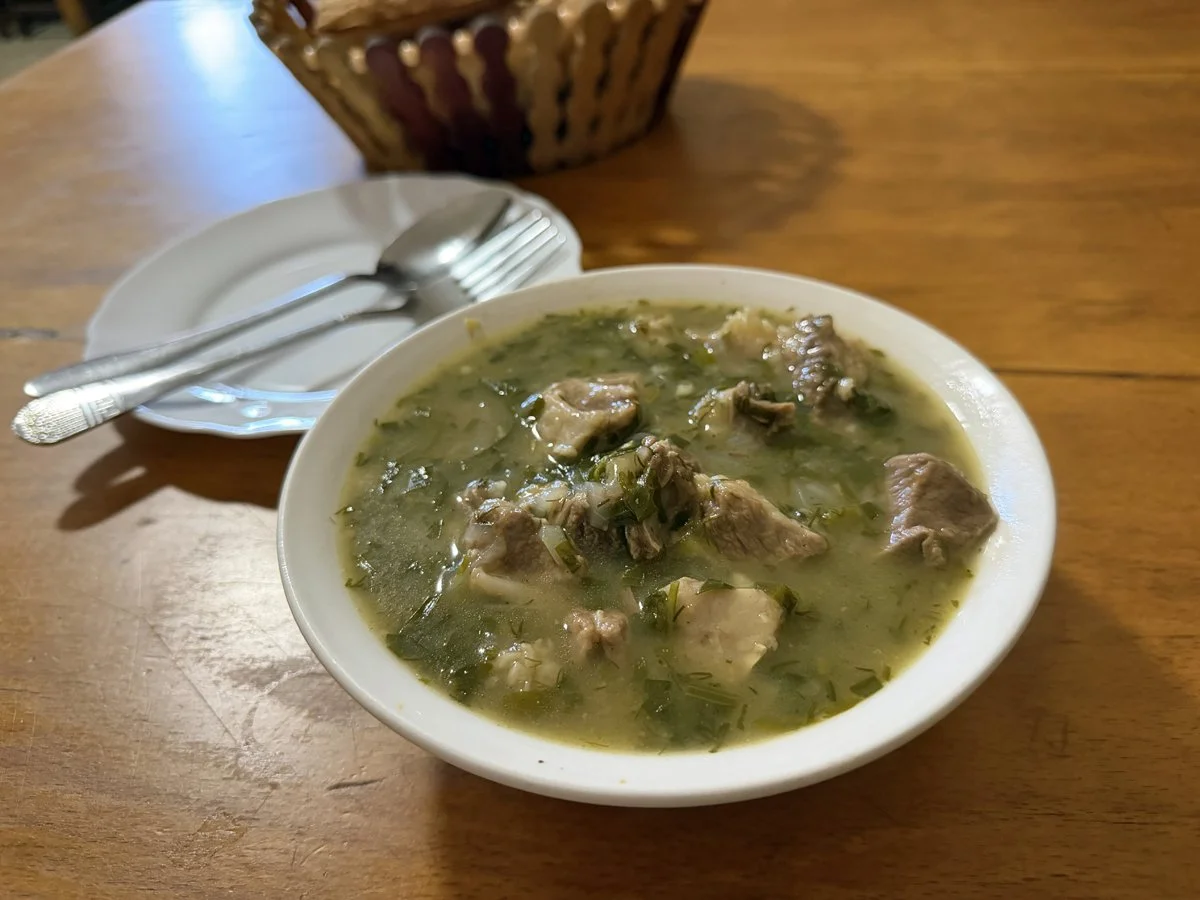
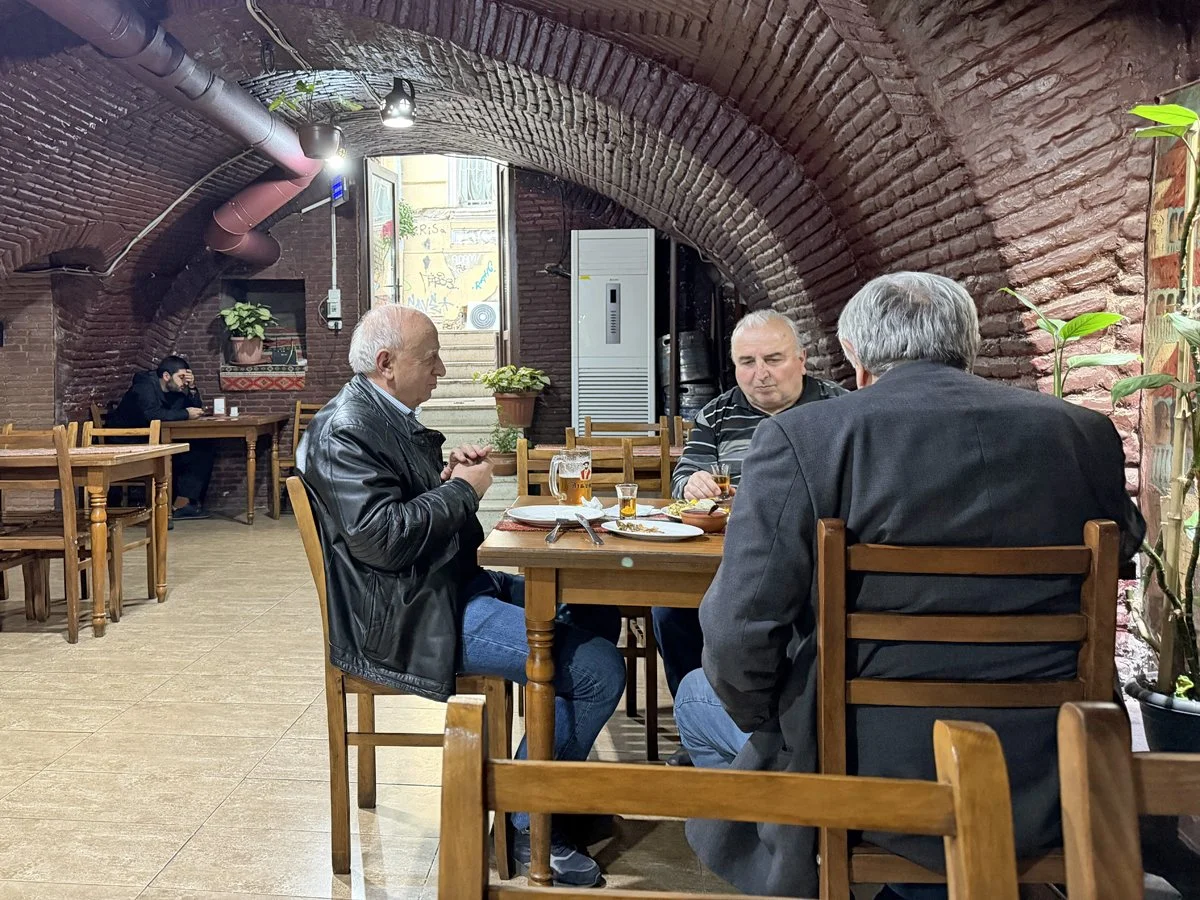
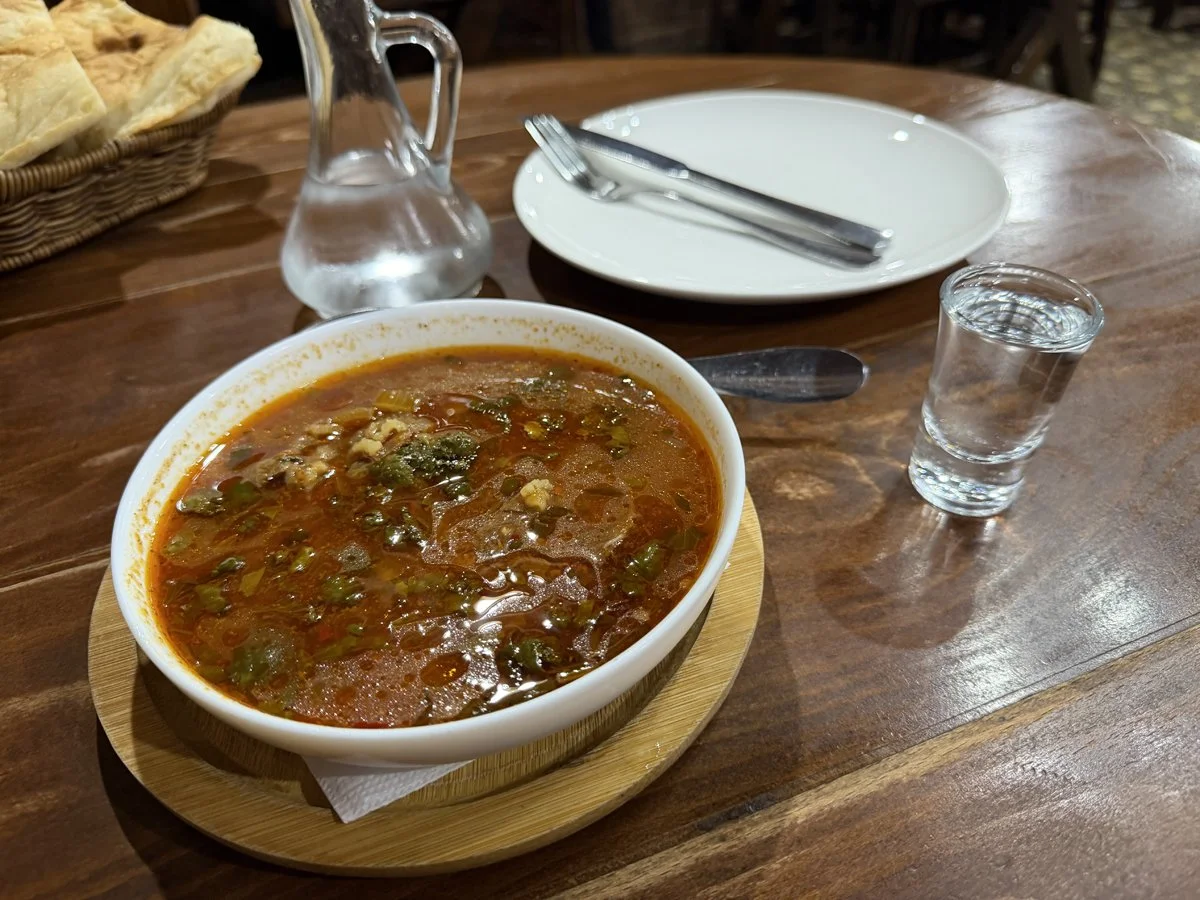
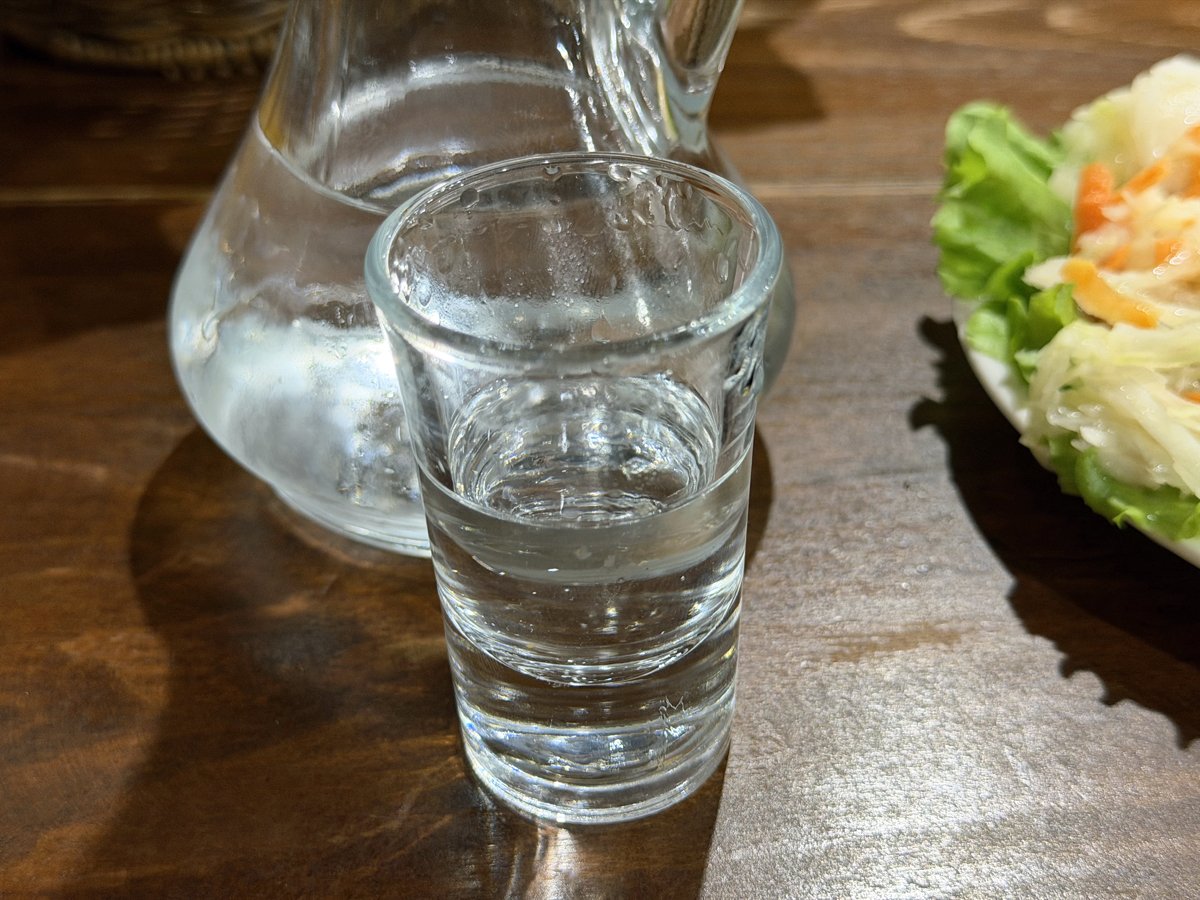
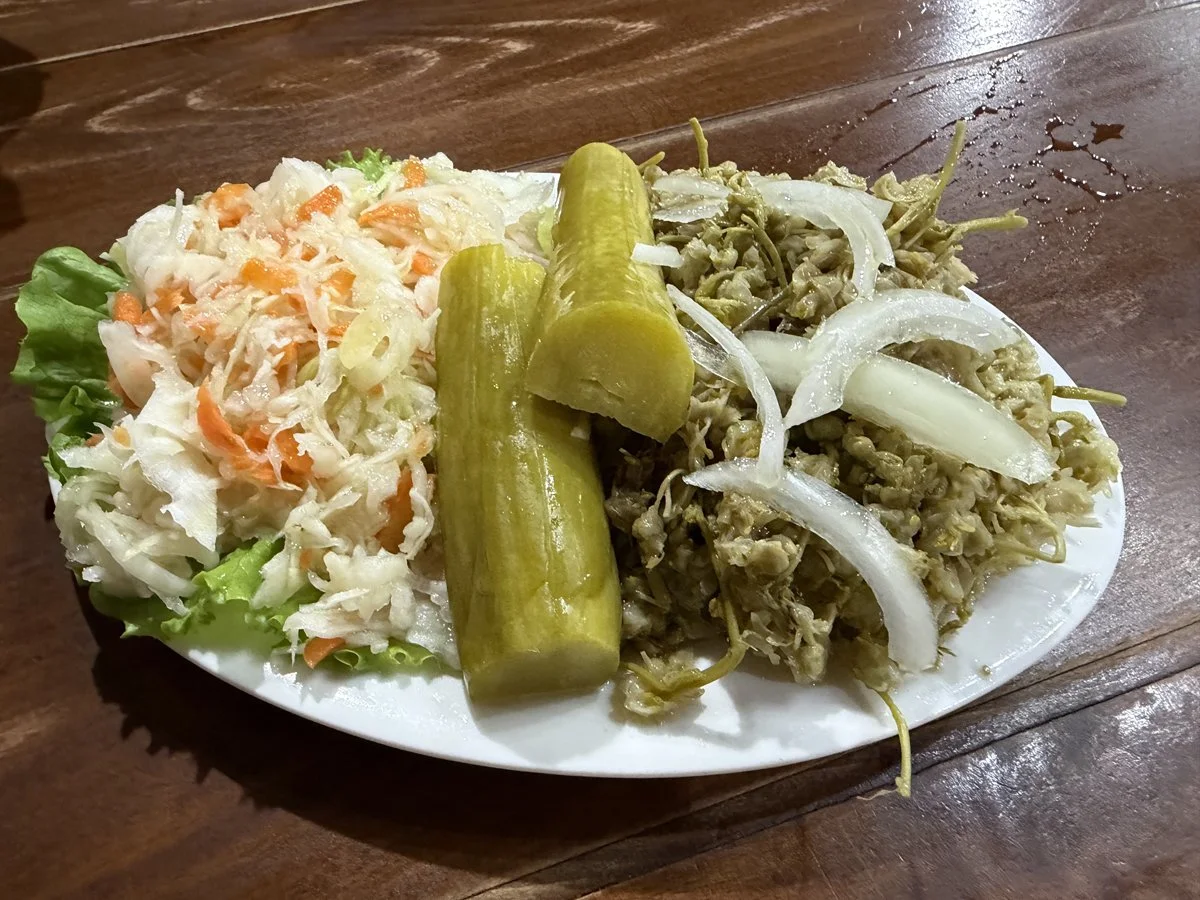
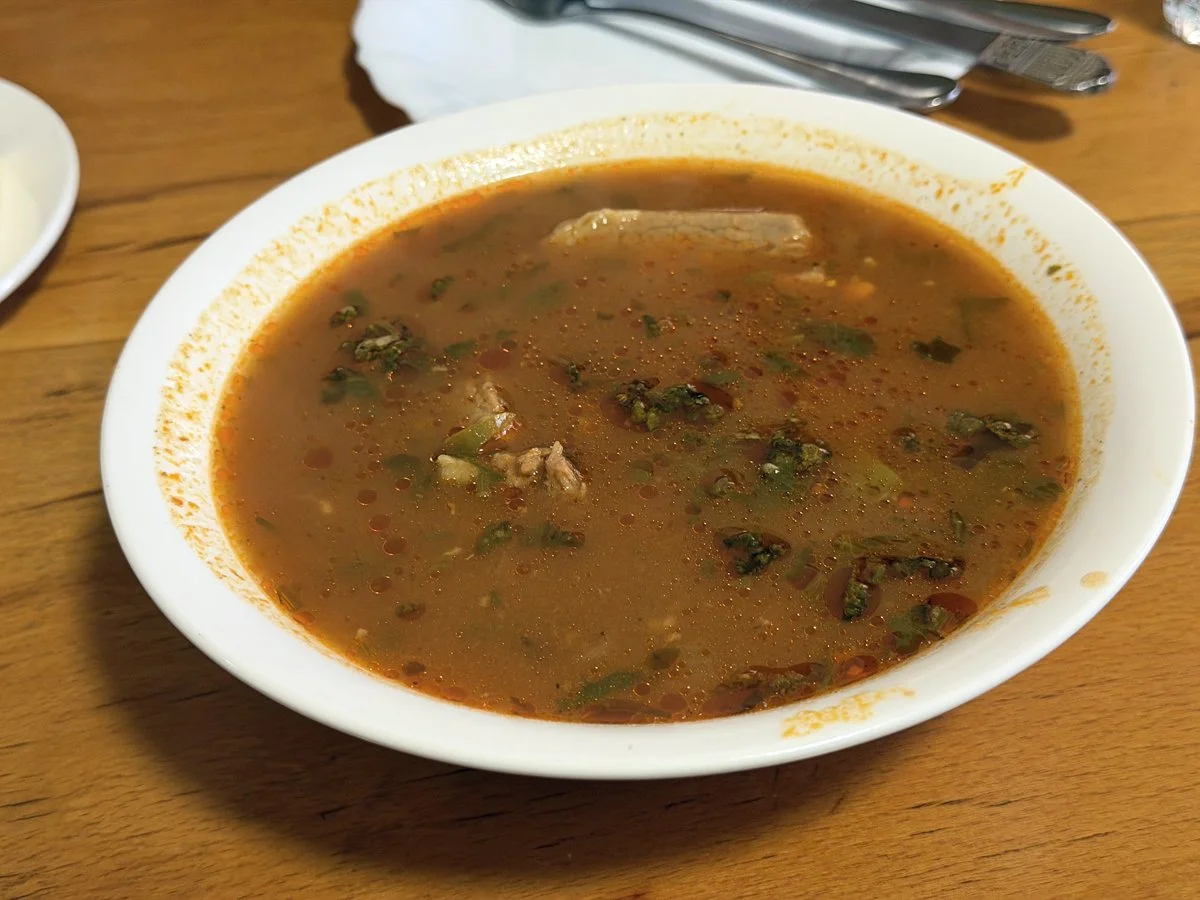
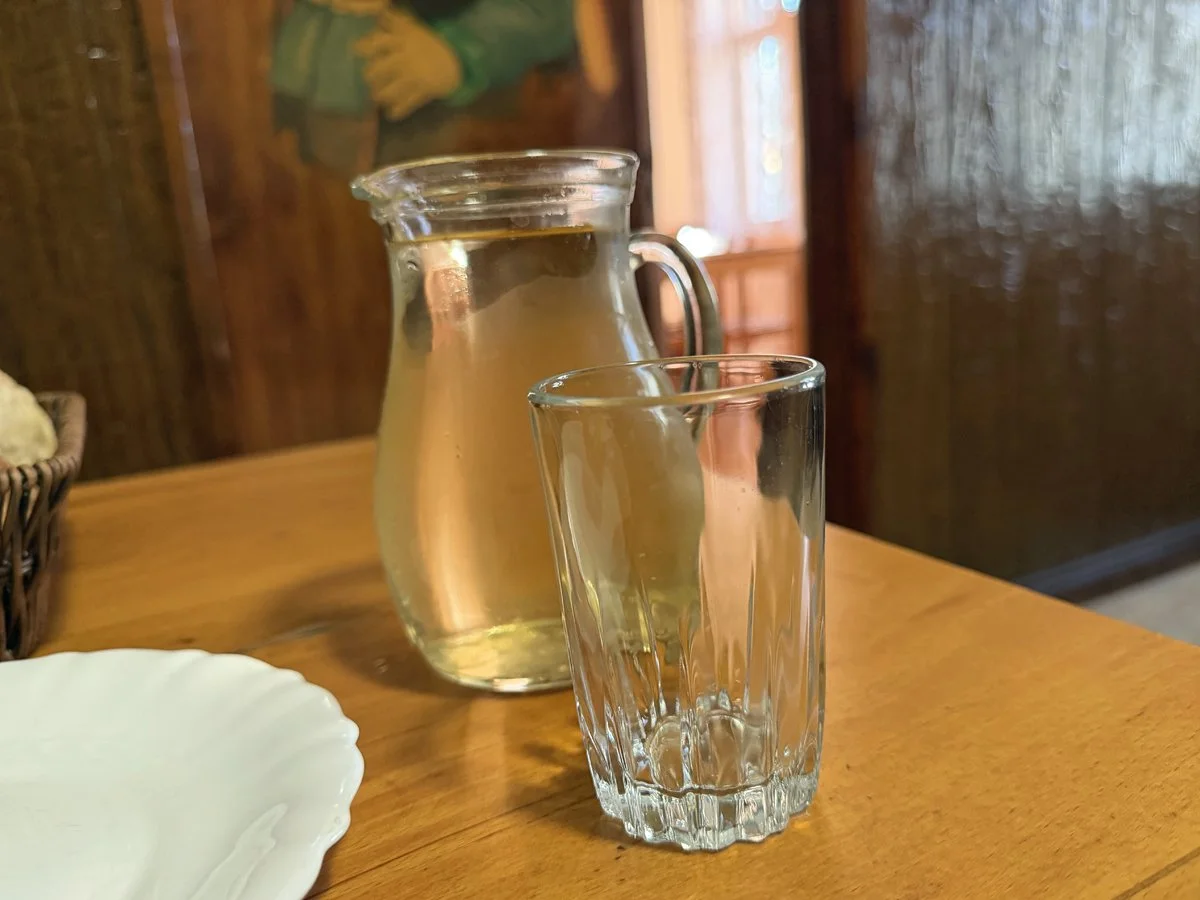
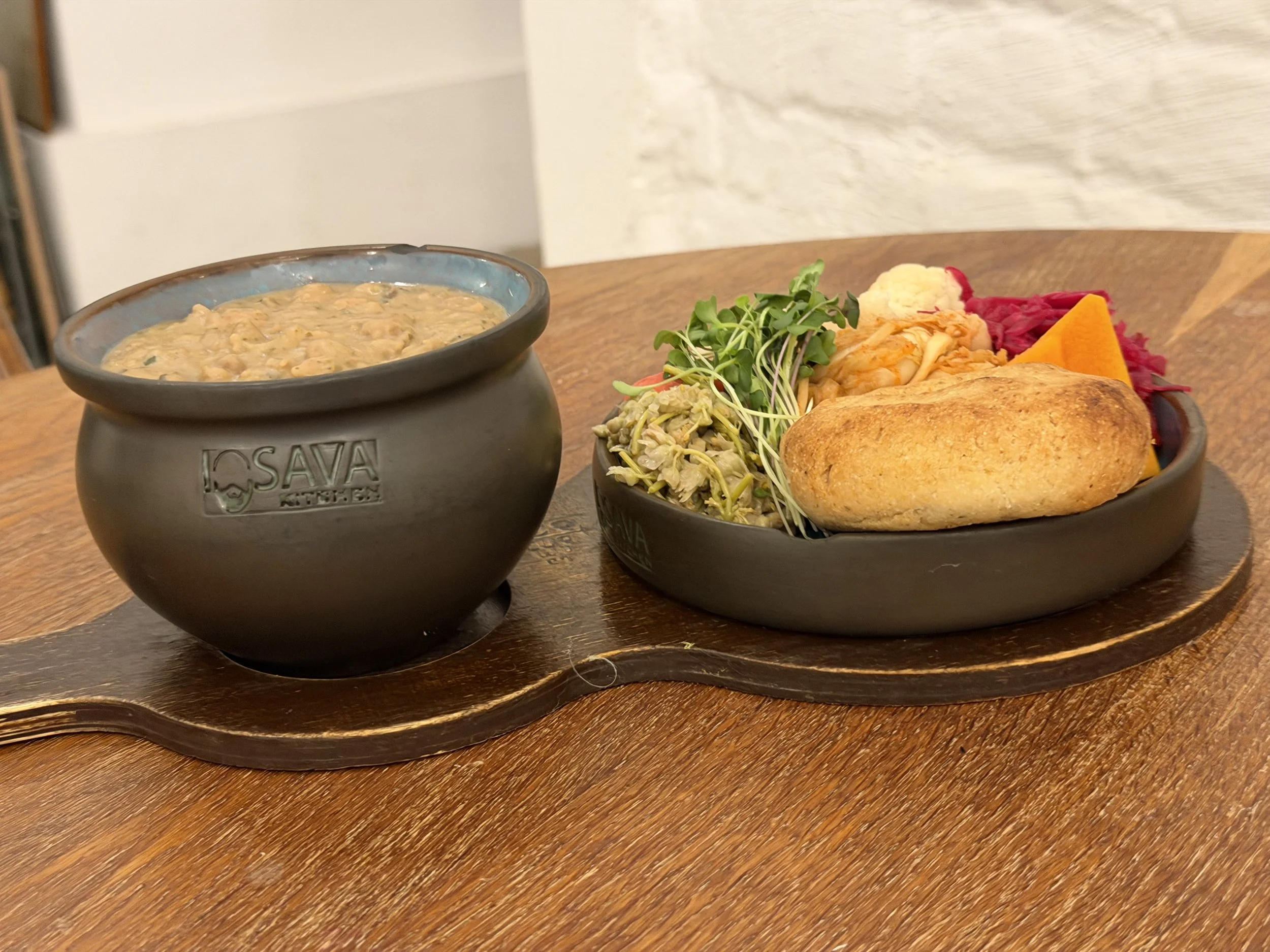
Back in Tbilisi, I returned to a place where I’d had a late breakfast on my first day. I ordered a soupy Kharcho stew, some pickles, bread, and a 0.25-liter glass of what I thought was 12-year-old aged wine. Or so I thought. I had simply ordered it from the wine card, but when I returned from the toilet, there was a small carafe of clear liquid and a tiny glass waiting on my table. A strange glass size for water, I thought—so I poured myself some.

It turned out to be chacha, a grape pomace brandy. Technically made from grapes, yes, but I hadn’t expected it to appear on the wine list. With an alcohol content usually between 40 and 60 percent, it was far too strong for my liking. I quickly Googled the drink and learned that, out of courtesy, you’re expected to drink at least three shots. By the third glass, I was toasting complete strangers who happened to be sitting within my line of sight.

I still don’t like chacha.

Thursday, 20 November

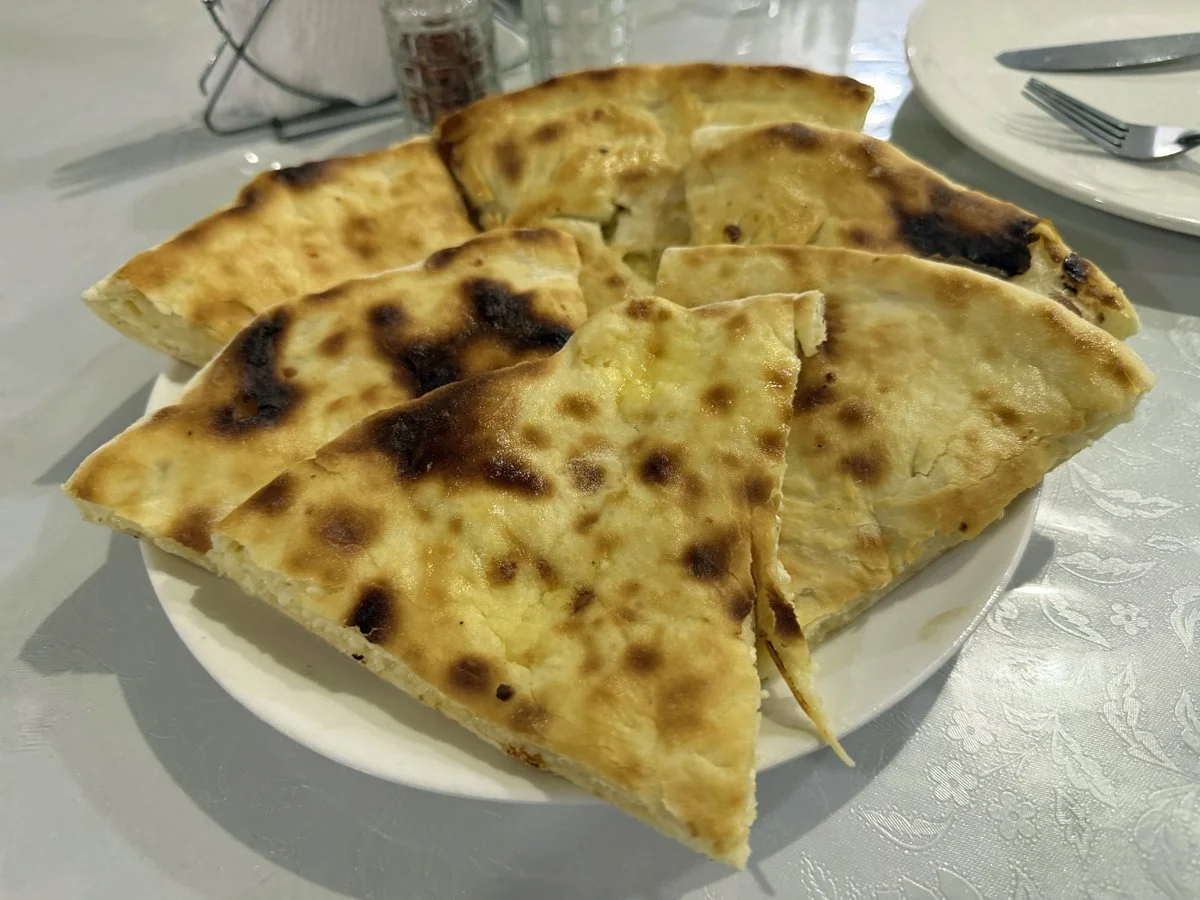
That day, I decided to stay in Tbilisi and go on a long hike. This journey wasn’t only about seeing as much of Georgia as possible; it was also a week for myself. I needed some physical exercise. For breakfast, I had the most common version of khachapuri: Imeretian khachapuri. More visually iconic is Adjarian khachapuri. They served me a full, round khachapuri rather than a few slices—far too much to finish for breakfast—so I had half of it packed up for lunch later that day.

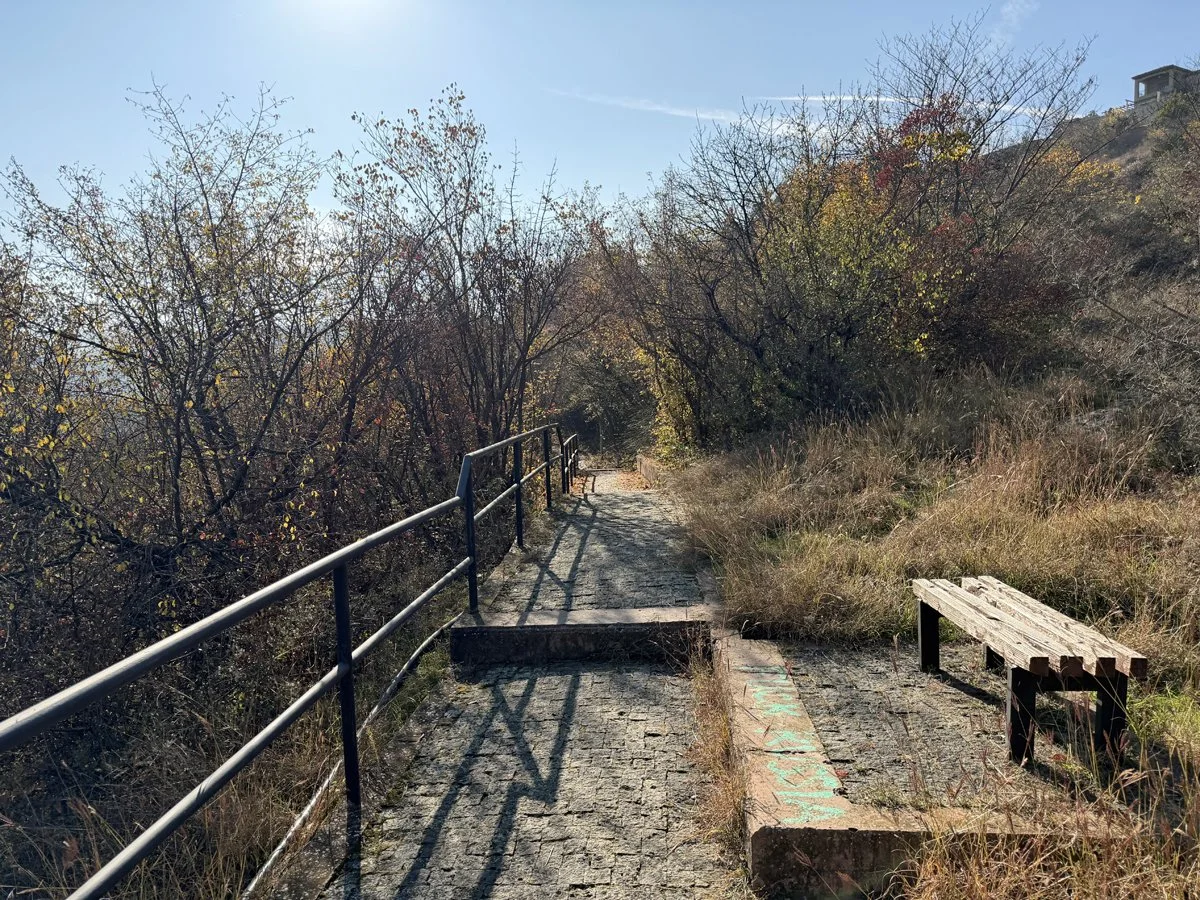
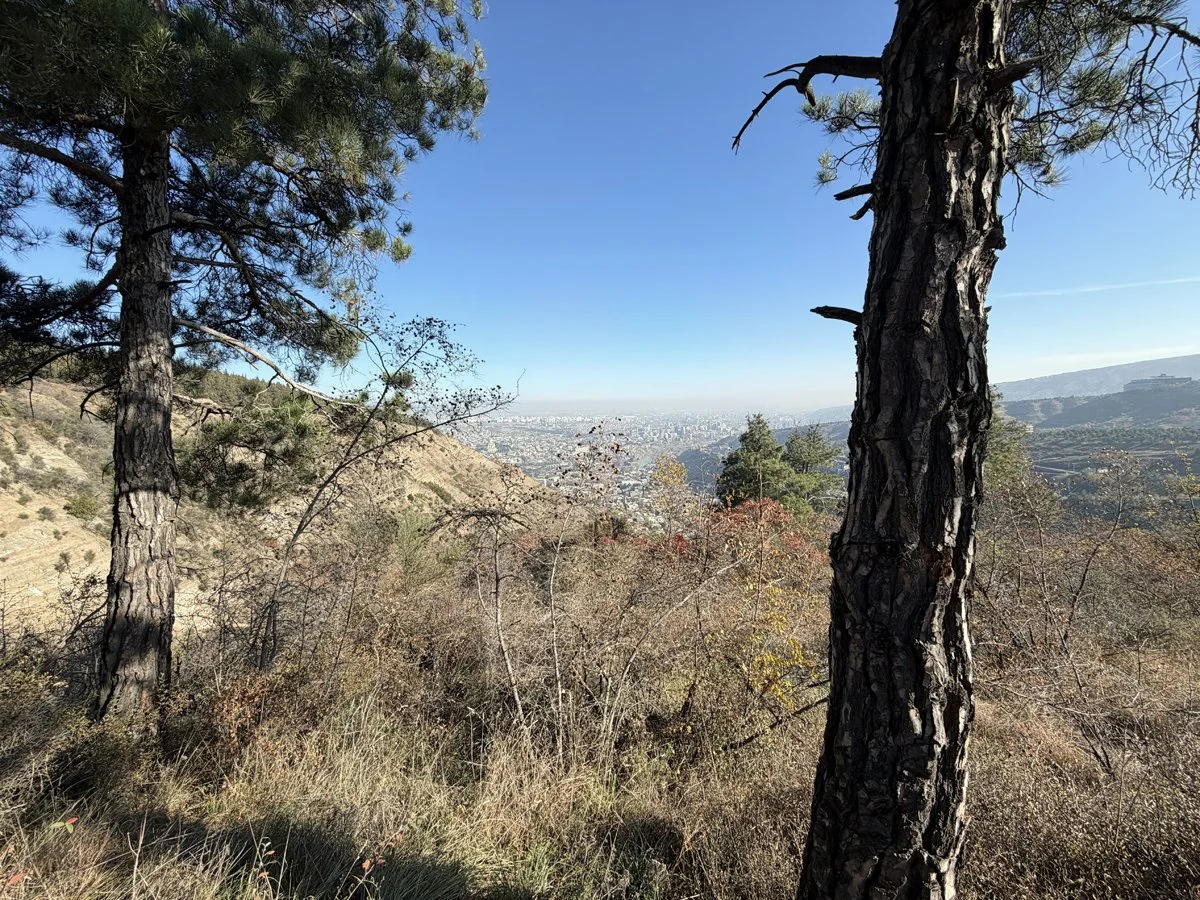
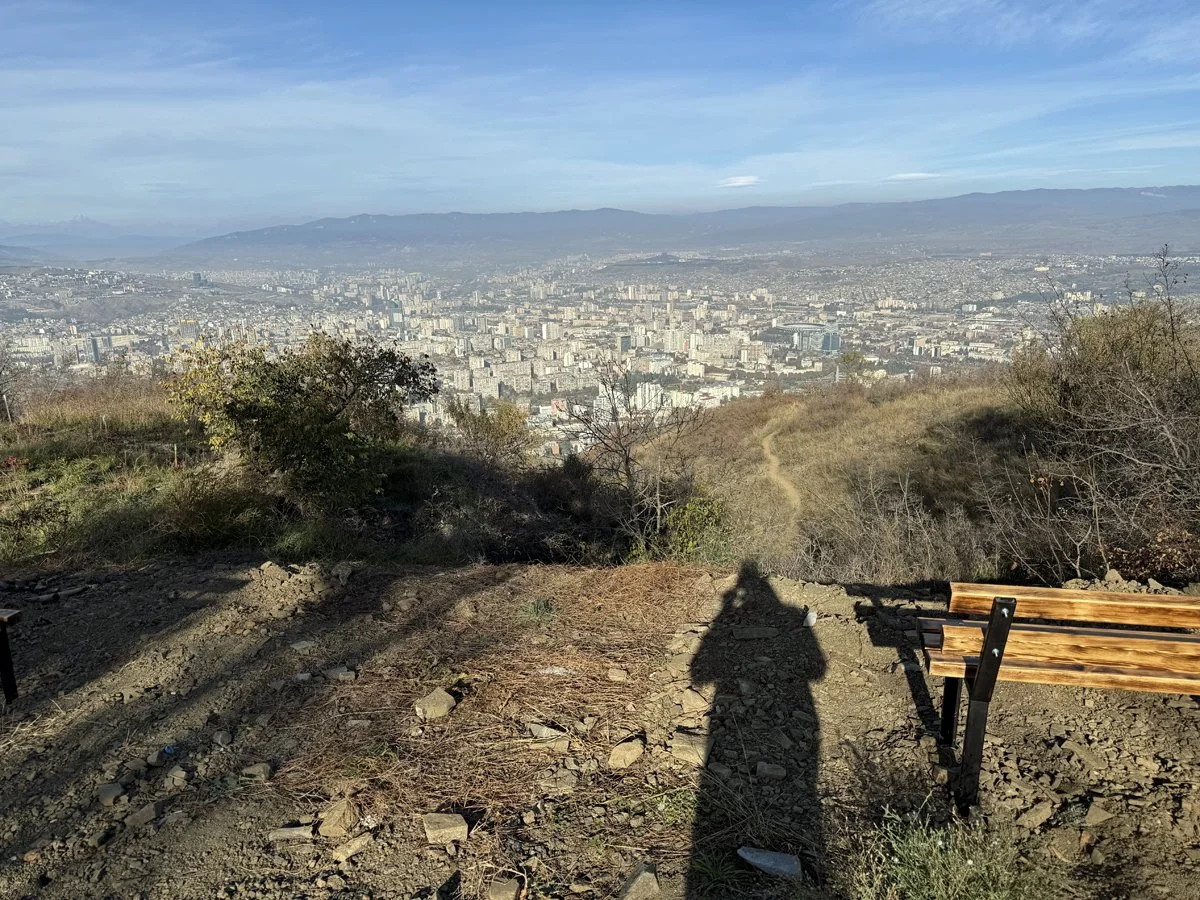
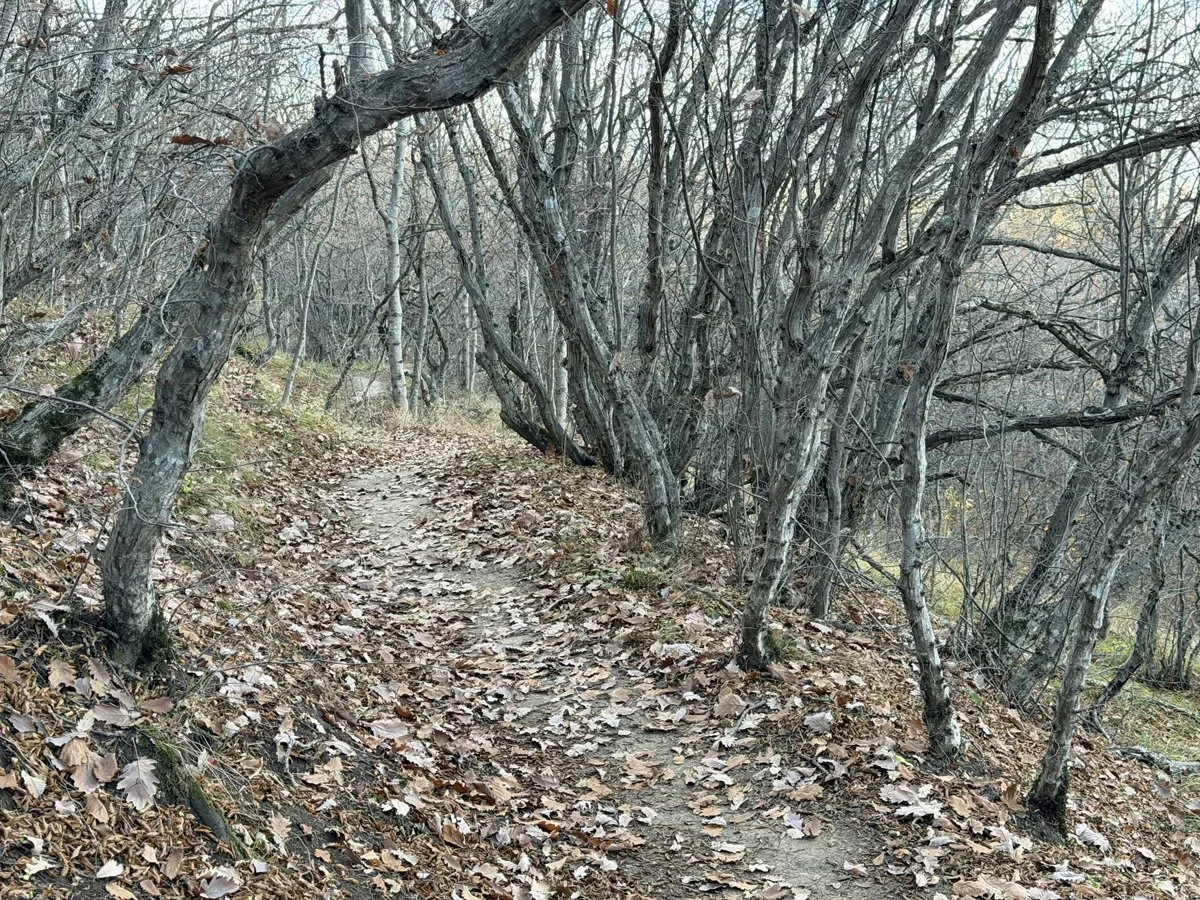
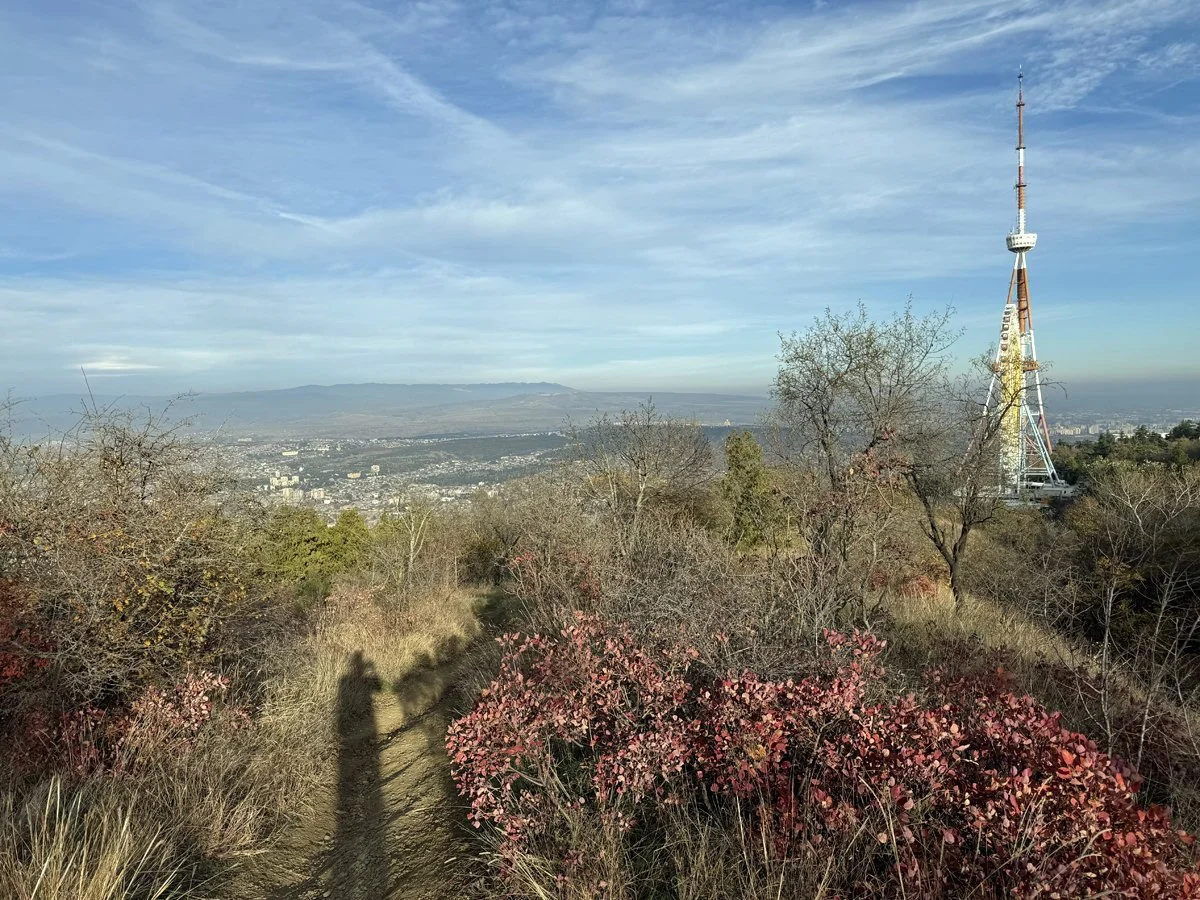
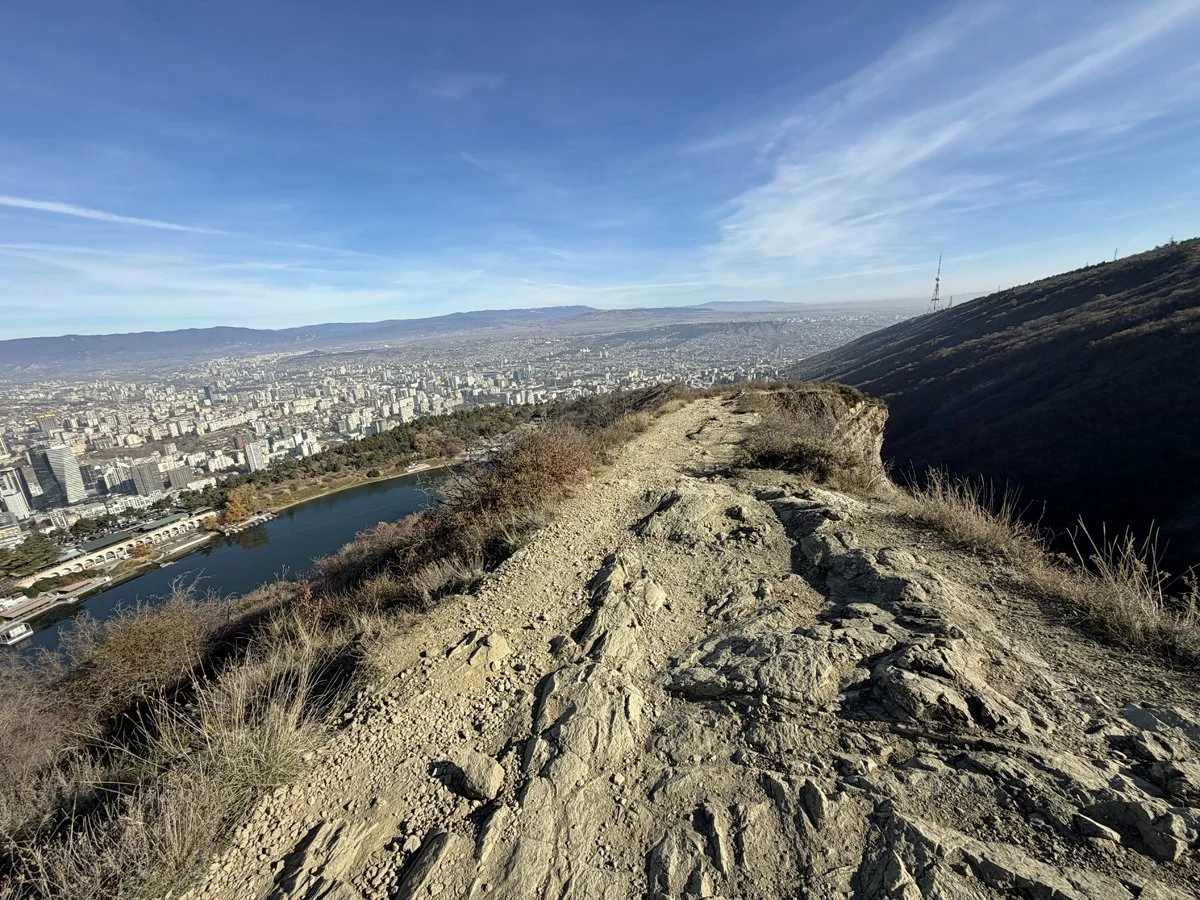
As you can see, Tbilisi is surrounded by hills rising about 300 meters. It takes roughly half an hour to reach the trail, after which you can simply follow the ridge for as long as time allows. I continued until, by my own calculation, I had to turn back to make it home before dark.

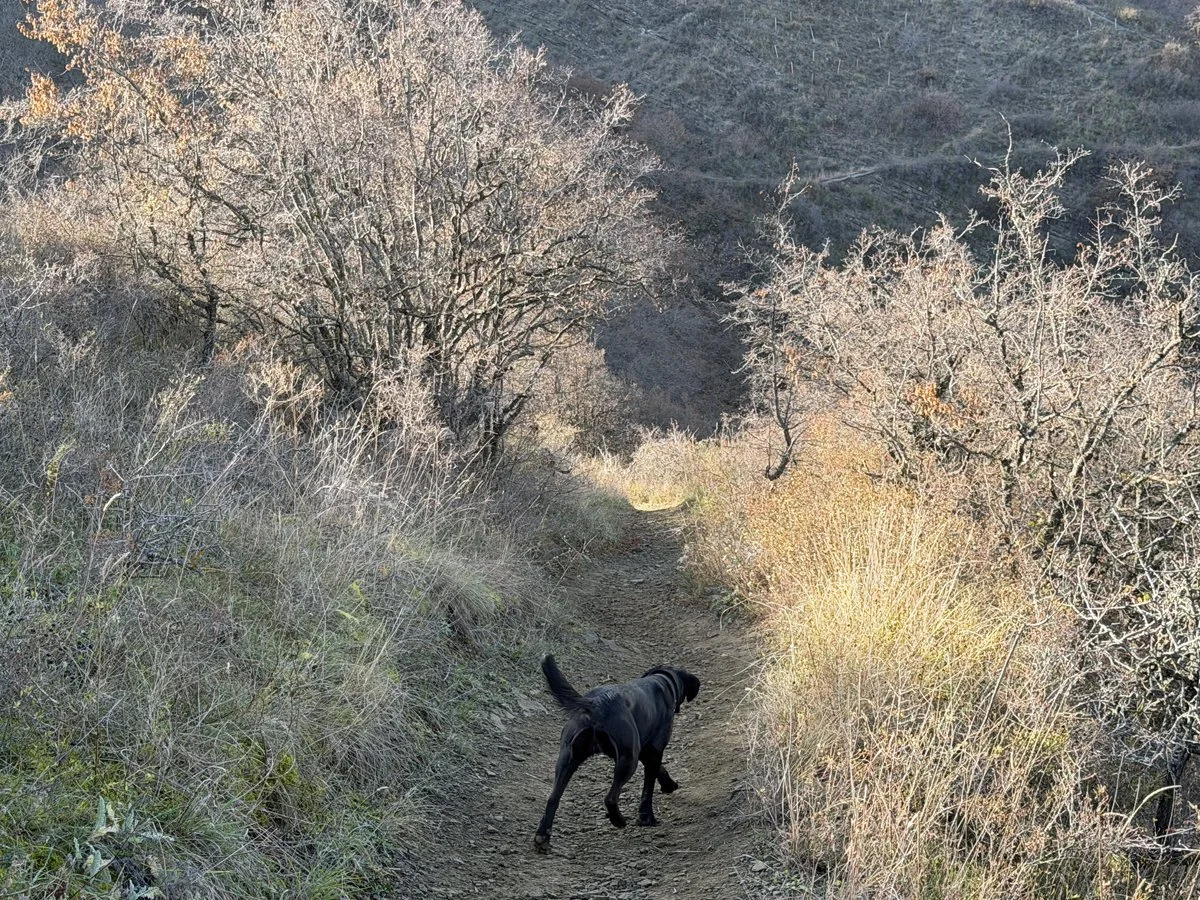
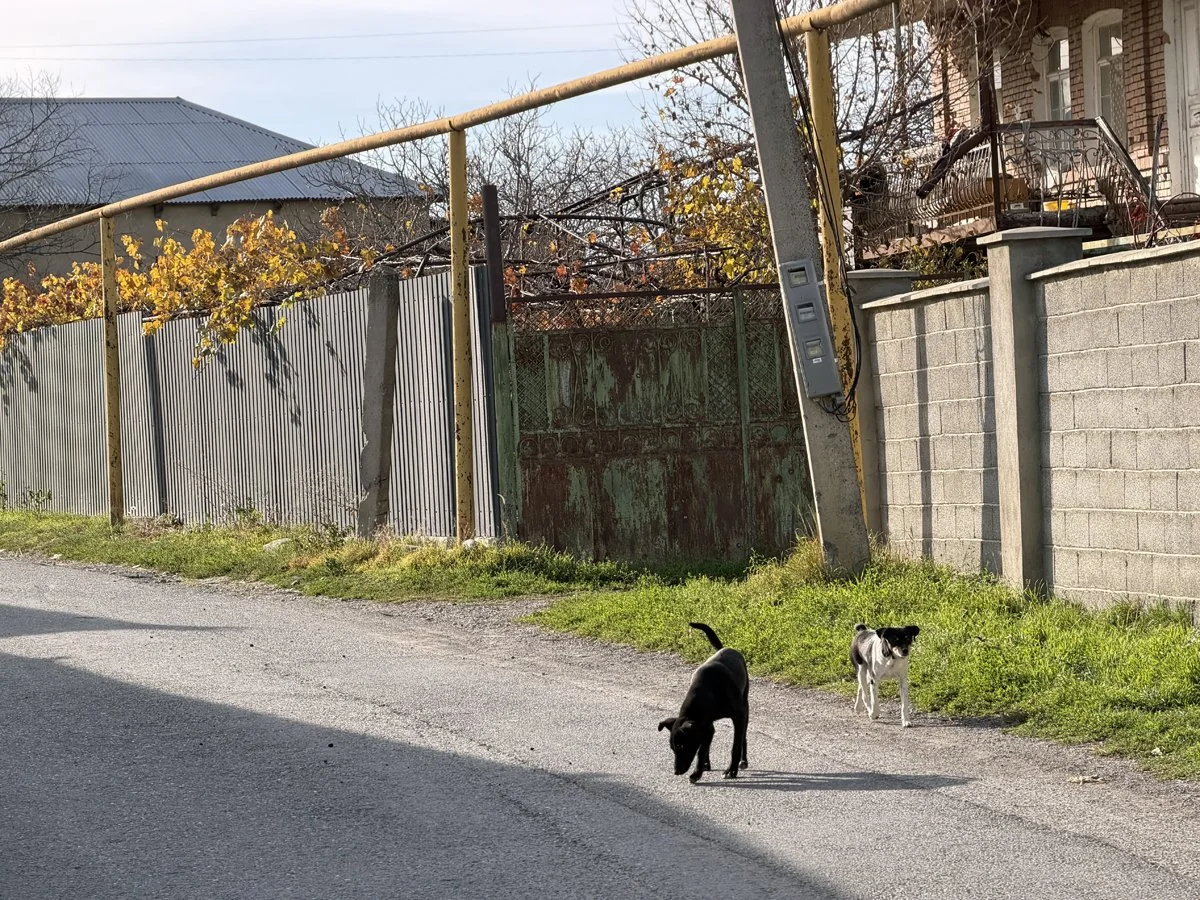
It was just endless single-track trails and a few stray black dogs, both of them friendly.

Salobie Bia სალობიე ბია

Hidden beneath the Rustaveli National Theatre is the restaurant Salobie Bia—“Beanhouse Bia”—which offers a modern take on traditional recipes.

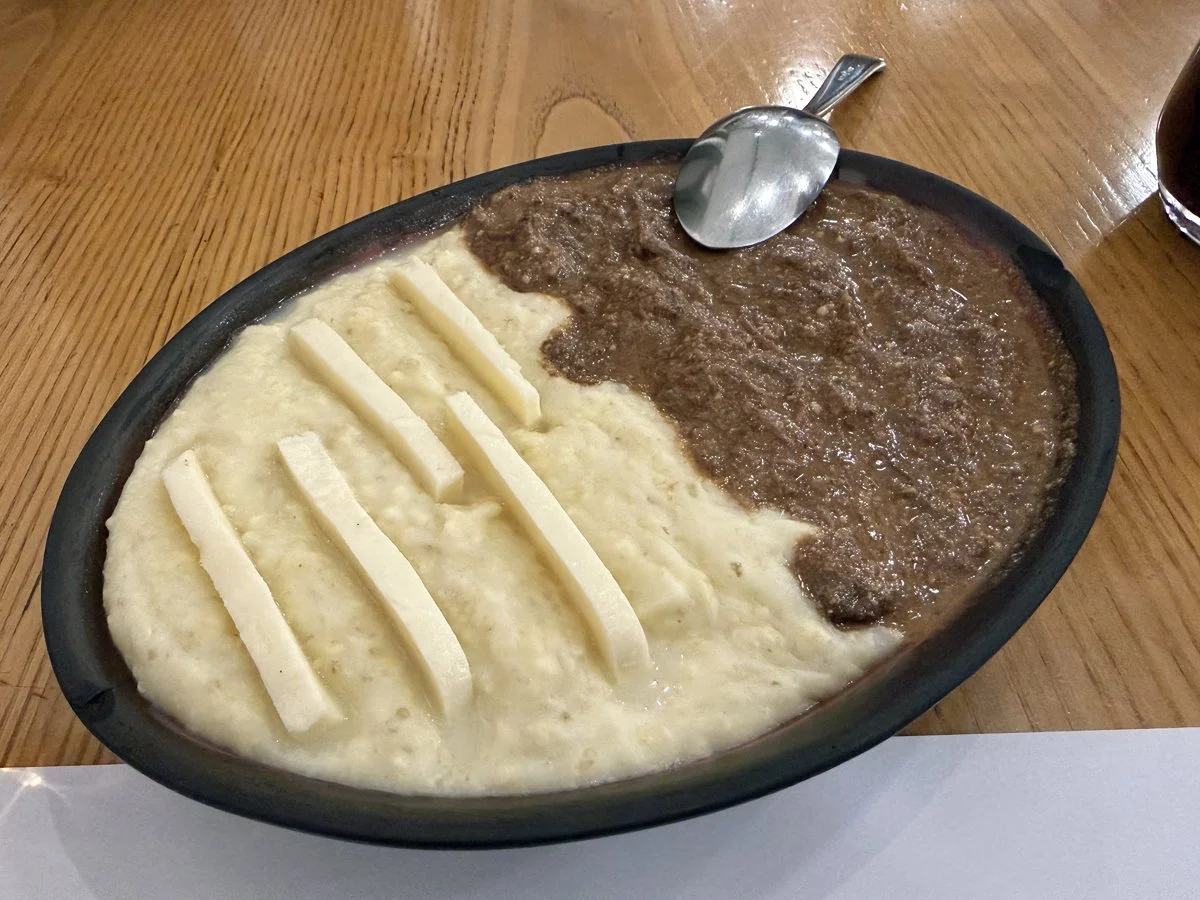
There are two main versions of this dish. Kharcho can be a soup made with beef, rice, cherry plum purée, and chopped walnuts, but in the Samegrelo region, Megrelian kharcho is prepared as a stew rather than a soup. Rice is omitted, and it is typically served over a bed of ghomi (Georgian polenta). At Salobie Bia, they served the Samegrelo version. It looked rather plain, but the recipe was perfectly executed.

I ordered homemade juice without realizing it would be served in a one-liter jar. It was hard to finish on my own. In Georgia, you have to be careful with portion sizes: many dishes are meant to be shared, so as a solo traveler it’s easy to order too much.

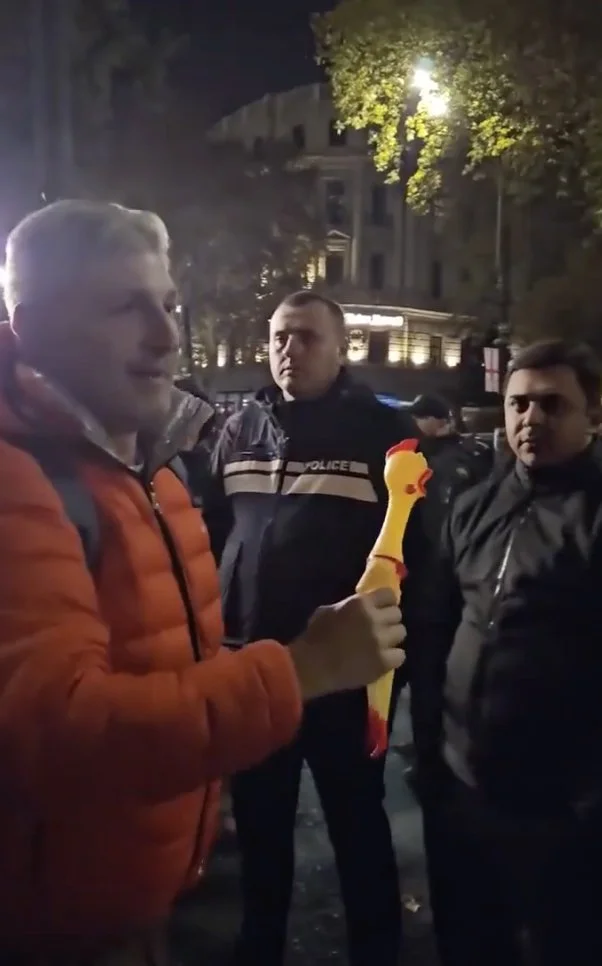
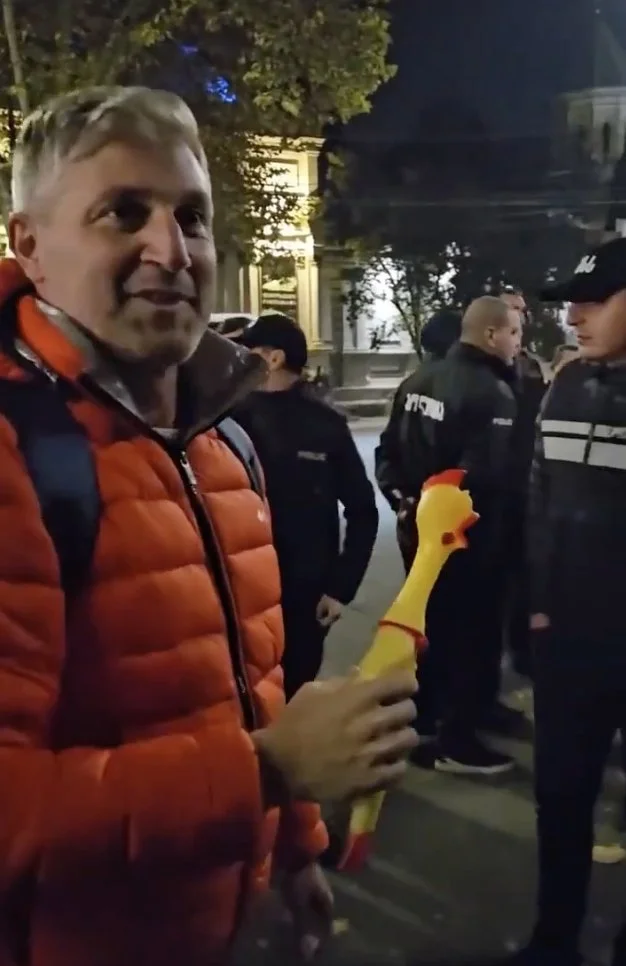
In Georgia, people are now being arrested for… wait for it… squeaking a rubber duck at the police. According to journalists on the ground, this is the only apparent reason for the arrest of Vano Skhirtladze at tonight’s protest. Day 358 of nonstop protests. 🎥 Levan Zazadze

[image or embed]

— Rusudan Djakeli (@rusudandjakeli.bsky.social) 20 November 2025 at 20:27

Next post: South-Ossetia

South Ossetia

During the week, I had booked a wine tour, which turned out to be difficult: November is a quiet month, and not many tours are available. When my booking was canceled, I quickly rearranged my itinerary and planned a visit to the South Ossetian border on Friday, 21 November. There was a train to Gori, but beyond that there was no public transport. Only a few hundred people live in border town Nikozi, so even a minibus doesn’t have enough passengers to run regularly. In Gori, I had to arrange a taxi for half the day.

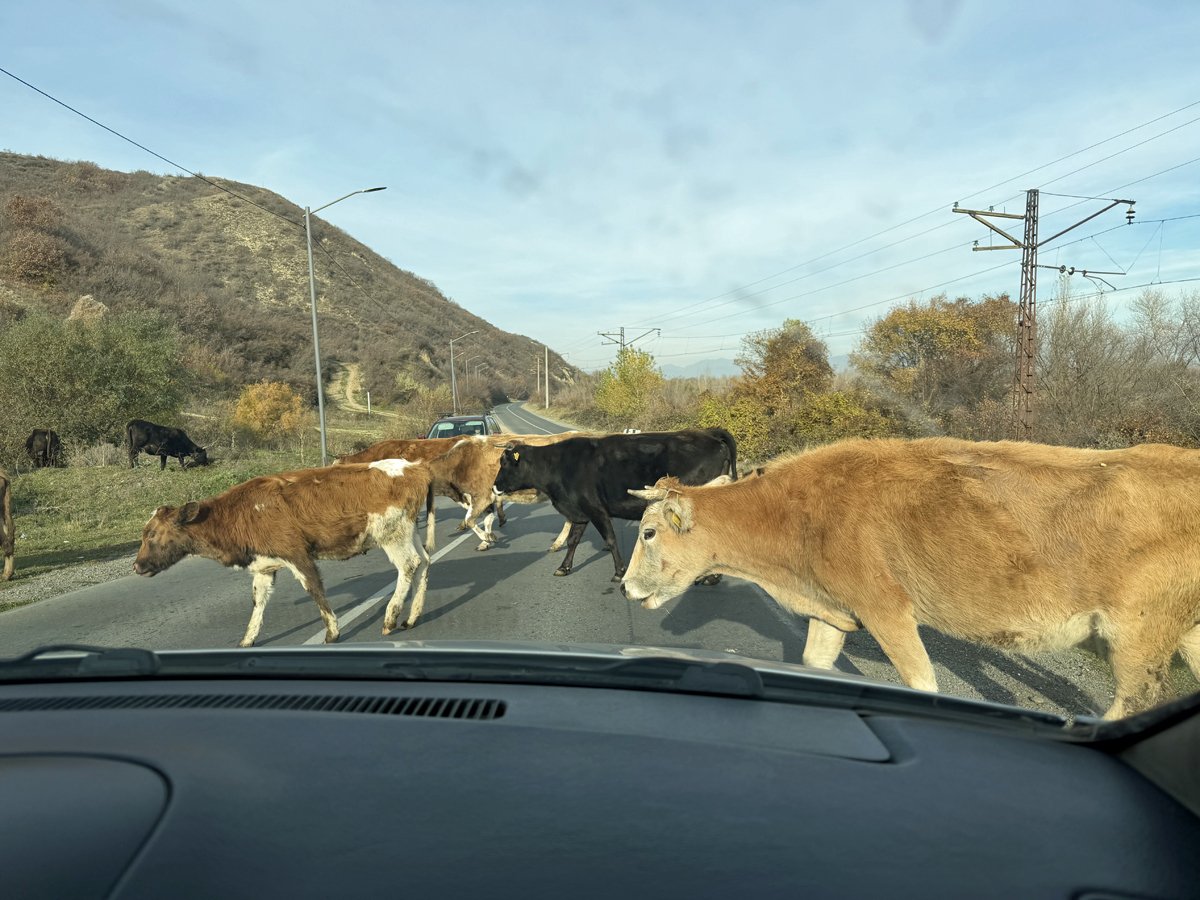
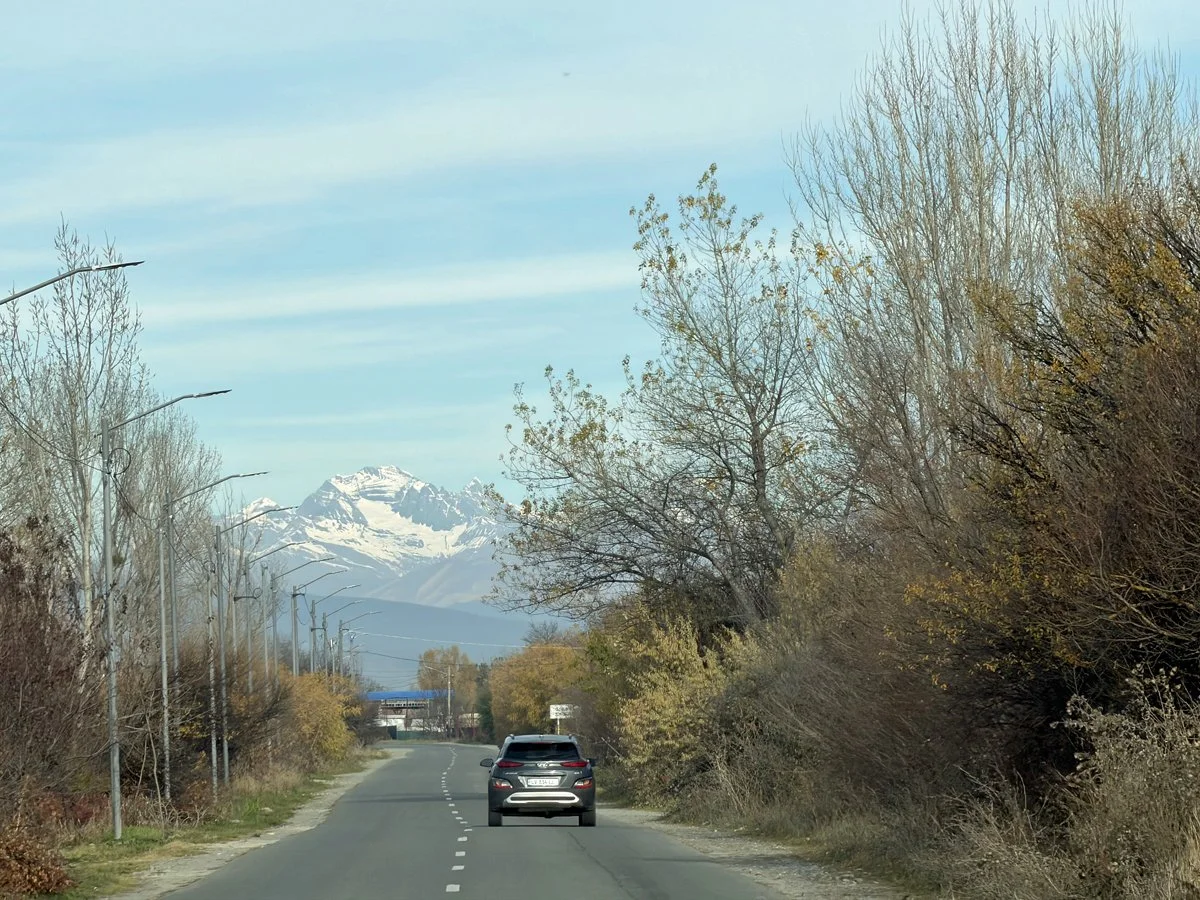
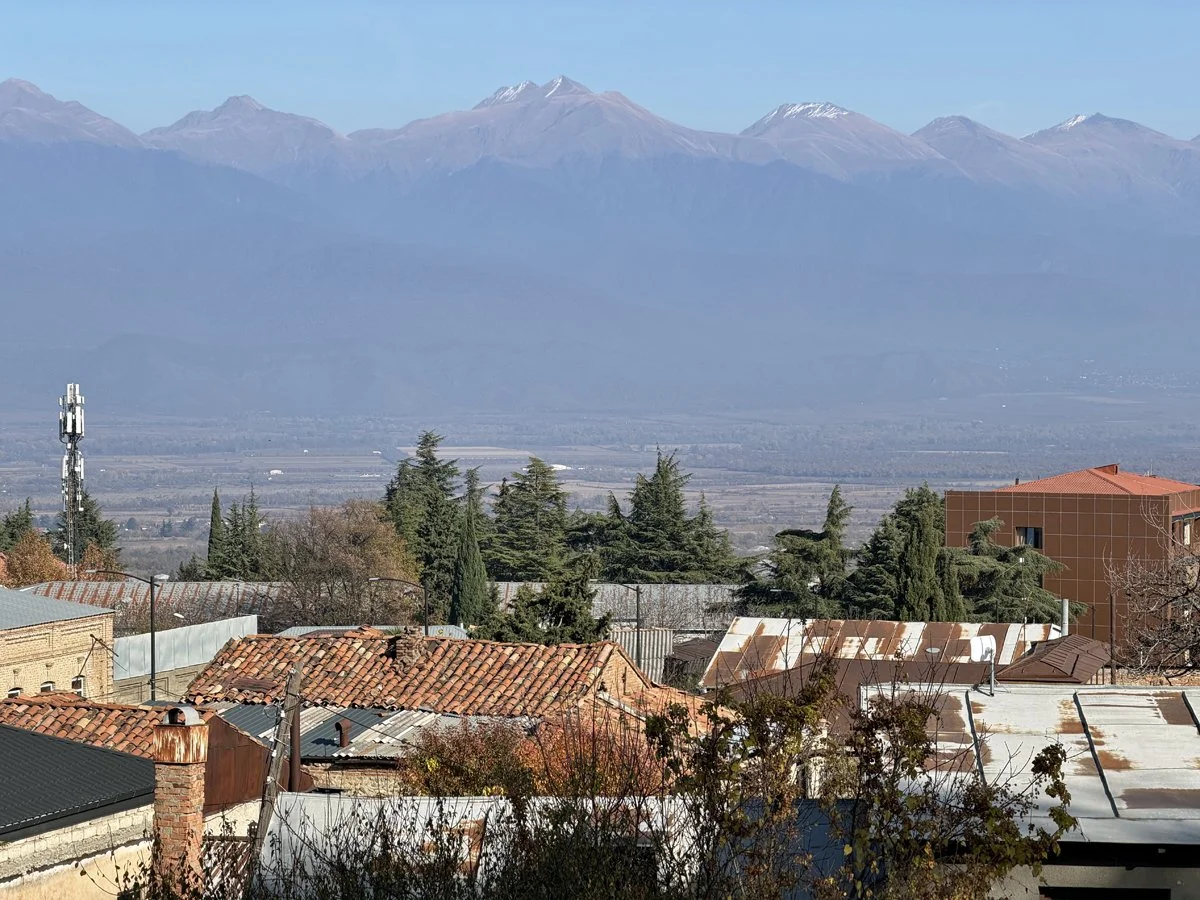
In Gori, I quickly found a taxi and set off toward the border with South Ossetia. The mountains in the distance lay beyond Georgia. I wondered how many tourists would take this route that day.

Nikozi ზემო ნიქოზი

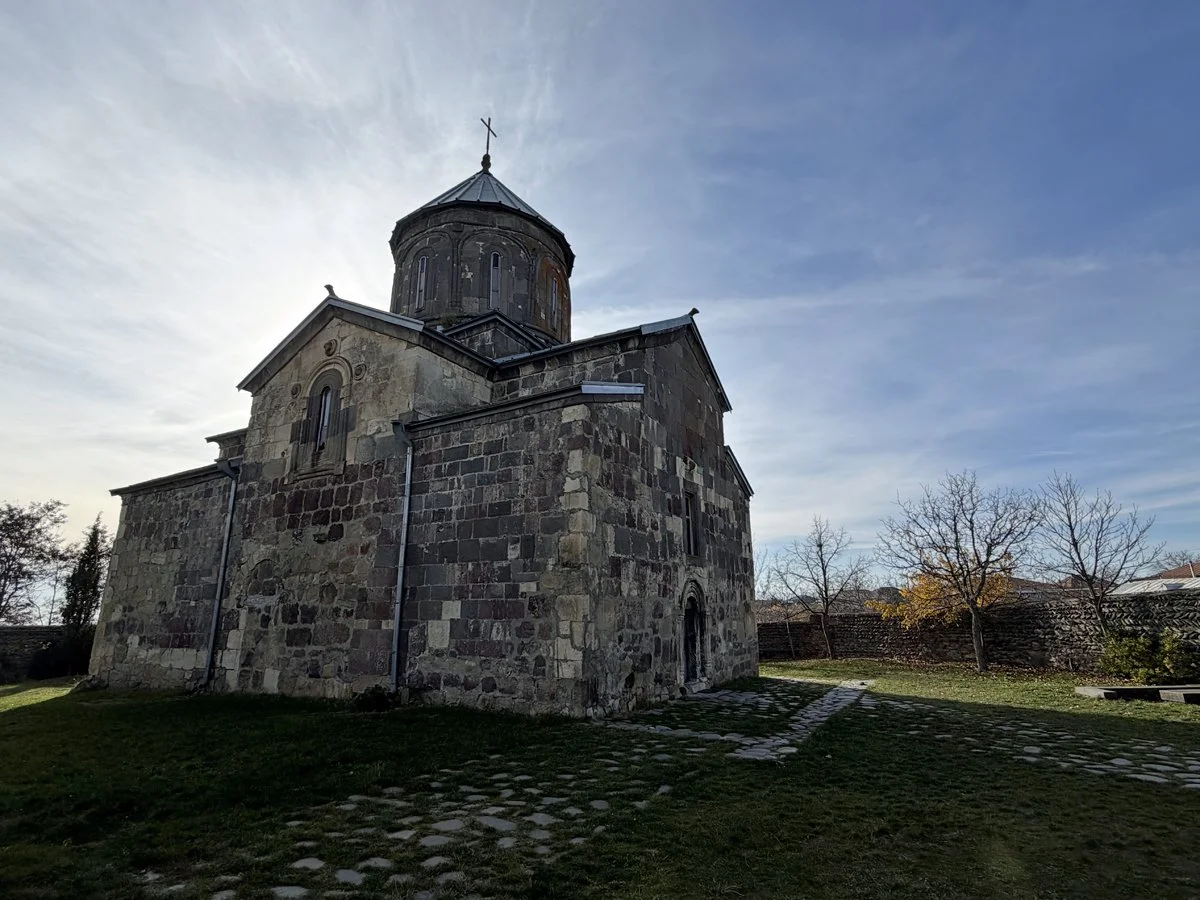
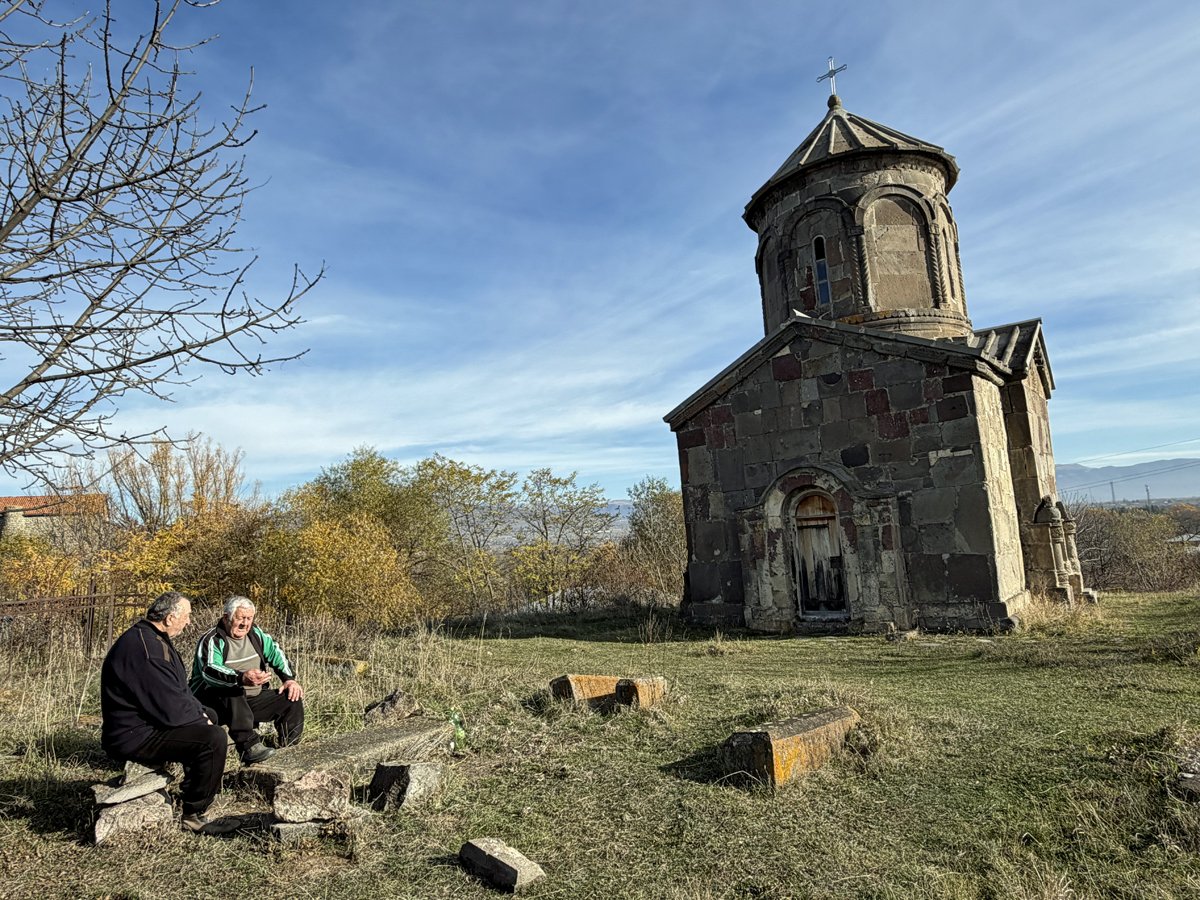
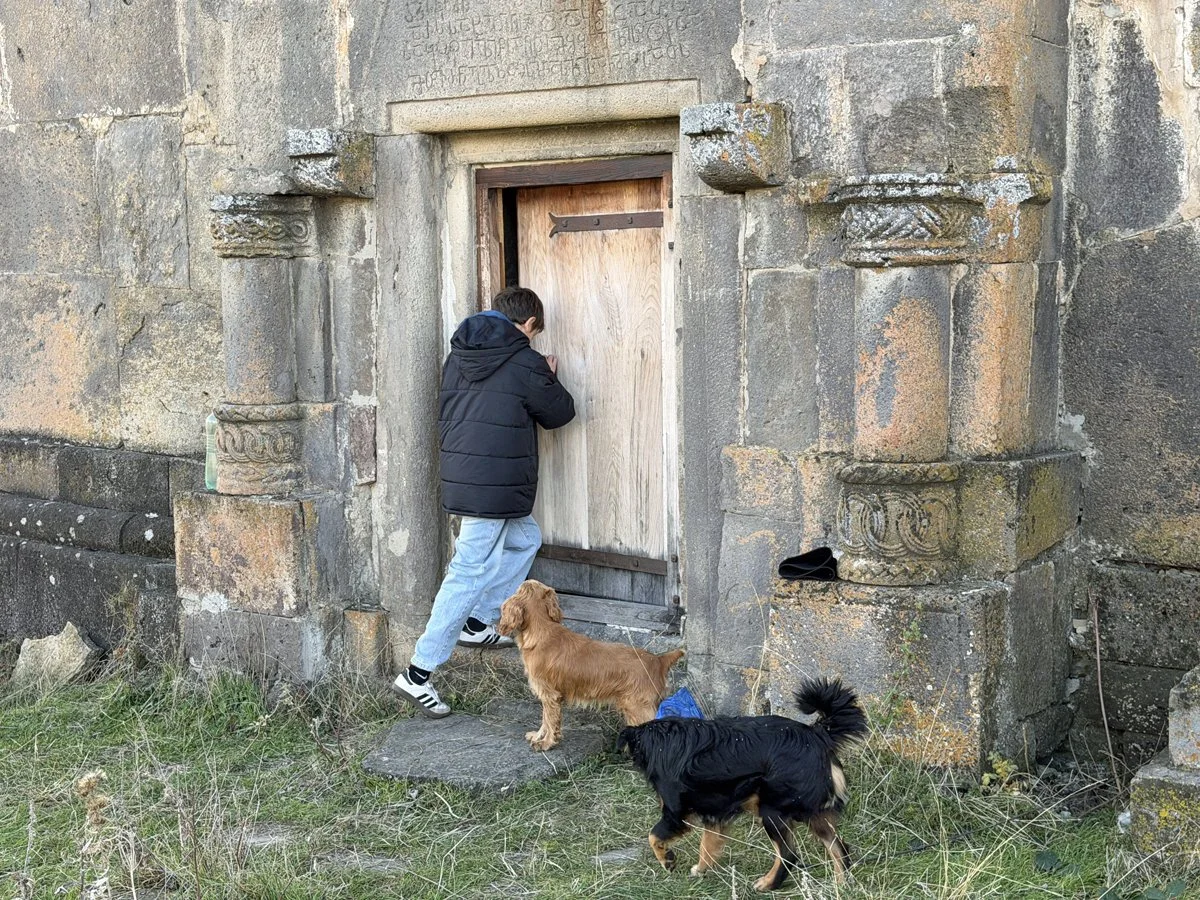
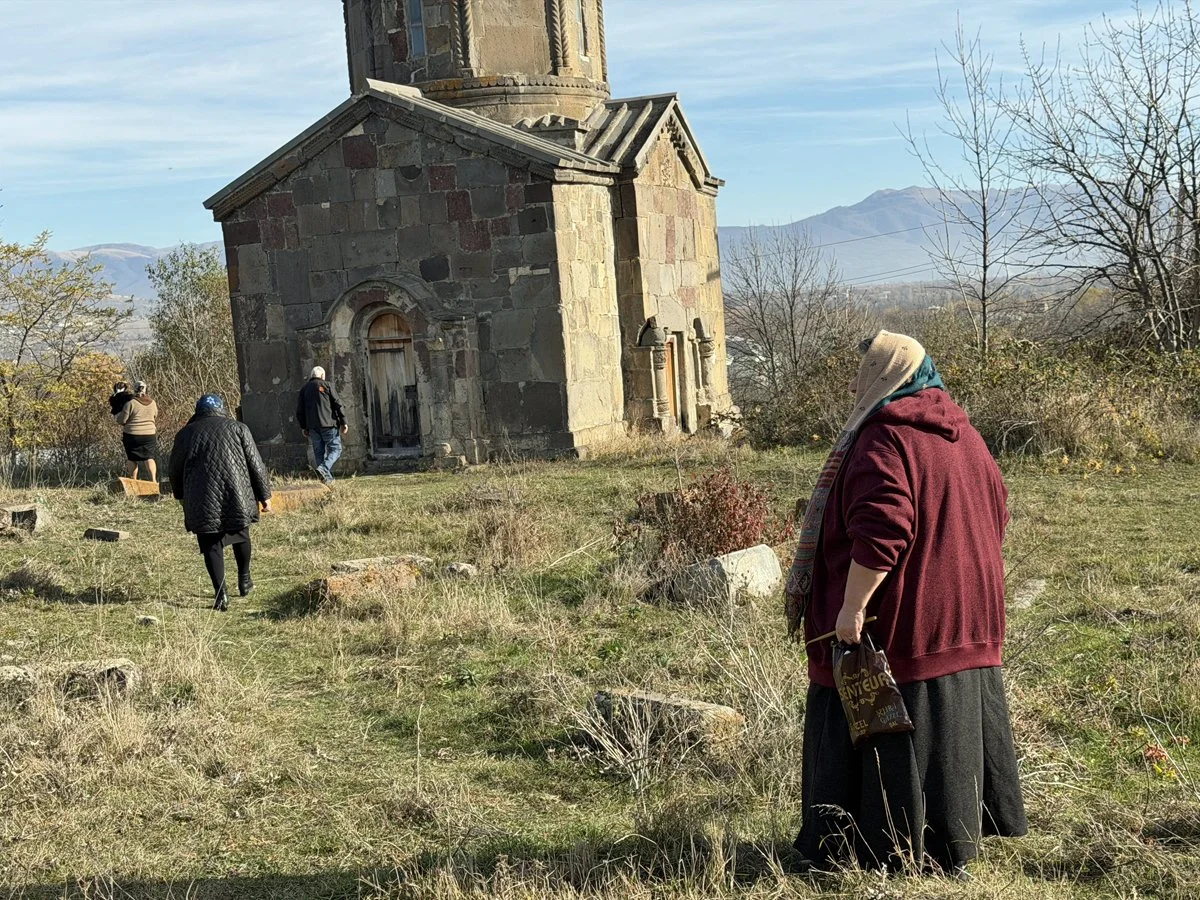
After half an hour, we reached Nikozi. The Zemo Nikozi Church of the Deity was first mentioned in a chronicle dating to around 800, written by the Georgian prince (eristavi) and historian Juansher, which refers to the appointment of a bishop by the 5th-century king Vakhtang Gorgasali. The current building dates largely from the 14th to the 16th centuries, while the tower was constructed in the 16th to 17th centuries.

Zemo Nikozi was the seat of the Bishopric of Nikozi, one of the oldest Christian dioceses in eastern Georgia. The church was of great importance in the 5th–7th centuries.

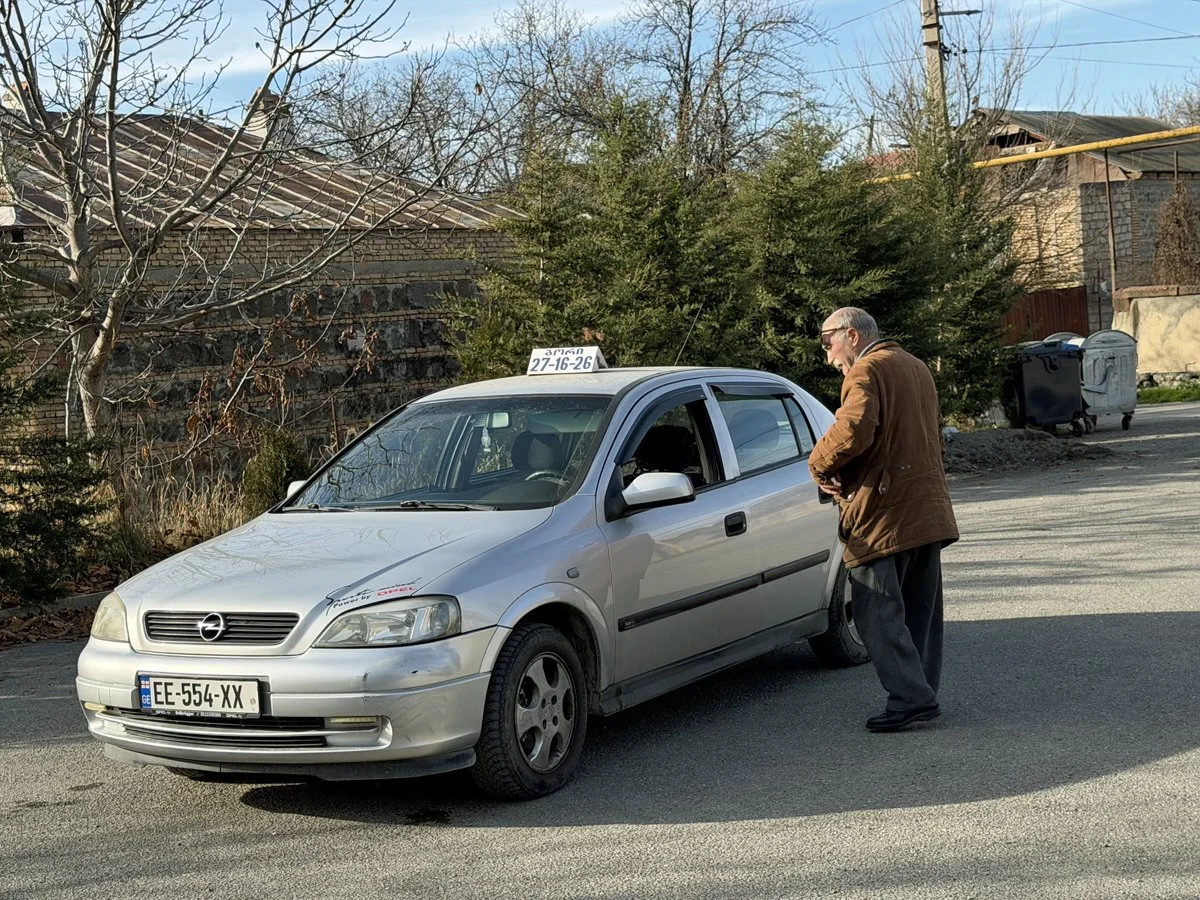
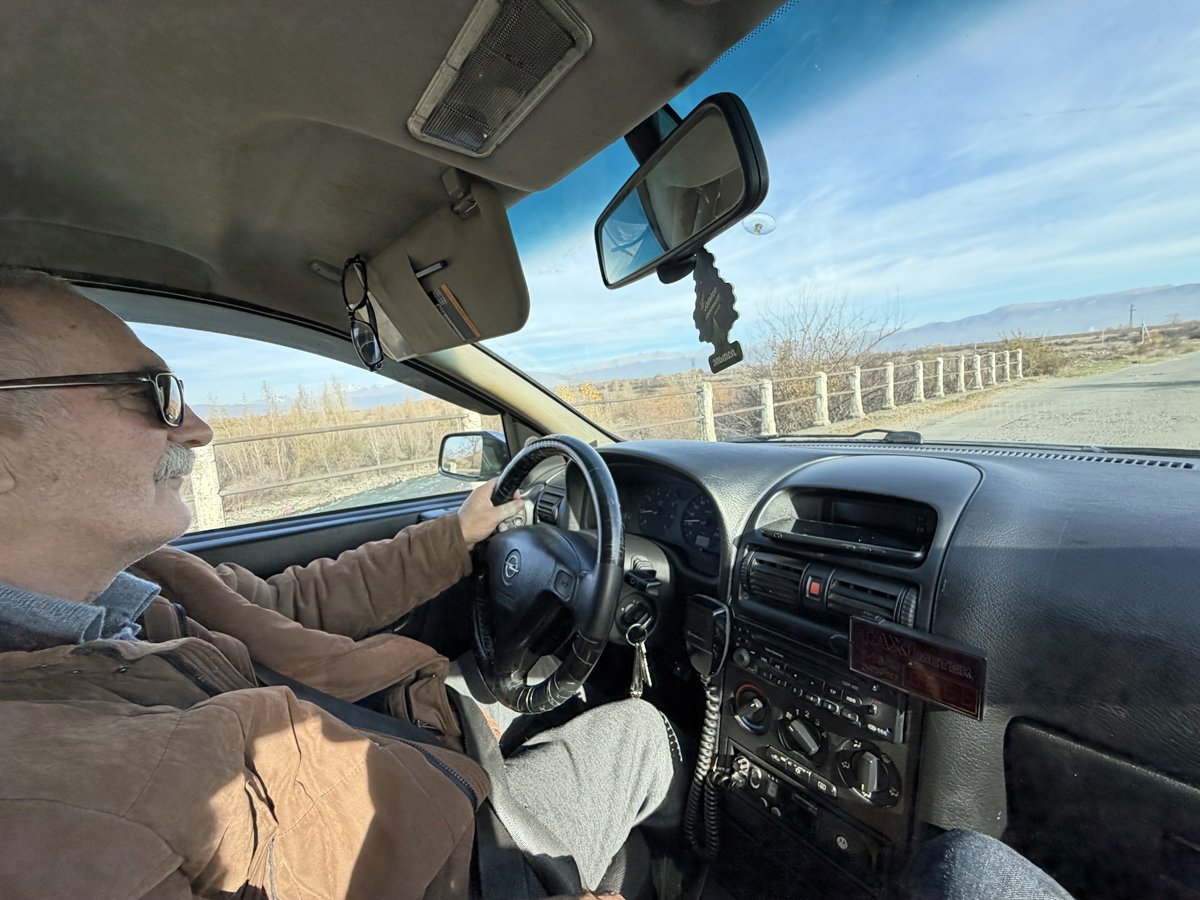
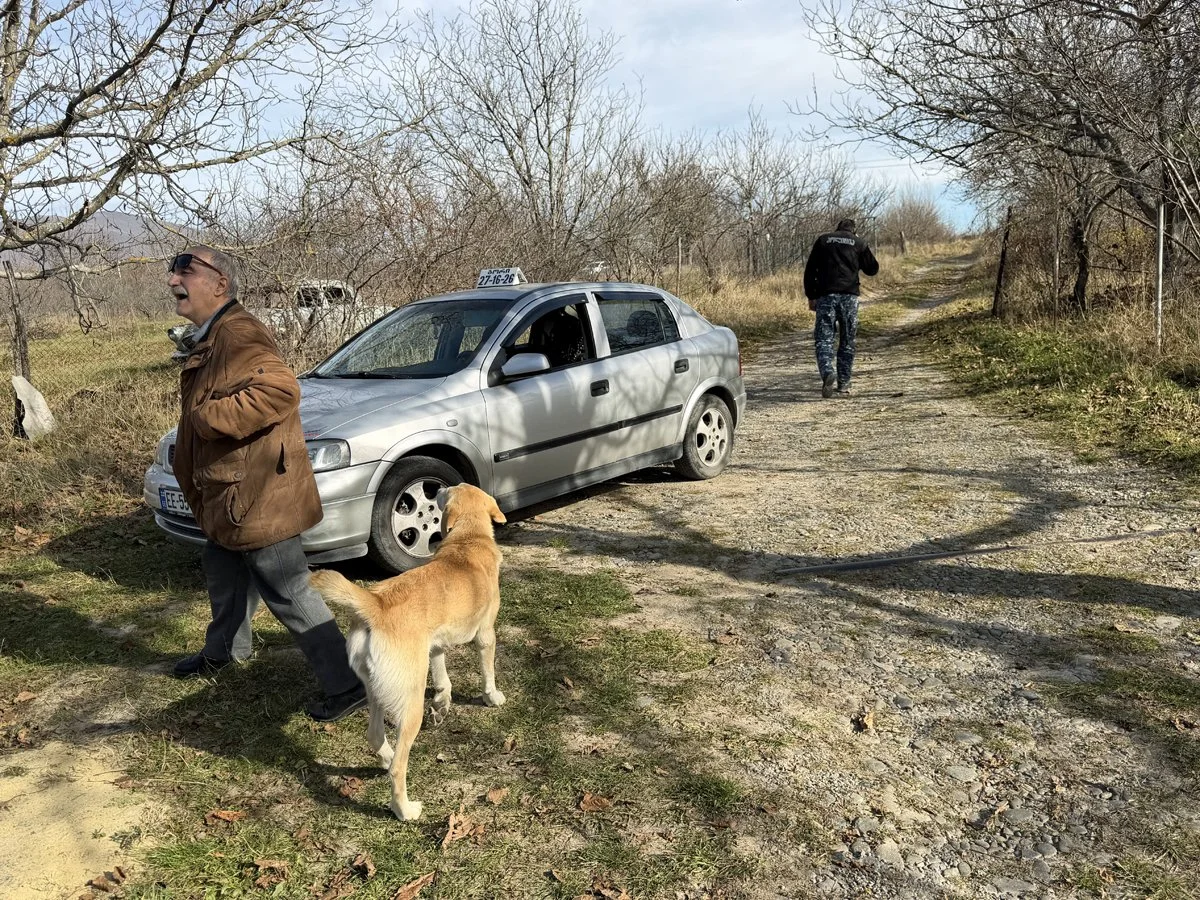
When I needed to negotiate a taxi for the day, there were five cars waiting. More or less at random, I ended up in a turn-of-the-century Opel Astra G—the driver was simply the first to roll down his window. I had estimated the cost at 80 lari; he quoted 60, so I agreed without haggling. The driver didn’t speak any English, but that didn’t bother me—or him.

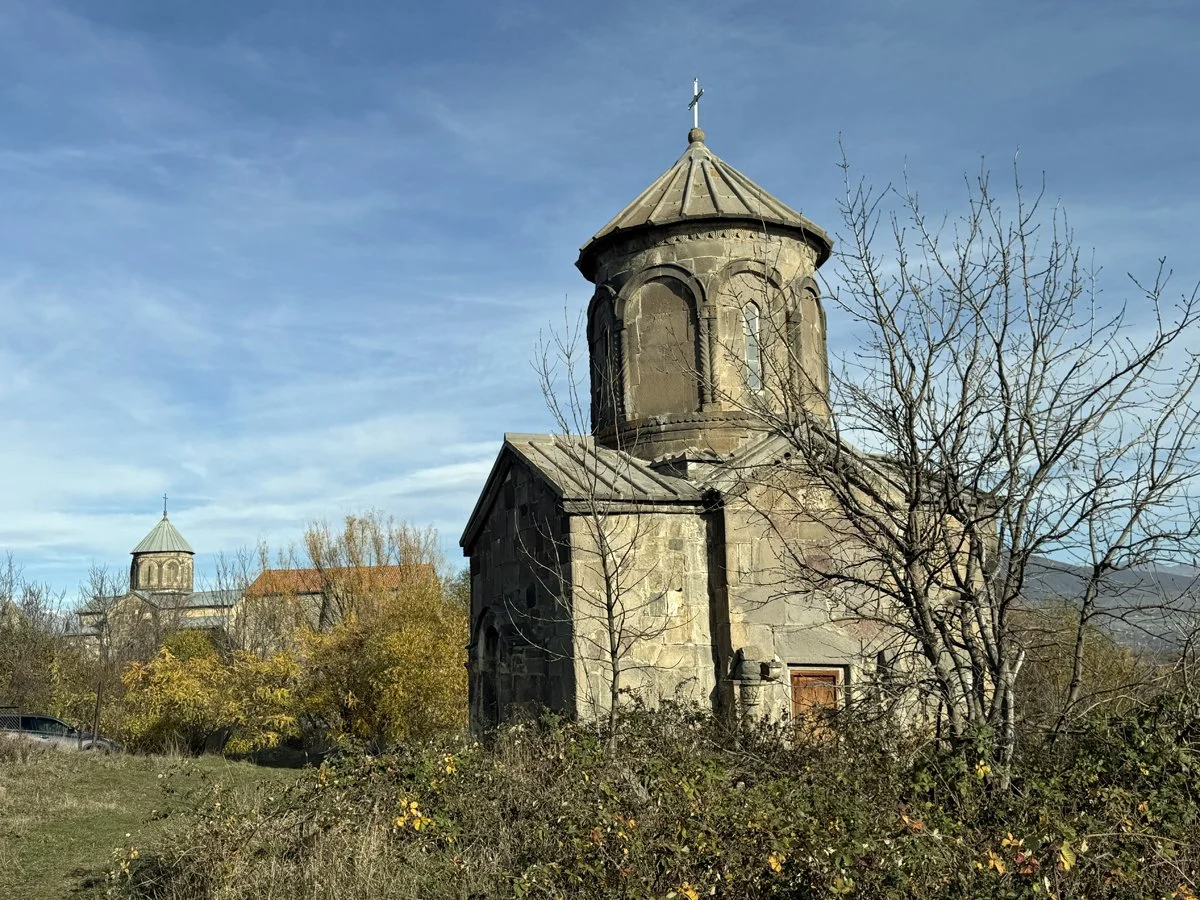
The Zemo Nikozi church of the Archangel is a 10th-century Georgian Orthodox church. It is part of one of Georgia’s oldest Christian settlements and one of the few surviving medieval structures from that period and represents the architectural and ecclesiastical heritage of the time.

The photo below shows the close proximity of the Zemo Nikozi Church of the Archangel to the Zemo Nikozi Church of the Deity—just a few hundred meters apart. I hadn’t expected to see so many visitors at the church. As far as I could tell, it wasn’t a special Orthodox feast day; the visitors appeared to be regular believers, all local, arriving on foot.

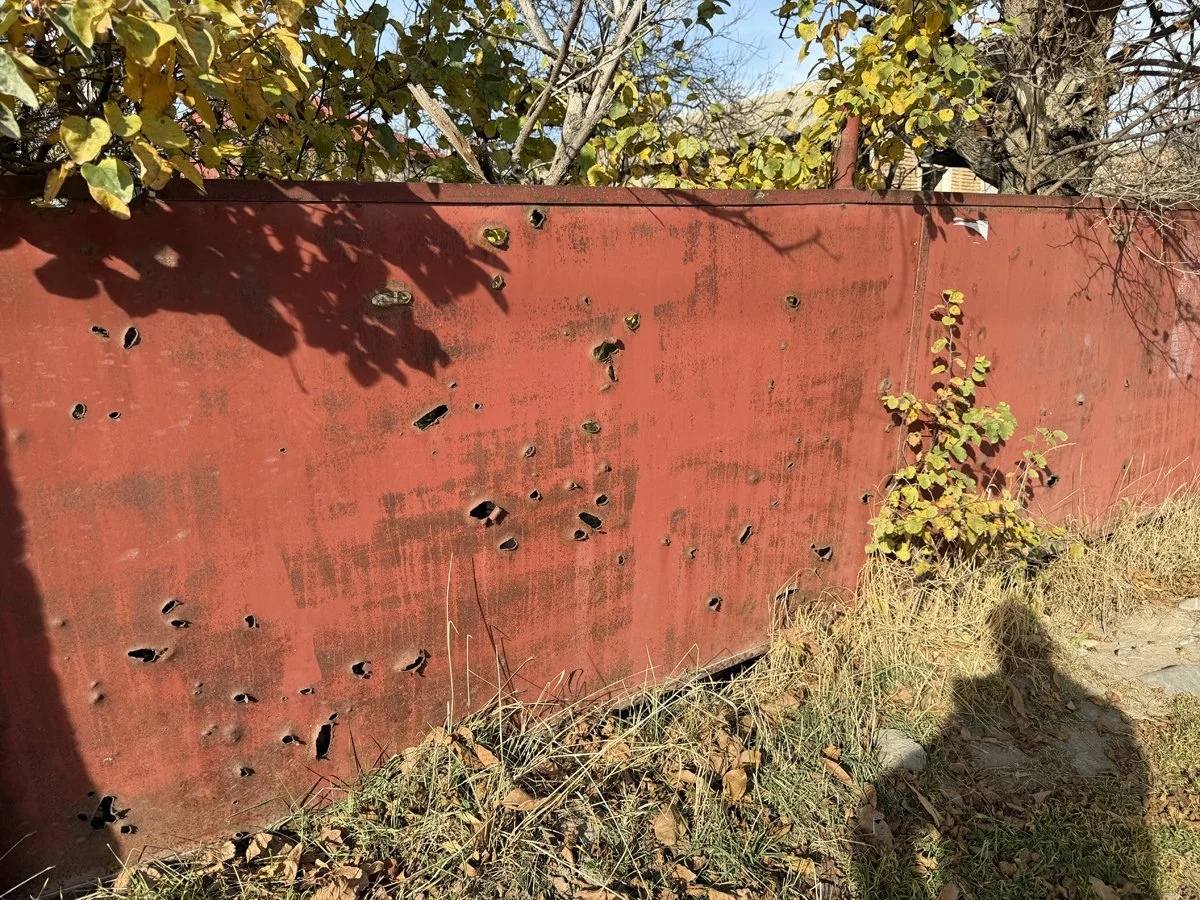
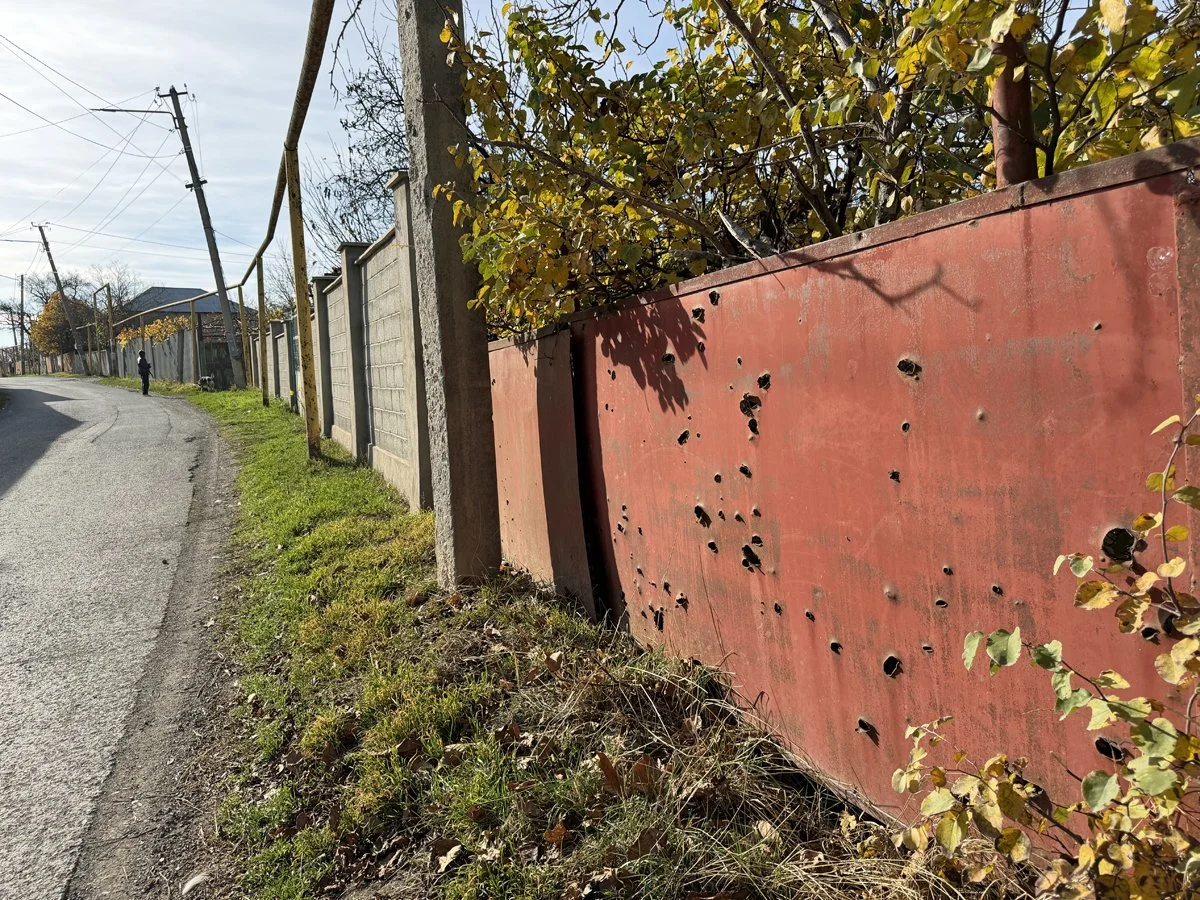
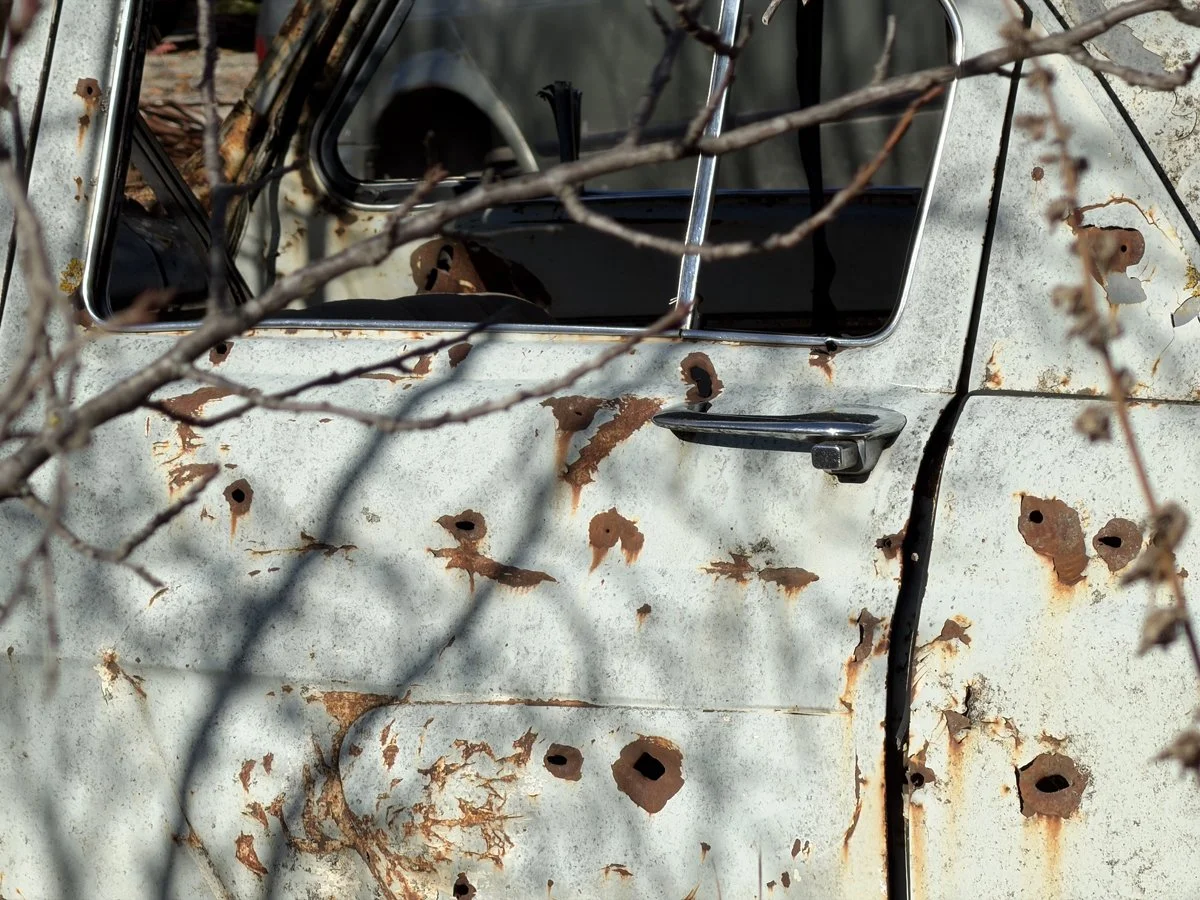
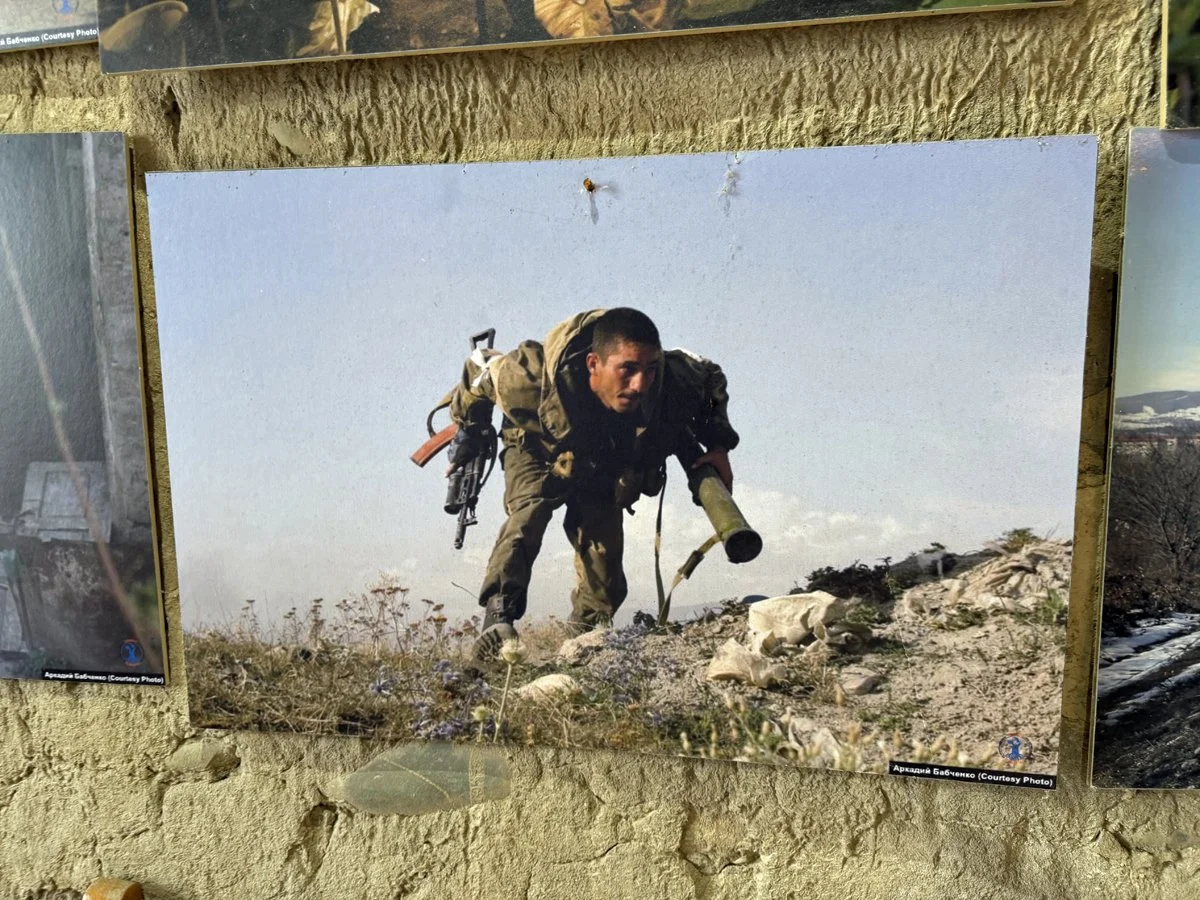
Some fences around the farms were still riddled with shrapnel holes from Russian artillery that exploded in Nikozi in 2008. During the August 2008 Russo-Georgian War, artillery shelling by Russian and South Ossetian forces caused serious damage in and around the village. The Zemo Nikozi Church of the Deity complex was heavily damaged; emergency stabilization and repair work was later carried out with support from the Council of Europe.

The idea that Russia wants peace in the Russo-Ukrainian war is laughable. What Witkoff and Kushner are negotiating is not a peace deal, but at best a business arrangement. If Russia is rewarded for the invasions of 2014 and 2022, the world will be less secure for a generation.

While I was taking photos of the shrapnel-riddled walls, I heard a dull explosion in the distance. I’m no expert, but it sounded like a muffled artillery blast. Russian and South Ossetian forces continue to harass Georgia.

Ergneti ერგნეთი

To get even closer to the border, we drove back to the nearest bridge to cross the river and then headed north. In Ergneti, there was supposed to be a small war museum, which I wanted to see.

When we arrived, it became clear that my taxi driver hadn’t been here before. He wasn’t sure where the museum was, but a roadblock and several police officers made it clear we were only meters from the actual border. There was some conversation in Georgian between my taxi driver and the police, and a few men were standing in the road. As I approached, I heard: “Het is toch geen Nederlander?”

“Oh God, nee toch,” I replied.

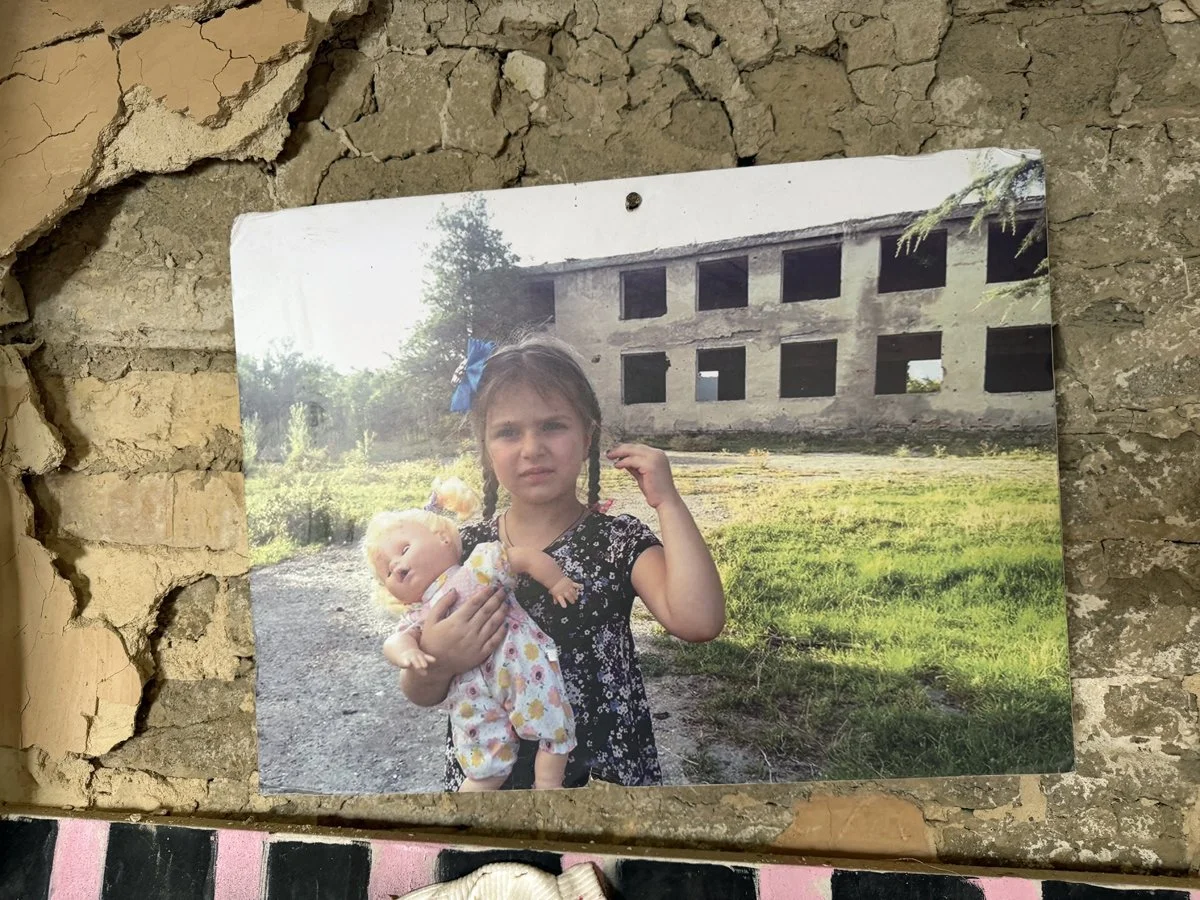
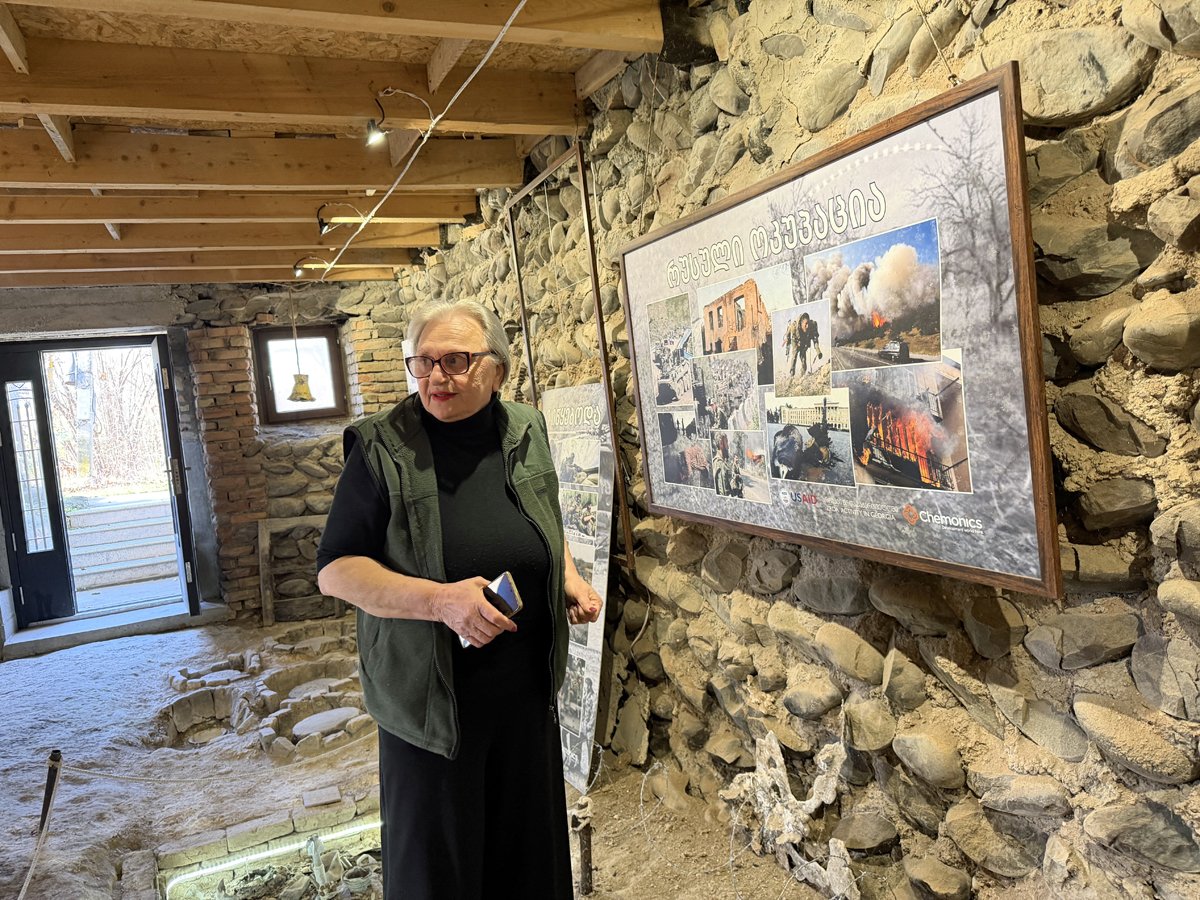
I wasn’t the only tourist that day. I had to show one of the policemen my passport, after which we were allowed to visit the museum, located in the first house next to the border. The lady of the house opened the gate for us.

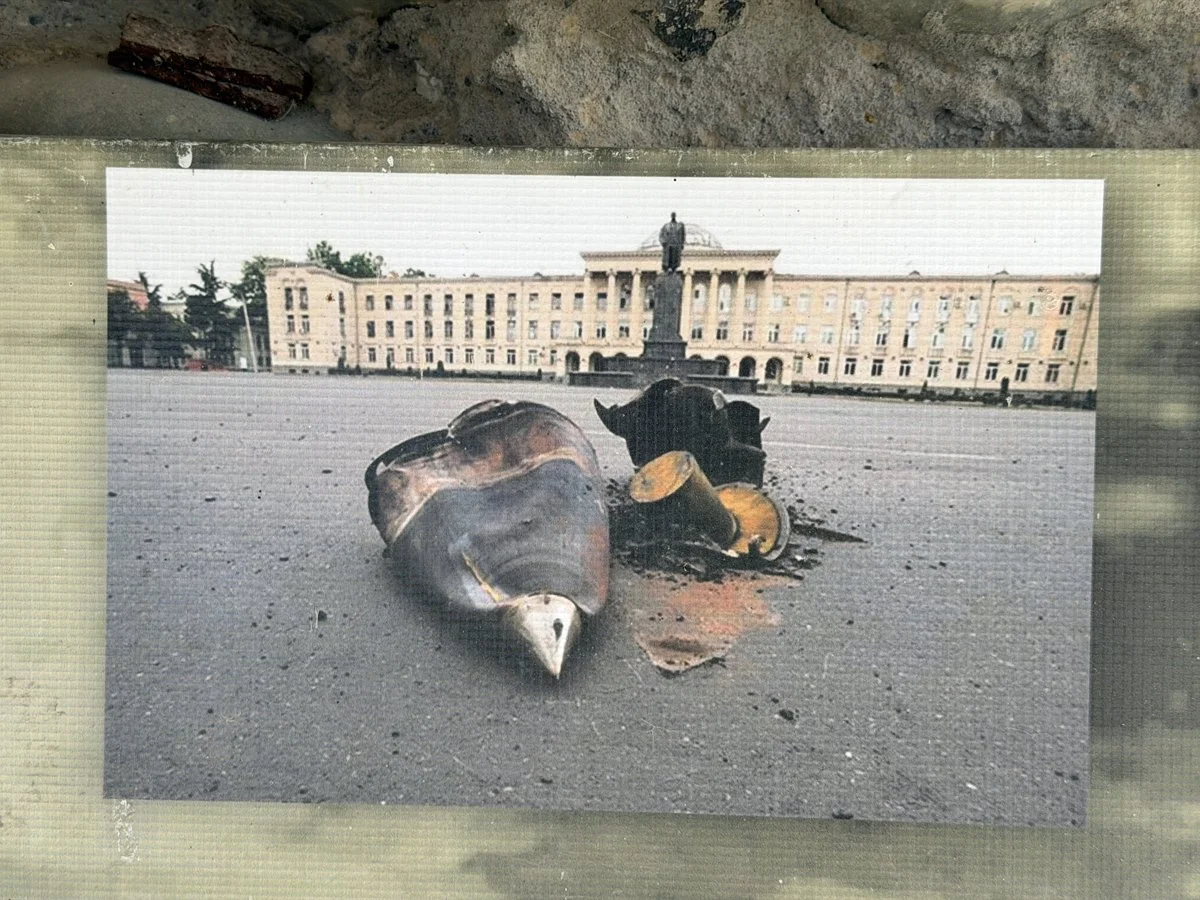
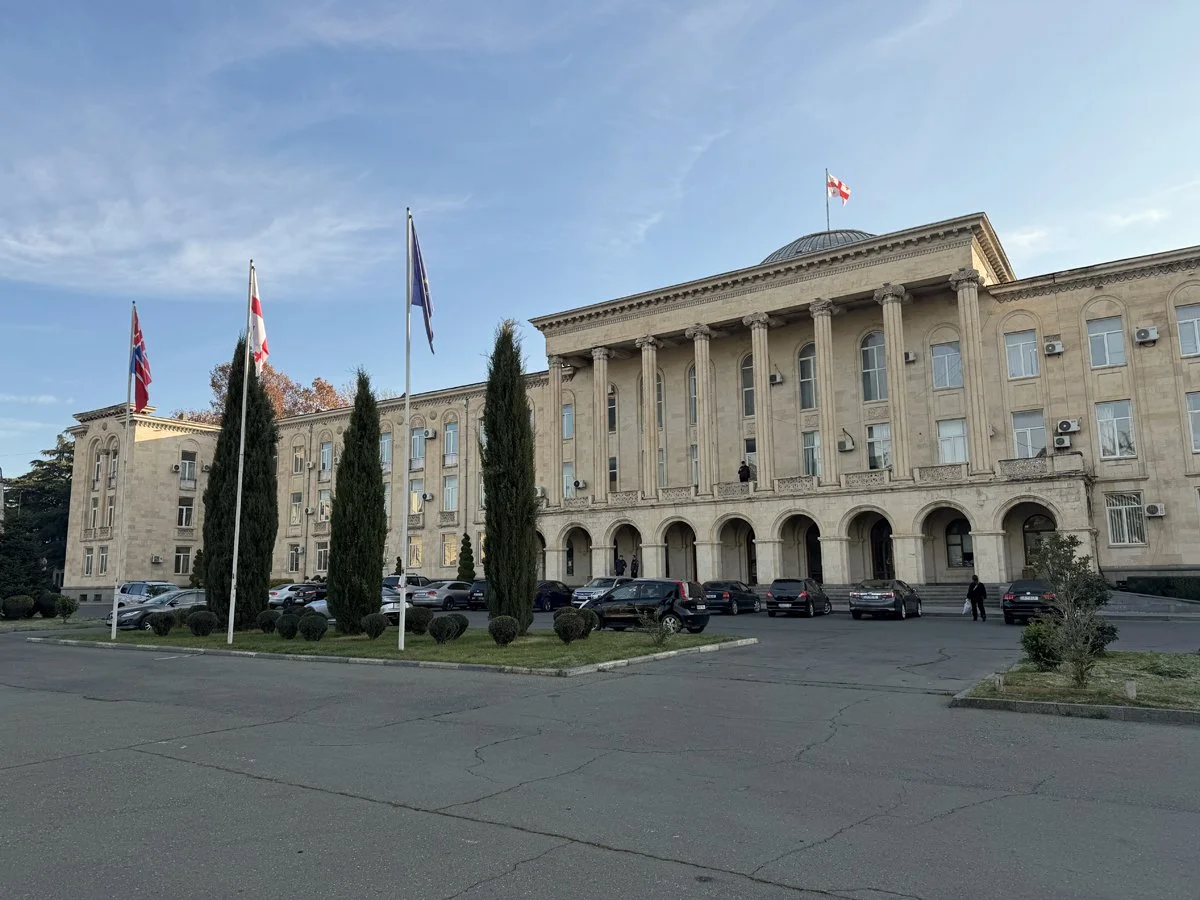
When the woman heard we were Dutch, she immediately mentioned the Dutch journalist and cameraman Stan Storimans. In 2008, he was killed during artillery shelling—not on the front line, but while standing in front of Gori’s city hall when a cluster bomb exploded. Eleven Georgian civilians were also killed in the blast. The cluster munition, consisting of twenty exploding submunitions, was delivered by an SS-26–type missile launched from the Russian Federation. Russia has never signed the Convention on Cluster Munitions (CCM), nor have the United States, China, India, Israel, or Ukraine.

Below Gori’s city hall in 2025.

The woman was the owner of the house and ran the museum herself. As I left the war museum, I heard more dull explosions in the distance.

“Rusi?” (Russian) I asked the taxi driver.

“Rusi,” he simply confirmed. Because my taxi driver was so relaxed and never rushed me, I tipped him an extra 20 lari.

The War Museum.

The Brotherhood

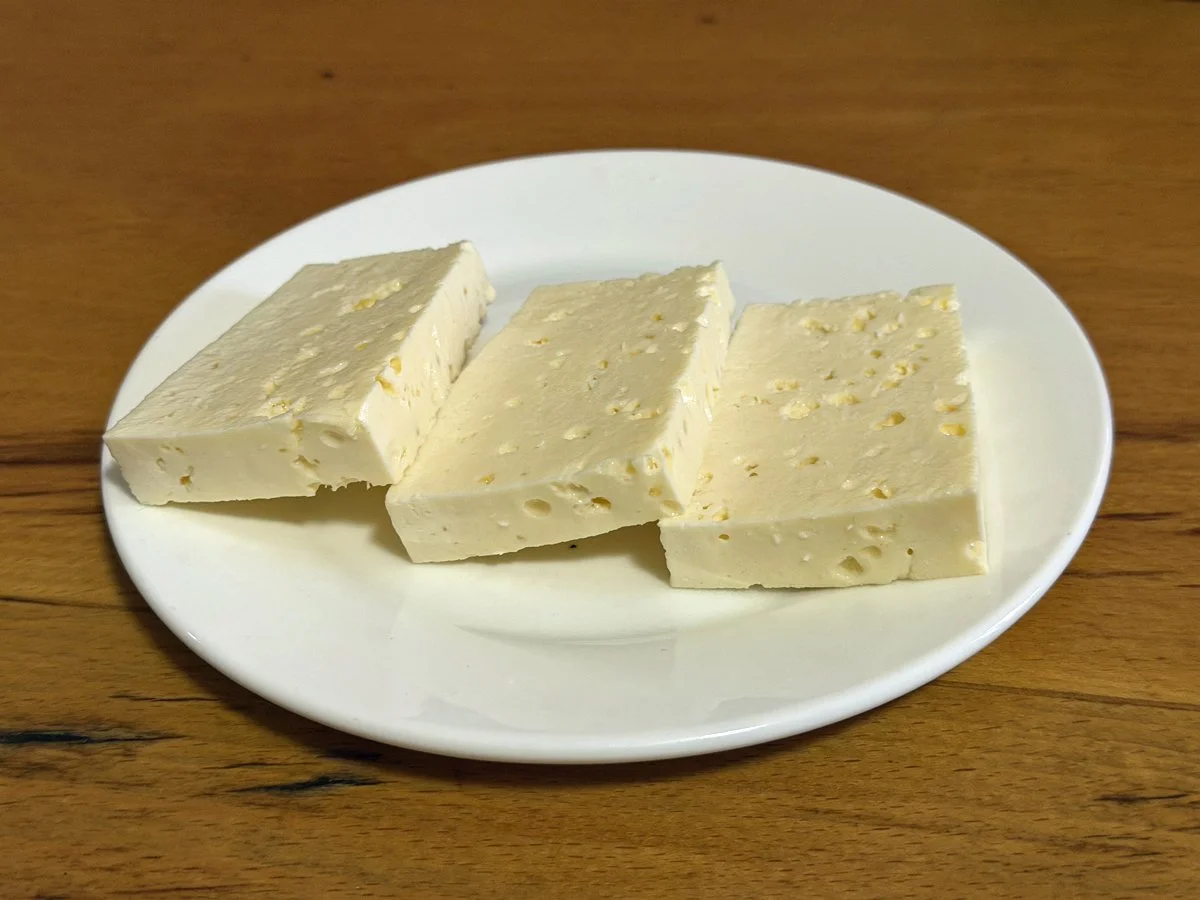
Back in Gori, I had lunch at the Brotherhood again. This time, I ordered kharcho (ხარჩო), made with beef, rice, cherry plum purée, and chopped walnuts. I also ordered some Imeruli (Imeretian) cheese, which I love and can’t find back home in the Netherlands. I emphasized that I wanted just a glass of wine, but they still brought me a full pitcher.

I wondered how Tbilisi has become such a popular tourist destination while part of Georgia remains at war with Russia.

Of course the situation is much more complicated in reality. The South Ossetians are a different ethnic group. They speak Ossetian, an Iranian language (related to Persian, not Georgian or Russian). North Ossetians live in North Ossetia–Alania, a republic within the Russian Federation. The conflict is not simply “Russians vs Georgians”, but involves a real minority population. And then you also have the Abkhazians living in Abkhazia, the disputed region on the northeastern coast of the Black Sea. Georgia considers Abkhazia as part of Georgia.

Georgian protester Elene Berikashvili was sentenced to administrative detention today along with several others. At rallies, she would read the police oath out loud for the officers. Today, her friend brought a speaker and played Elene’s recording for the police. Uninterrupted protest, day 359. ✊🇬🇪

[image or embed]

— Rusudan Djakeli (@rusudandjakeli.bsky.social) 21 November 2025 at 18:28

Last post: Turtle Lake

Turtle Lake

Back in Tbilisi

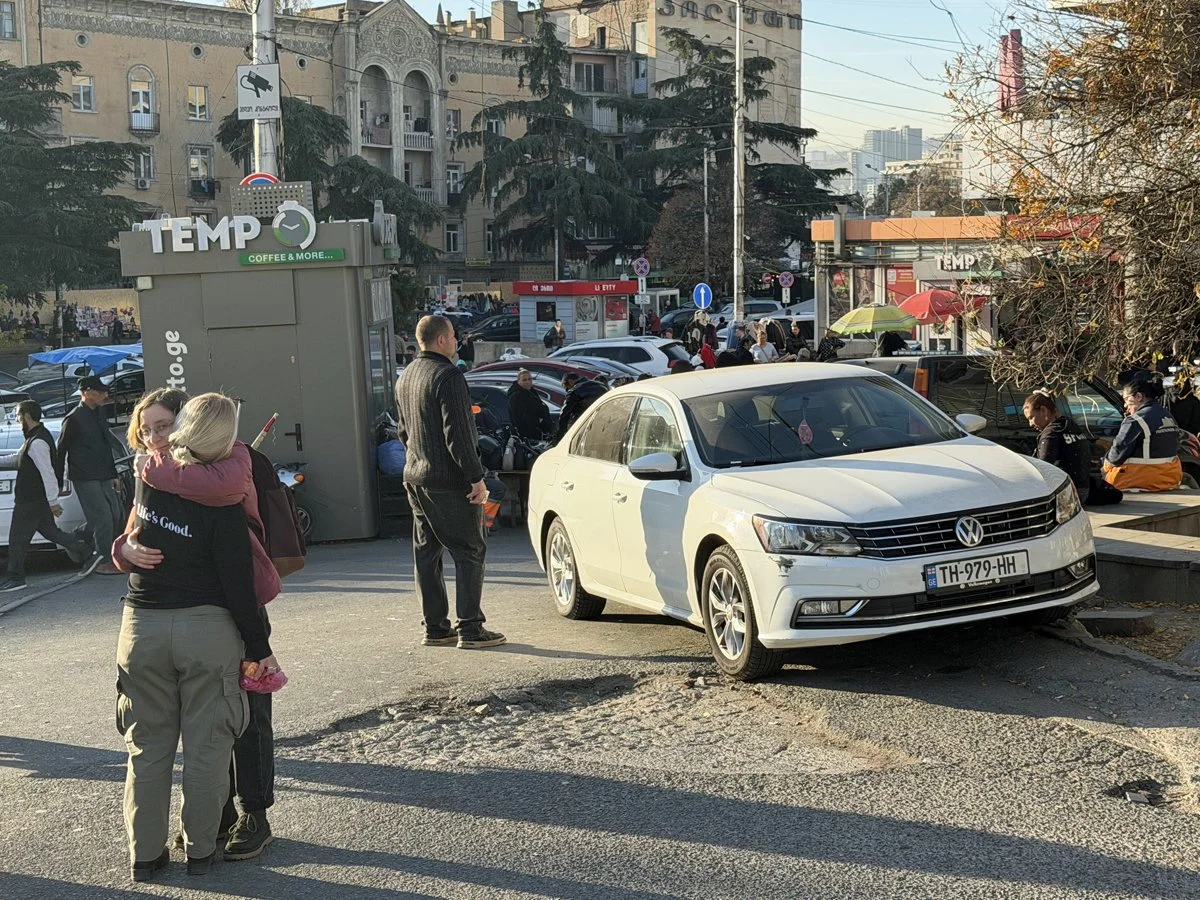
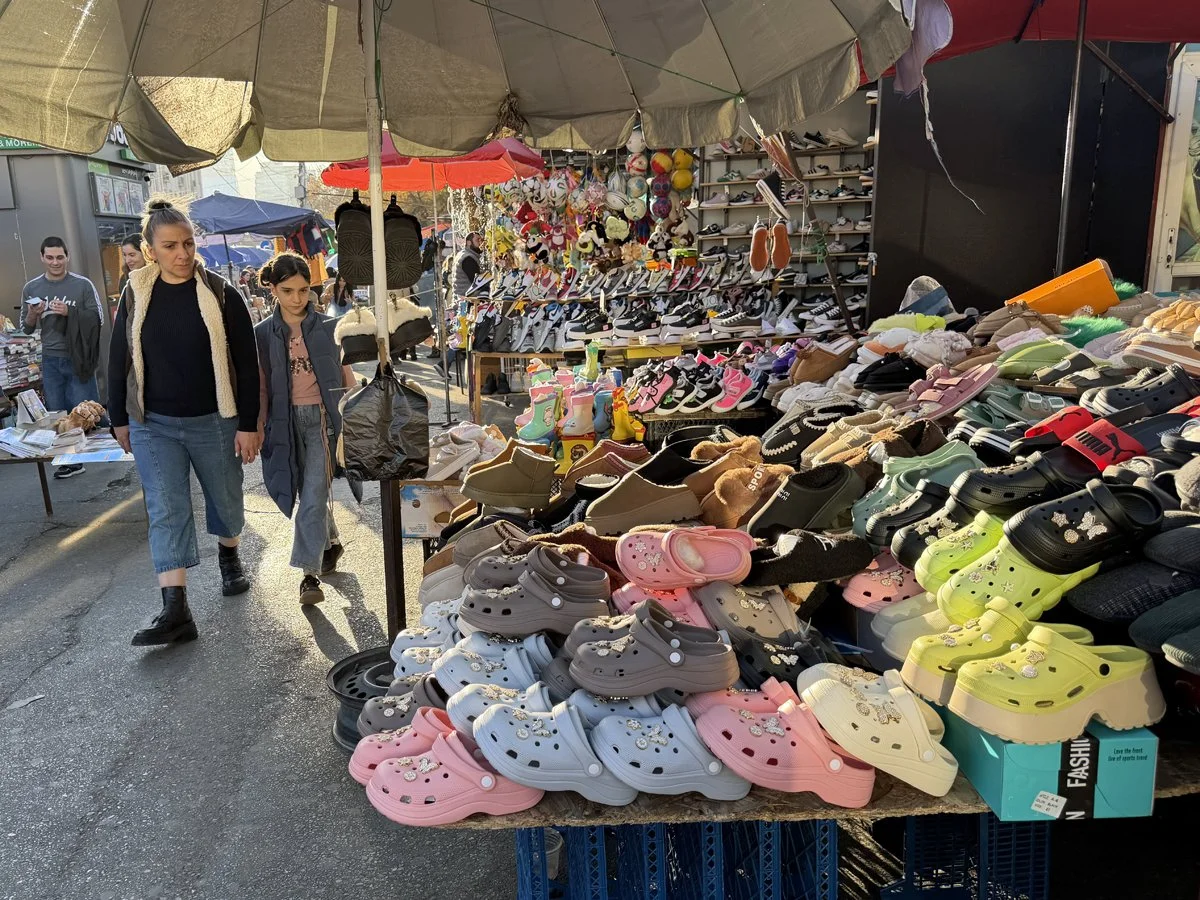
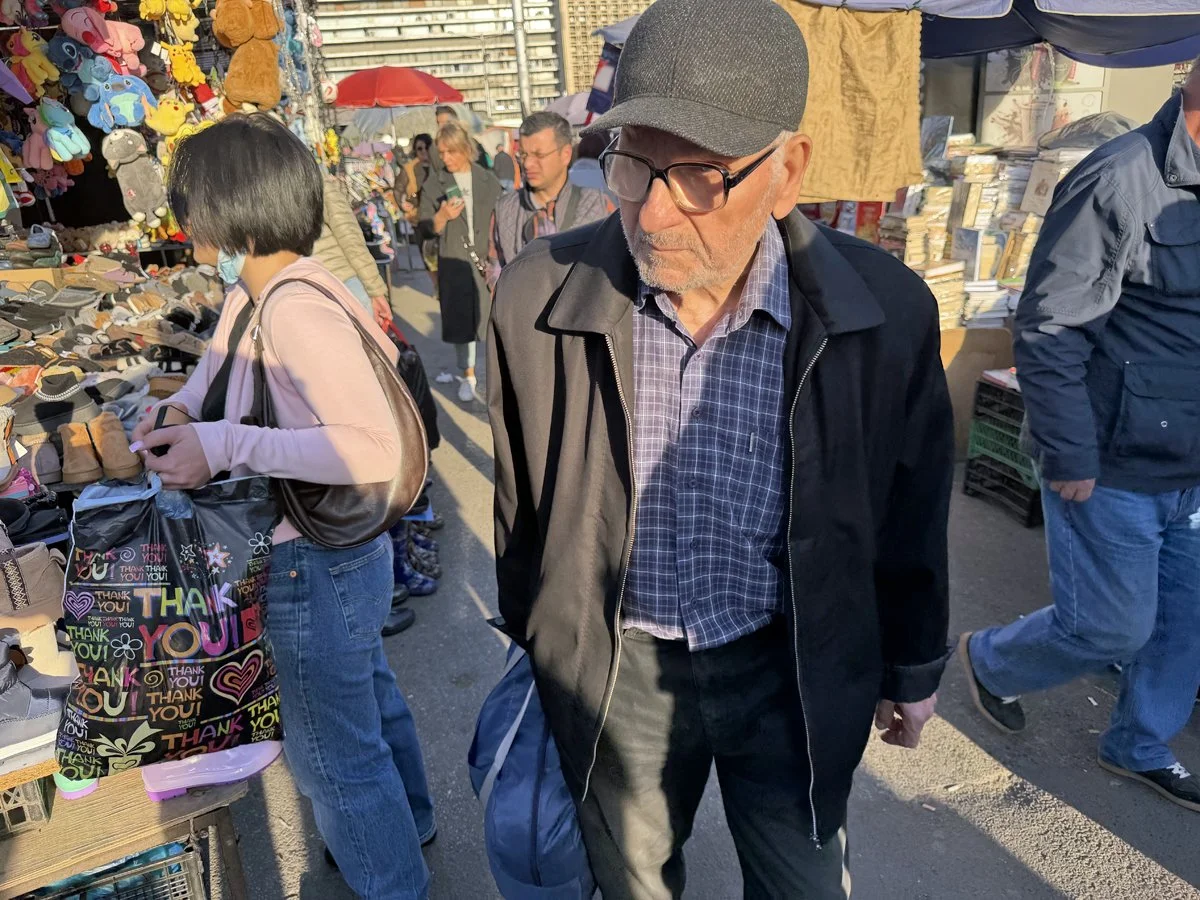
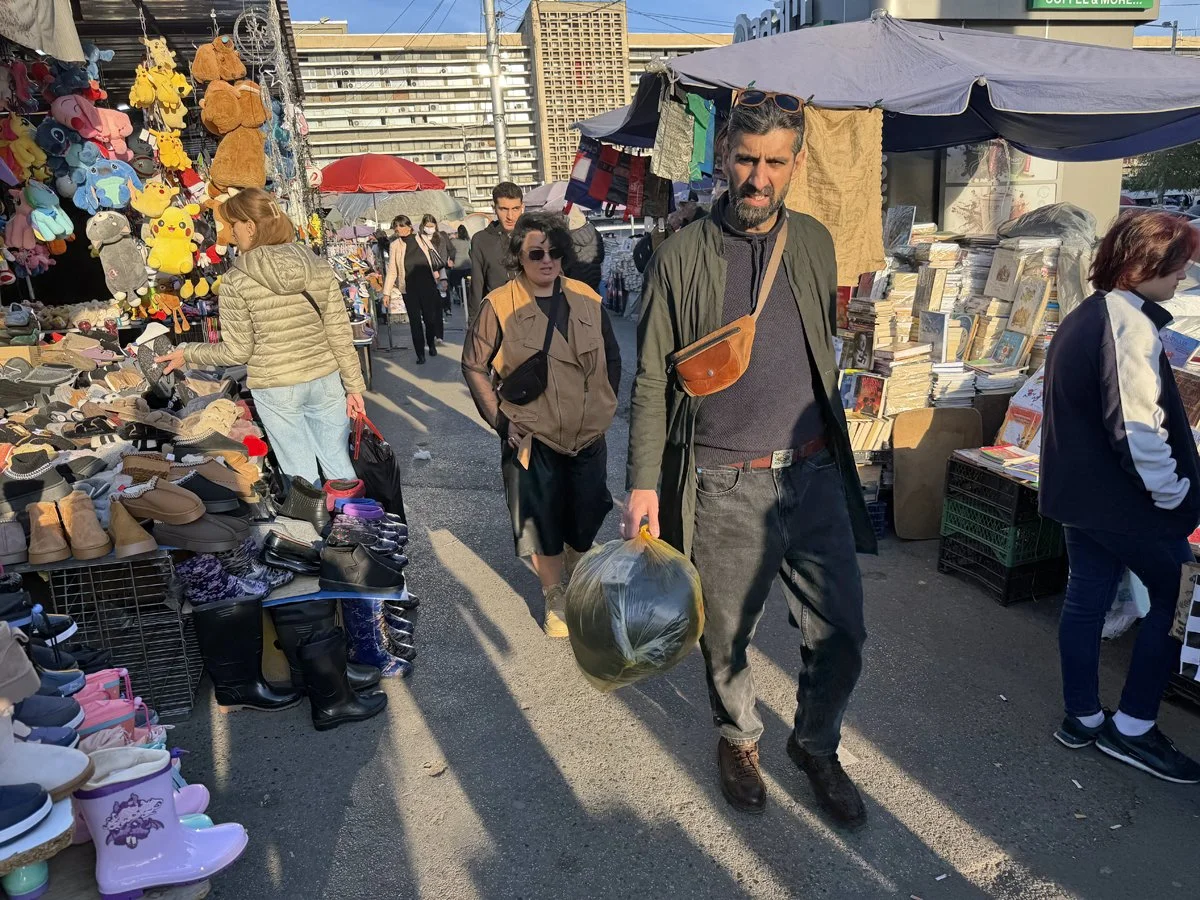
I arrived back in Tbilisi—and in a different world—by train. I didn’t need to buy anything, but I still lingered at the market in front of the railway station. When I travel, I love markets—it’s usually not the most affluent people who shop there. There were so many plastic Crocs clogs on display, but I already have three pairs at home.

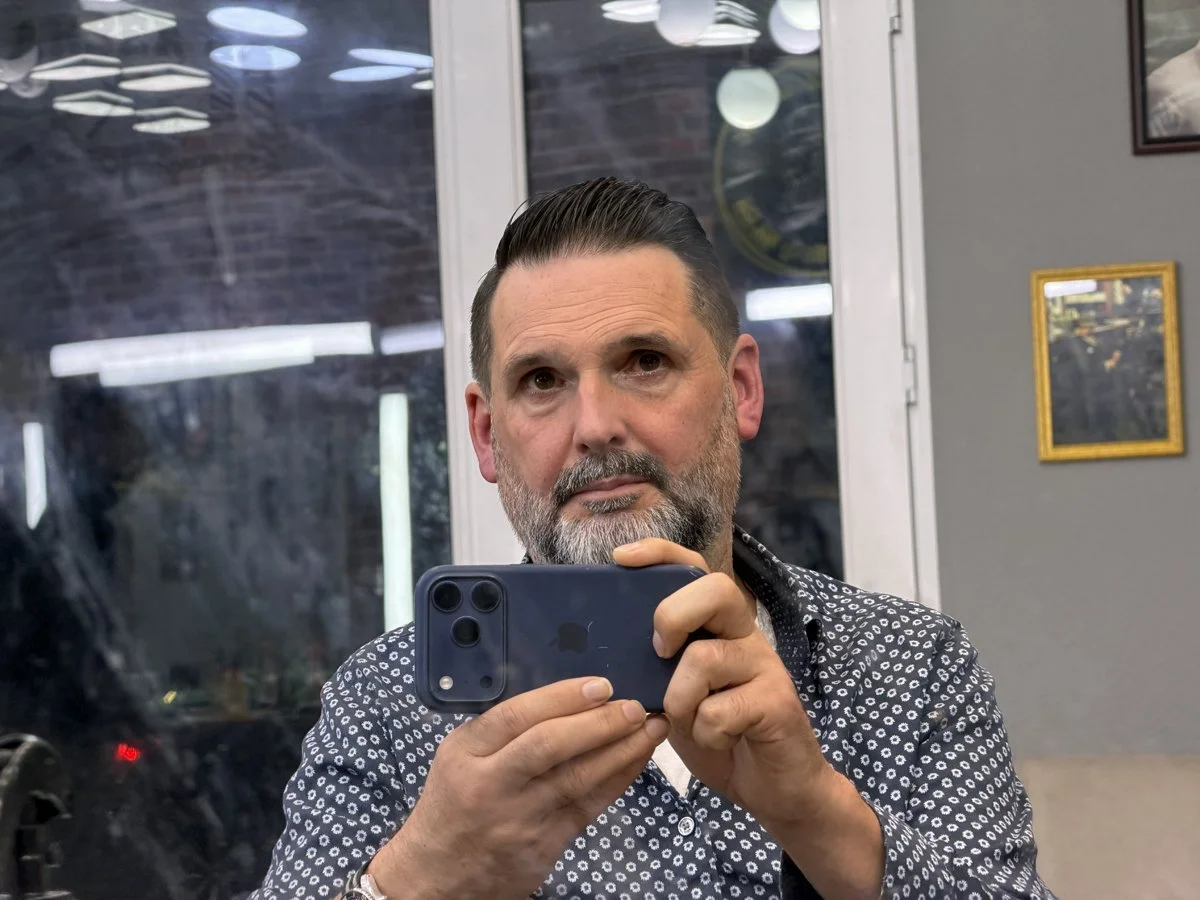
On Friday evening, I ended up at the Aslan barbershop. I explained that I wanted a haircut and a tidy beard. Half an hour later, I found myself with cotton swabs sticking out of my nostrils and ears—a clever way to pull out hot wax used to remove stray hairs. Shortly after, a facial mask followed, and I realized I was getting the full treatment. I figured I was rich enough to pay and didn’t protest. In the end, it cost about half of what I would have paid back home.

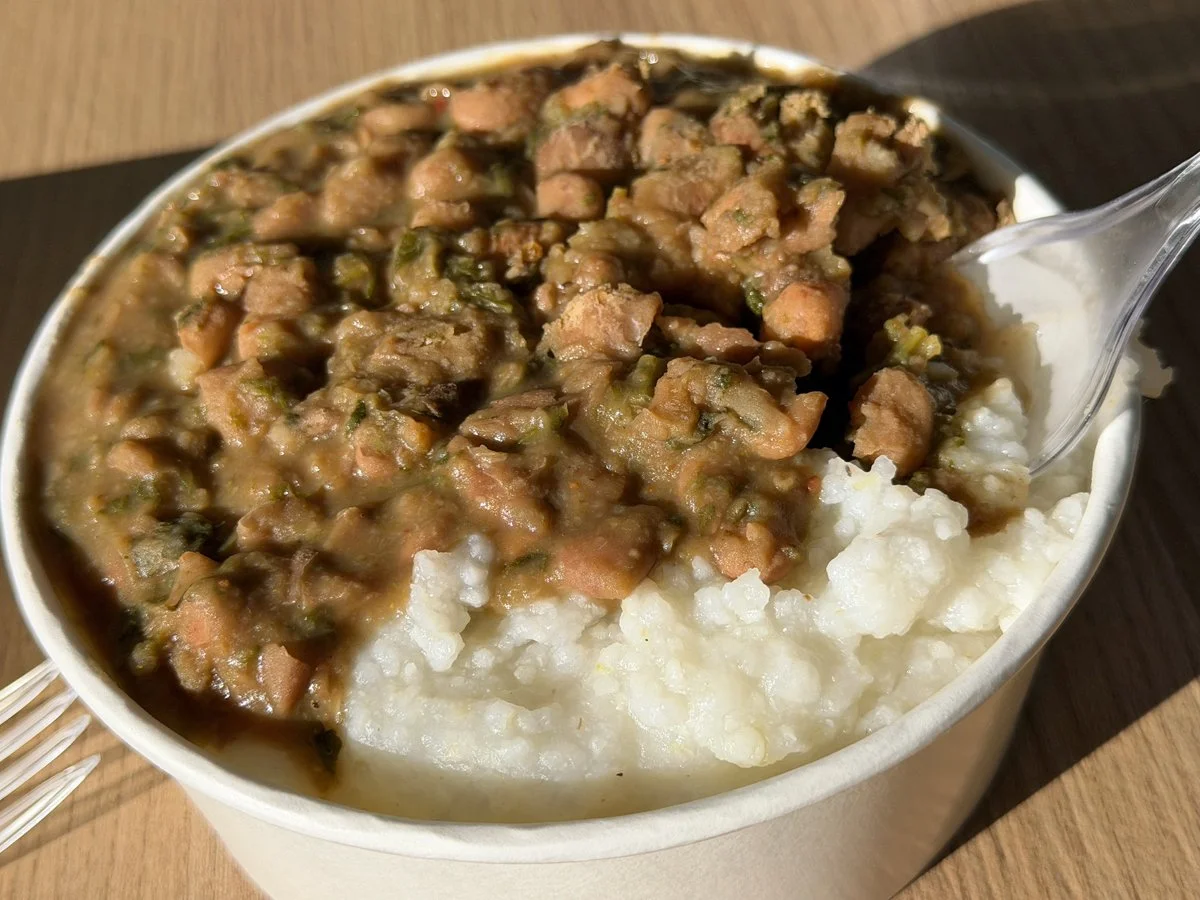
On my last day, I decided to take a long city hike along the mountain ridge to Turtle Lake. I was simply curious to see the lake—no other reason. For breakfast, I had beans and porridge at Mtatsminda Park. When I arrived at 9 a.m., all the food places were still closed, and I had to wait almost an hour. On the trail, I knew there would be nothing to eat.

It was only half an hour farther than my hike on Thursday, but this time the walking felt much easier. Within a week, I had grown used to the hills. I brought some tap water and was hardly hungry—the beans and porridge had provided enough energy to last until late afternoon.

Because I stayed in the same apartment for the full eight nights, the journey felt more relaxed. I even had time to reflect on life. I realized that I don’t hike nearly as much as I used to. Working full-time, combined with the self-imposed obligation to visit my father every Saturday and help him maintain the house and garden, meant that the last time I could truly decide what to do with my weekends was before 2018. That was the year my mother was hospitalized for the first time, and since then I’ve dropped everything on weekends—except when I’m traveling.

Turtle Lake was underwhelming. I had expected a secluded high-mountain lake, but instead it was very much at city level and could be reached by car from the other side of the ridge. Still, the sun was shining, and even after a week the autumn temperatures remained around 20 degrees Celsius.

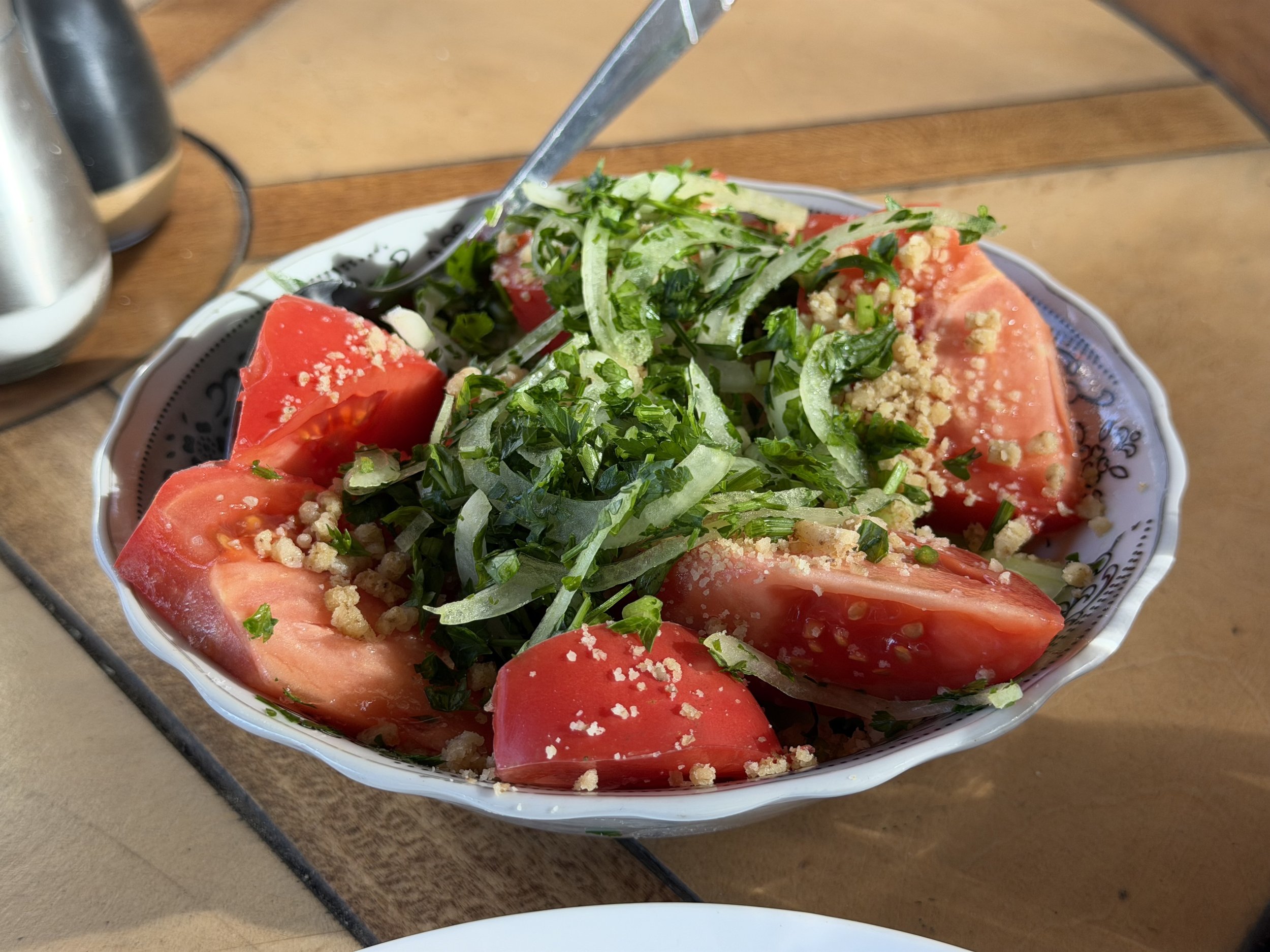
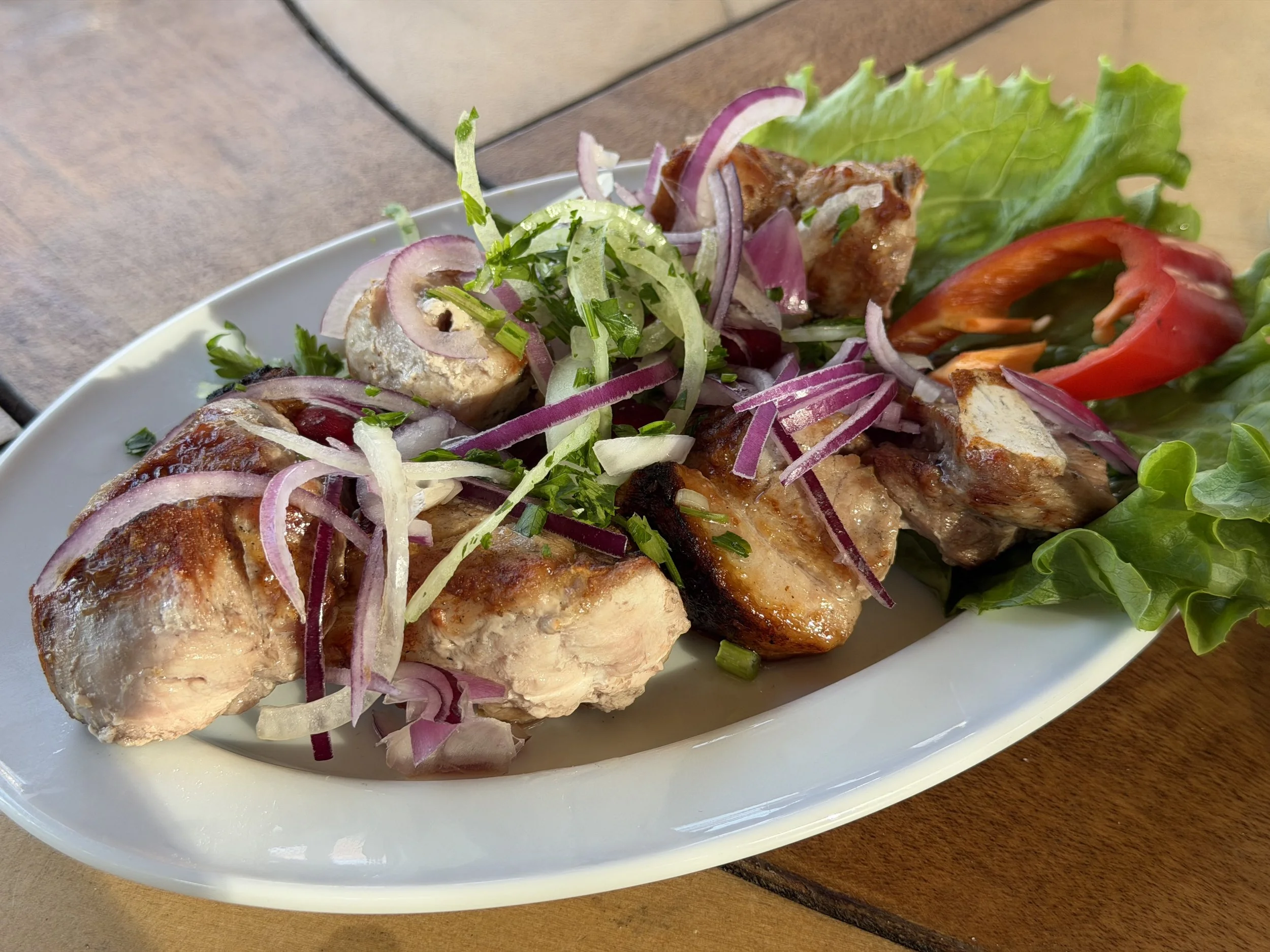
When I got back to the TV Tower, I caught the smell of a barbecue. With no need for more carbs, I ordered the classic tomato-and-cucumber salad with a crumbled walnut dressing. For meat, I chose a single skewer of pork, called mtsvadi, along with a glass of red wine. Mtsvadi is essentially the same as shashlik—the word shashlik even entered the Dutch language as sjasliek. At home, I own half-meter-long metal skewers, and once a year I indulge myself by roasting a skewer of pork.

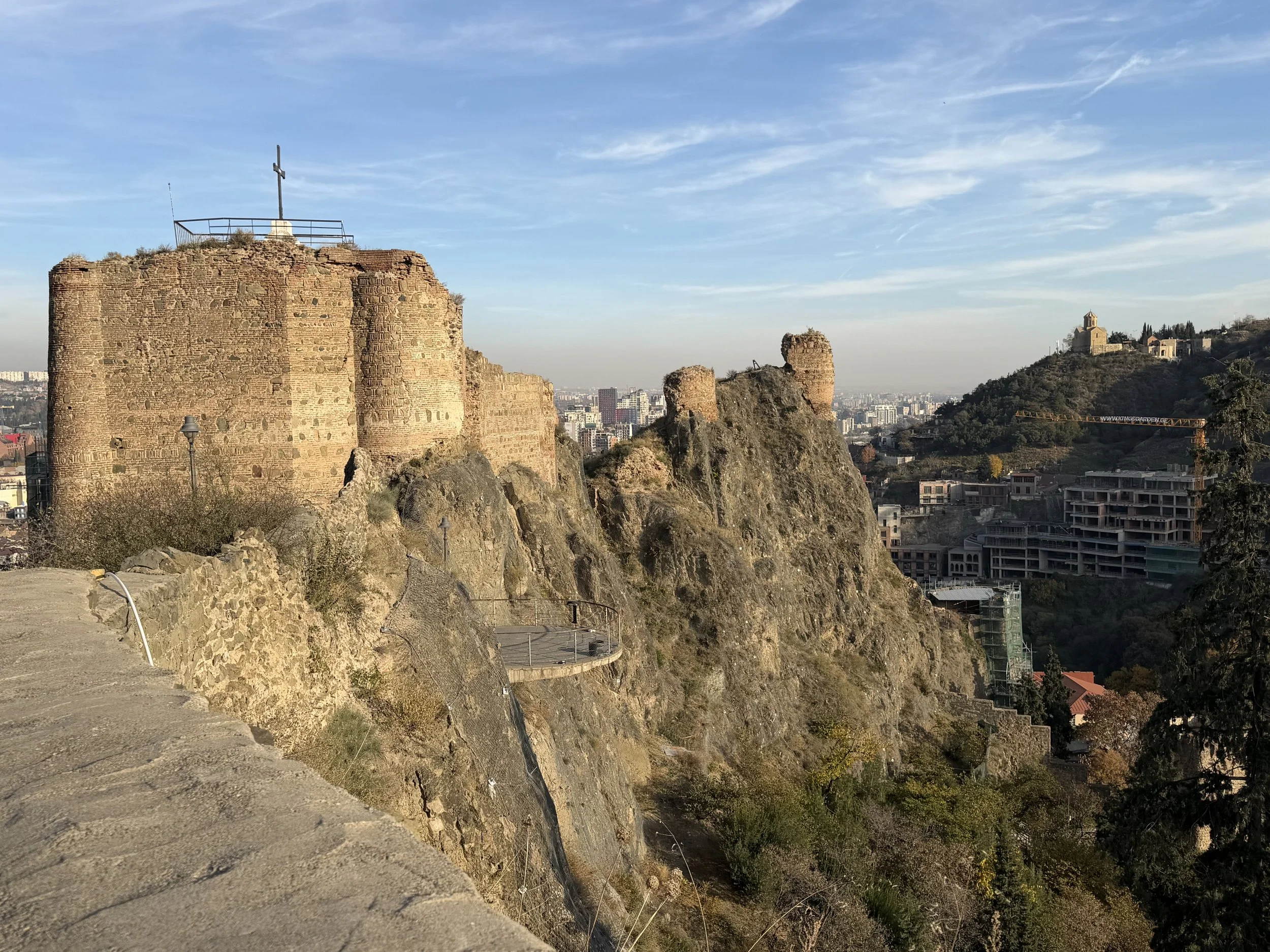
Just fifteen minutes of climbing from my apartment, the Narikala Fortress towers over the Old City. The site was under construction at the time, so it was closed to visitors. According to legend, it was first built when Tbilisi was part of the Kingdom of Iberia (c. 302 BC–580 AD). Over the centuries, the fortress was captured by the Persians, then fell into the hands of the Umayyad Caliphate and later the Kingdom of Georgia (1008–1490). However, most of the structures visible today date from the 16th and 17th centuries.

Salobie Bia სალობიე ბია

17 Shota Rustaveli, Tbilisi

Because my lunch was postponed until the afternoon, I had my last dinner quite late. I went back to the Bean House on Rustaveli Avenue for a classic lobio, served with pickles. When it comes to longevity, this was probably the healthiest meal I ate in Georgia. Lobio can be flavored with adjika and walnuts. Adjika is made from red chili peppers, garlic, walnuts, fresh green coriander, dried coriander, summer savory, oil, white wine vinegar, and salt.

Every day, Georgian police carry out countless unlawful orders. Today, they suddenly decided that standing on the raised platform in front of Parliament is forbidden — and arrested young activist Sopo Markozia for simply being there. Day 360. 🎥 Tornike Jandieri

[image or embed]

— Rusudan Djakeli (@rusudandjakeli.bsky.social) 22 November 2025 at 18:36

On Sunday morning, my flight took off from Tbilisi. I left behind a city with increasingly restrictive laws against peaceful protest and a police force that was suppressing the daily demonstrations more and more aggressively. One day, a man was arrested for squeaking a rubber duck at the police; another day, a woman was arrested simply for standing on the sidewalk. In total, five Georgians are now being charged with “obstructing movement” for protesting peacefully on a sidewalk. Each faces up to 15 days of administrative detention and up to one year in prison for repeated “offenses.”

The Georgian courts are also keeping 61-year-old protester Zurab Menteshashvili in pretrial detention. He is being prosecuted criminally under Georgian Dream’s new repressive laws for “blocking the road”—meaning peacefully standing in the middle of Rustaveli Avenue during the daily protests.

This news hit protesters hard. According to a BBC investigation, the Georgian Dream regime used a World War I–era chemical agent called “camite” during last year’s protests.

Despite mass arrests, draconian laws, and heavy fines, Georgians continue to take to the streets every single day. At the time of writing, this marked day 394 of daily, uninterrupted protests in Georgia. I think they are all heroes.