Camino del Norte: Zumaia - Deba
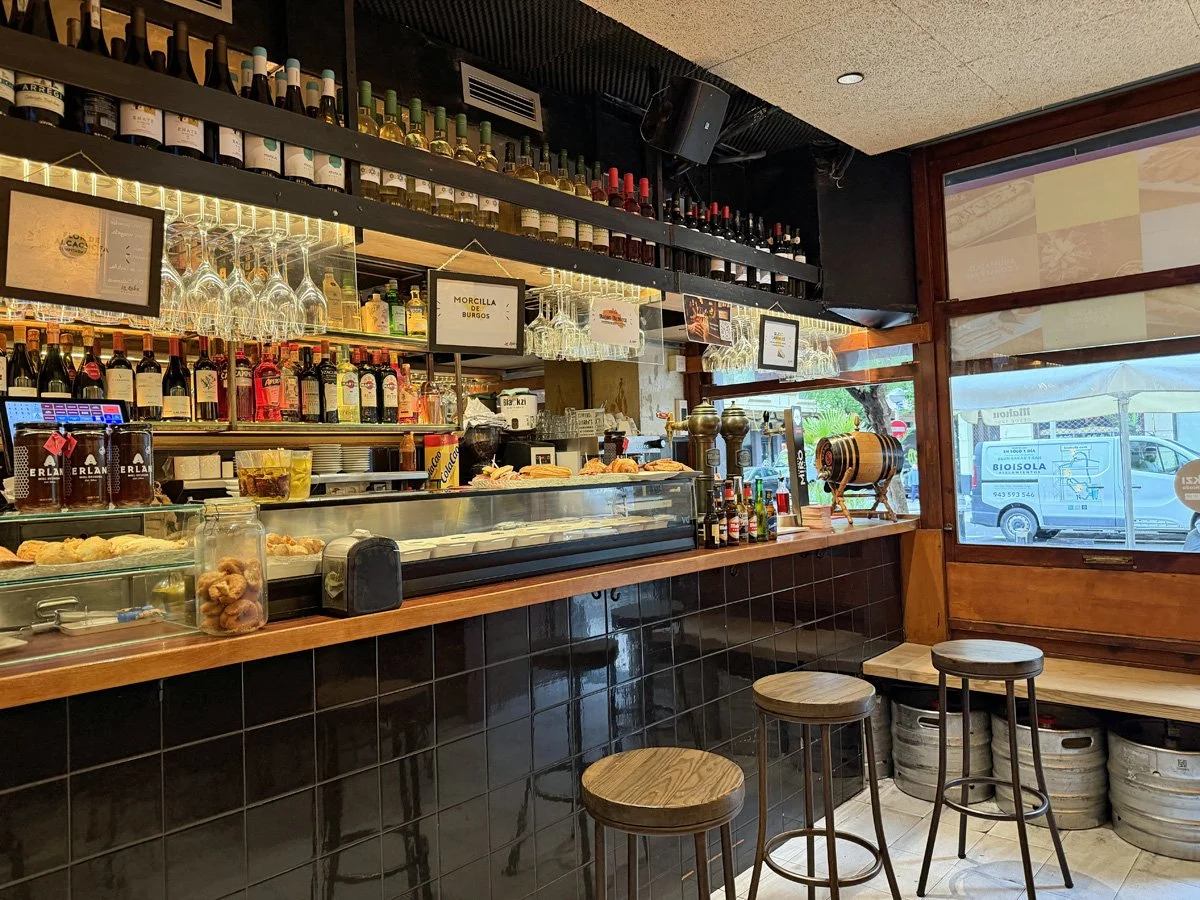
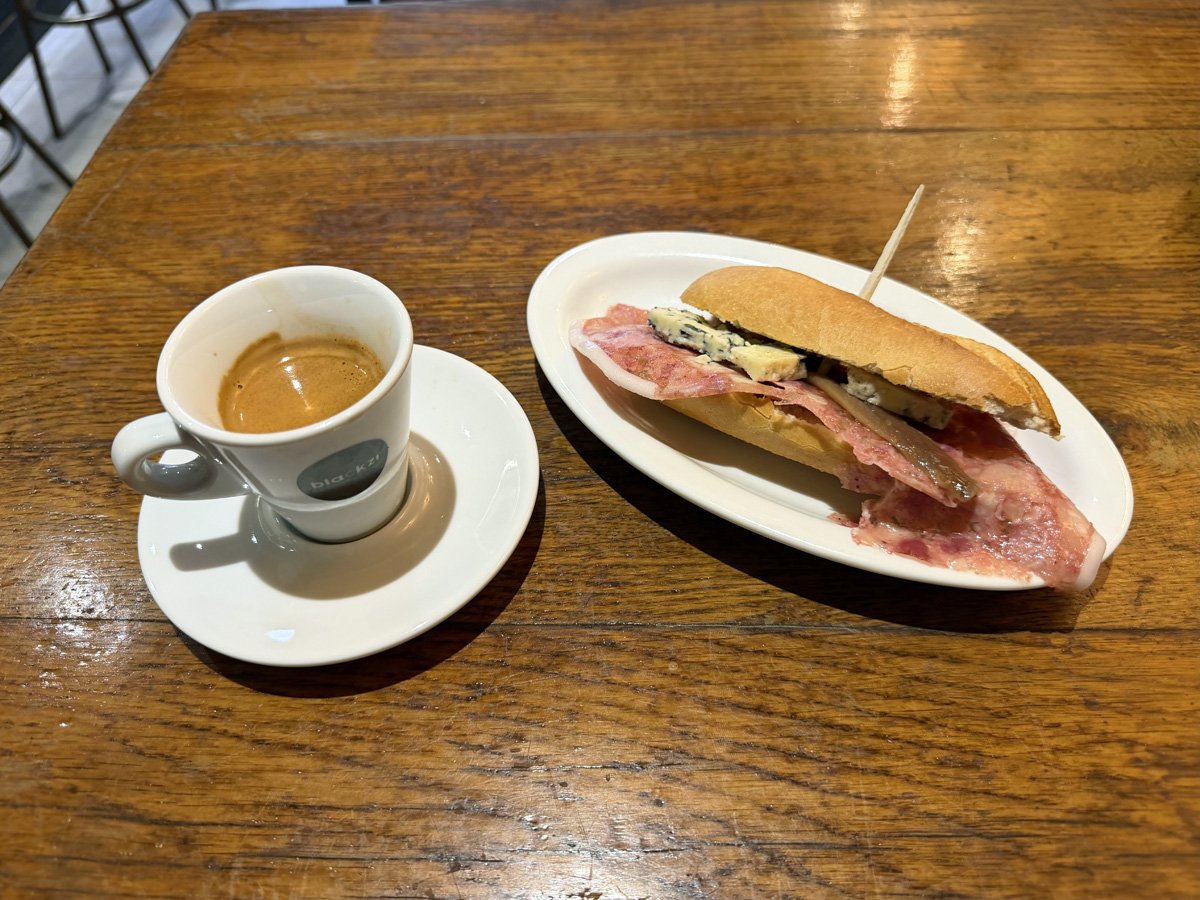
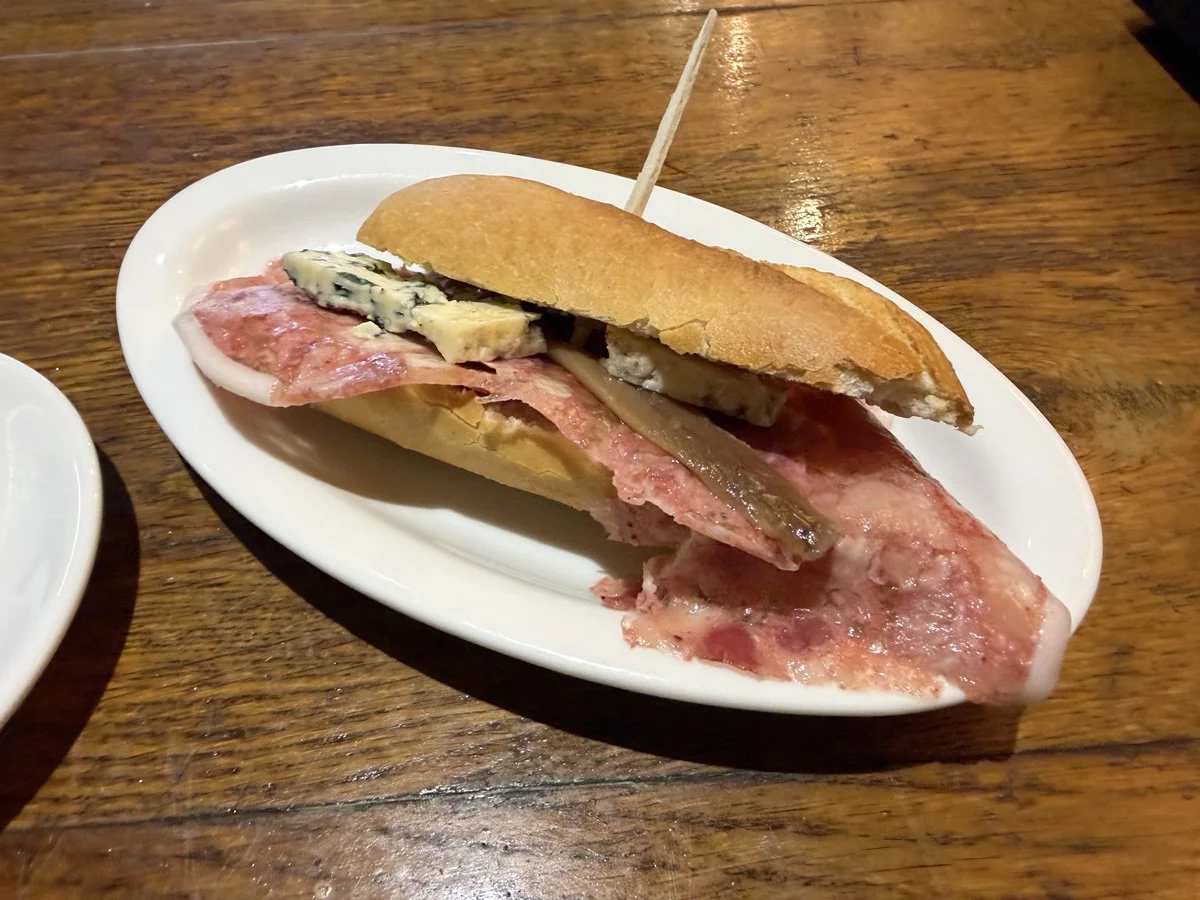
Before my fourth day of walking, I had a day off and my lunch reservation in Zarautz. But since I had plenty of time, I started the morning in the Gros neighborhood with a café solo and a very good bread roll filled with a slice of cold brawn (or head cheese—pork scraps set in a sour gelatin), blue cheese, and anchovy. It was a perfect combination: sour, salty, and bitter coffee all at once.
I Shazam’d the music playing in the background.
Voy a escalar,
La Torre Picasso.
Como un titán,
Sin miedo al fracaso.
Esquivaré los disparos, la metralla,
Las balas y el fuego.
Para mirarte, uh-uh,
A los ojos de nuevo.
Outside, it had started raining again.
Kirkilla in Zarautz
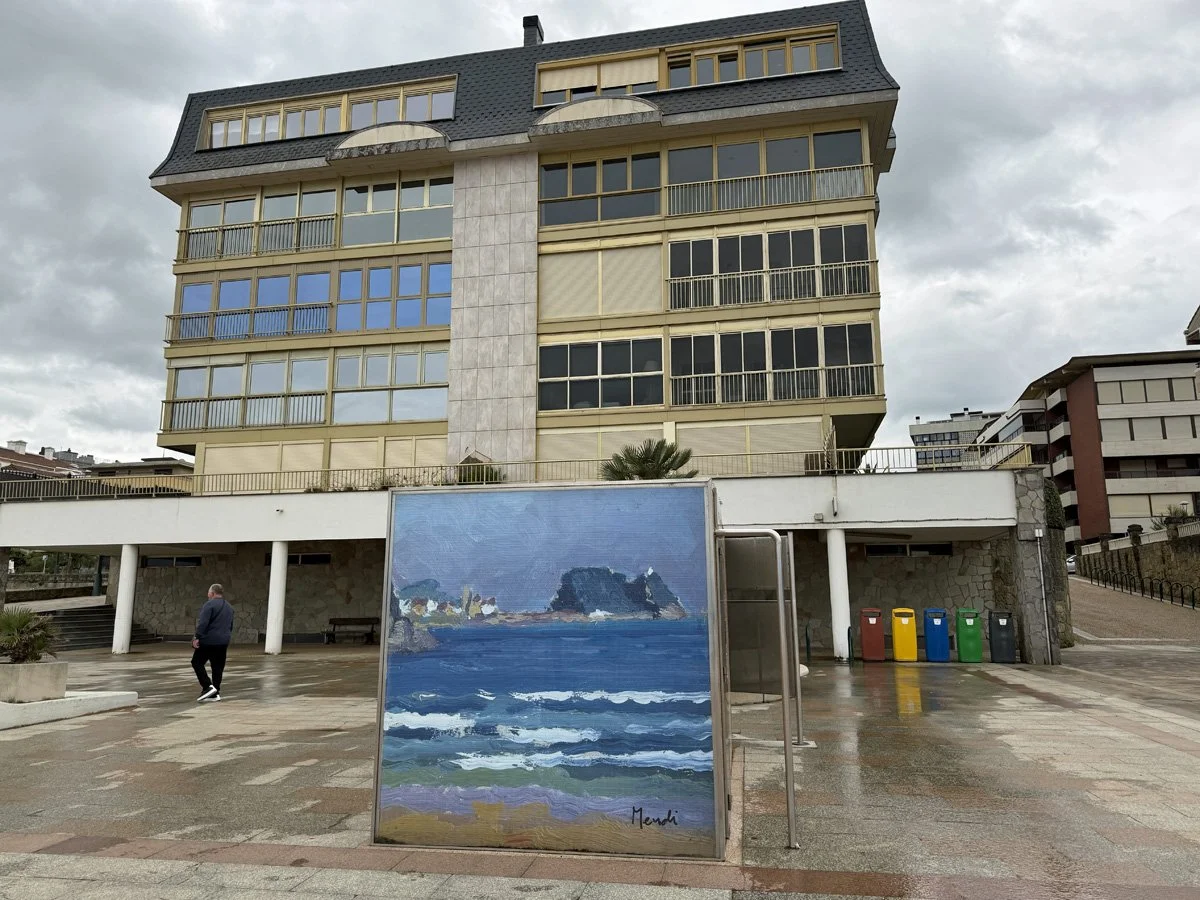
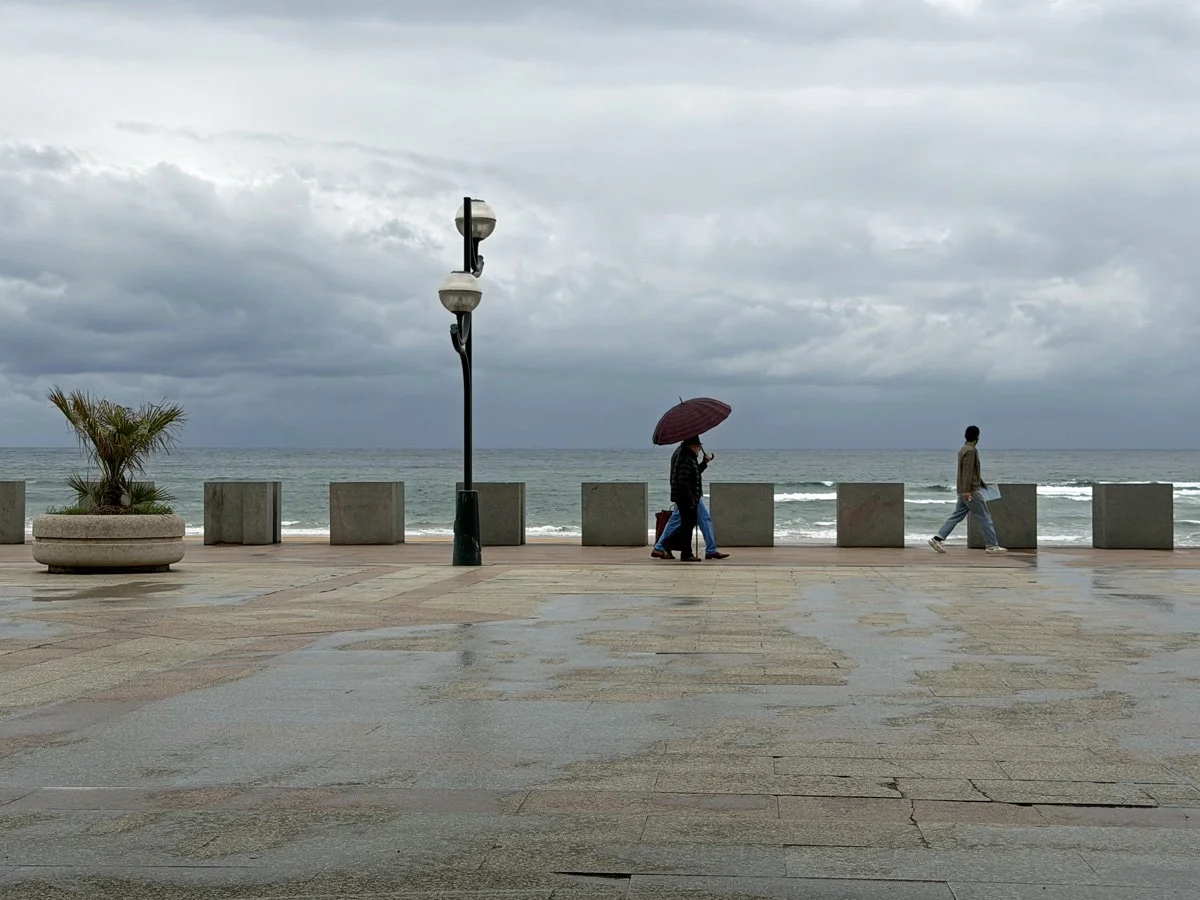
I don’t know why modern beachfront architecture is usually so ugly. The artwork is a painting by Juan Luis Mendizábal, known as “Mendi” — a local painter from Zarautz. He is said to have committed in July 1992 to painting every single day for 365 days, going to the seafront each day to paint Zarautz beach and the iconic Ratón de Getaria.
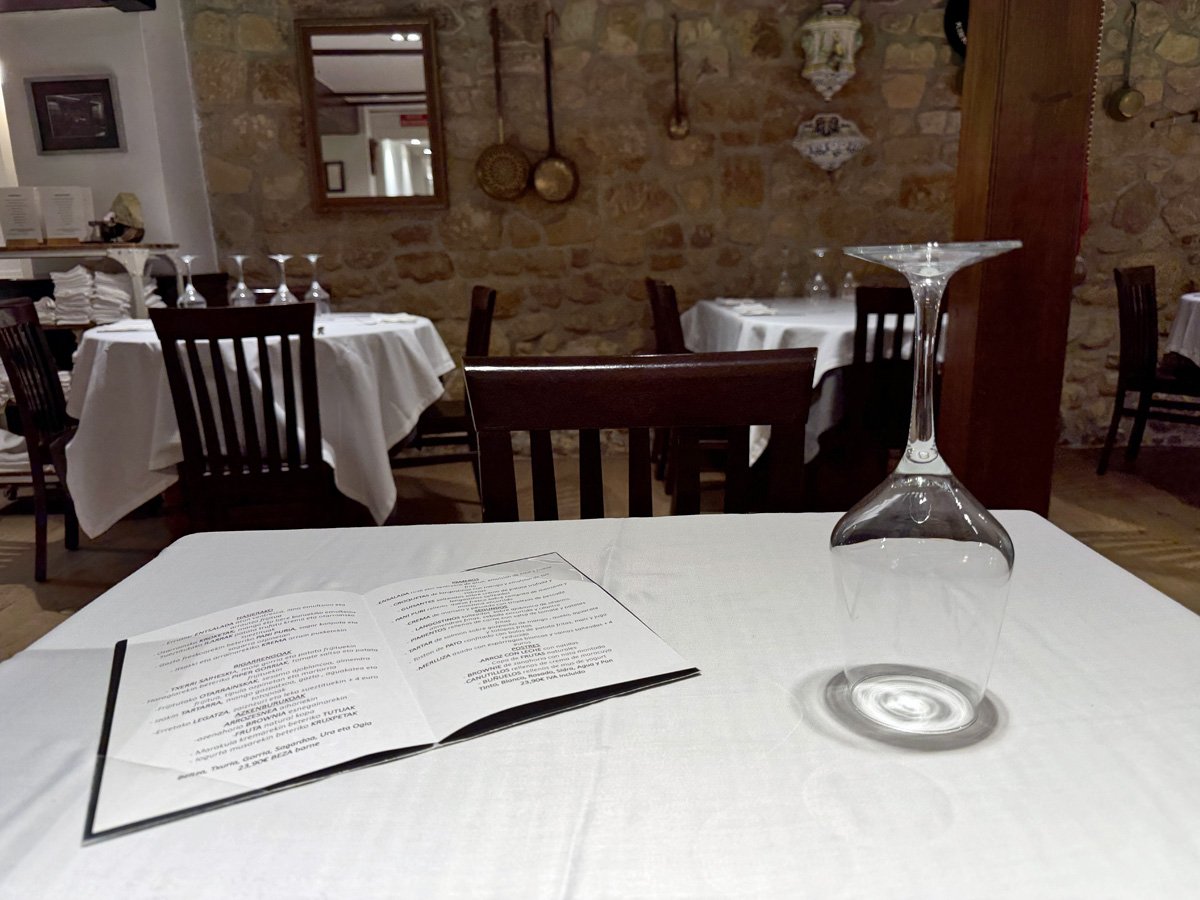
The restaurant I had reserved is called Kirkilla. It opened in 1983 after originally functioning as a warehouse. The chef, Xabier Zabala, joined at the age of 21 and stayed for 15 years.
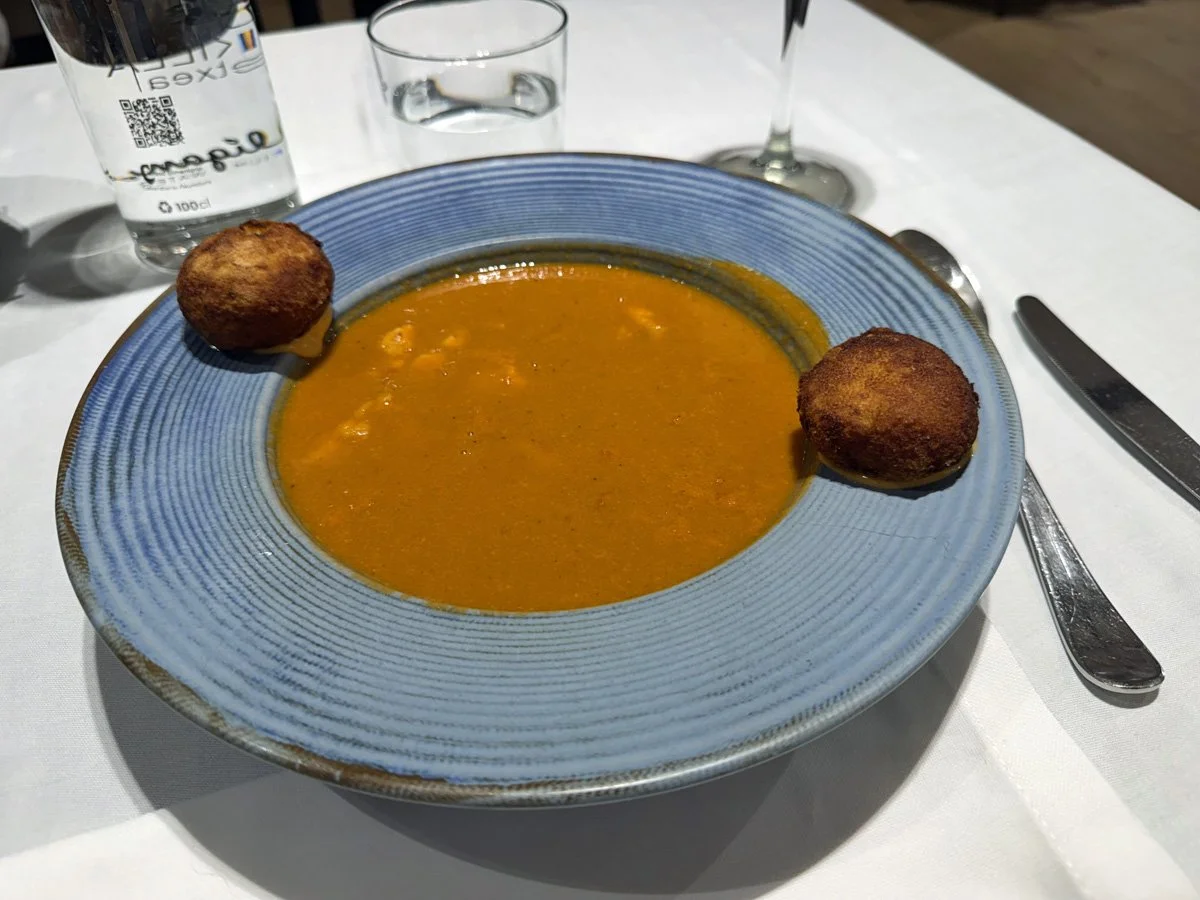
The tasting menu wasn’t available for lunch—something I hadn’t checked beforehand—and the lunch menu was fairly limited. For the starter, I chose the Itsaski eta arrainarekiko krema arrain puxketekin (seafood and fish cream with fish croquettes), which was essentially a bisque. For the main course, I had frijitutako otarrainskak, sesame ajoblanco, almendra frijitua, tipula ozpinetan eta marroia (fried Basque shrimp, sesame ajoblanco, fried almonds, pickled onion, and tarragon).
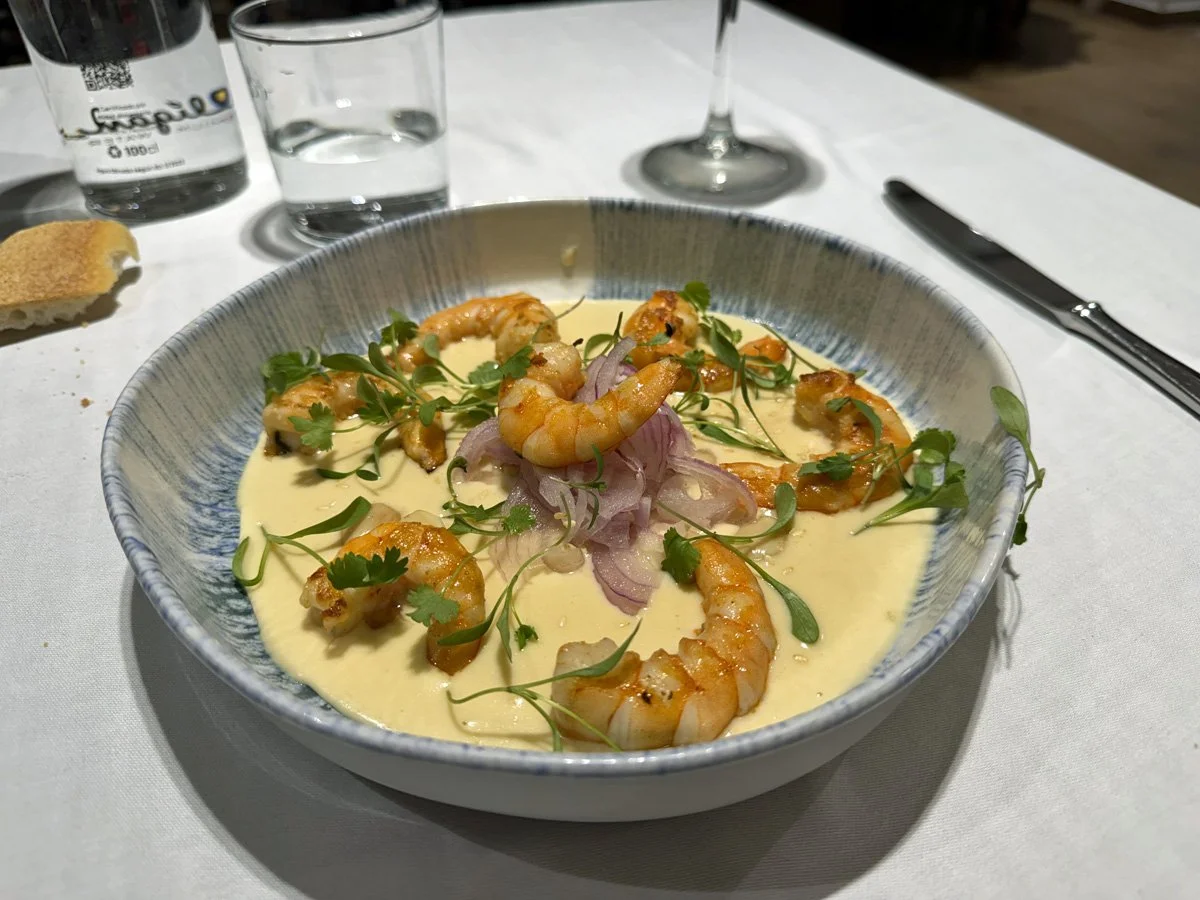
It’s easy to see that the Basque language is a true isolate. There is no demonstrated genetic relationship to any other language in the world, and it predates the arrival of Indo-European languages in the region. At the same time, Basque has clearly borrowed vocabulary from languages it has come into contact with since Indo-European languages spread into what is now Spain—for example almendra frijitua (“fried almonds”), where almendra is of Latin origin.
However, arrain, the Basque word for fish, is generally considered native vocabulary, with no clear connection to Latin, Romance, or Germanic languages.
I was a bit shocked when I got the bill—it came to only €23.90. The lunch menu included bread, mineral water, a glass of white wine, and even the glass of cider I ordered.
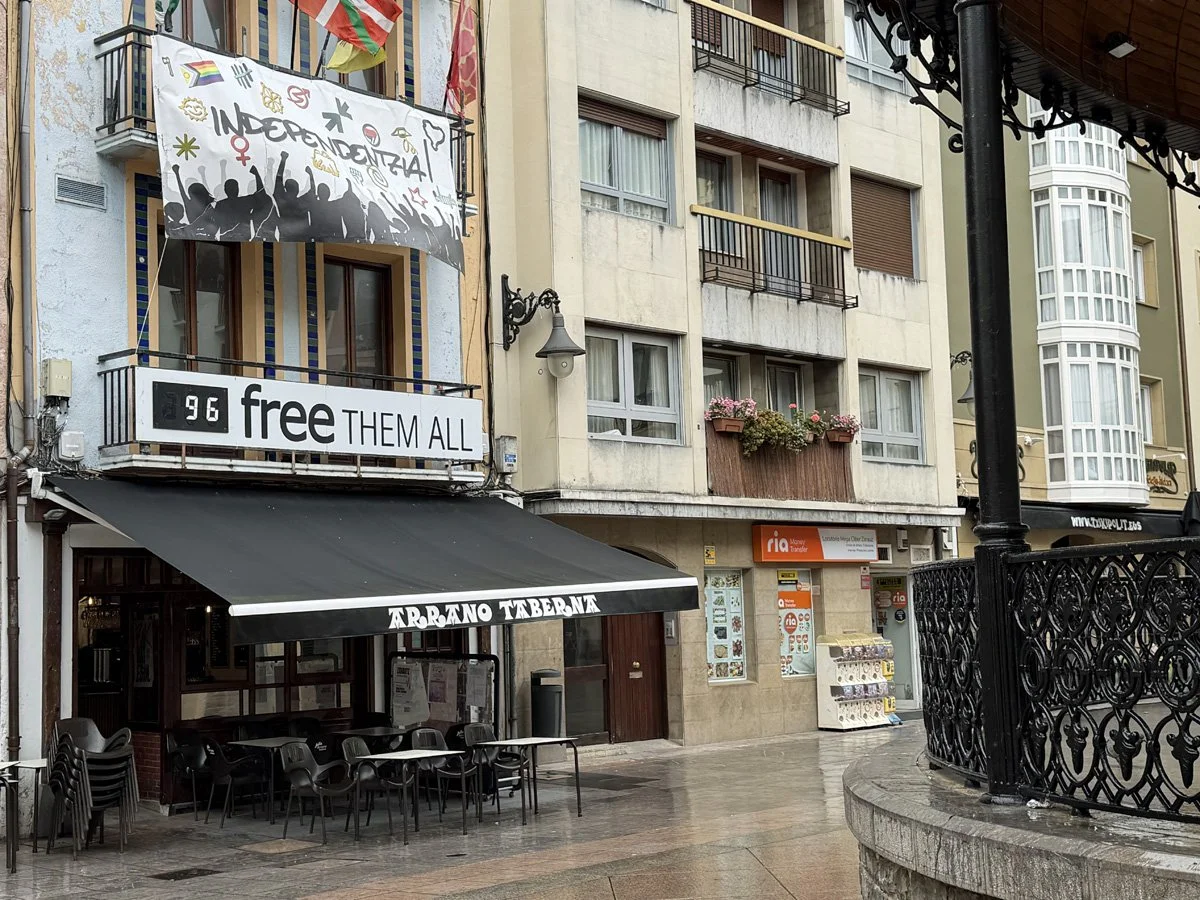
ETA was founded in 1959 during the later years of the dictatorship of Francisco Franco, so the post-war Basque independence movement can best be understood in relation to Franco’s regime, which promoted a centralized Spanish nationalism. Even public use of the Basque language (Euskara) was restricted. It was not until 1968 that ETA carried out its first lethal attack. This escalated during the late Franco era but did not end with Franco’s death in 1975.
After the transition to democracy, ETA was heavily targeted by the Spanish state, and its public support declined over time, particularly due to civilian casualties. In 2018, ETA declared its complete dissolution without a negotiated political settlement. Even though there are still around 130–200 former ETA-linked prisoners, the phrase “96 free them all” likely refers to a local or more specific subset of those prisoners.
ETA is relatively recent history—the Basque independence movement itself is much older. Modern Basque nationalism began in the late 19th century, especially after the Spanish state gradually abolished many of the Basque fueros (traditional rights and privileges). Basque nationalists did not need to invent an entirely “imagined community” in the sense described by Benedict Anderson (Imagined Communities: Reflections on the Origin and Spread of Nationalism, 1983), since there was already a strong linguistic and cultural foundation. Nevertheless, the Basque flag (Ikurriña) was created in the late 19th century, in the broader context of emerging European nation-states and modern nationalism.
Ozeanoen aurkikuntza / the discovery of the oceans
Back in San Sebastián, I realised I had seen little of the city. I visited the small maritime museum, Euskal Itsas Museoa, which had an exhibition on Juan Sebastián Elcano and Andrés de Urdaneta.
I learned about Ferdinand Magellan in school, but he was Portuguese. In the Basque Country, the hero of the first circumnavigation of the Earth is not Magellan, but Juan Sebastián Elcano, who was born in Getaria.
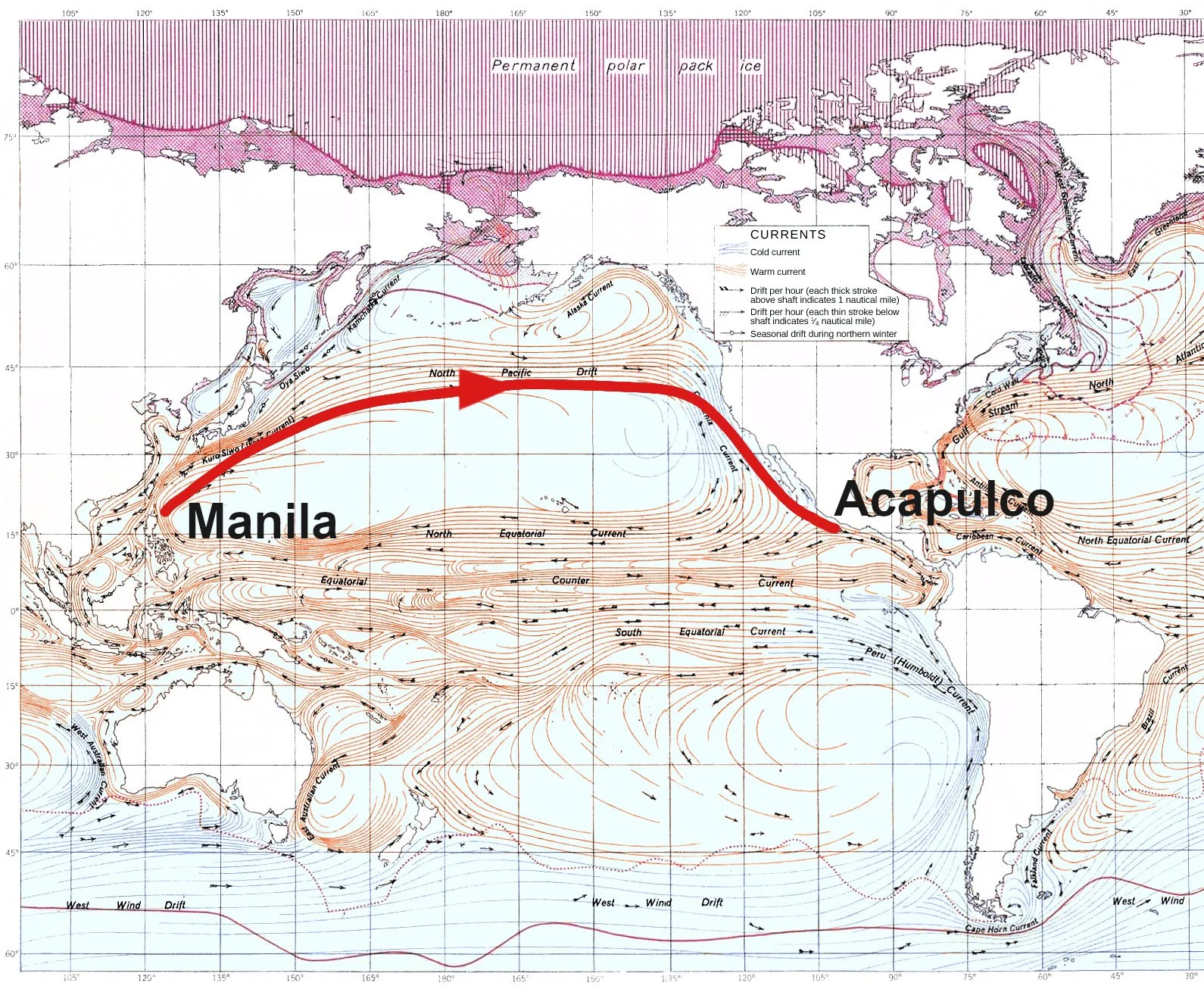
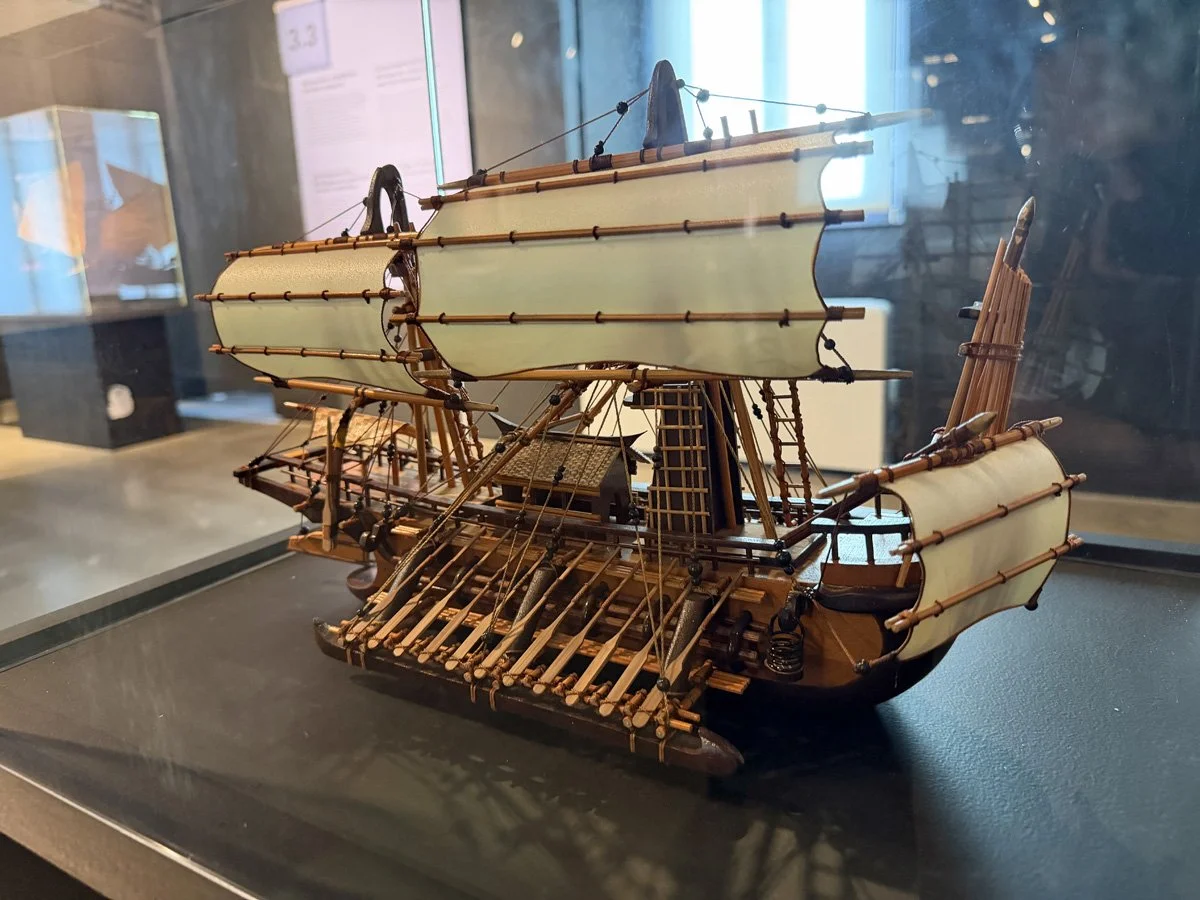
The exhibition also told the story of Andrés de Urdaneta and his discovery of a return route across the Pacific, sailing northeast toward the 38th parallel from Asia to New Spain. This “tornaviaje” made it possible to complete regular transoceanic navigation and helped open the Pacific to sustained global maritime trade. Below is a scale model of an “Indonesian” ship. Urdaneta and Elcano were both part of the Loaísa expedition to the Spice Islands, which are now part of modern-day Indonesia.
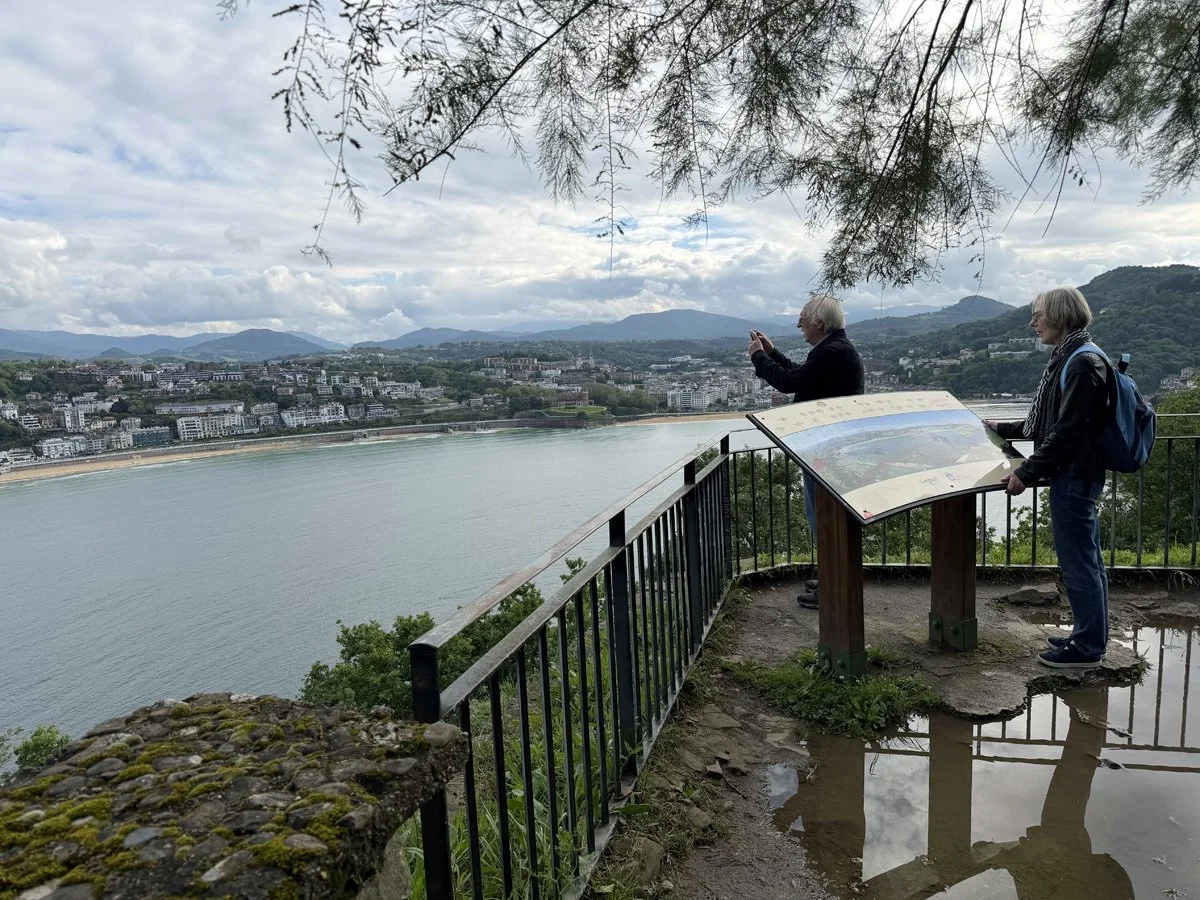
Monte Urgull is the hill overlooking the old city of San Sebastián. It has long been used as a military stronghold, dating back to at least the 12th century. Today, it still contains a fortress—partly in ruins.
During the 1813 Siege of San Sebastián, the site sustained heavy damage, partly due to ammunition magazines exploding. For good measure, I climbed Monte Urgull, and the view was quite impressive. I wasn’t especially excited by the fortress itself, though—once you’ve seen one ruined fortress, you’ve seen them all. The history is more compelling than the remains: the city was held by Napoleonic French troops and besieged by British and Portuguese forces during the Peninsular War.
This is the Thucydides Trap that France and Great Britain fell into. The rise of France as an emerging power led to war with Great Britain and its ally, Portugal. The term was coined by American political scientist Graham Allison (Harvard University). It gained global attention when Chinese President Xi Jinping mentioned it to Donald Trump during his visit in May 2026.
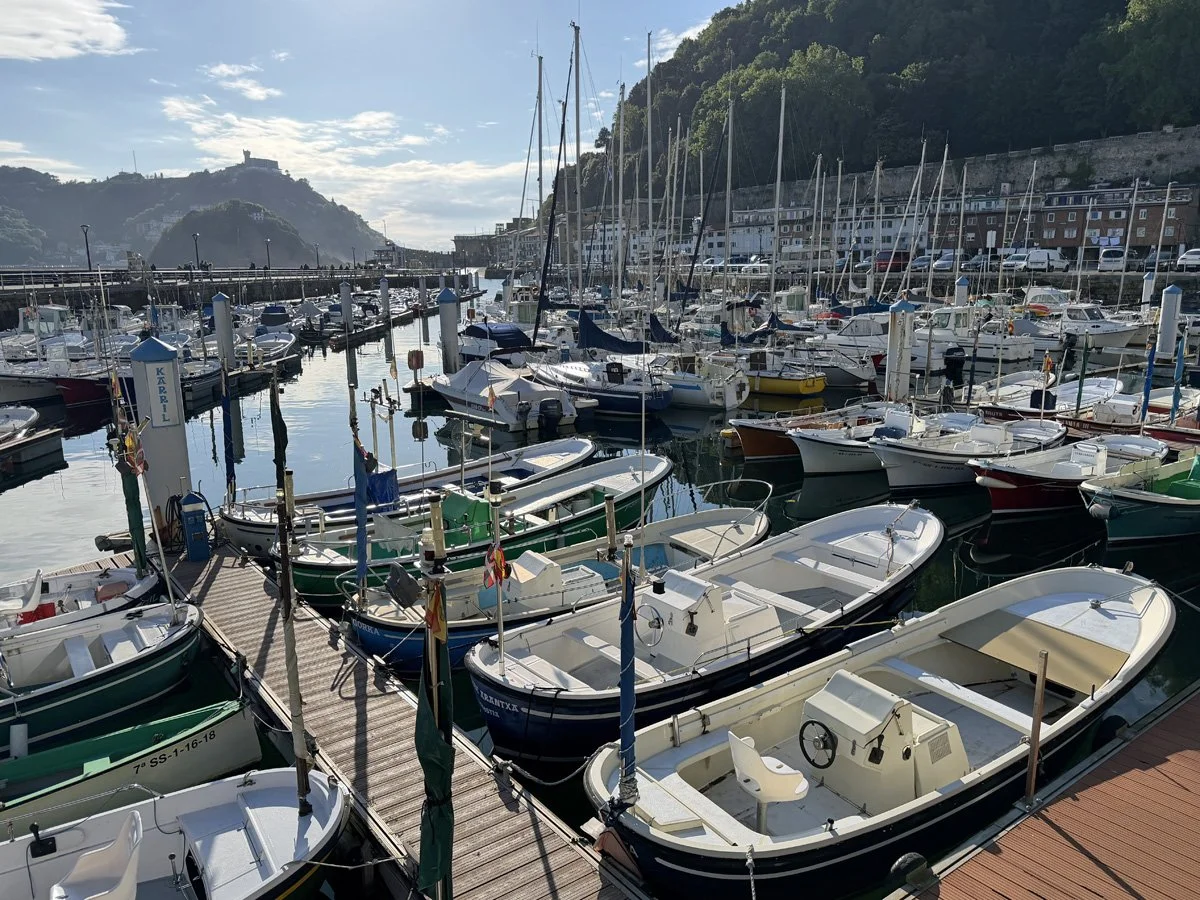
Above, the small harbour is now used mainly for pleasure sailing yachts, while in the foreground are modern txalupas—open boats used for mixed purposes such as coastal inshore fishing and leisure trips. In the maritime museum, there was also a list of local Basque fish: sardine, horse mackerel, hake, conger, monkfish, tuna, bonito (albacore tuna), anchovy, and mackerel.
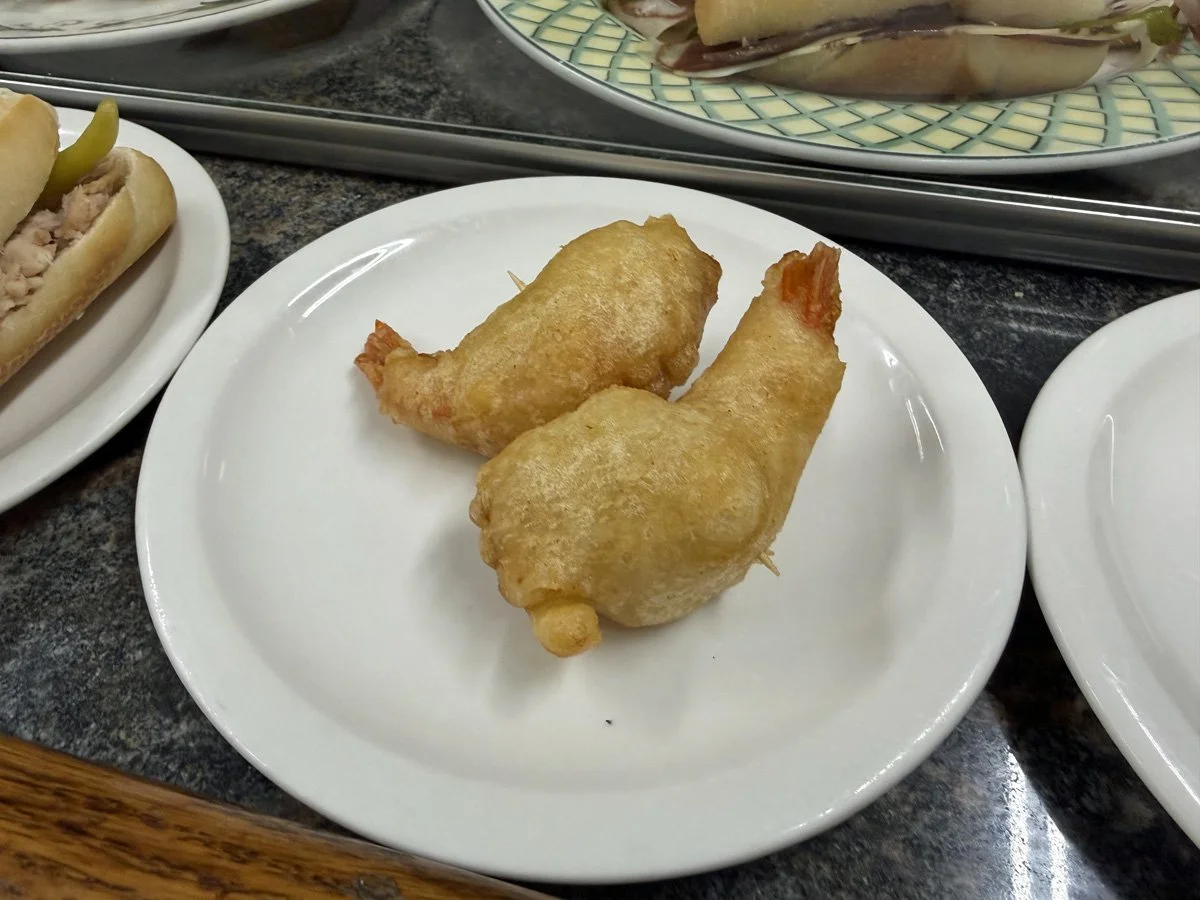
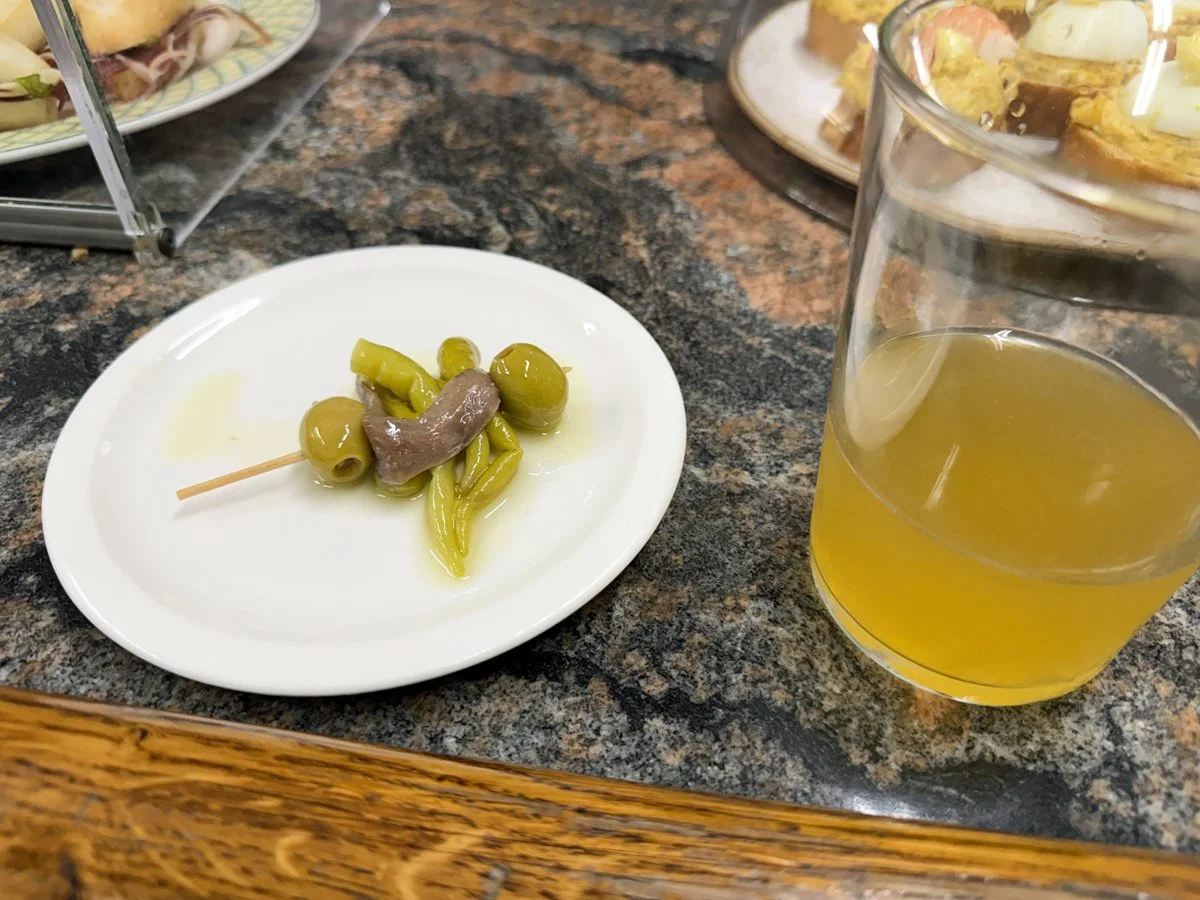
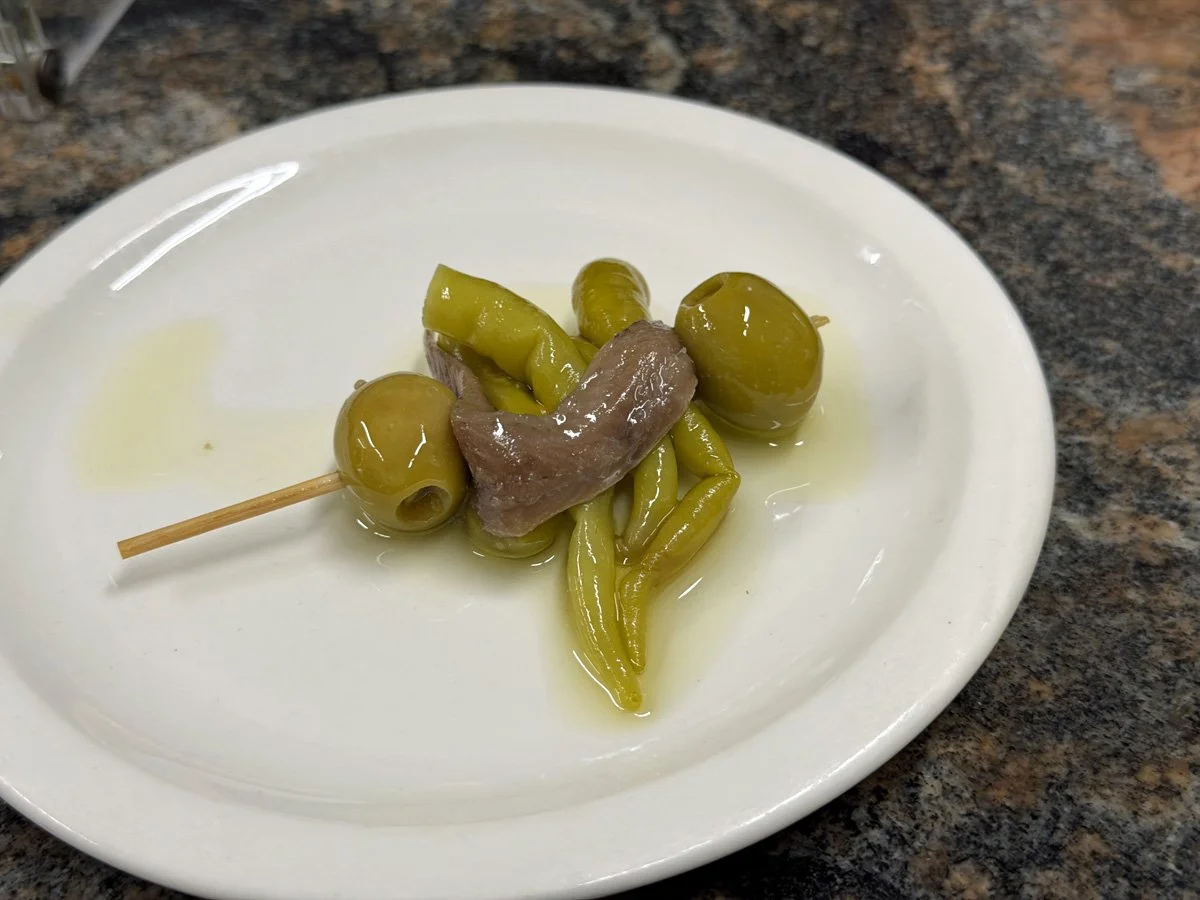
For dinner, I opted not to go to a restaurant. After walking around for a while, I returned to the pintxos bar I had visited on the first day. The more famous places had long queues of mainly Asian tourists waiting just to get inside—not for me. Instead, I had the best battered shrimp, cider, and a glorious Gilda.
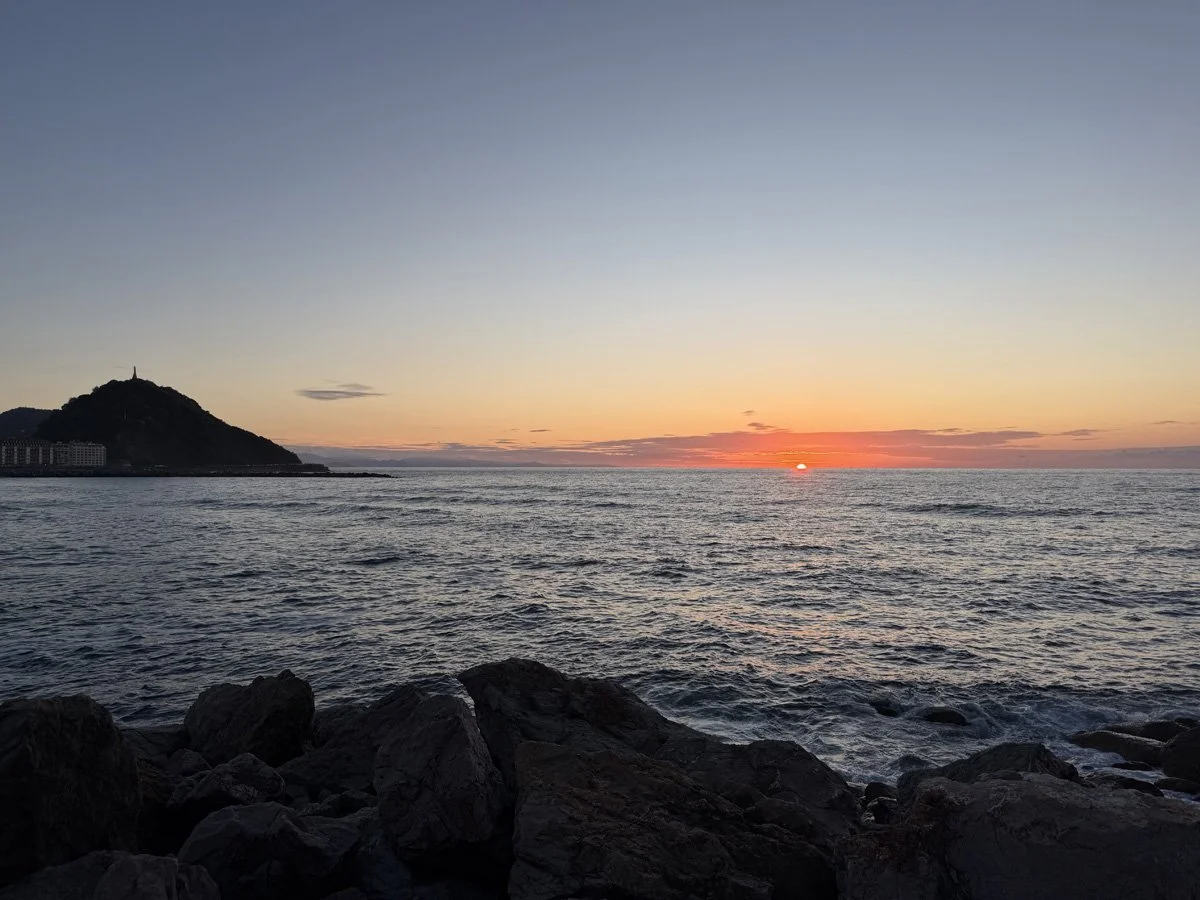
On my walk back to the hotel, I photographed the last few seconds of the sun as it set. The next day, my fourth and final Camino walk was waiting for me.
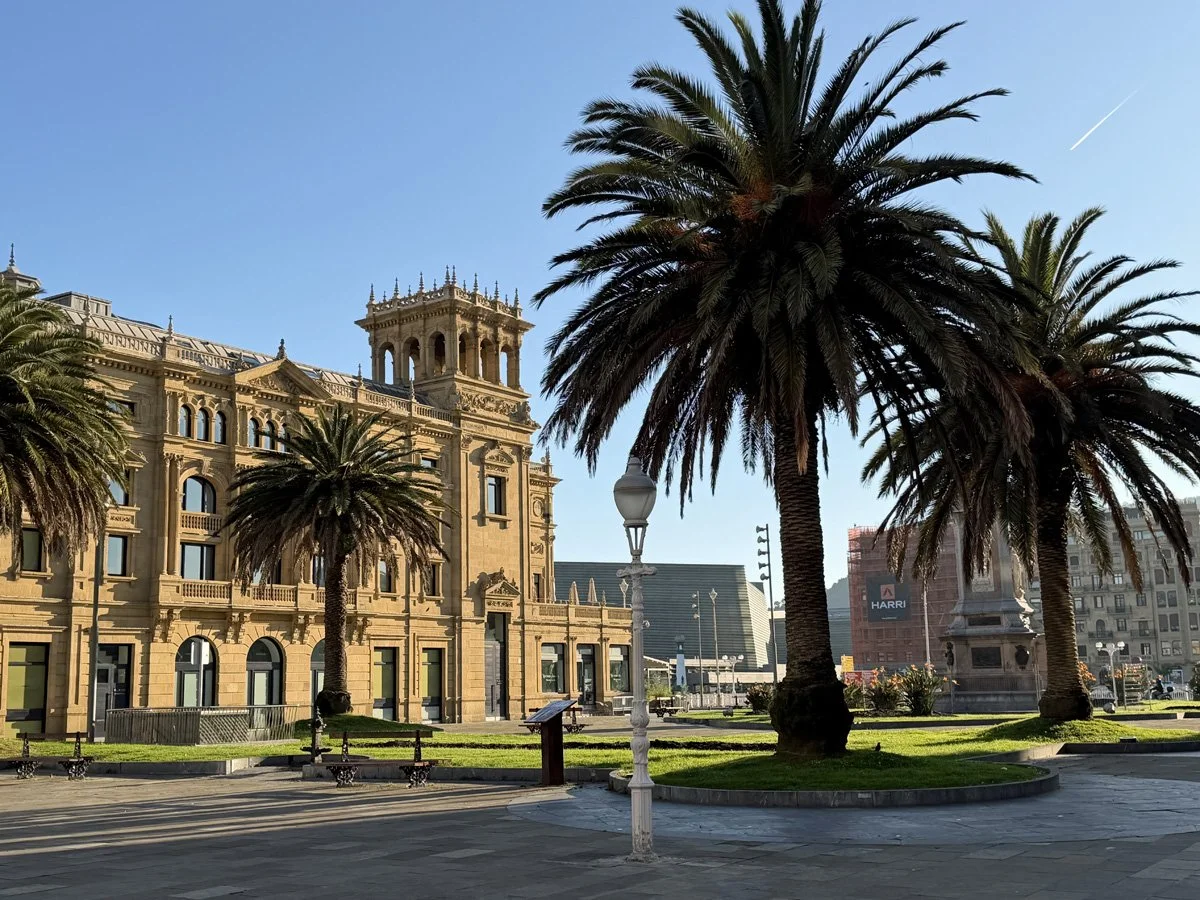
San Sebastián in the morning sun.
Zumaia - Deba
The section between Zumaia and Deba is said to be the most beautiful—and most difficult—stretch of the Camino del Norte. How hard can it be? I thought to myself.
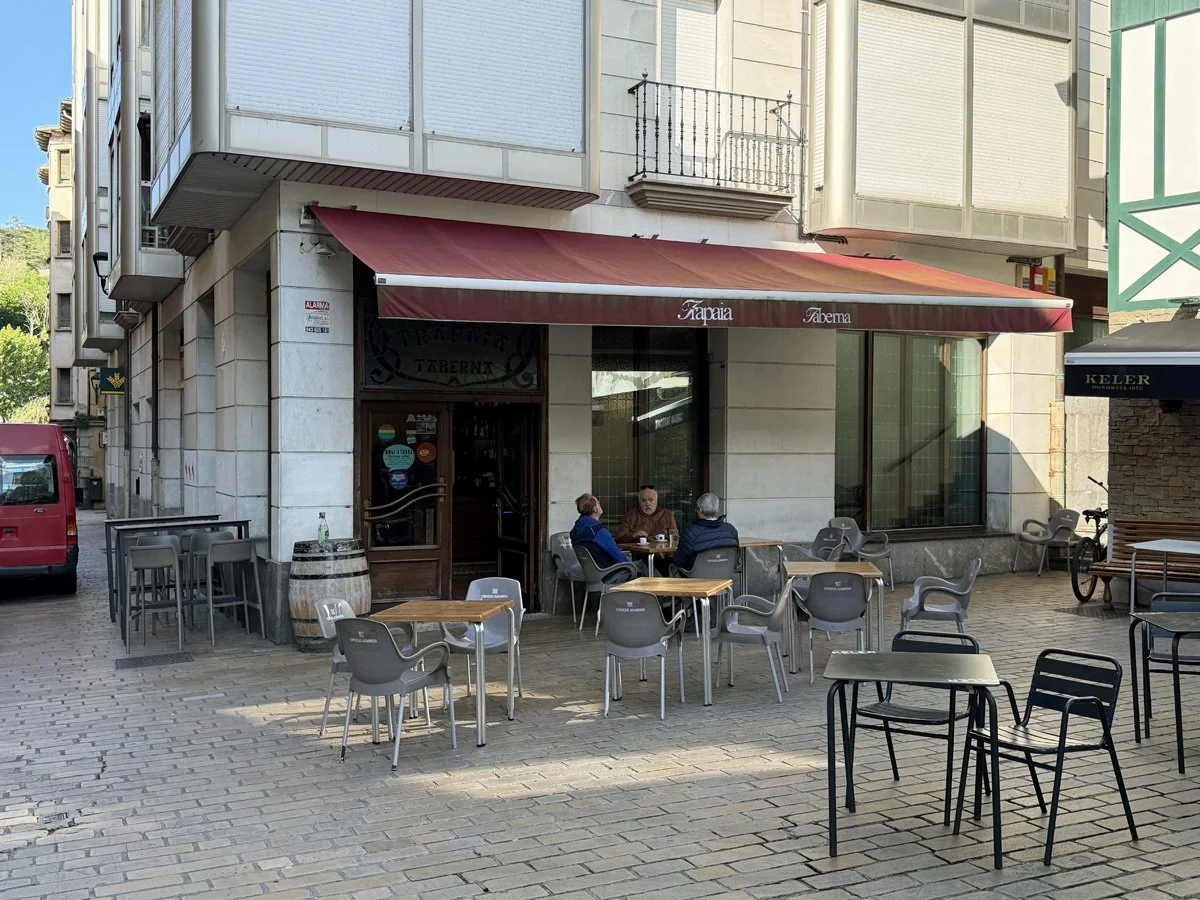
I took the train to Zumaia, stopped at a café for breakfast—more pintxos!—and then set off along the path. It was a sunny day, around 20°C, warm enough for a T-shirt.
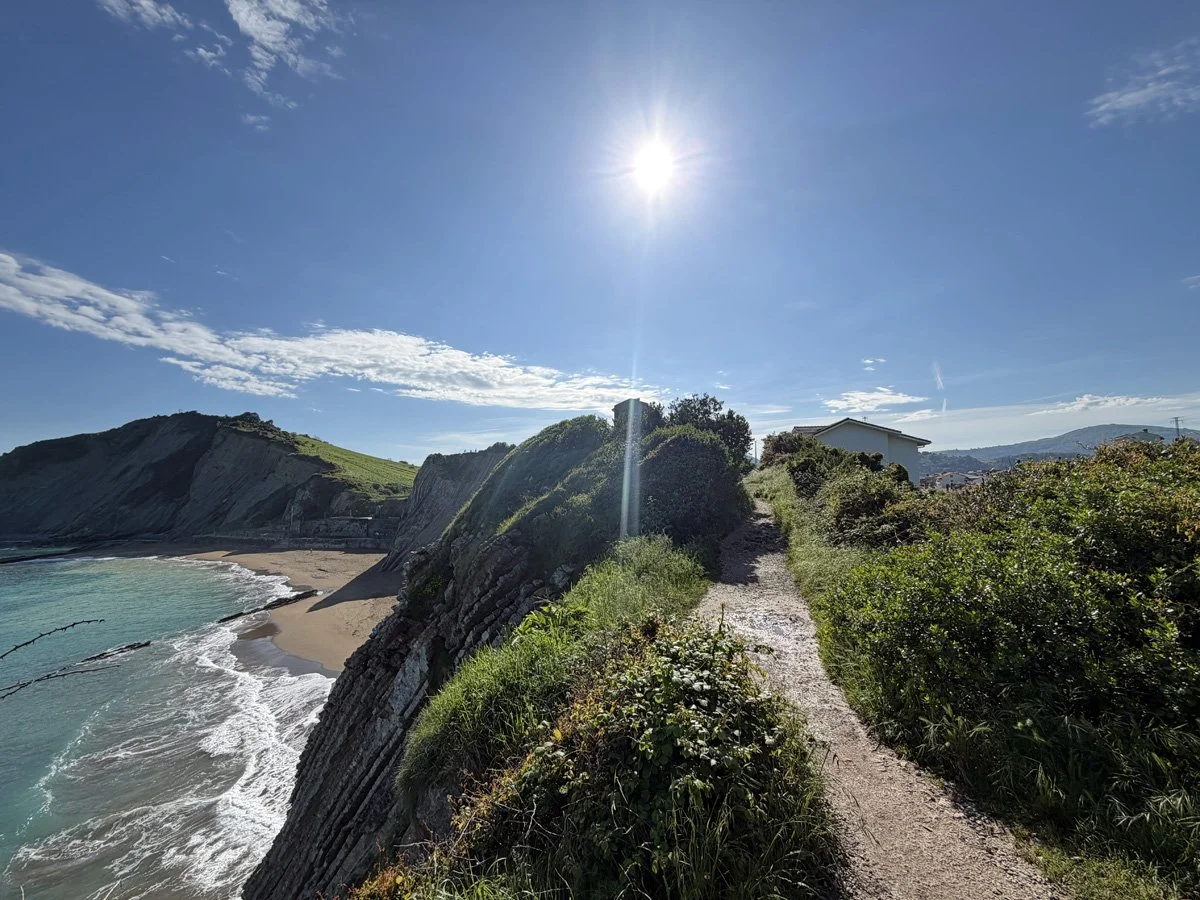
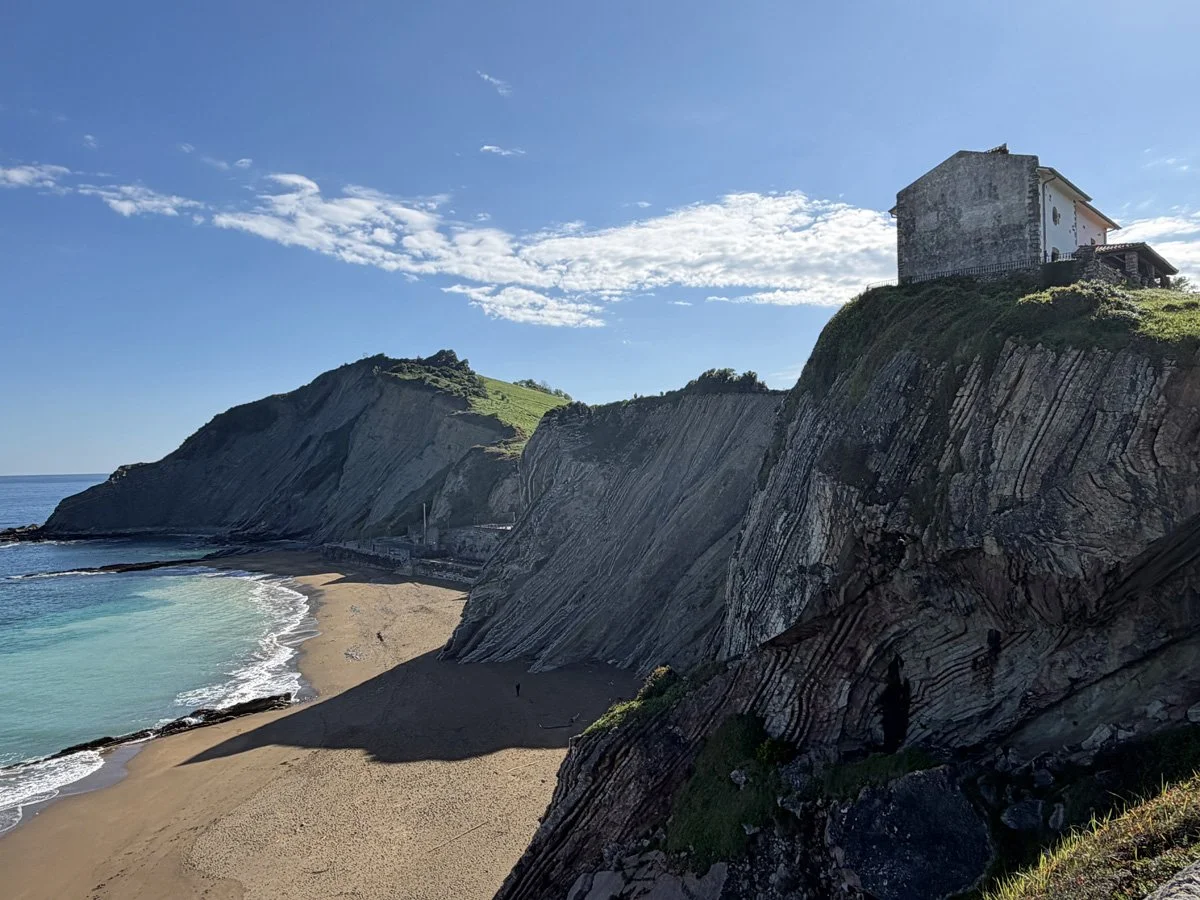
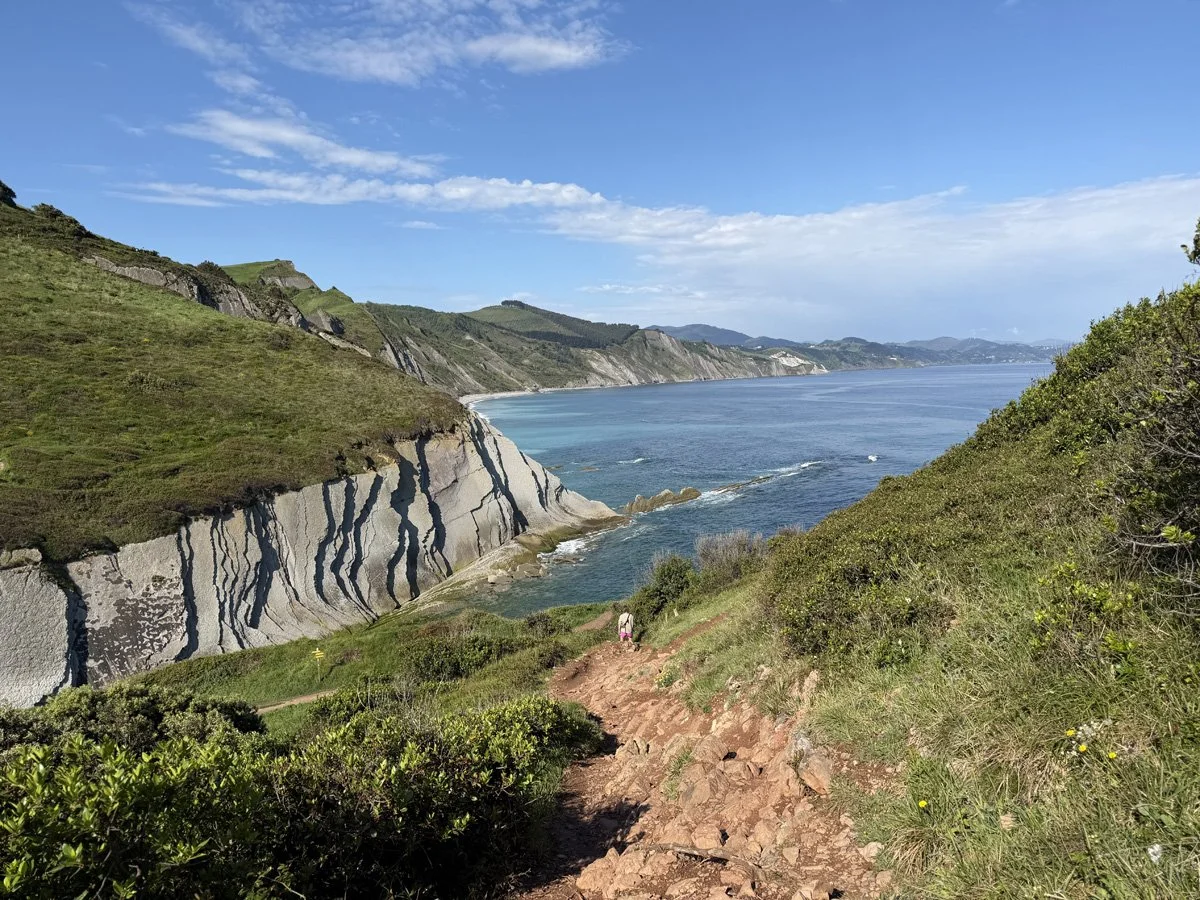
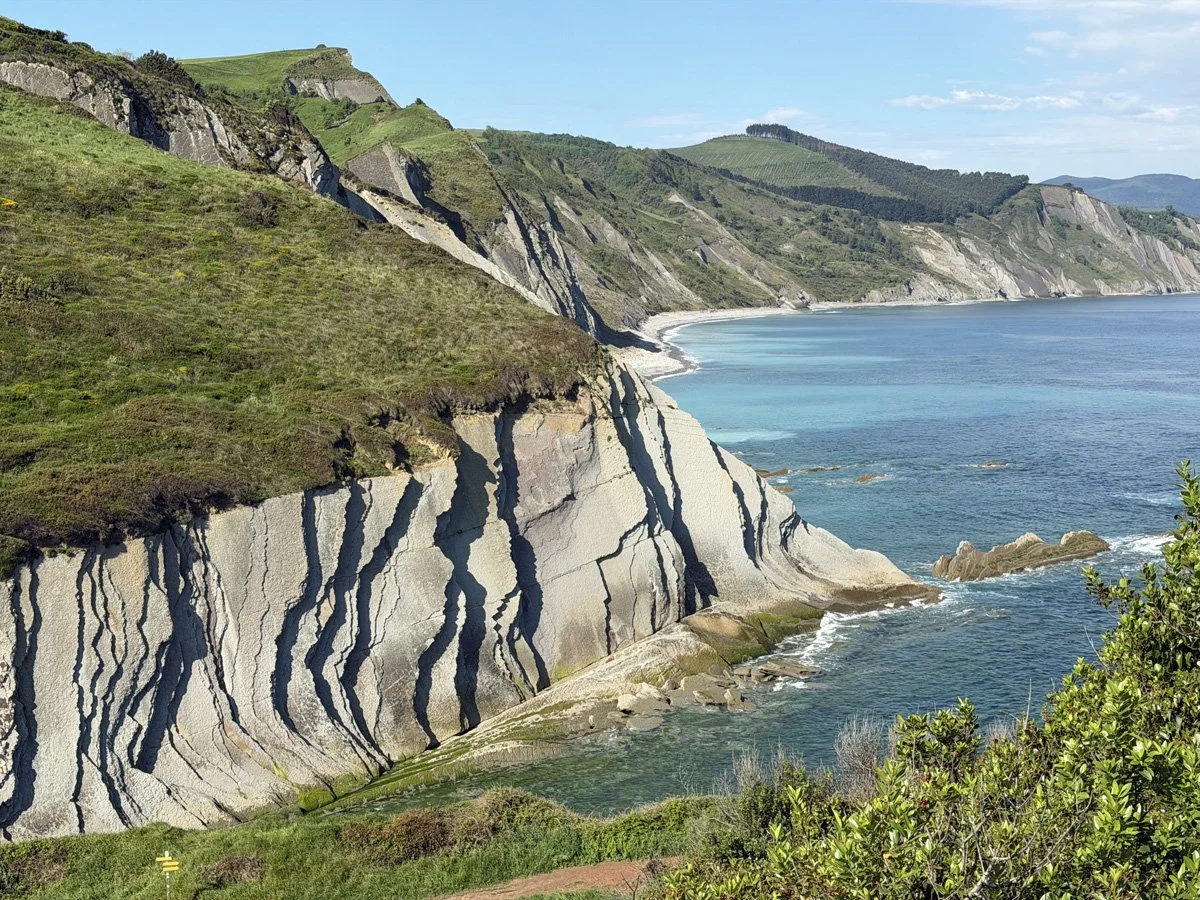
Basque Coast Geopark
The cliffs between Zumaia and Deba are like a walk through deep time. You can see multiple flysch layers of hard limestone and sandstone alternating with softer mudstone. Formed in an ancient deep-sea basin, these sediments were later uplifted by tectonic forces, which in places have tilted the layers dramatically.
The cliffs expose strata ranging from the Middle Cretaceous period (100 million years ago) to more recent Cenozoic layers (tens of millions of years old).
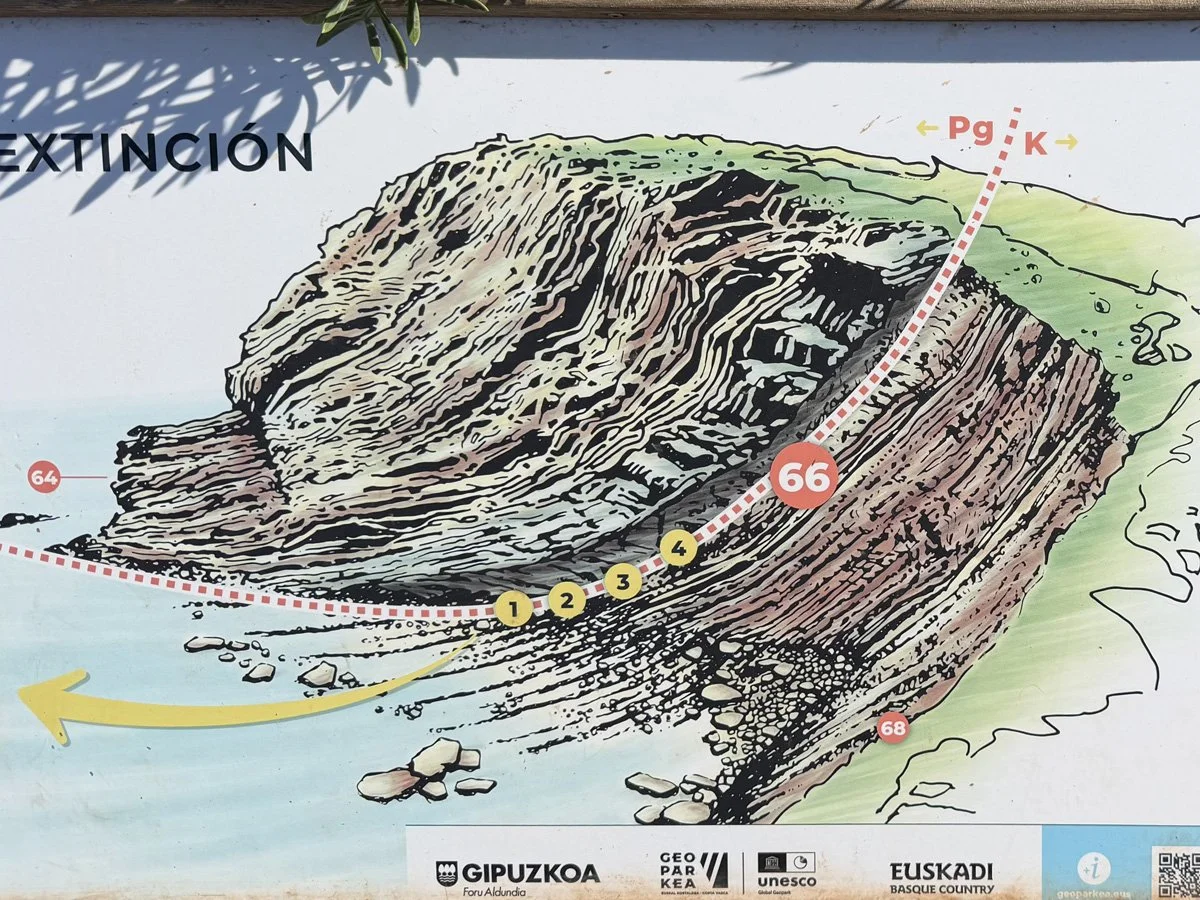
One particularly important feature is a thin layer enriched in iridium. Across this boundary, about 75% of marine species disappear, marking the mass extinction event linked to the asteroid impact in the Yucatán Peninsula, Mexico.
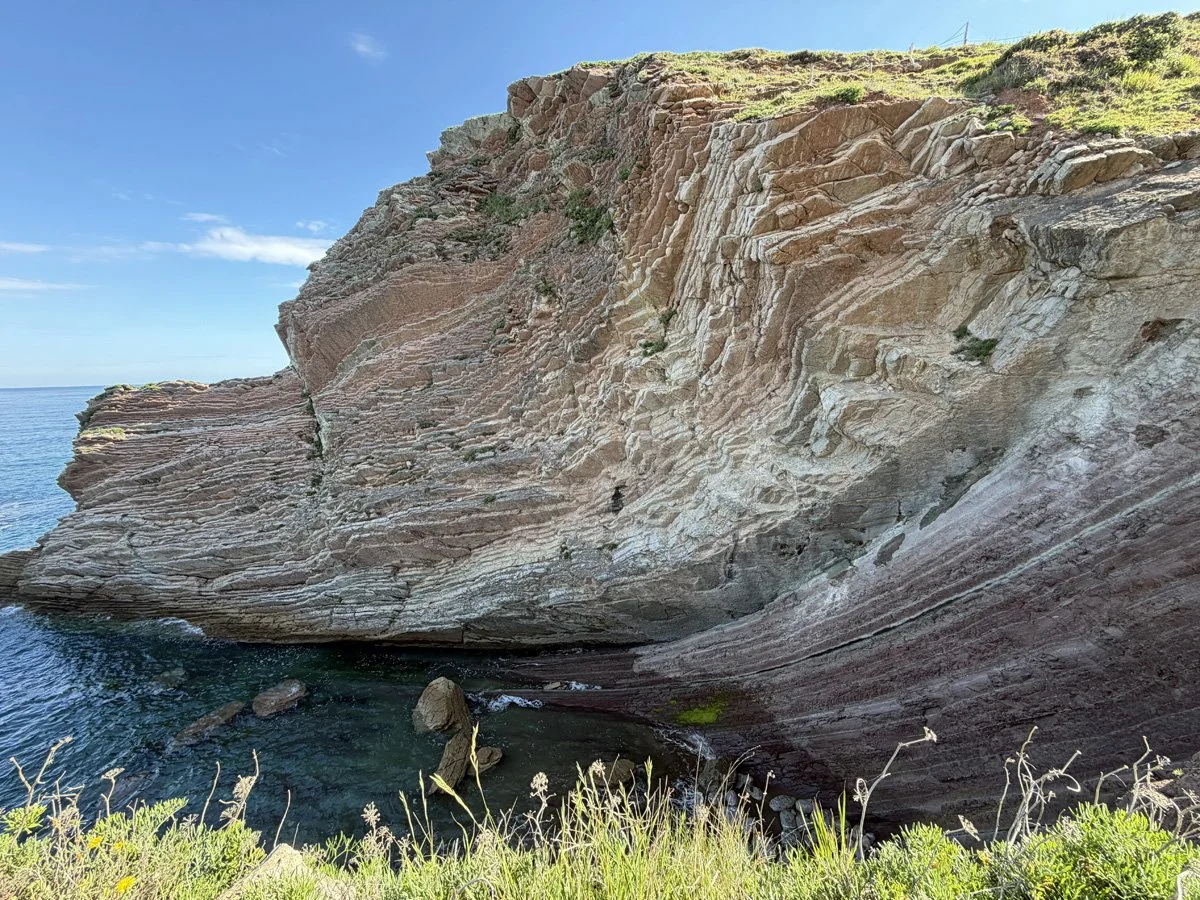
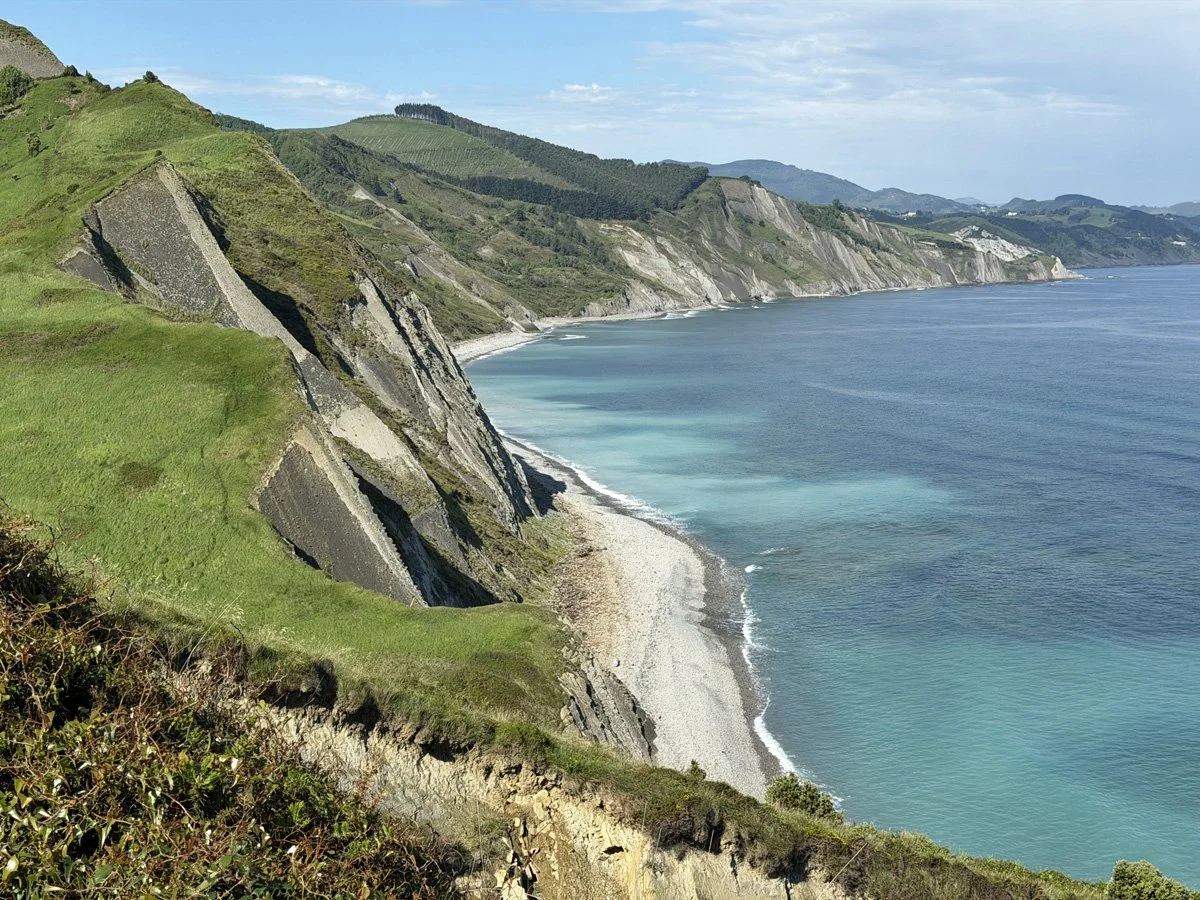
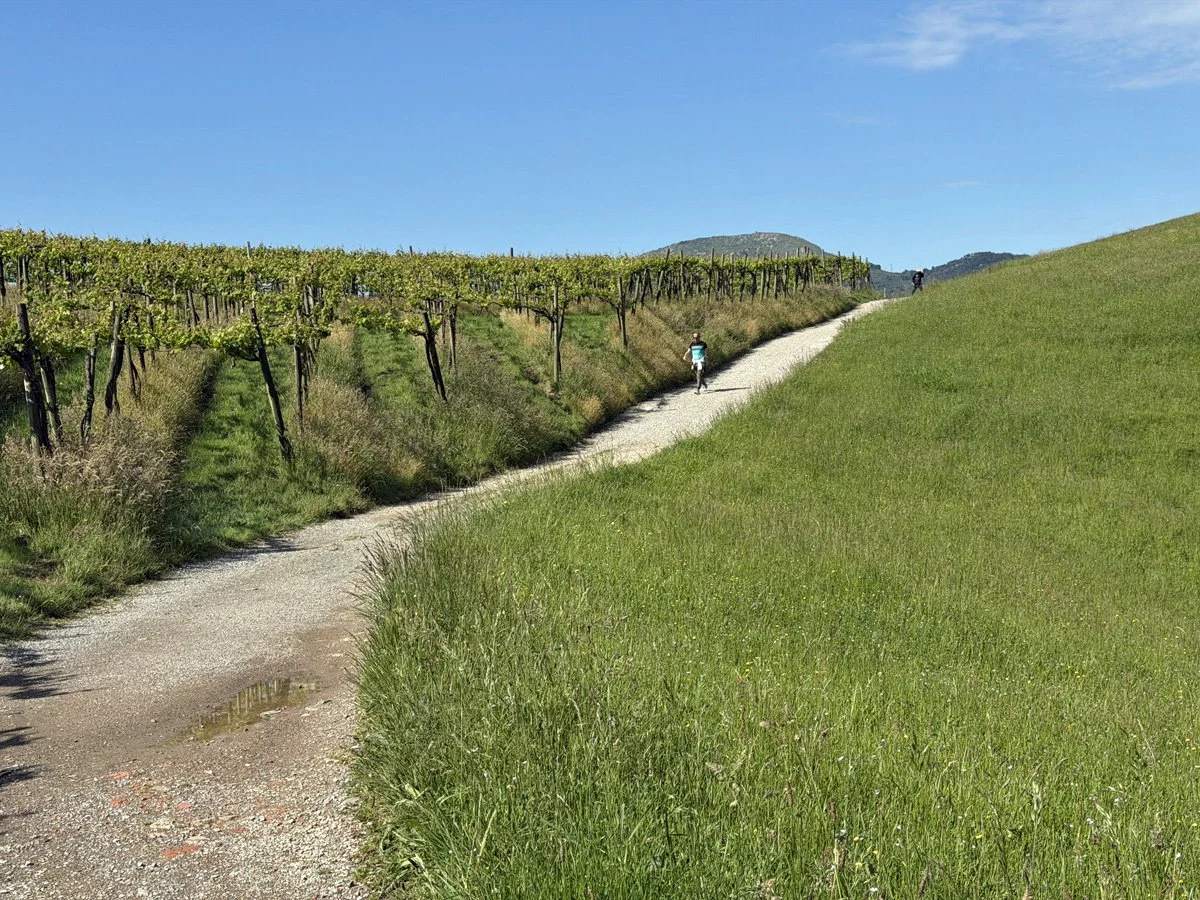
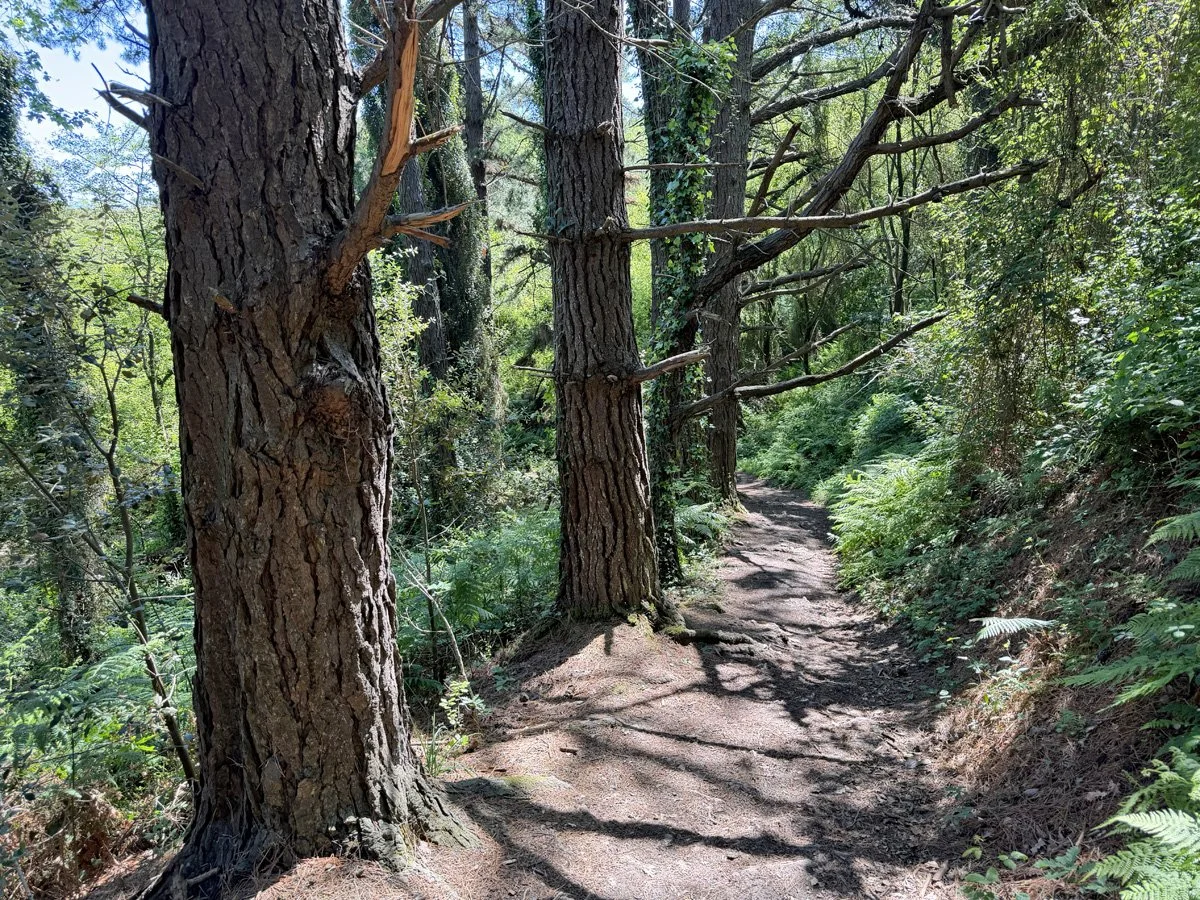
On my Wise Pilgrim app, I noticed two parallel Camino routes—one closer to the sea and more scenic. Many pilgrims apparently choose the less scenic inland path, because on this beautiful day I saw very few fellow hikers along the coastal route. Between Zumaia and Deba there is no village.
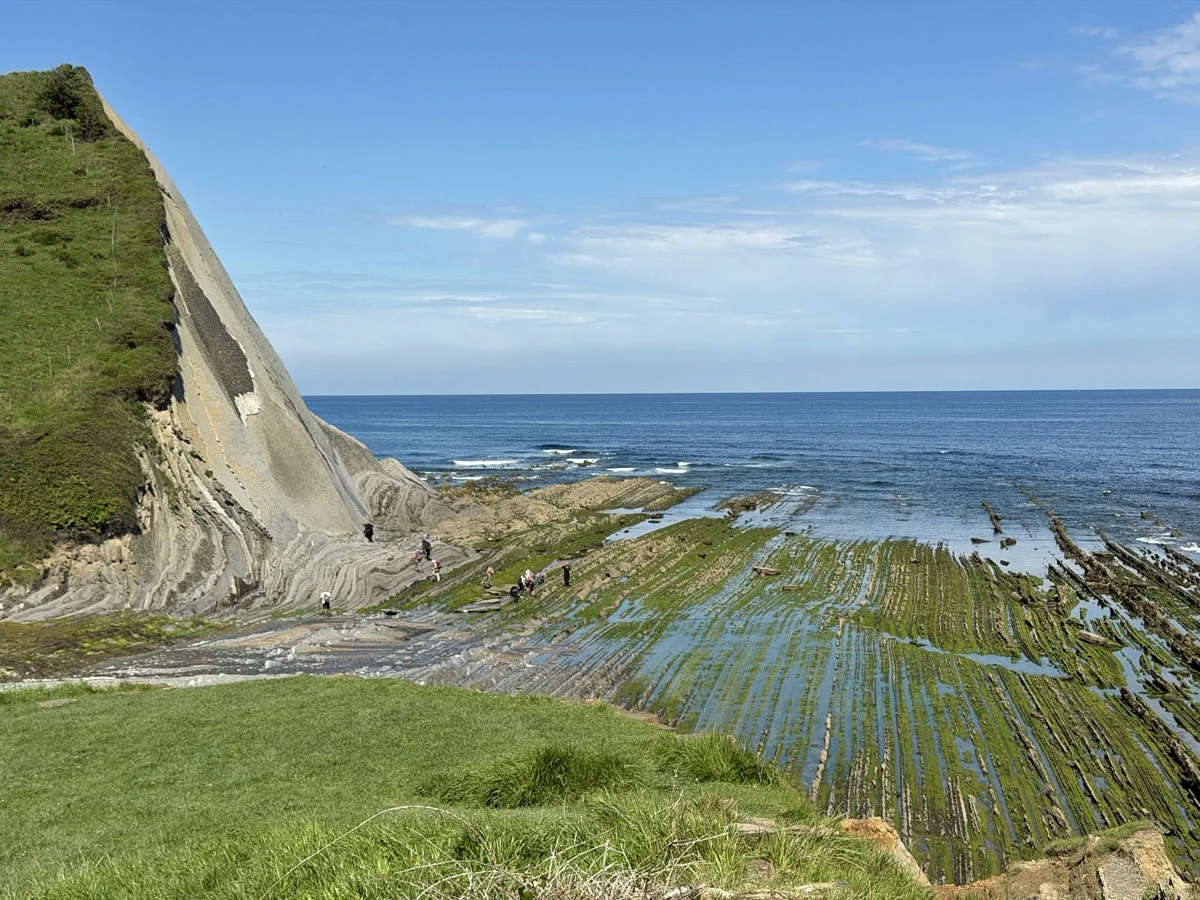
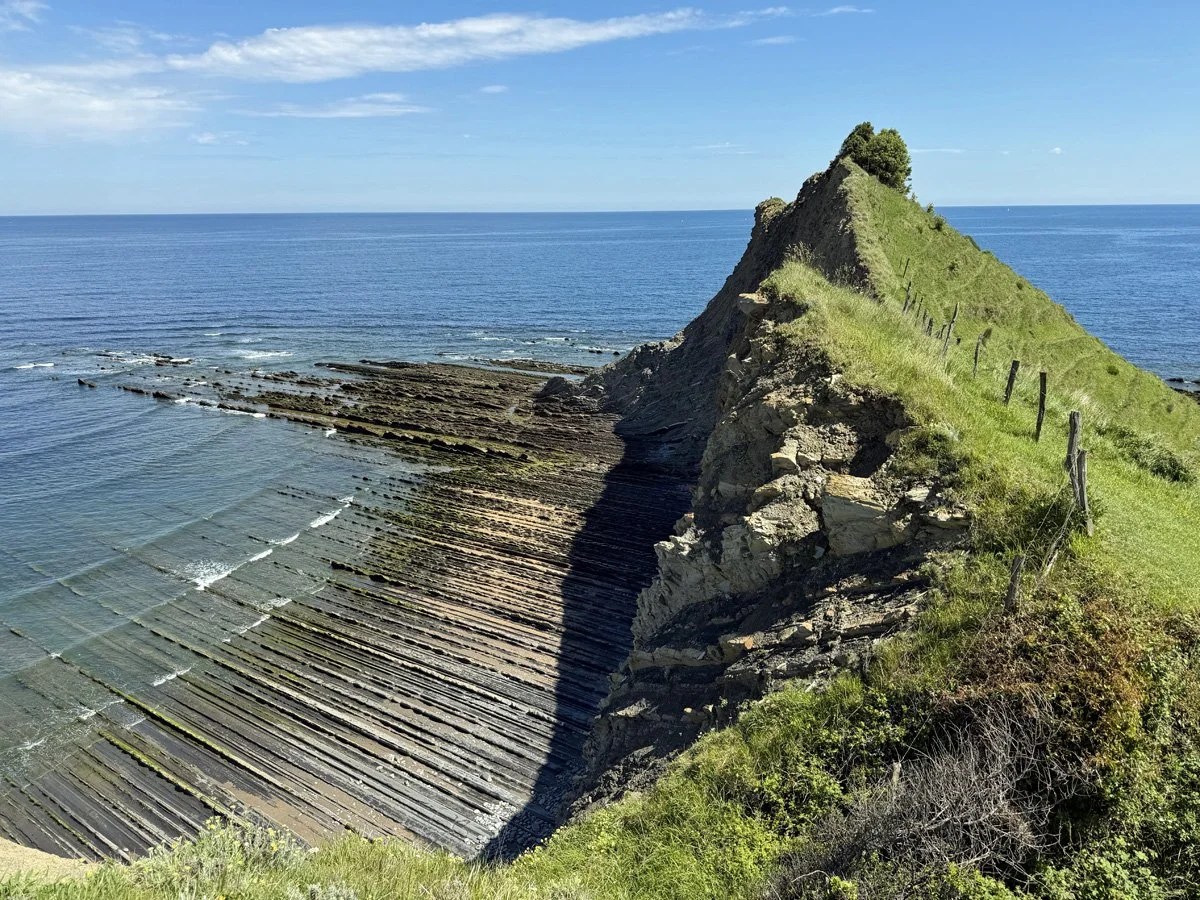
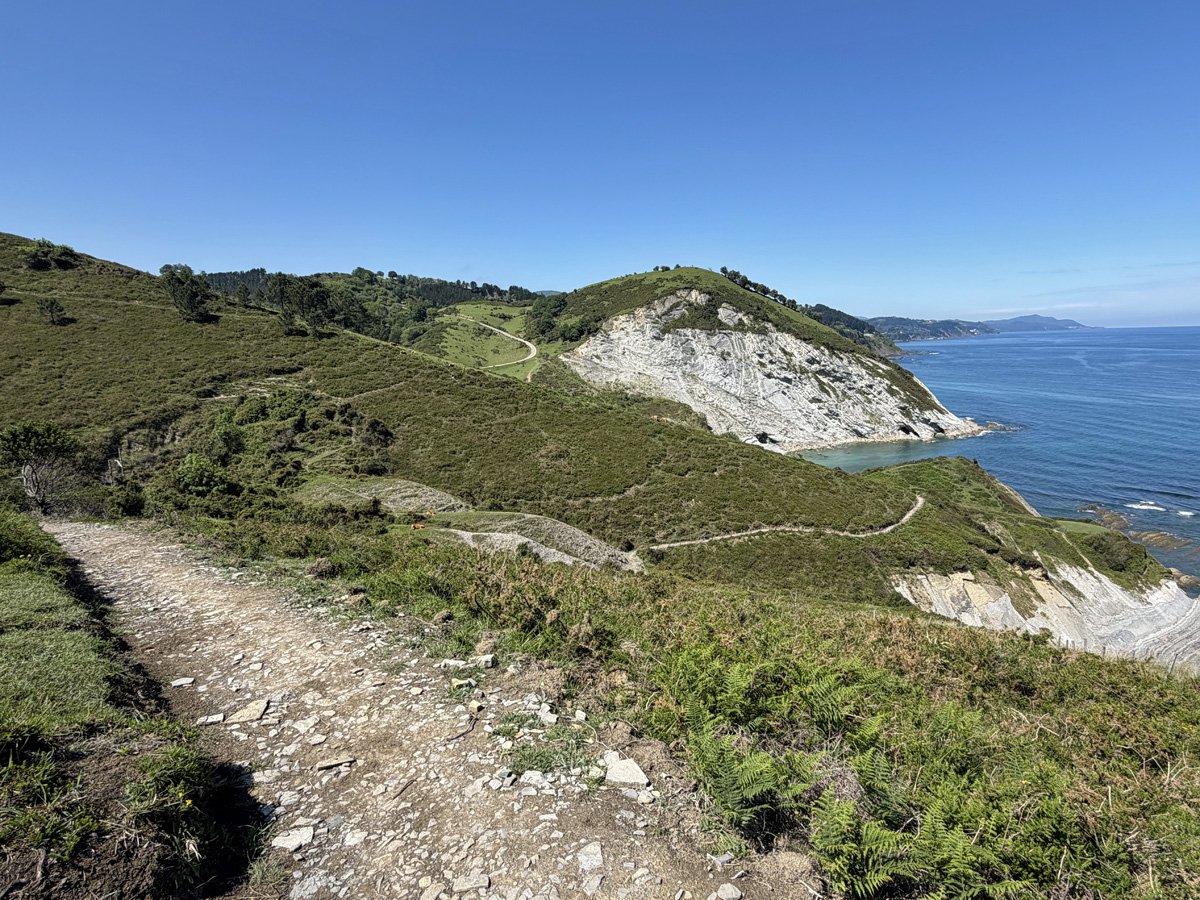
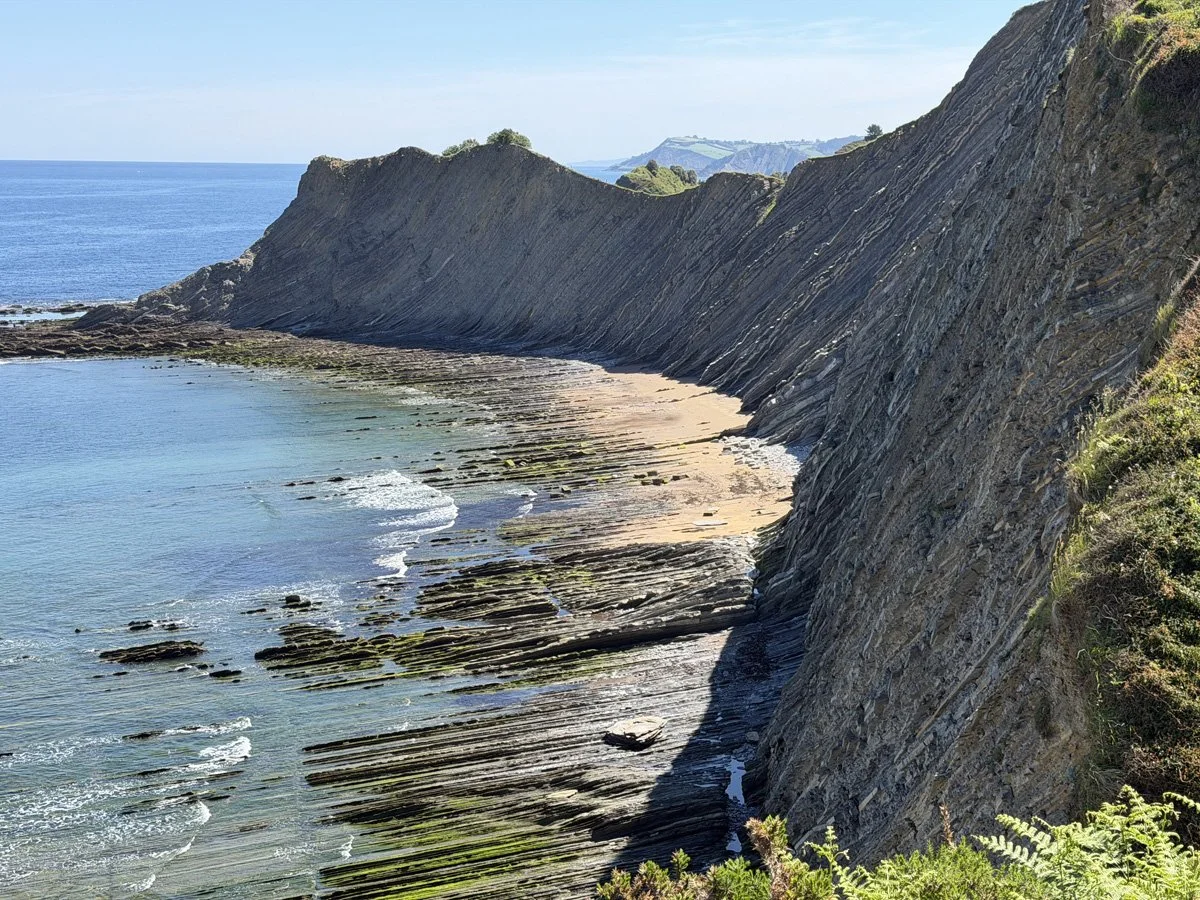
Amazing tectonic forces—coral fossils have been found on top of these 600-meter-high hills, where the area was once a shallow tropical sea.
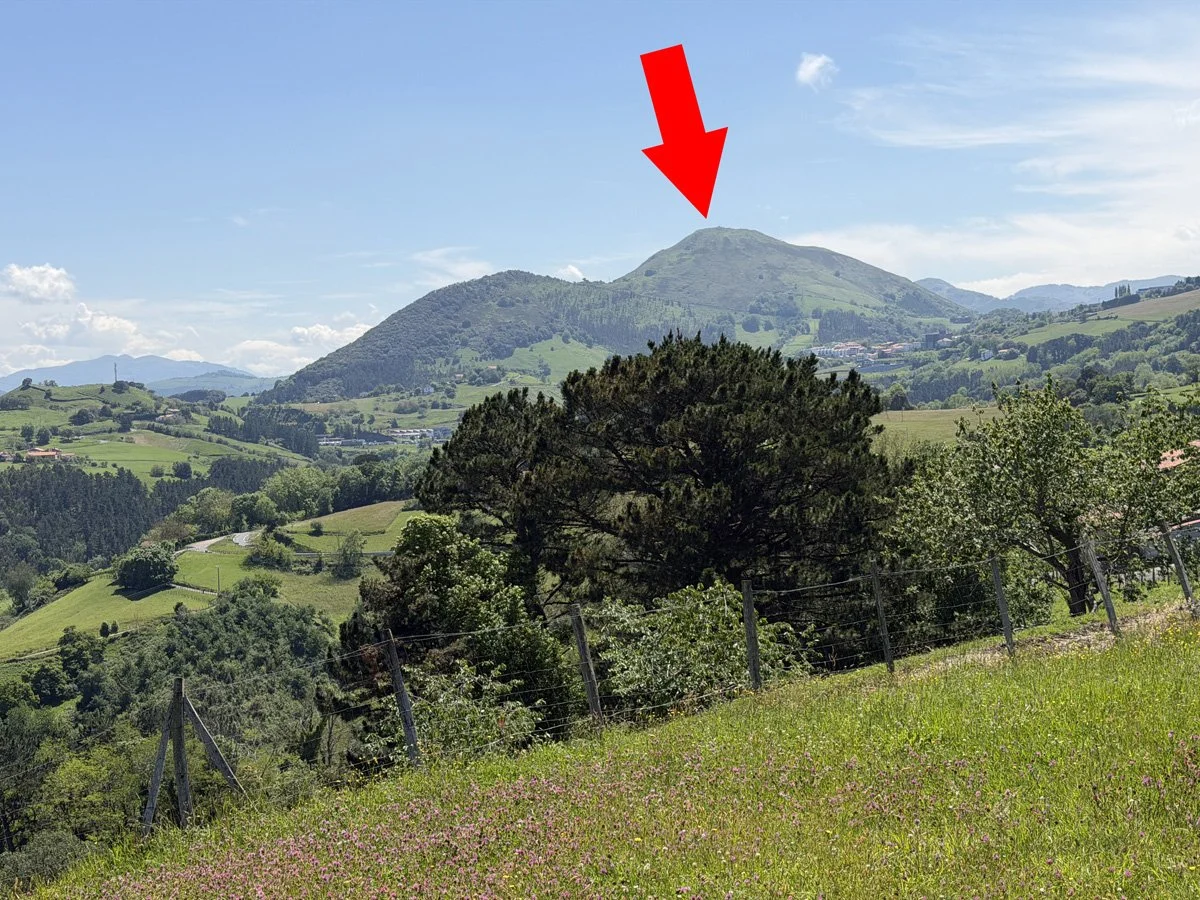
I arrived in Deba after just 4.5 hours of walking. The Camino here overlaps with the Ruta del Flysch (GR-121), or at least the Camino del Norte shown on my Wise Pilgrim app runs alongside the GR-121.
The elevation gain between Zumaia and Deba is around 660 metres, with a similar amount of descent. It’s not too extreme compared to a typical hiking day in the high Alps. I reached Deba early enough to enjoy a proper lunch.
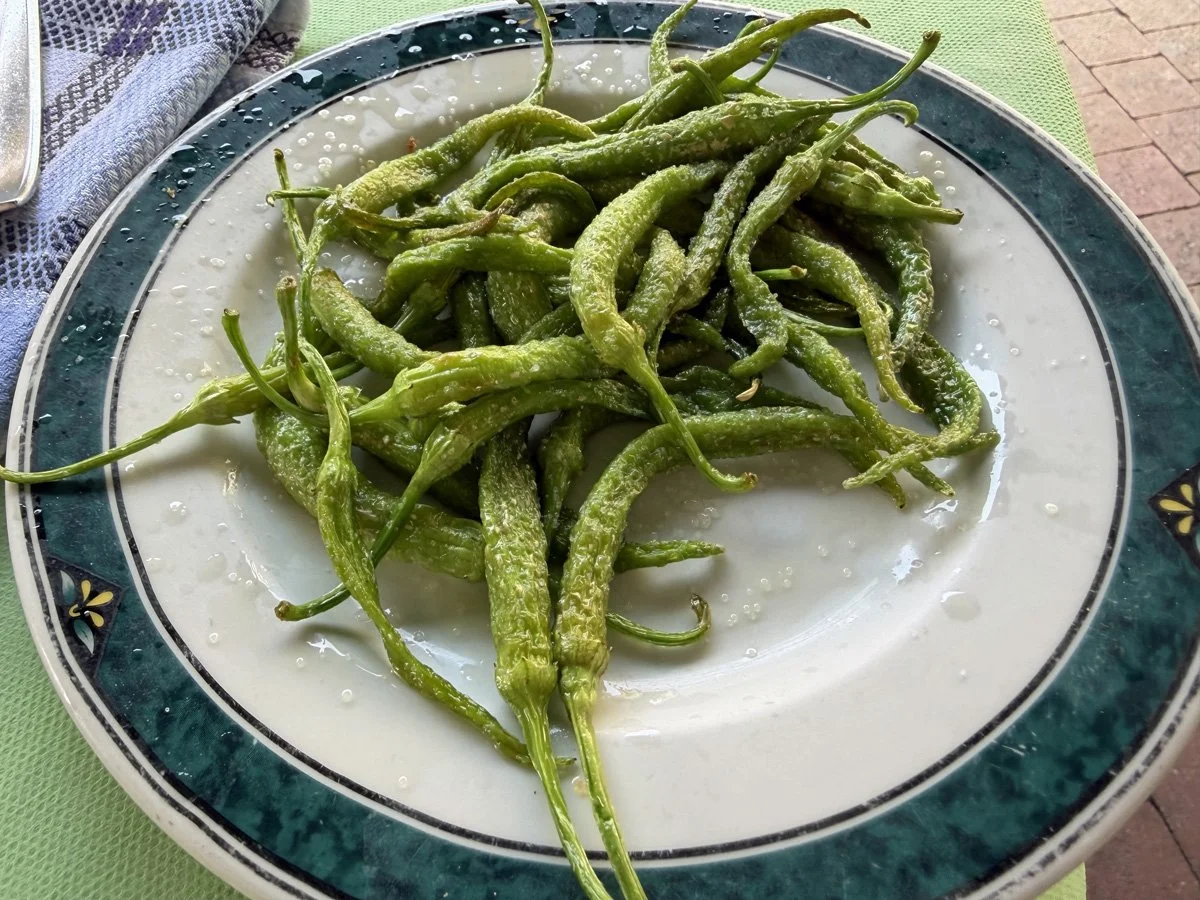
The Guindilla de Ibarra were in season, so I ordered a plate. These long green peppers are traditionally grown in the Basque Country, especially around the town of Ibarra, which gives them their name. They’re typically either lightly fried in olive oil or pickled in vinegar, and are also a key ingredient in the classic Gilda pintxo.
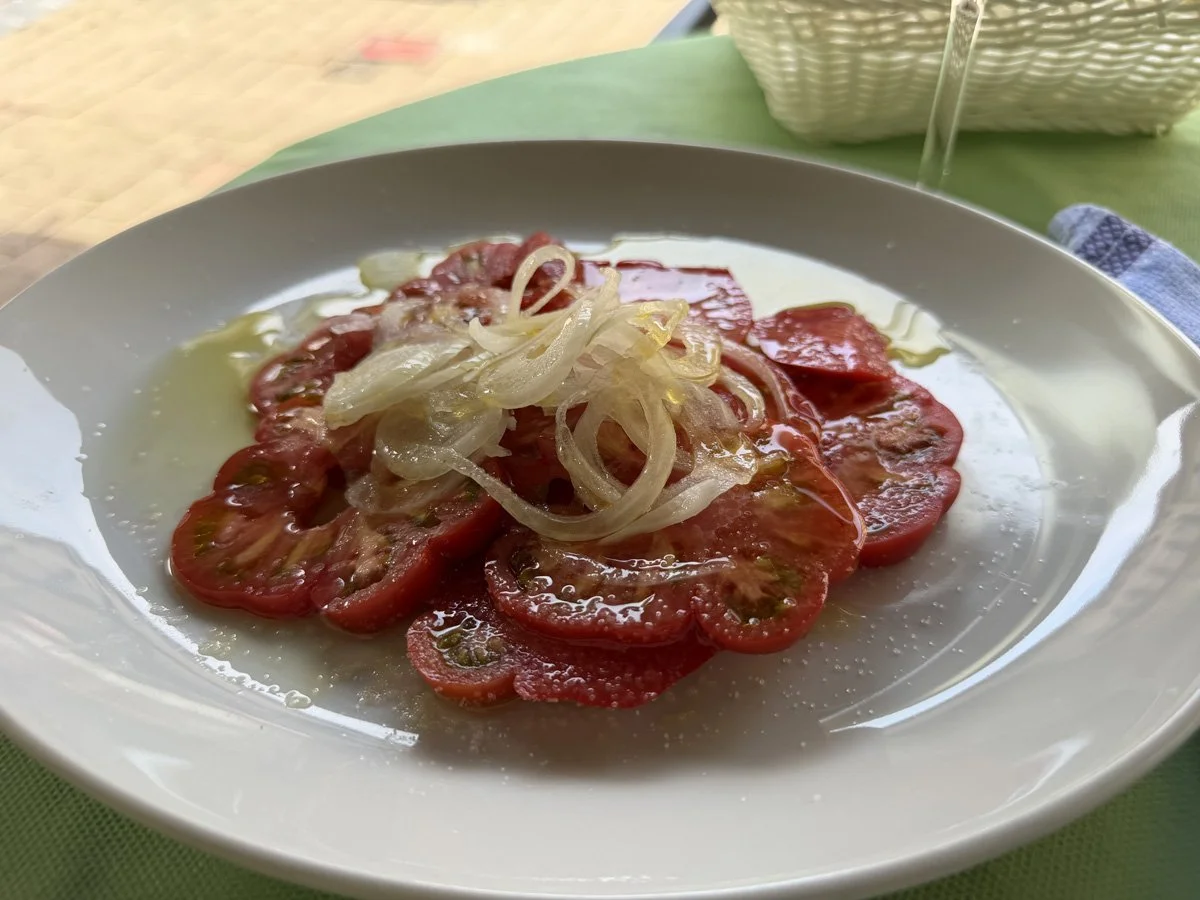
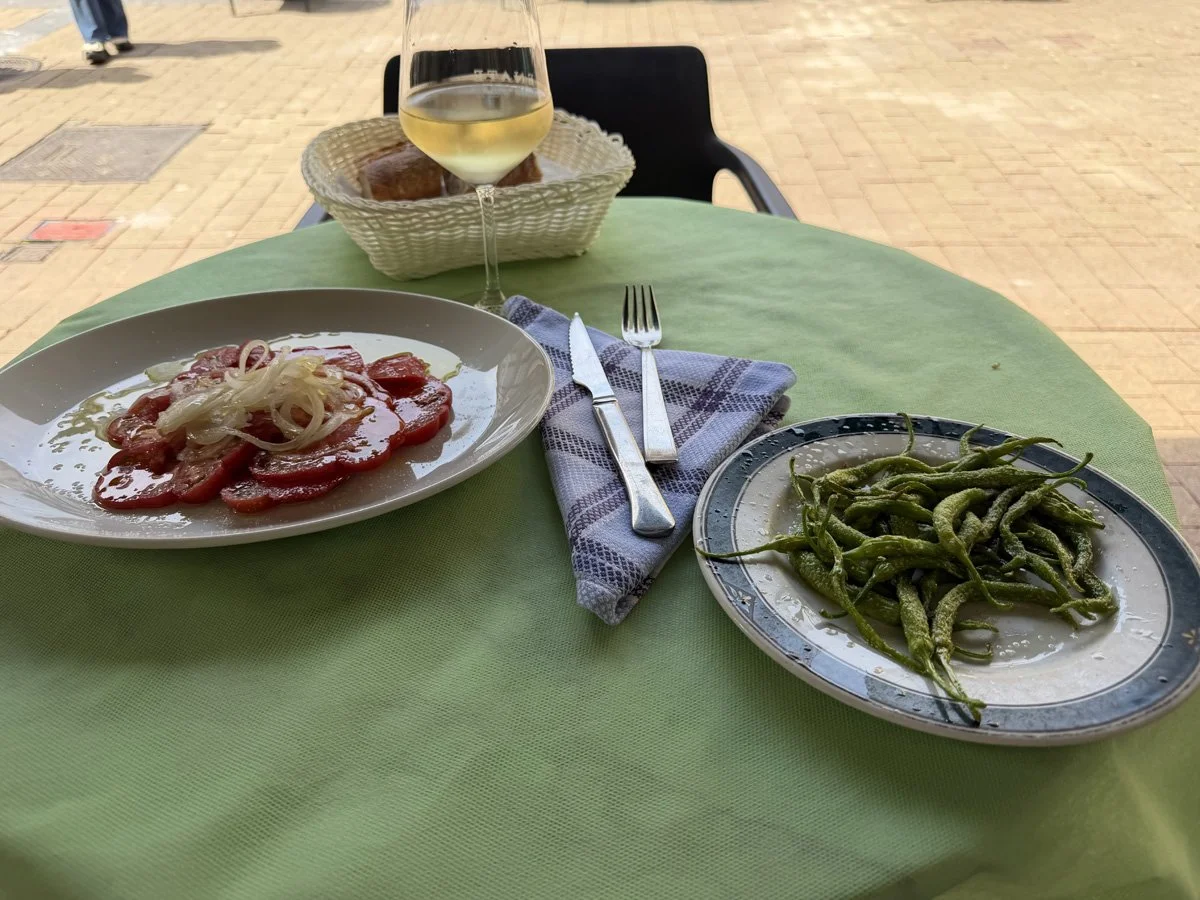
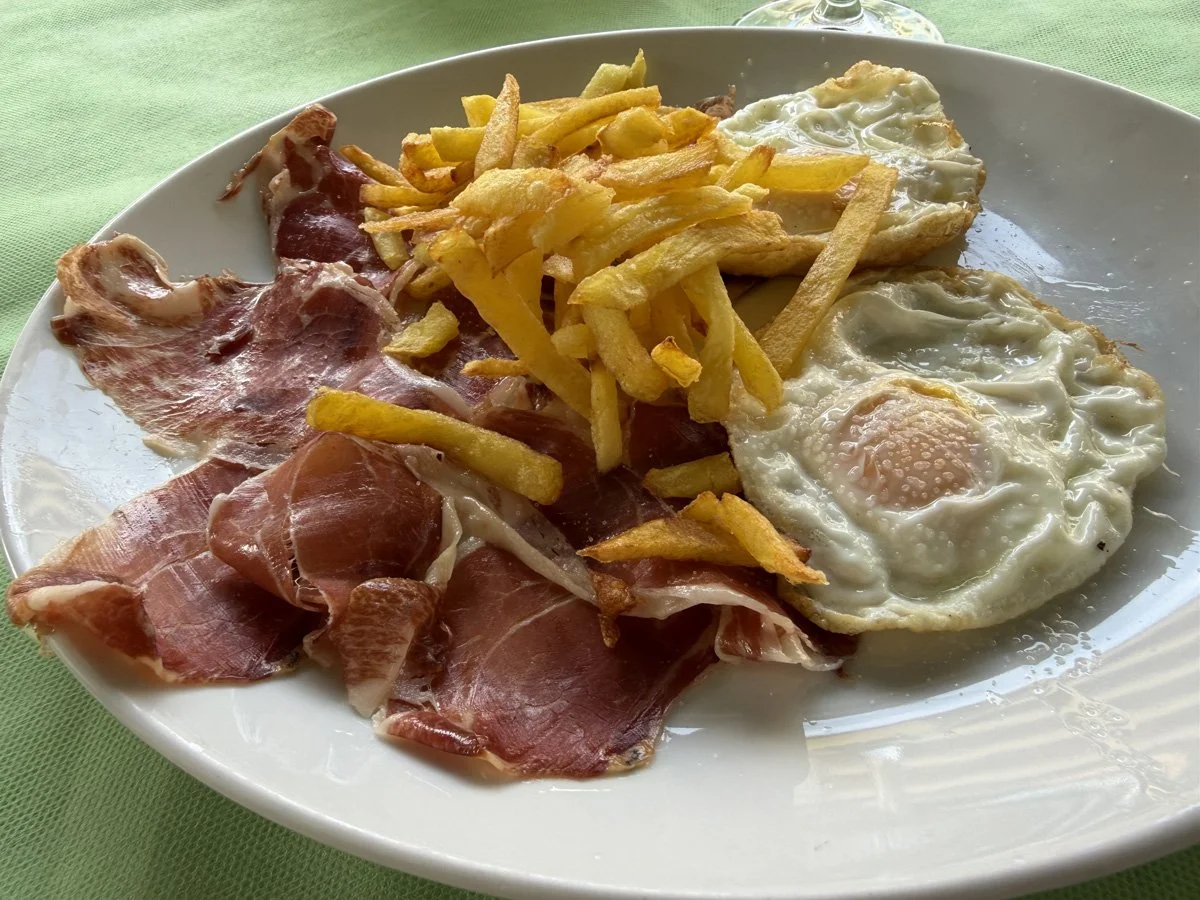
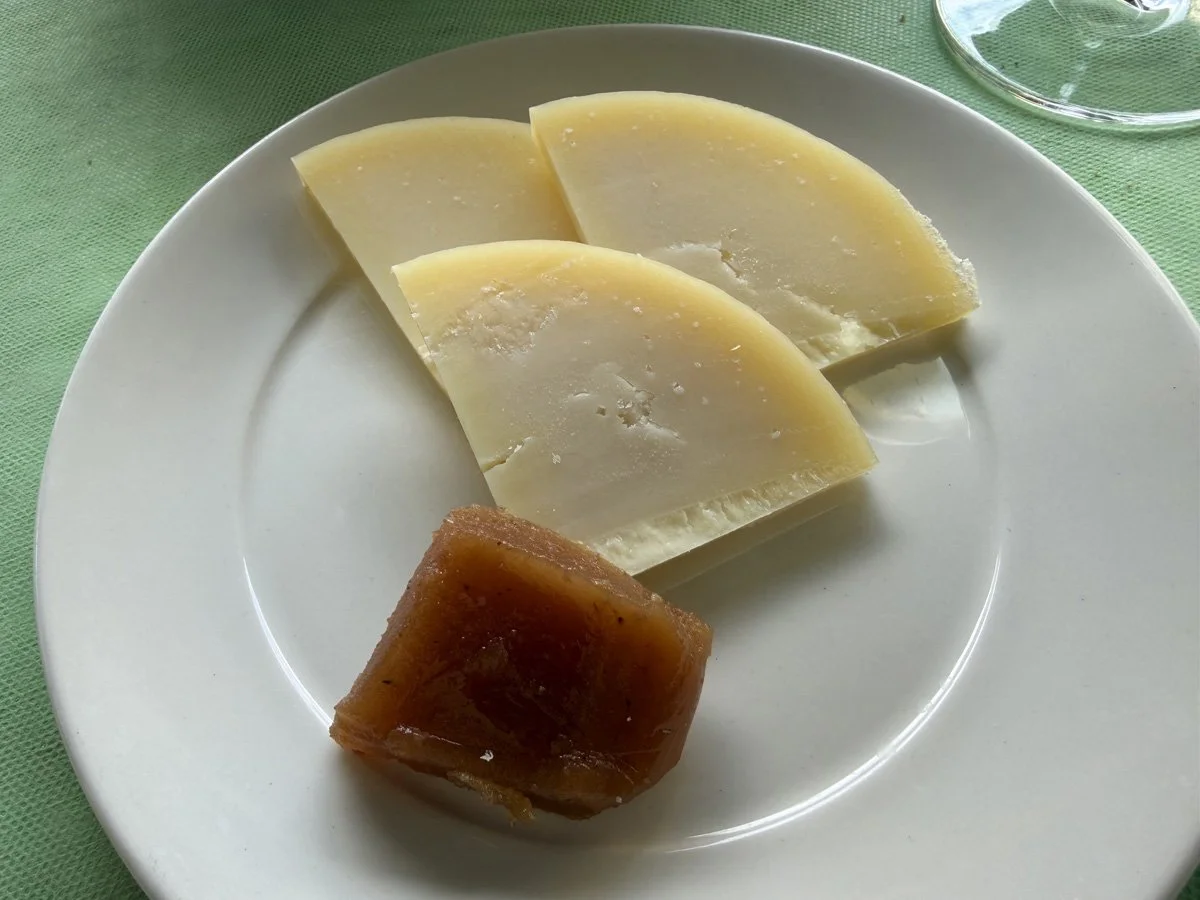
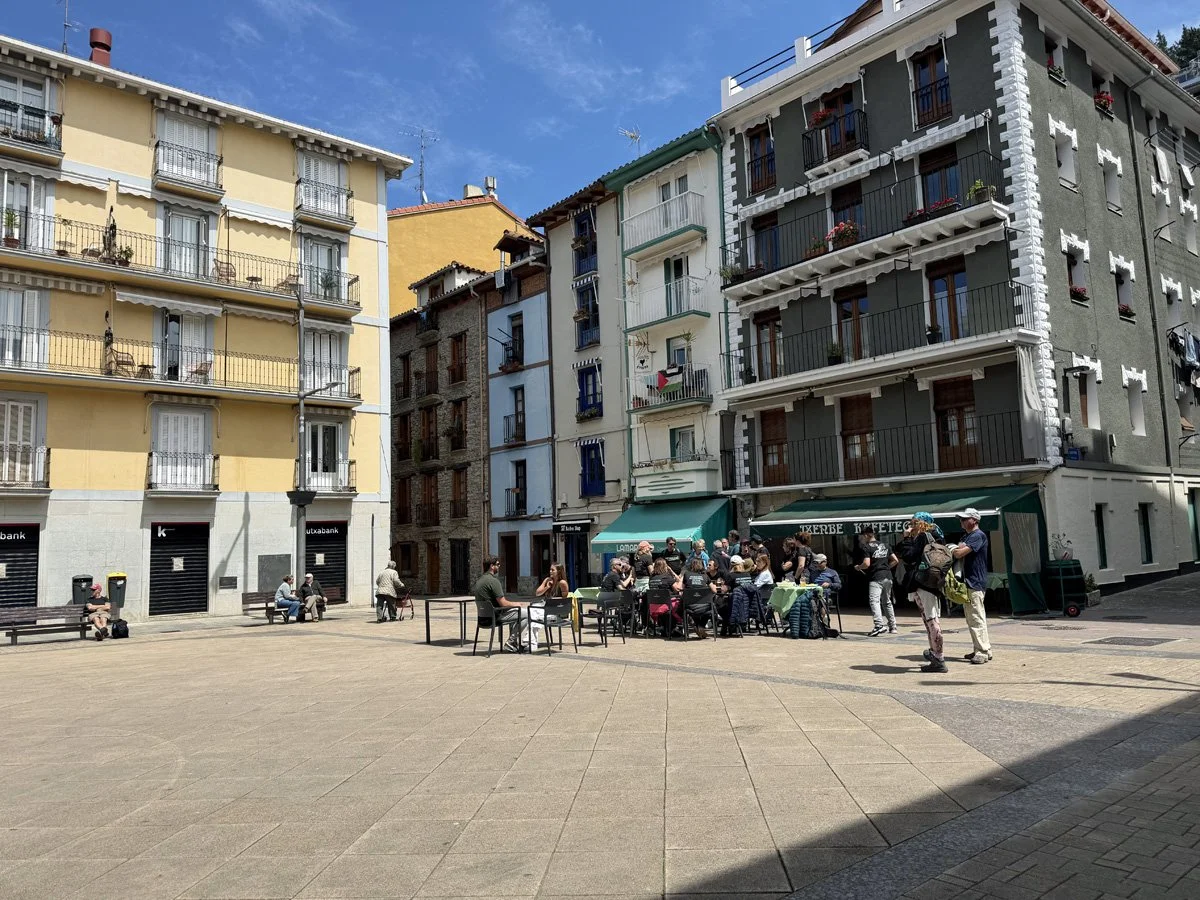
So during my week, I ended up walking roughly half the distance between Irún and Bilbao. The full route is about 151 kilometres, and I walked the 71-kilometre stretch between Irun and Deba. If I had devoted all my time and energy to walking, I could have made it all the way to Bilbao — but I would have missed out on the food, the museums, and the feeling of actually being on vacation.
The day before, I’d made an 8:30 p.m. reservation at the restaurant Muka in San Sebastián. After lunch it was already 3 p.m., and I still had to take the train back, shower, and get some rest. I figured I’d be hungry again by 8:30. I was wrong.
Muka
I was trying to get ready by 7 p.m. for Muka, but I just wasn’t hungry. Suddenly, I felt very tired and really didn’t feel like eating at all. The reservation had been secured with a credit card, and not showing up would have cost €30, so I went anyway, arriving around 8:30 p.m.
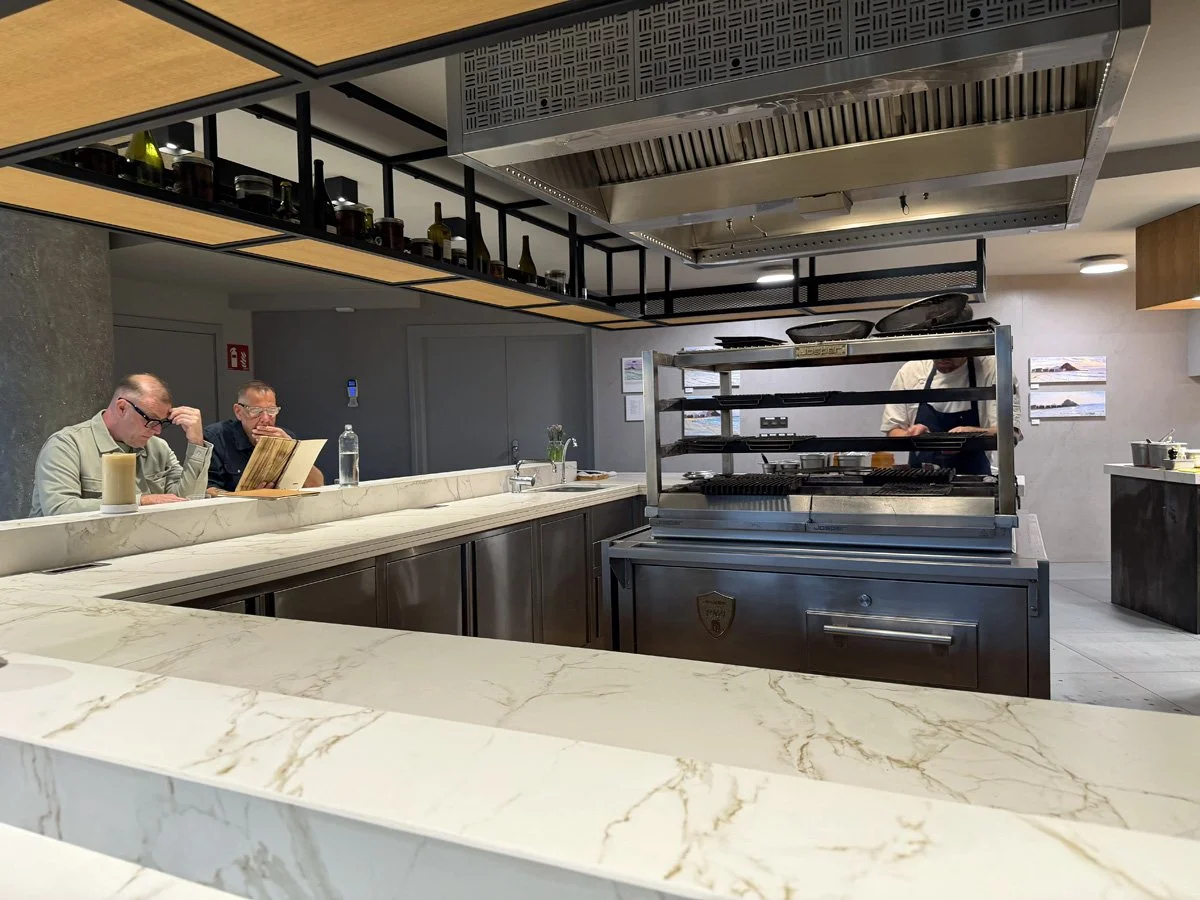
Because I was dining alone, I was given a seat at the bar — tables are usually reserved for couples or larger parties. Originally, I had planned to go all in: the full seafood tasting menu, wine pairing, the whole thing, regardless of the cost. But once I got there, I changed my mind. I didn’t even want alcohol.
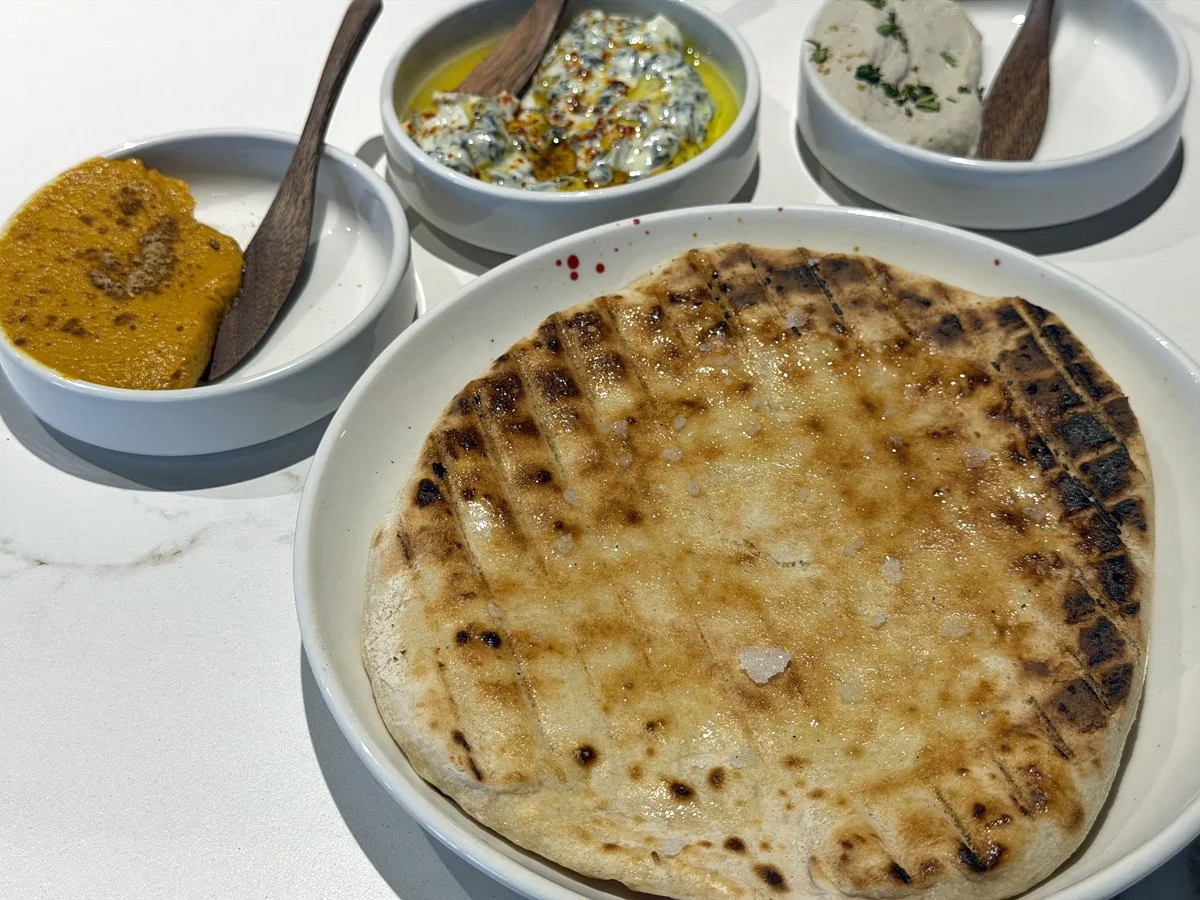
Instead, I ordered a ginger-apple juice, the fried flatbread with three dipping sauces, and the springtime special of peas, broad beans, and erretxiko — the Basque name for the St. George’s mushroom (Calocybe gambosa). These mushrooms are considered a luxury item and can cost up to €99 per kilo.
The waitress warned me that the peas, beans, and mushrooms were a very, very small dish. I waved away her concern. The flatbread turned out to be surprisingly filling. Later I read that it was actually meant for sharing, but being alone: with whom?
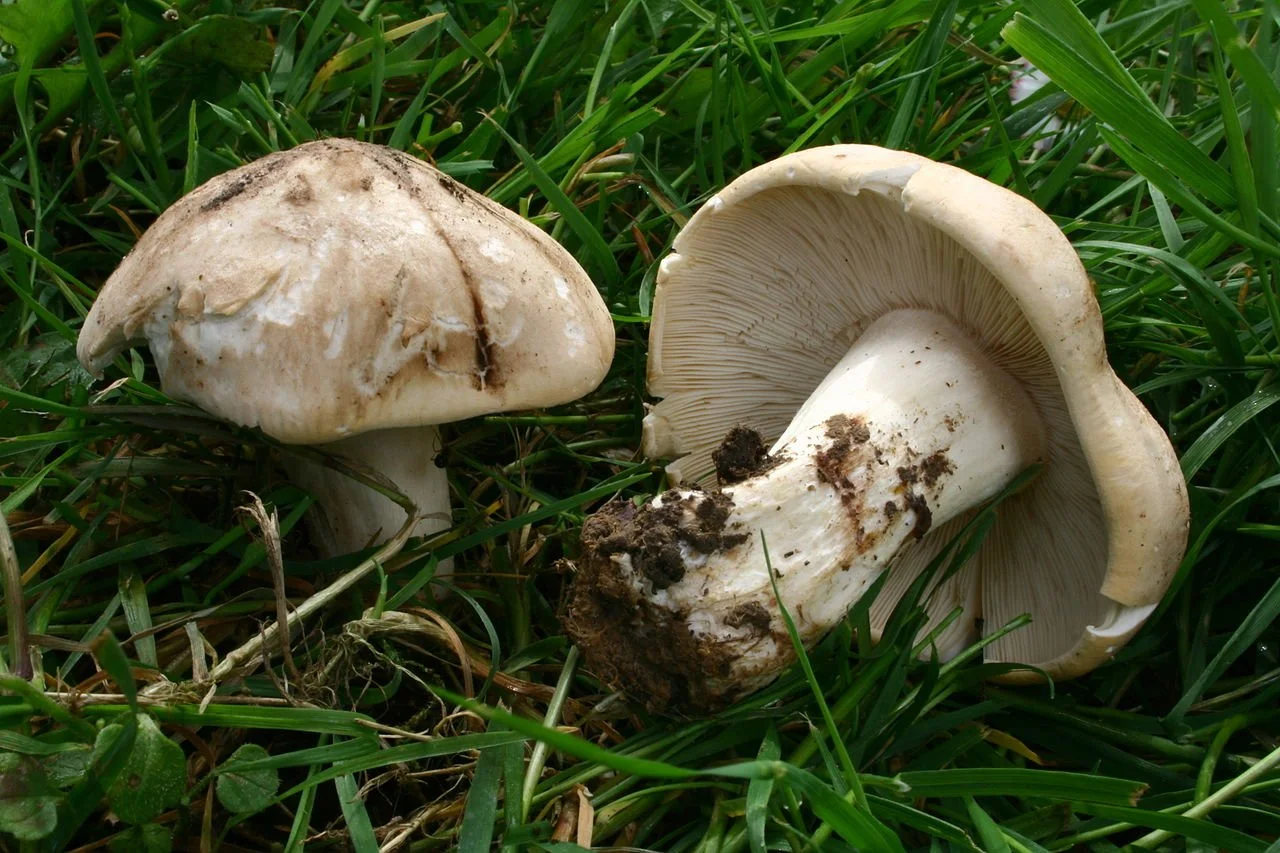
The erretxiko arrived in a tiny cup. Even so, I was happy, although the price — €28 for such a small bowl — gave me pause. Still, after dinner I felt as though I could not possibly have eaten another bite.
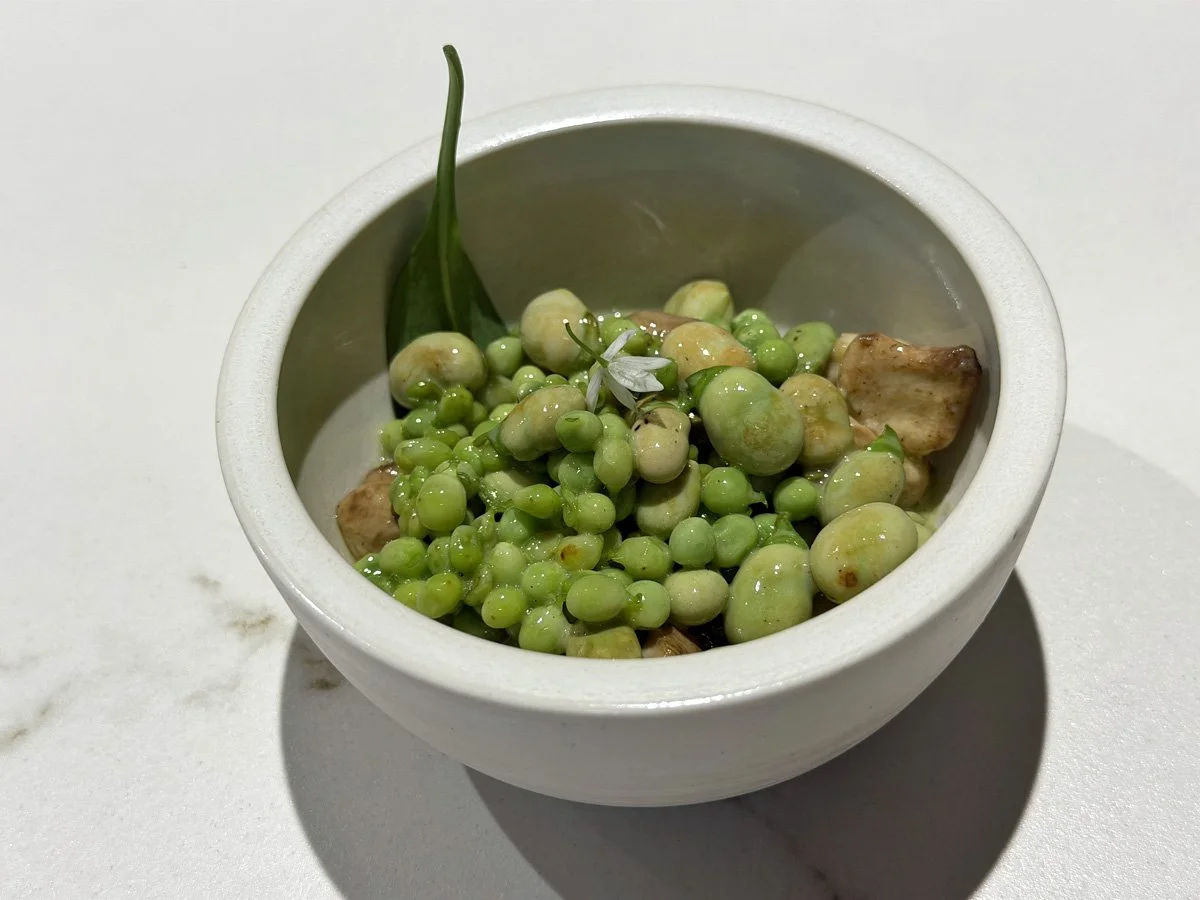
I felt there was some kind of life lesson in it all. It reminded me of the time I stayed at a Korean Buddhist temple and a monk scolded me for leaving literally five grains of rice in my bowl. I should be happy, I thought, with my tiny bowl of fresh, sustainable peas, beans and expensive mushrooms.
Muka was conceived by chef Andoni Luis Aduriz and the IXO group, the team behind the renowned Mugaritz.
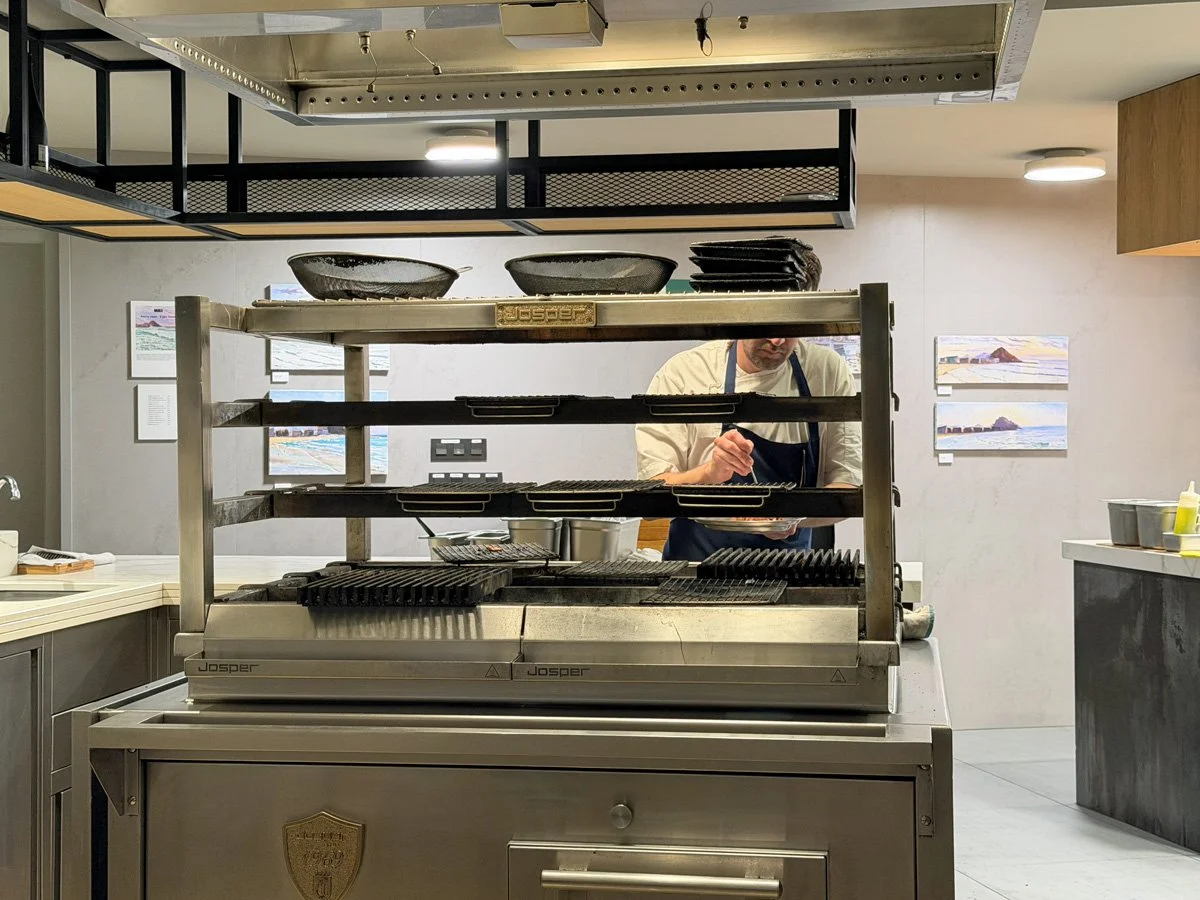
The name “Muka” comes from the Iparralde — or French — Basque word for “ashes from the fire,” reflecting the restaurant’s central idea of exploring fire in all its forms. Much of the cooking happens over an open grill. Sitting at the bar, I had a full view of the cook preparing the food over fire.
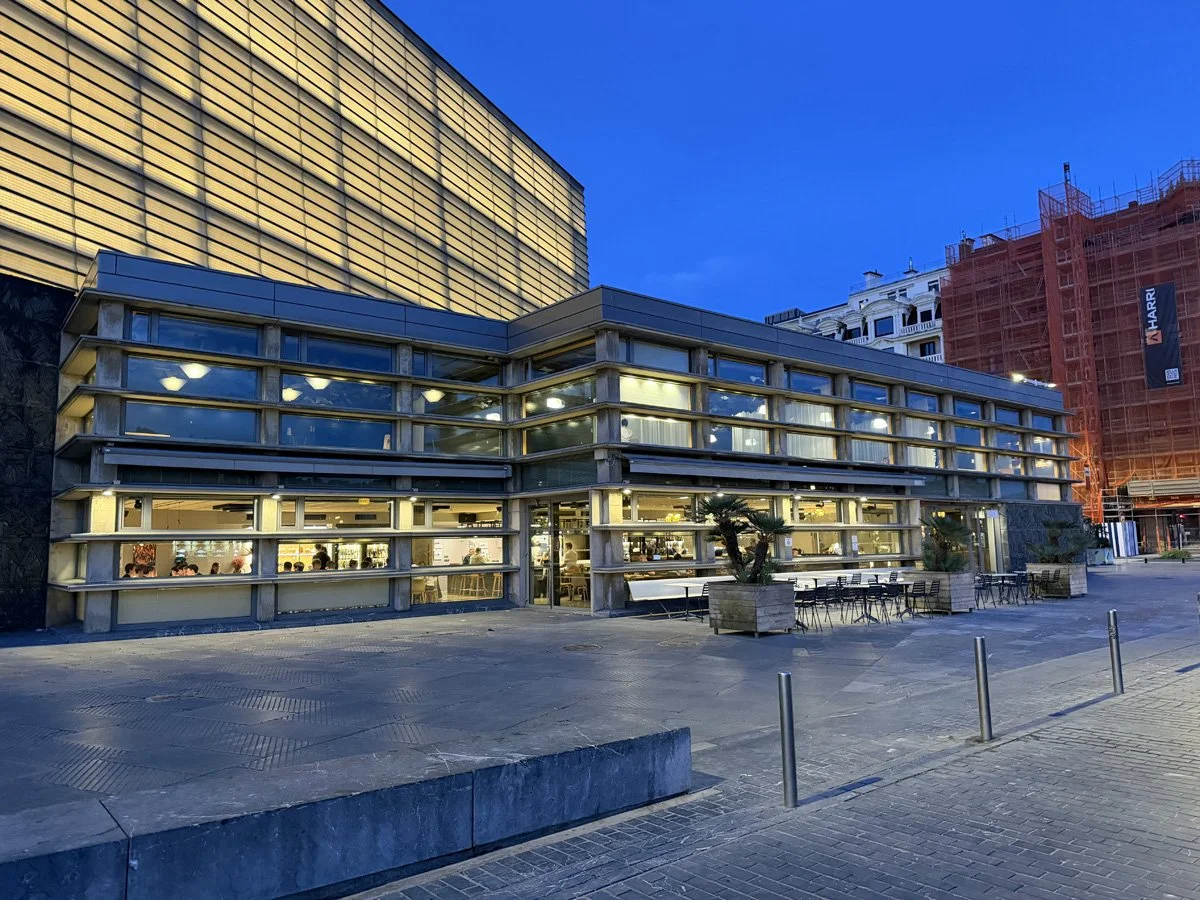
The restaurant is part of the Kursaal Congress Centre and Auditorium complex. The next day, I had to travel back to Bilbao to catch my flight home on Saturday.