San Sebastián - Orio and back
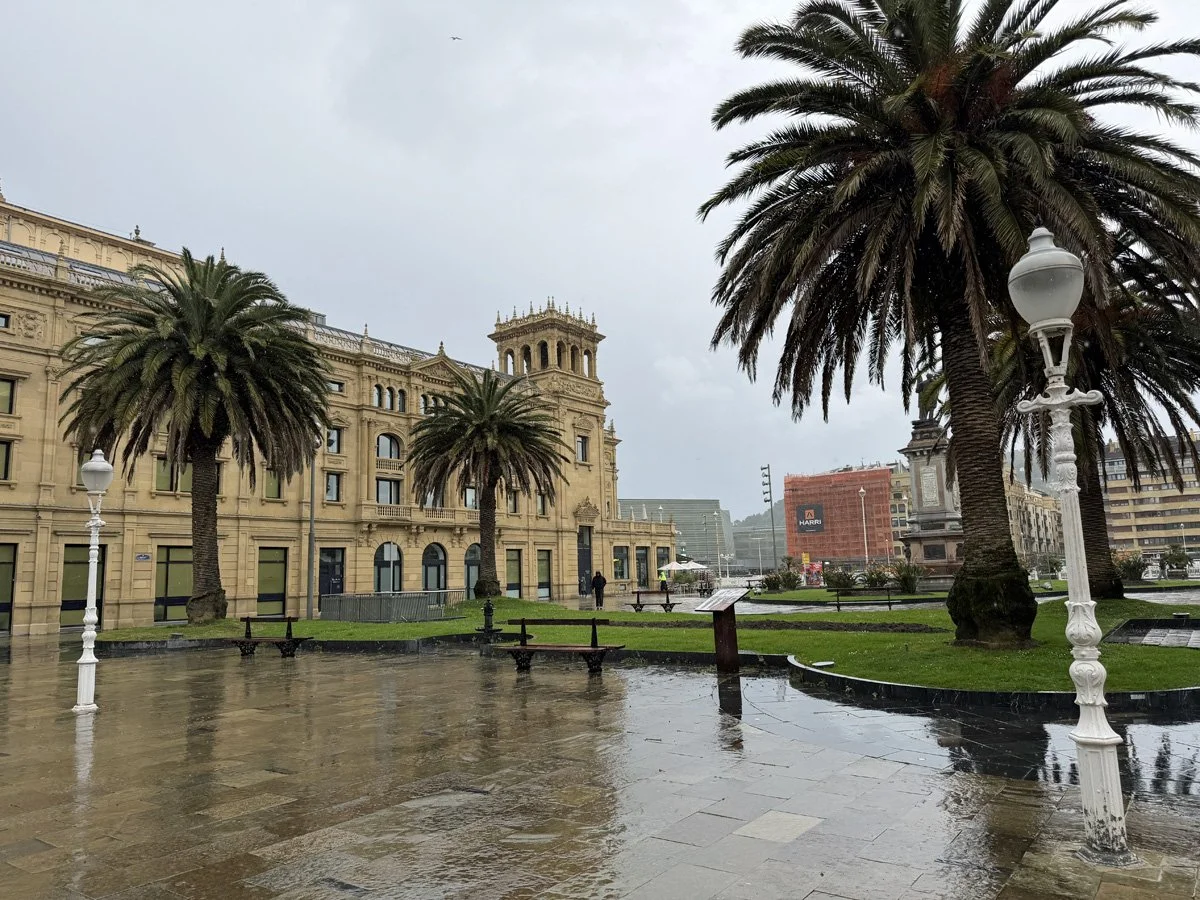
On my second hiking day I walked past La Concha bay and picked up the Camino heading towards Orio. I hadn’t even reached the edge of San Sebastián when it started to rain heavily. Because it had been dry the day before, I had left my umbrella and rain pants at the hotel, though I was wearing my yellow raincoat.
Walking along La Concha, it became clear why Isabella II of Spain chose San Sebastián as a place to take sea baths in the mid-19th century. The place is beautiful. When Maria Christina of Austria, widow of Alfonso XII of Spain, moved the royal court’s summer residence to San Sebastián in the late 19th century, the city’s bond with the royal family grew even stronger. Donostia flourished as a fully fledged seaside resort, and even Mata Hari is said to have visited.
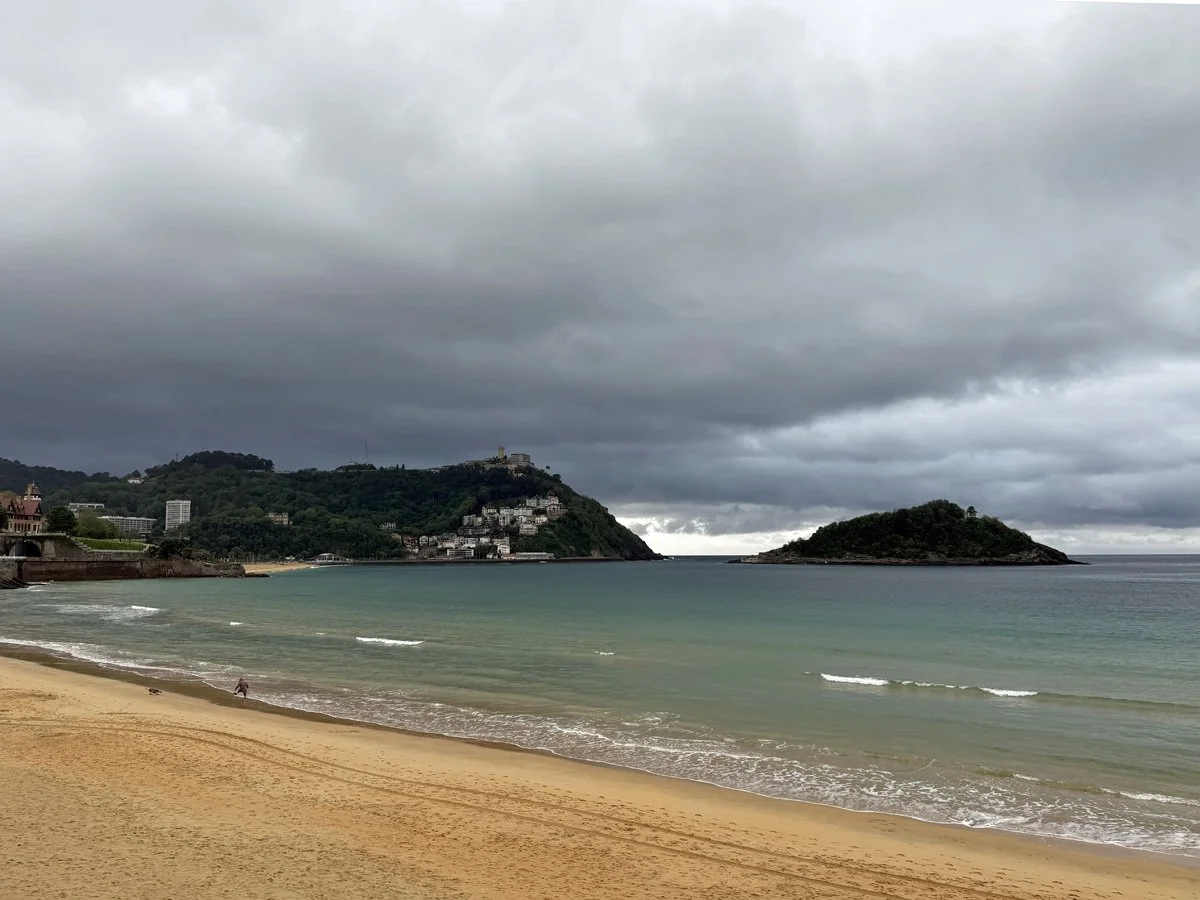
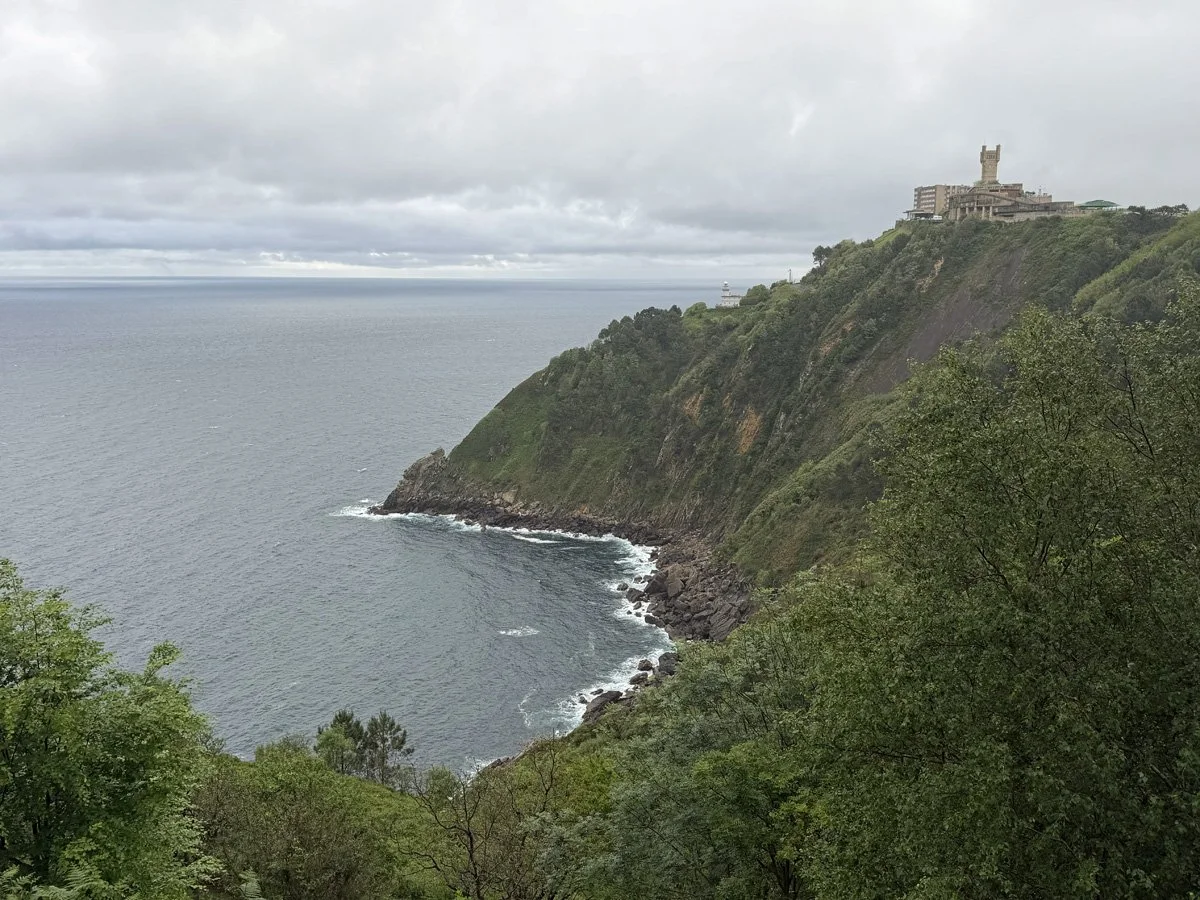
It took a while before I reached anything that felt like nature. Being a Monday, there were no local runners or dog walkers, only a few long-distance pilgrims on the Camino. They would greet me with “Buen Camino,” and I would simply nod along, not feeling the need to explain that I wasn’t really walking the Camino in the traditional sense, despite my wide-brimmed walking hat, an amazing tool in the rain.
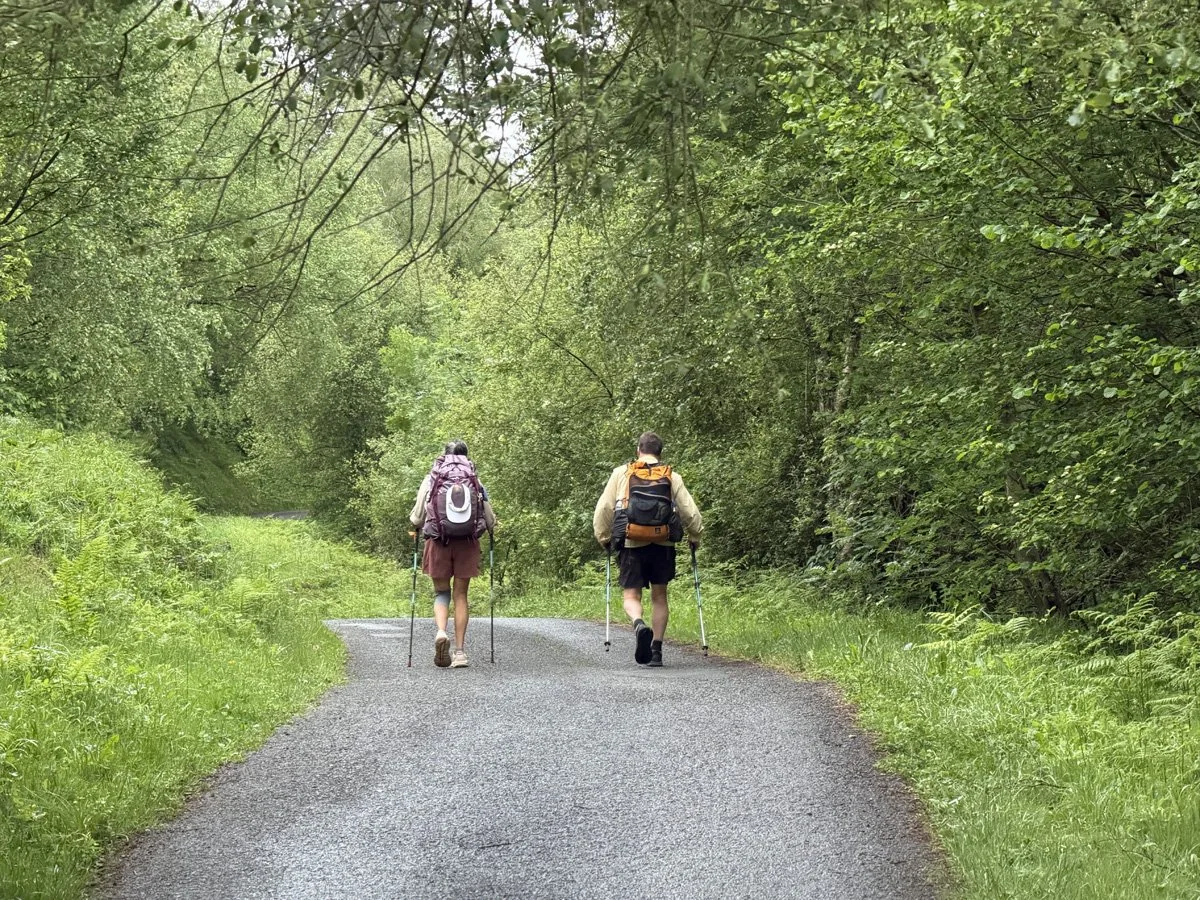
I noticed I was moving faster than most other hikers/pilgrims — perhaps because my day pack was very light, or perhaps because I was on some kind of mission. At one point, as I overtook two hikers, the girl in front of me shouted, “Man with a mission coming through!” I called back that my only mission was to find a glass of cider in the next village.
I wasn’t particularly preoccupied with the bones of the apostle James the Greater. When Spain was largely under Muslim rule in the 9th century, the story of the discovery of the tomb of Apostle James the Greater can be seen as something close to a political necessity—helping to unify and strengthen Christian resistance against Al-Andalus. The story is a medieval foundation legend but there is no 9th-century evidence that proves the bones were those of Saint James.
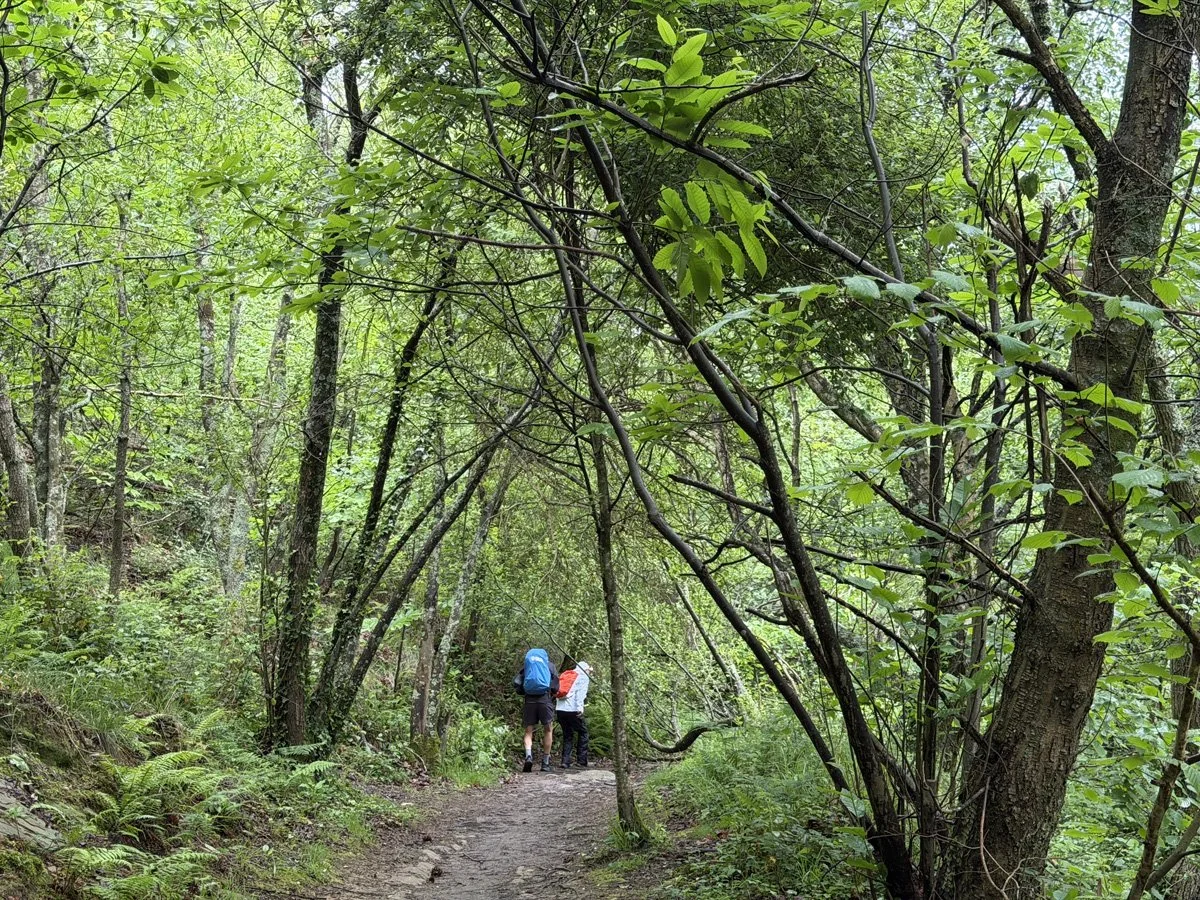
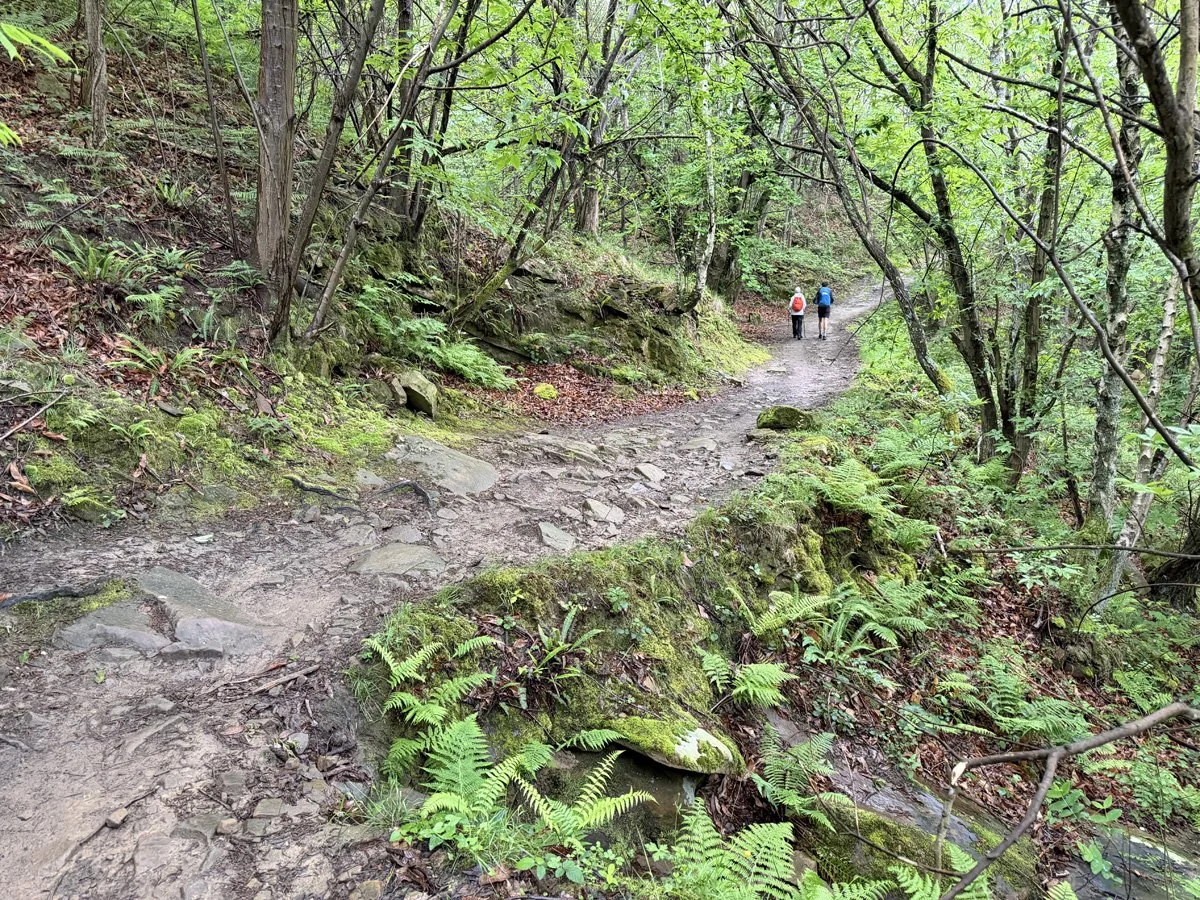
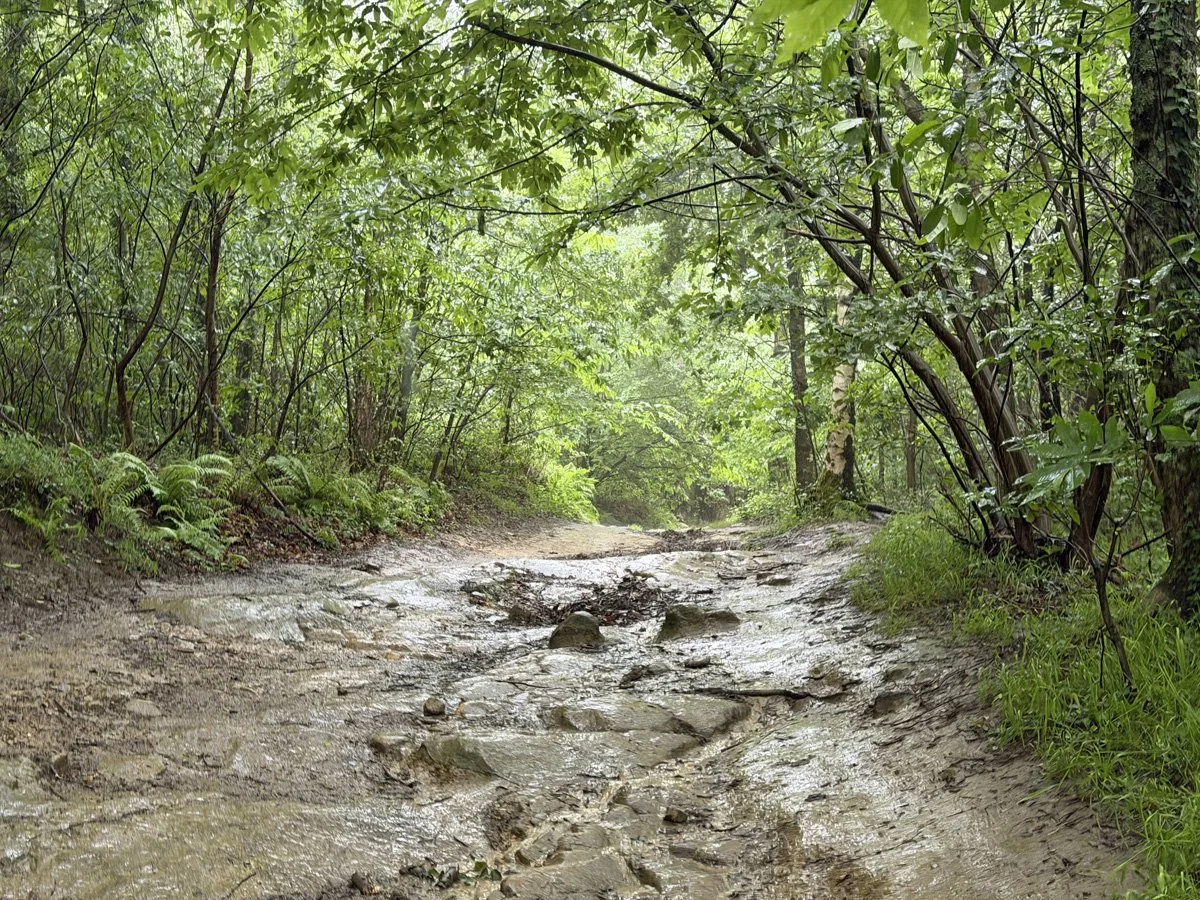
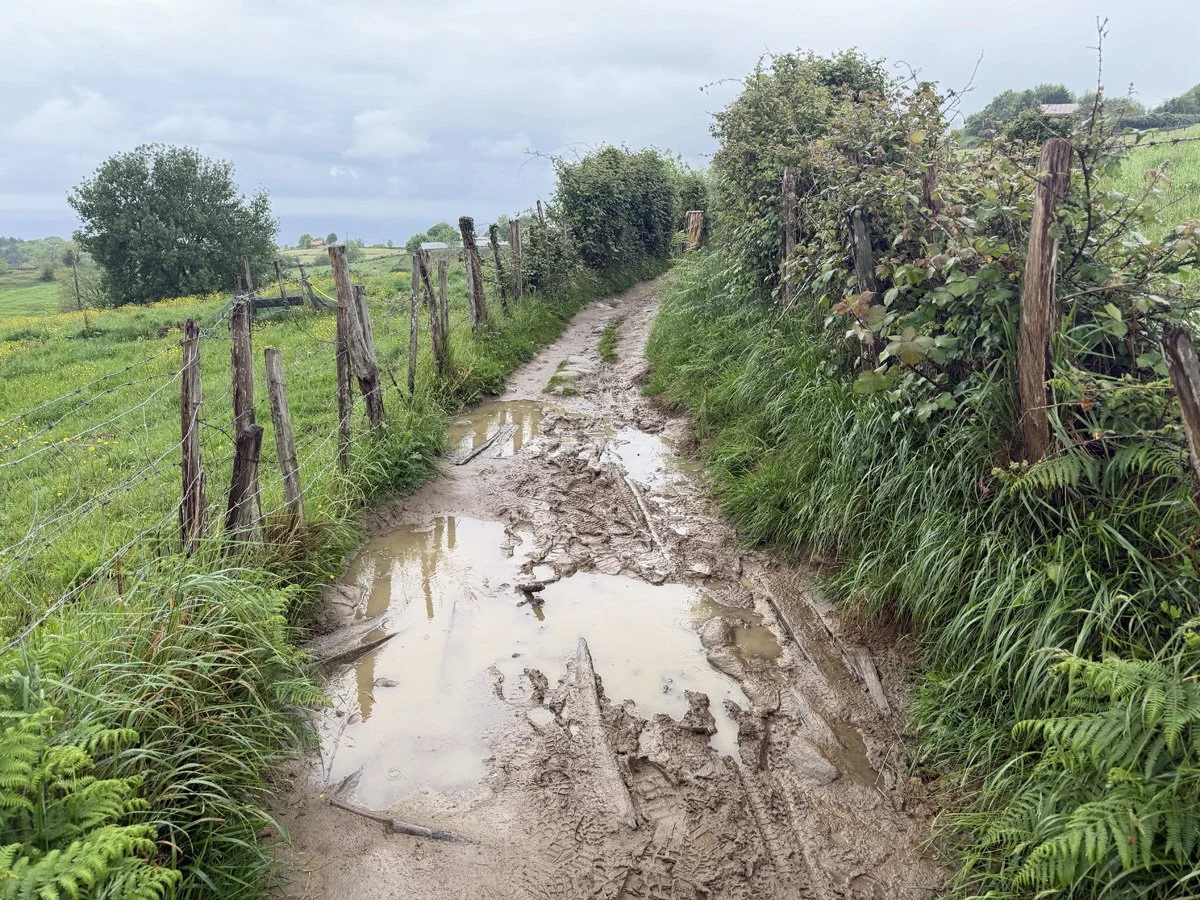
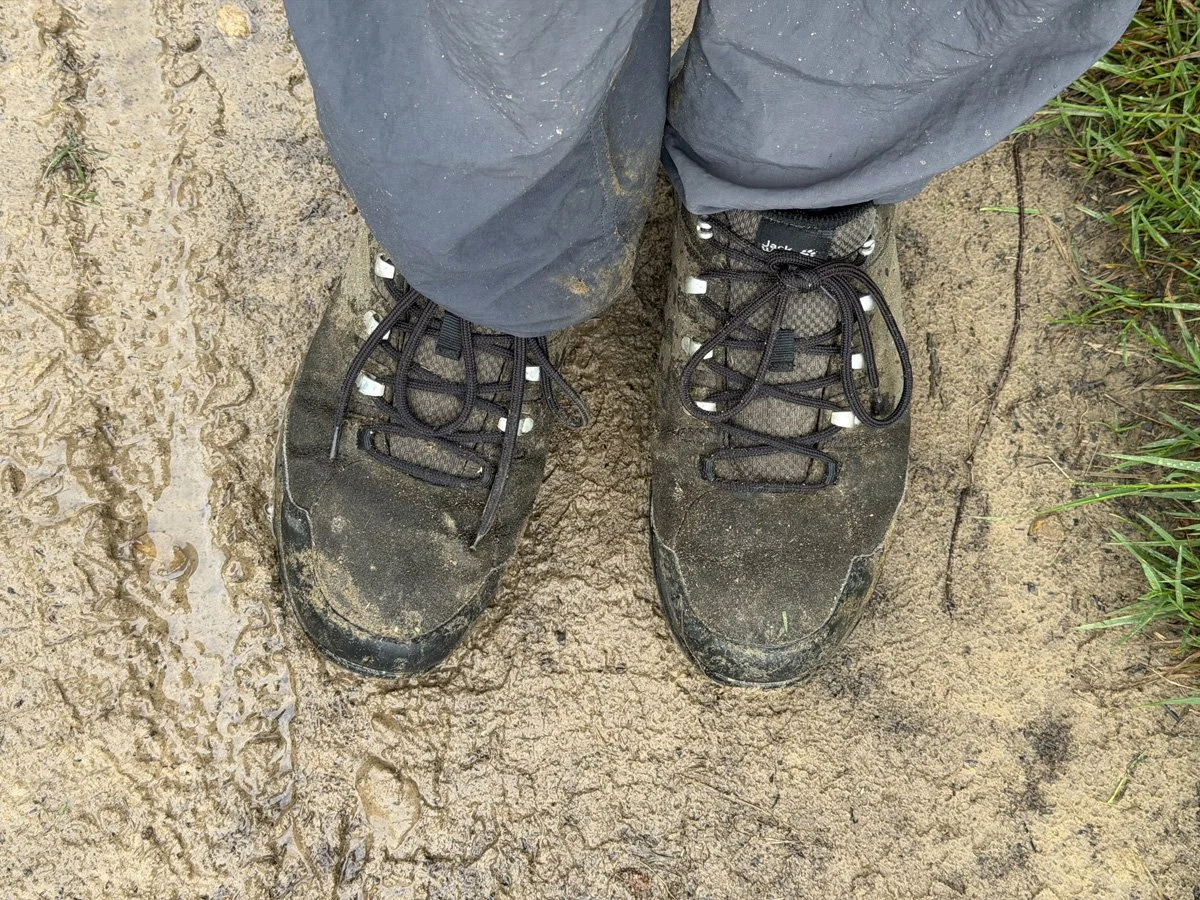
At one point, the water was flowing over the path in a thin layer. The sand turned to clay and became incredibly slippery. I always look like I’m not having fun in photos, but I can assure everyone: I was having the time of my life. The rain only added to the challenge — and I actually enjoyed it.
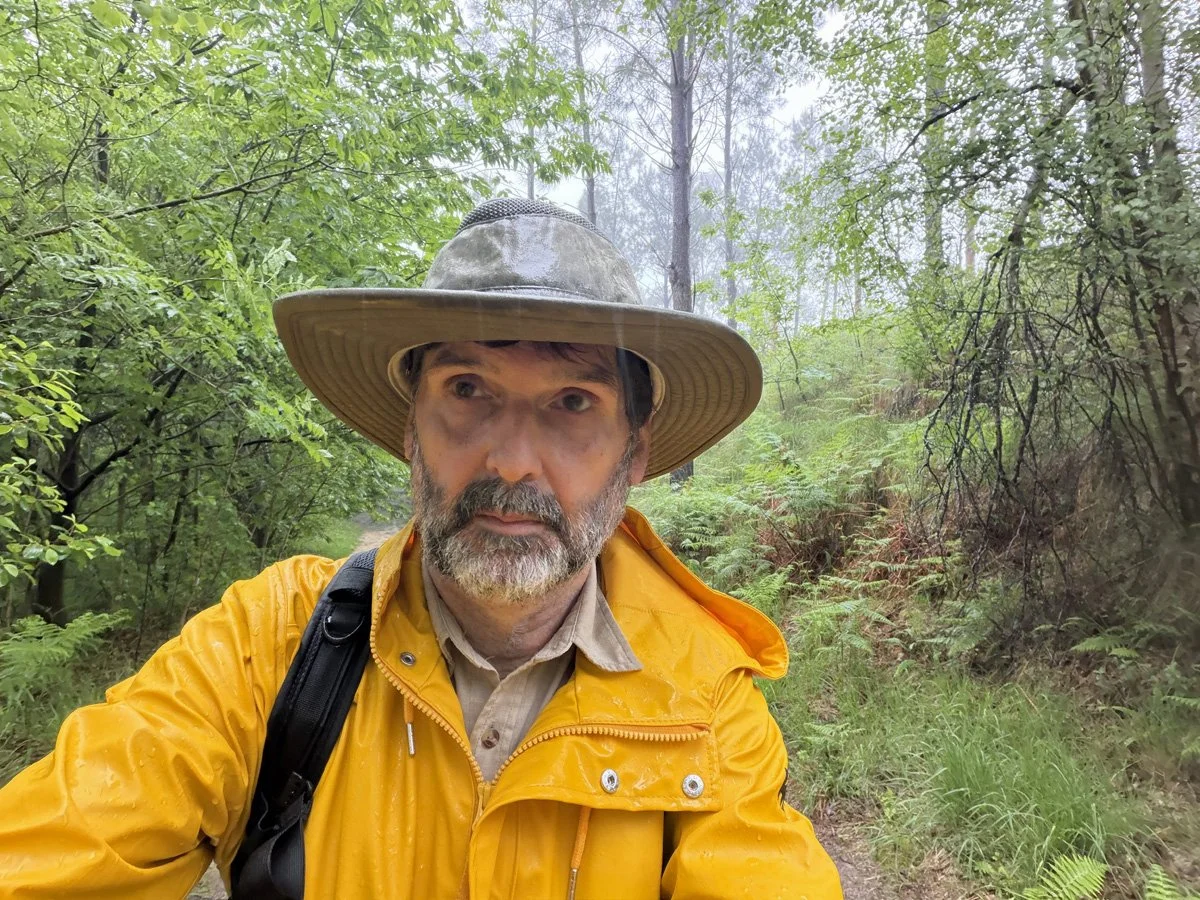
The man with a mission.
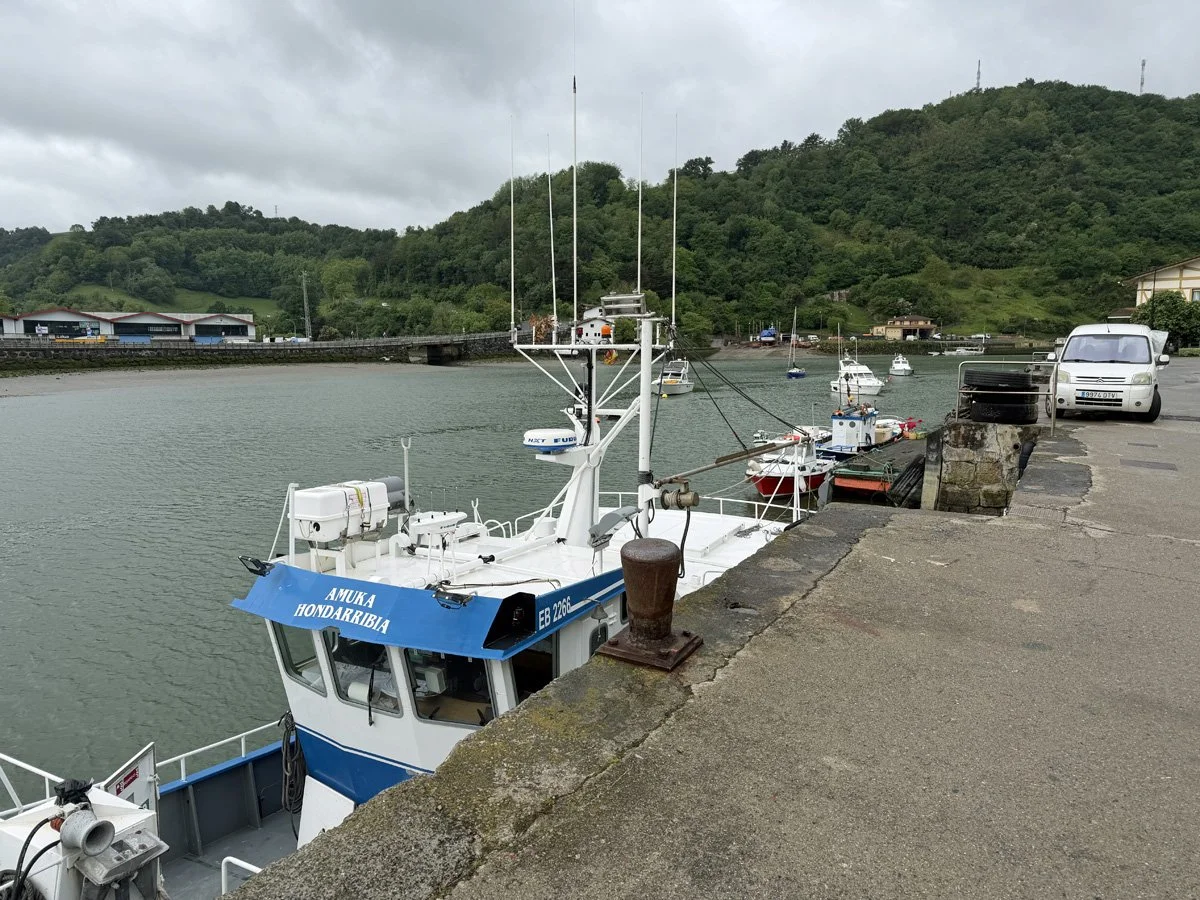
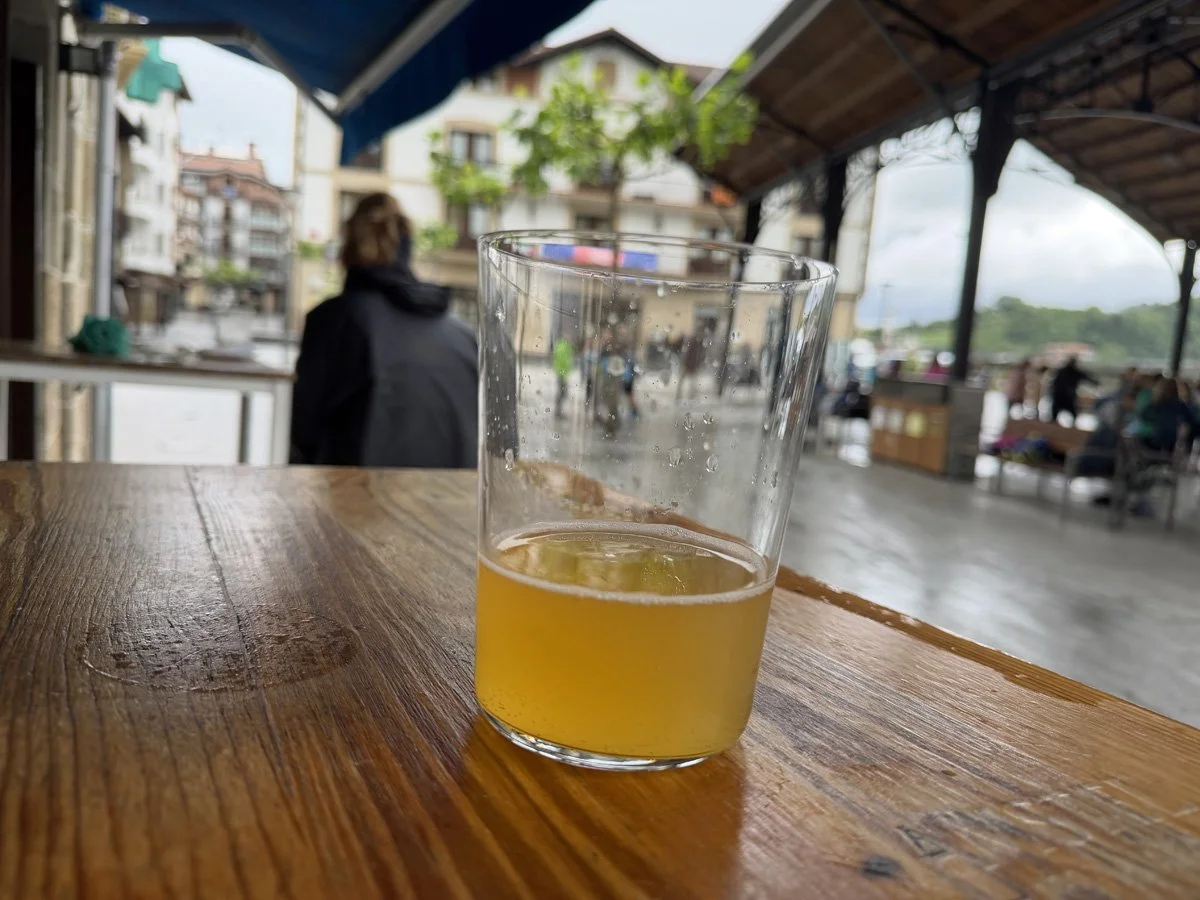
Orio is a small town on the Oria River, not far from the sea, with fewer than 6,000 inhabitants. I hadn’t drunk much during the trail, so the first thing I ordered was a glass of sidra. The glass itself is much bigger, but when you order one, they pour only about 100 ml in the traditional txotx-like style. Pouring the cider this way aerates it and gives it a slightly fizzy feel. To be precise txotx refers to the pouring in the Basque cider house directly from the wooden barrels.
The other option is to order the standard 700 ml bottle and practice txotx yourself. The local Basque apple varieties are sharp and high in acidity rather than sweet, and most traditional Basque cider (sagardoa in the Basque language) is fermented with wild or native yeasts, which gives it a very distinctive character. I don’t think I can drink sweet cider anymore.
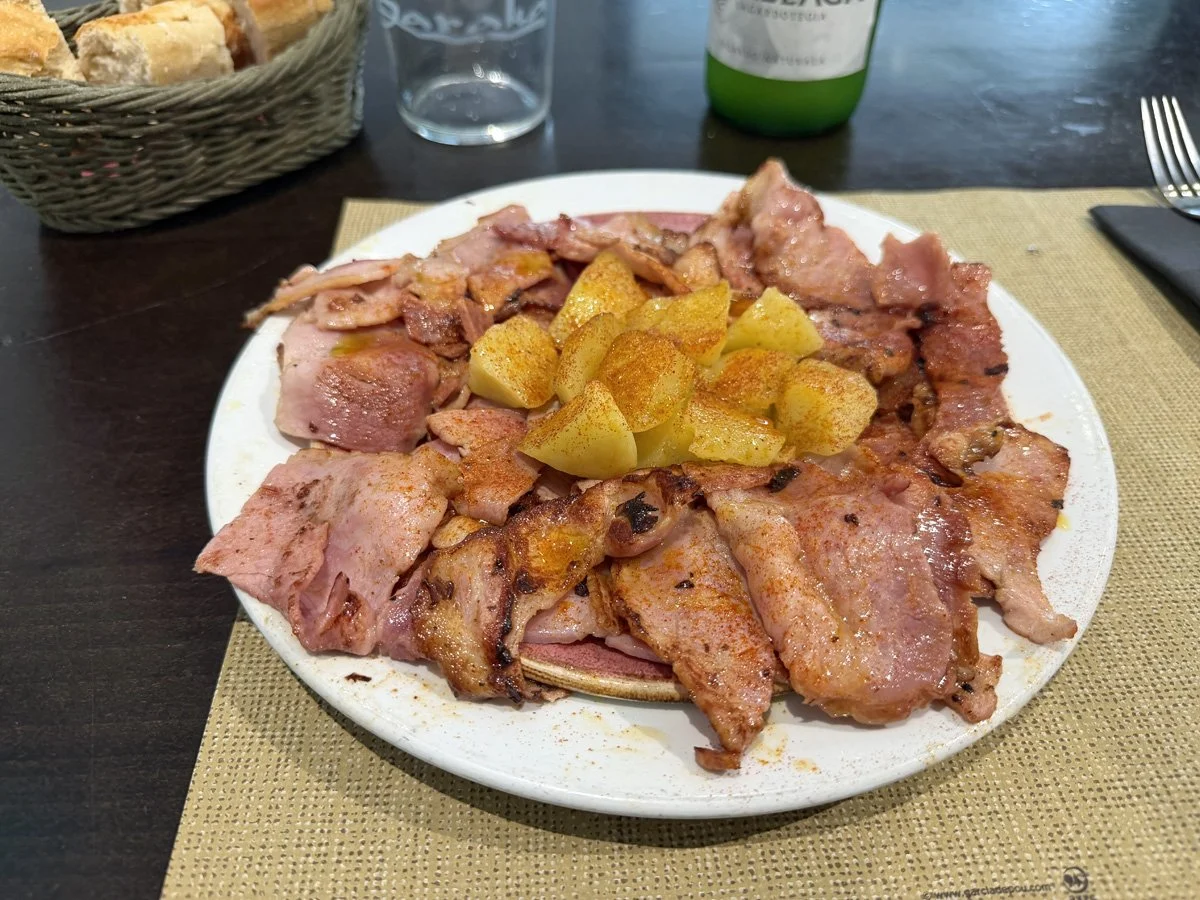
Next came lunch. I found a place with a huge television permanently tuned to football. That’s always a good sign — it usually means the place is local. I ordered a whole bottle of cider and started with lacón. I had looked up what it meant beforehand and expected something light: thin slices of cured pork, maybe. Instead, a big plate of fried fatty bacon and potatoes arrived at the table. I was hungry, so I ate it quickly anyway.
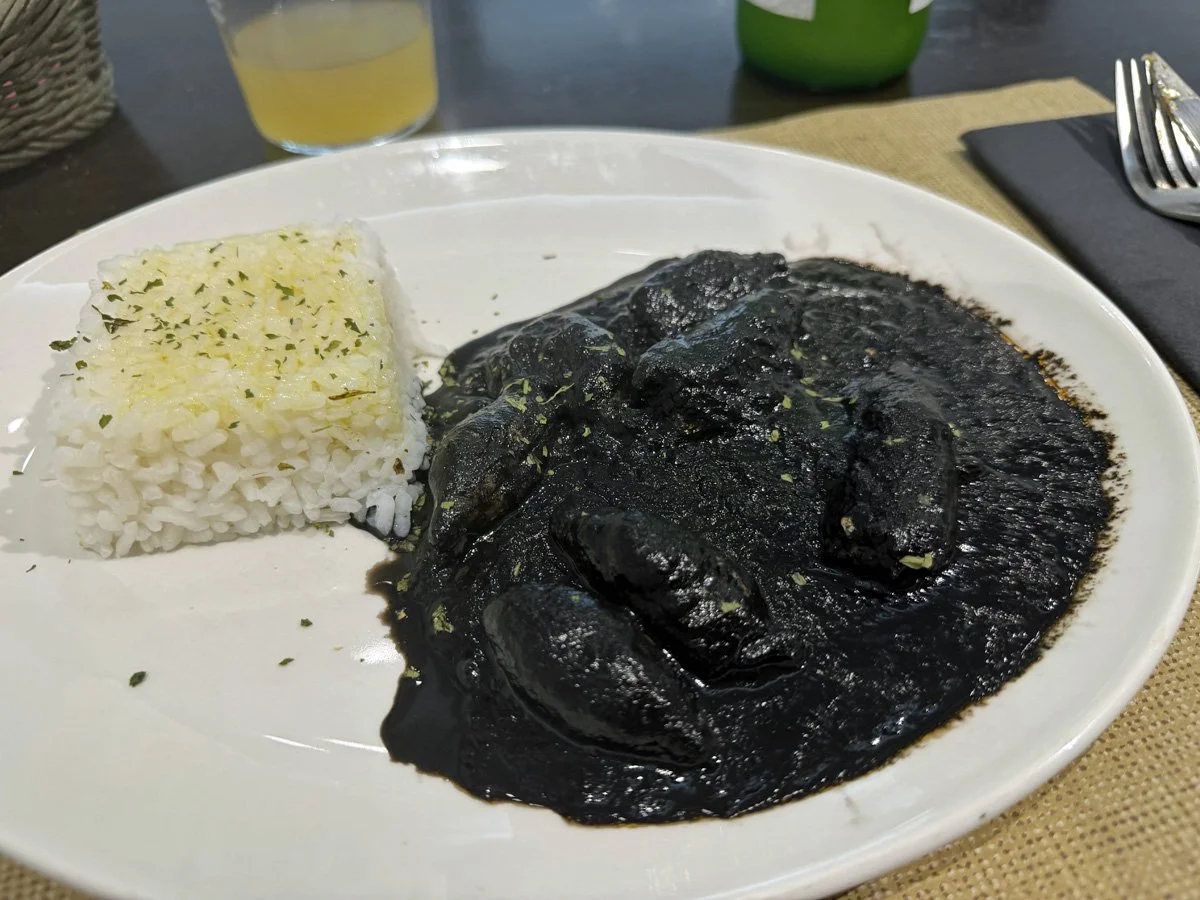
For the main course, I ordered chipirones en su tinta — baby squid cooked in their own ink. I love the disconnect between what your eyes see and the smell coming from the plate: deep black, yet the lovely scent of the ocean.
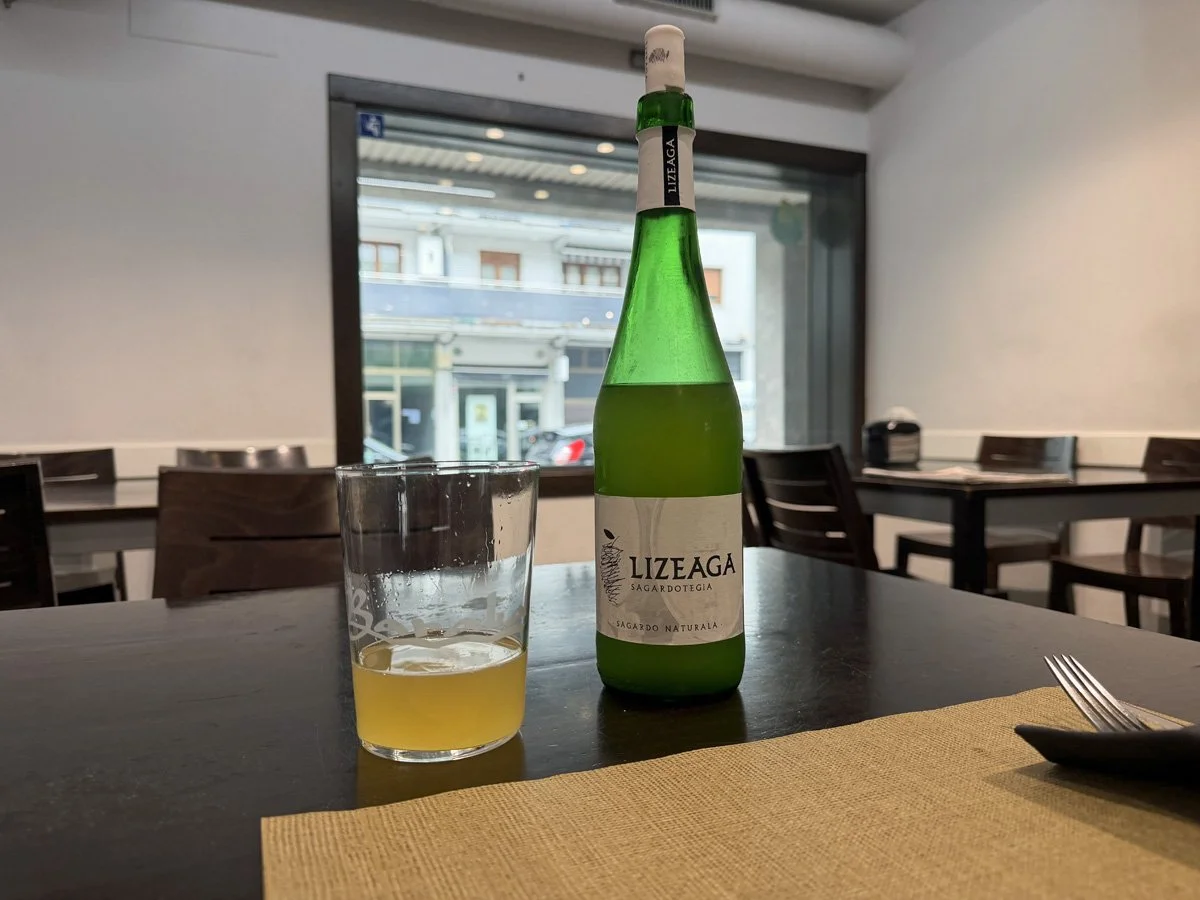
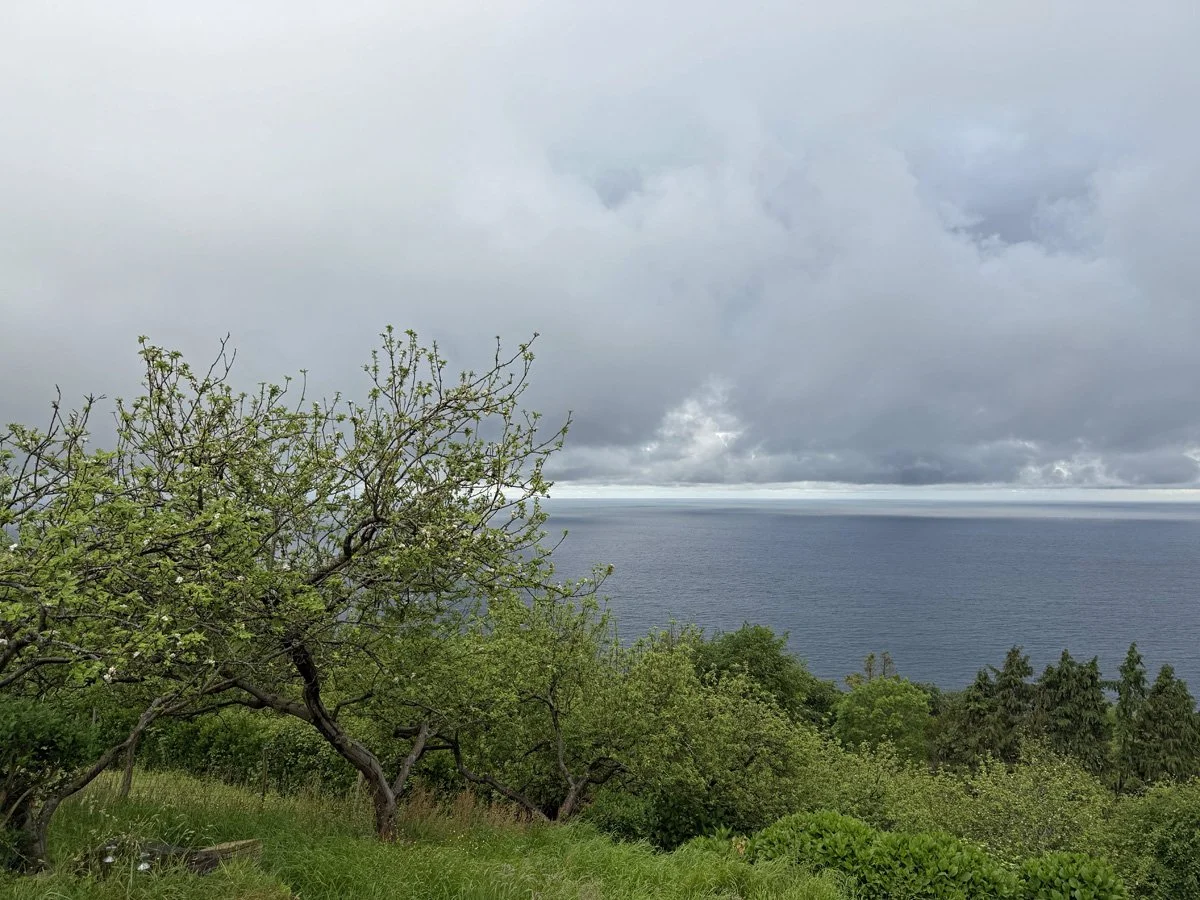
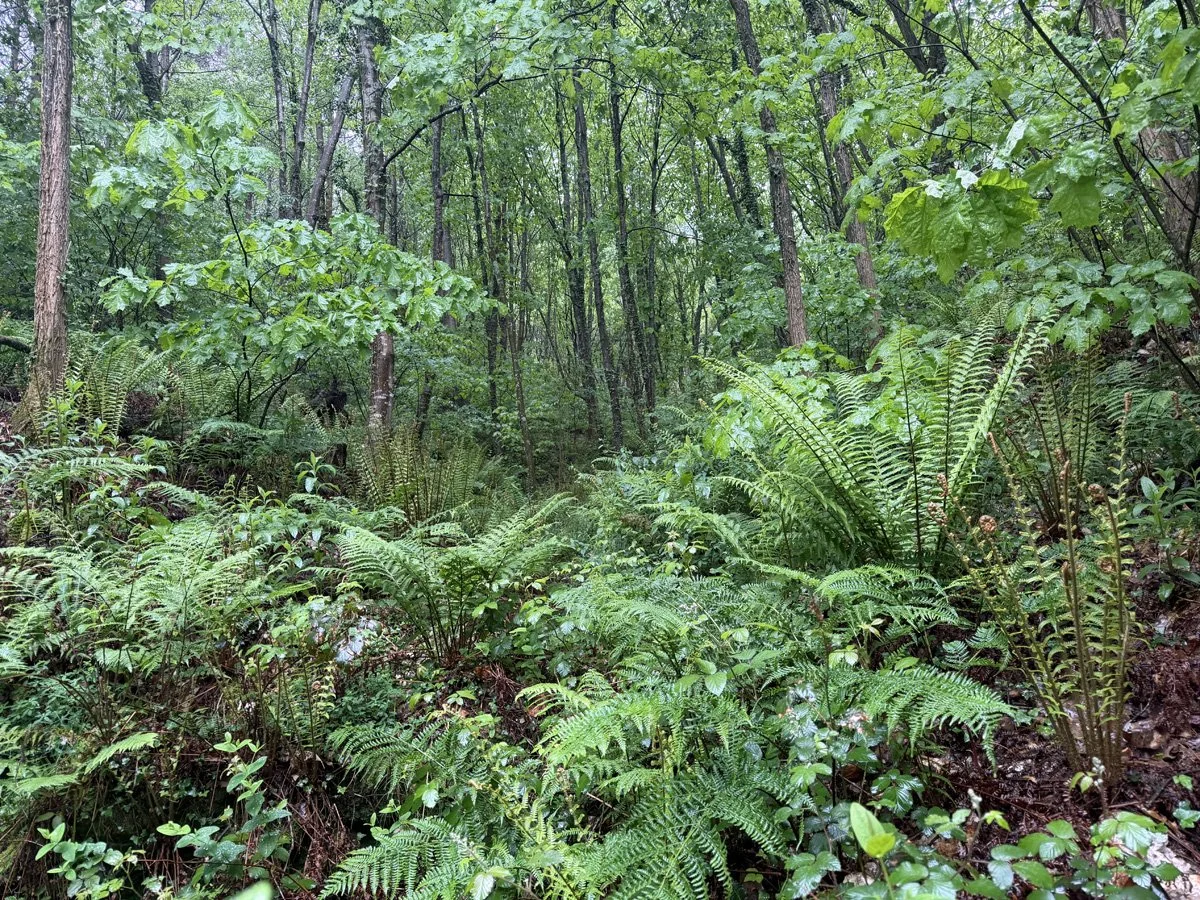
After lunch in Orio, it was clear I had drunk too much cider. The stuff is 6 percent alcohol. I was cold and wet, and the next village, Zarautz, felt just a bit too far. I also hadn’t figured out where the train station near Zarautz was. In hindsight, I could have made it there without much trouble, but I decided instead to walk back to San Sebastián. The landscape grew increasingly green, as if the recent rain had given the plants a sudden growth spurt. At the same time, the path became muddier with every step.
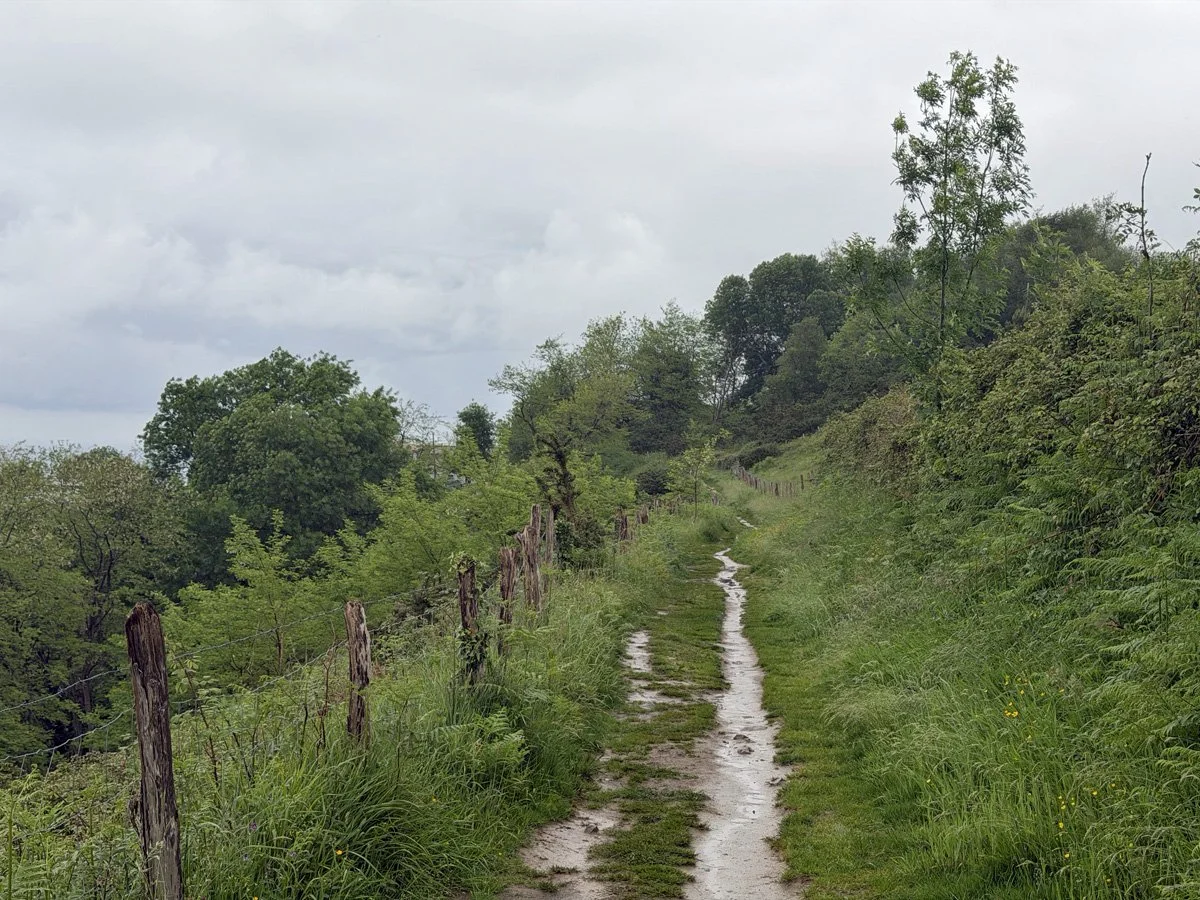
It turned out to be a rather tiring return journey, with more rain and growing hunger. I was relieved to finally get back to my hotel, exactly ten hours after I had set out.
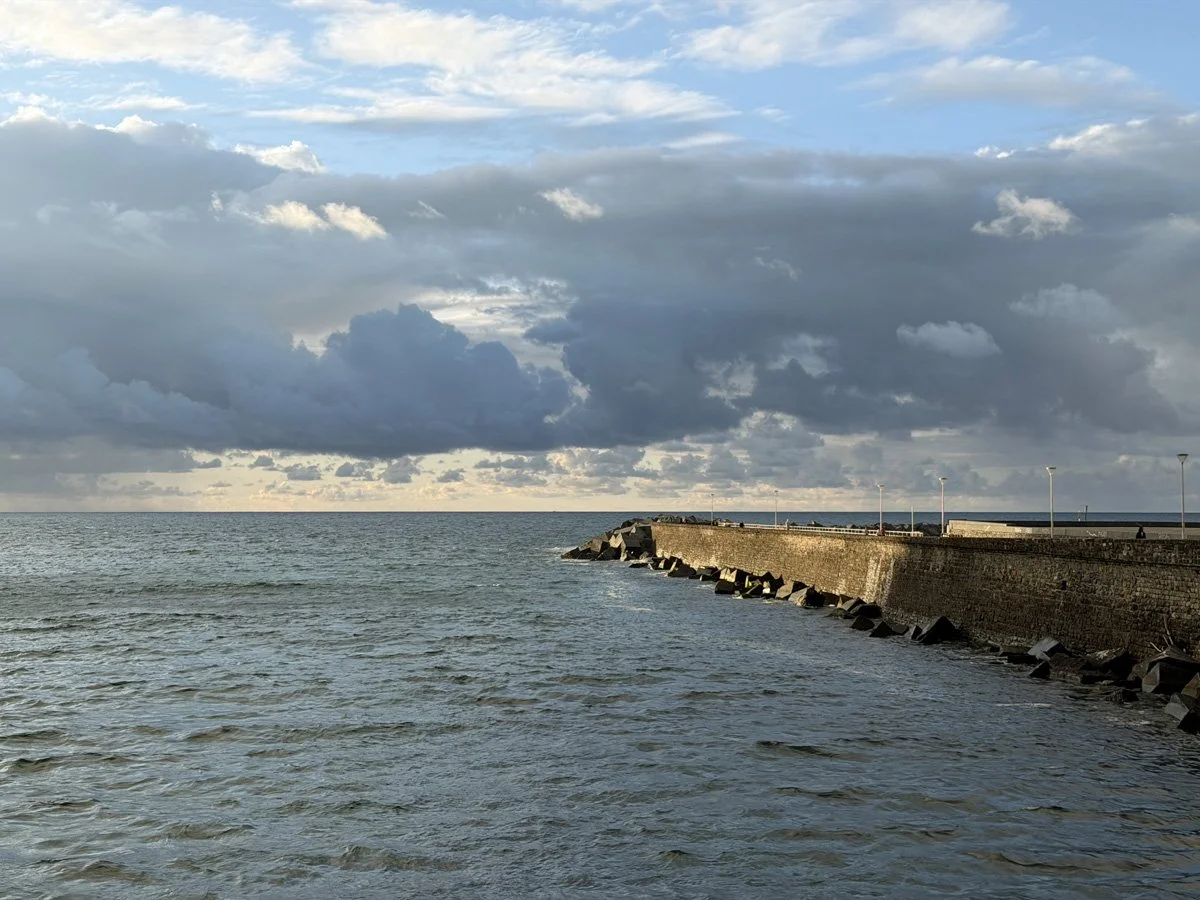
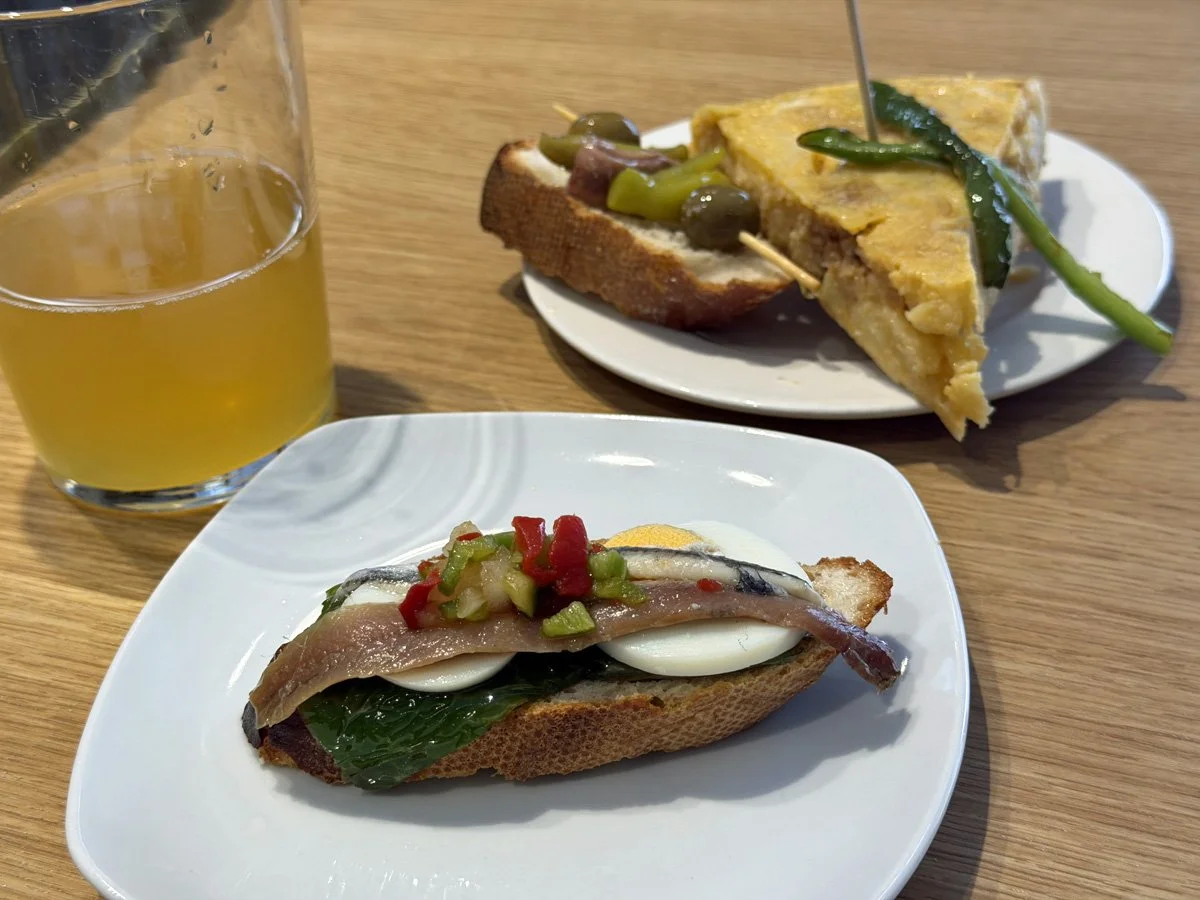
After a hot shower and an hour’s rest under the blanket, all I could manage was a short walk to the old town for a glass of white wine and a couple of pintxos for dinner. By then the sun came out.
Day 3: Orio - Zarautz - Zumaia
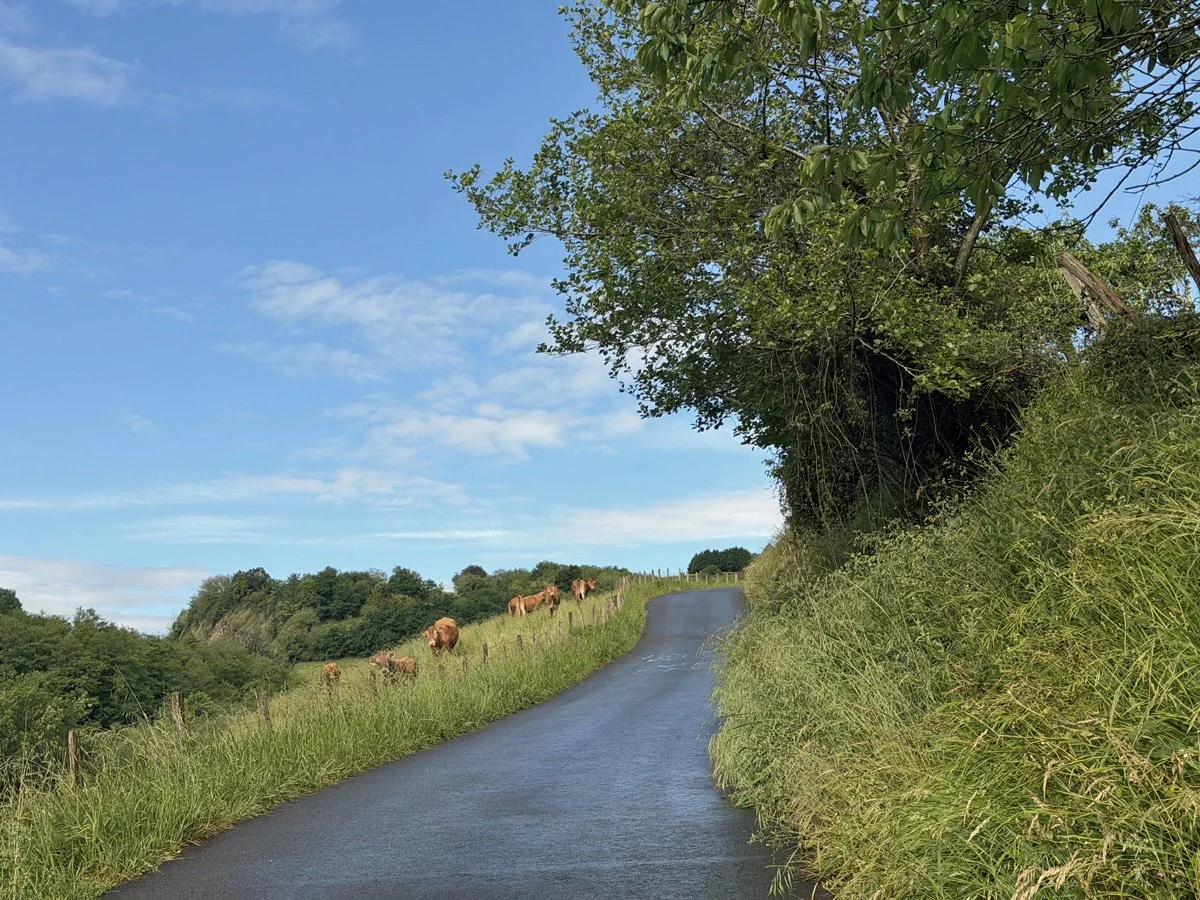
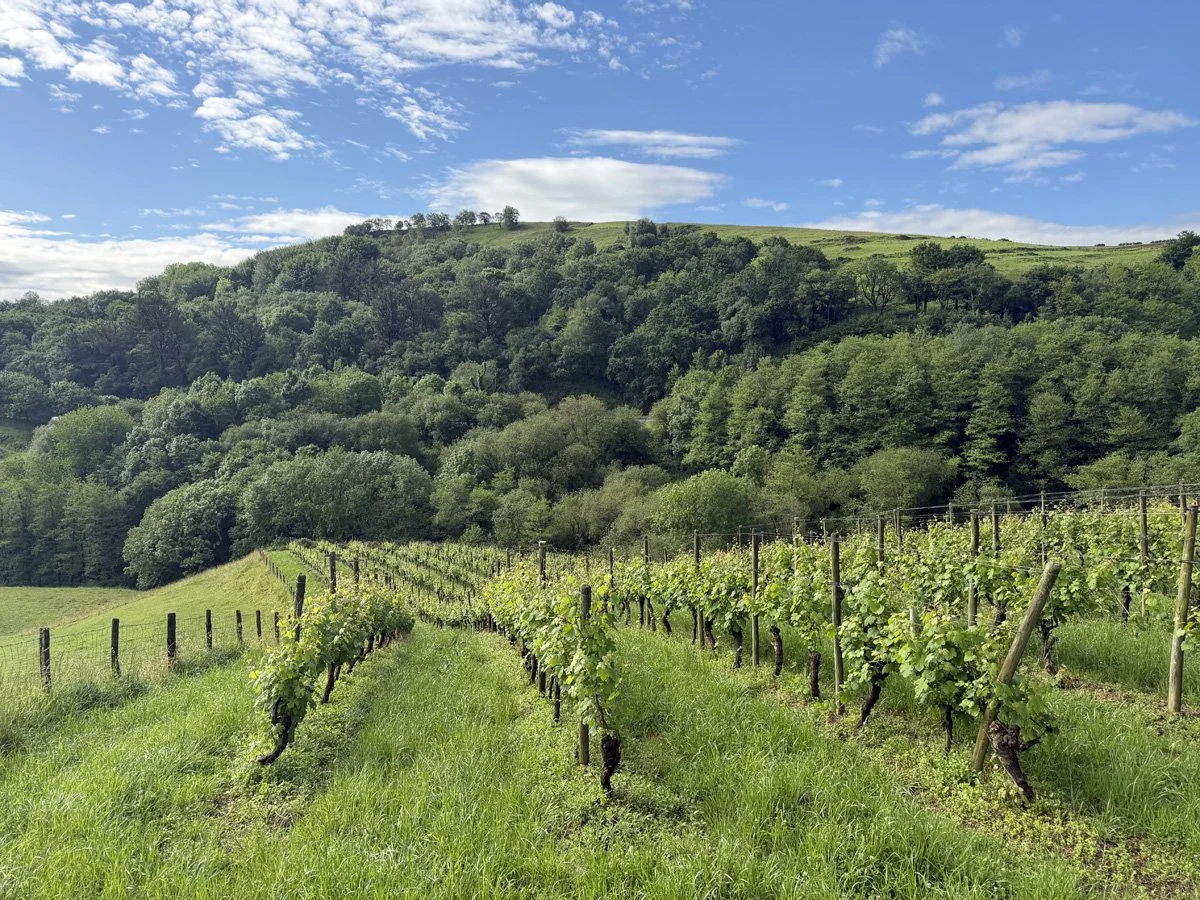
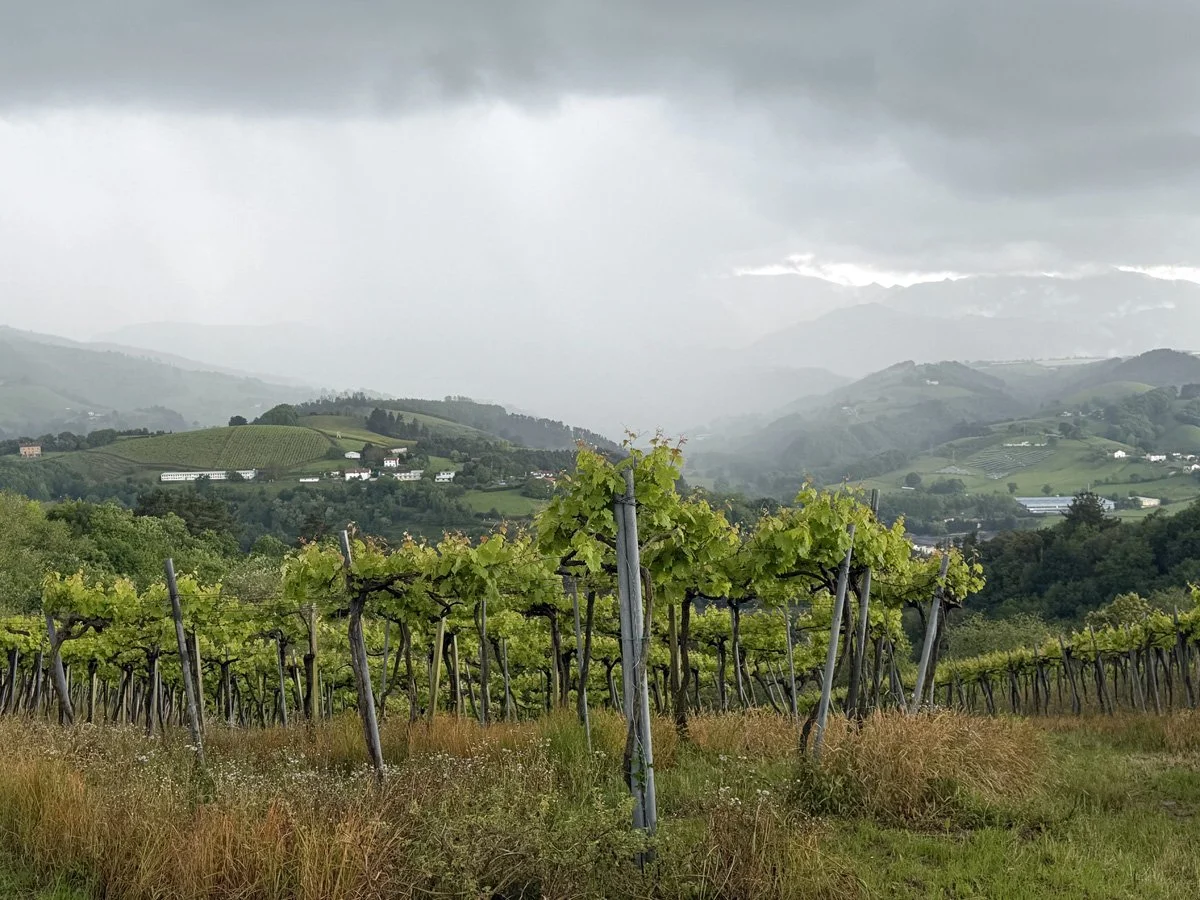
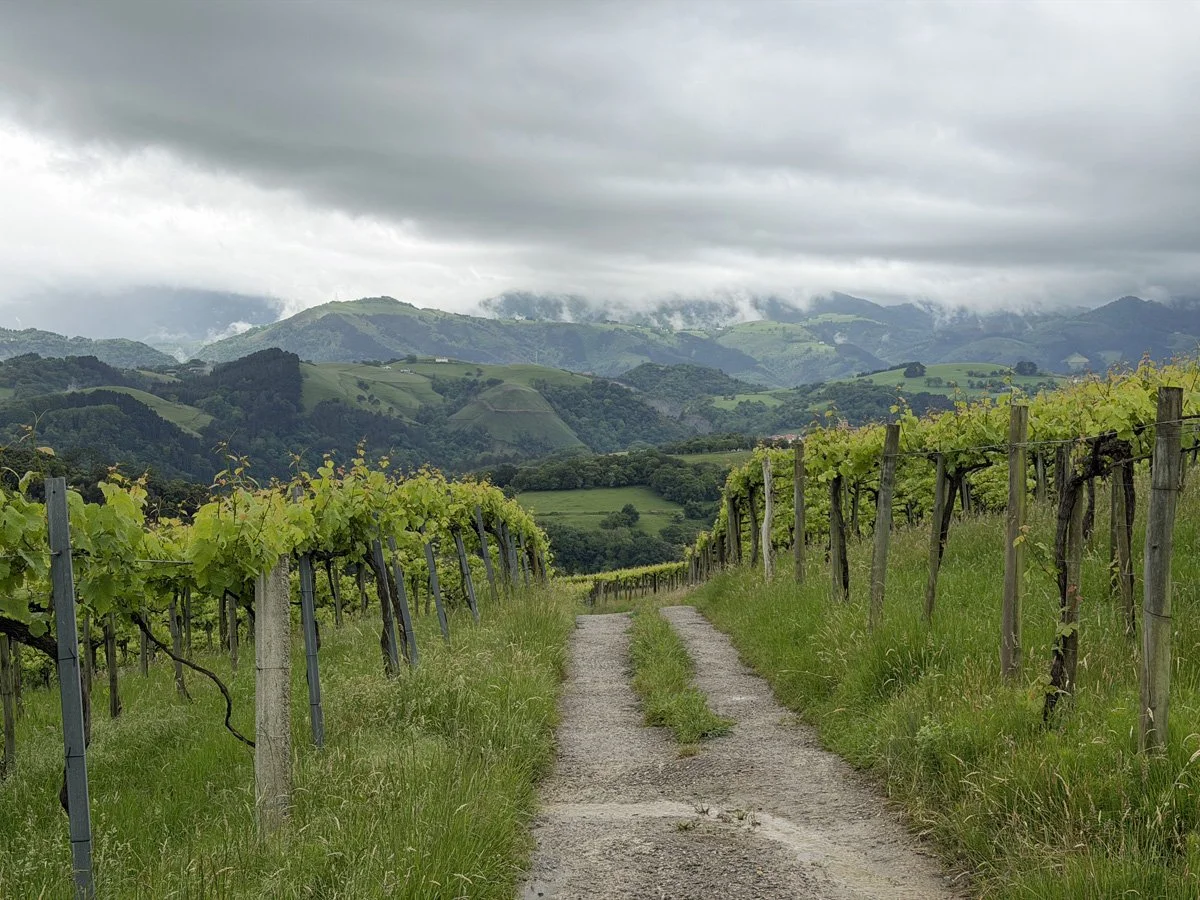
On the third day, I took an early morning train to Orio so I could pick up the Camino del Norte where I had left off the previous day. It started out sunny. This time I could see Orio from the opposite side of the river, with a small shipyard used for repairs nearby. Vineyards began to appear in the Windows XP themed landscape.
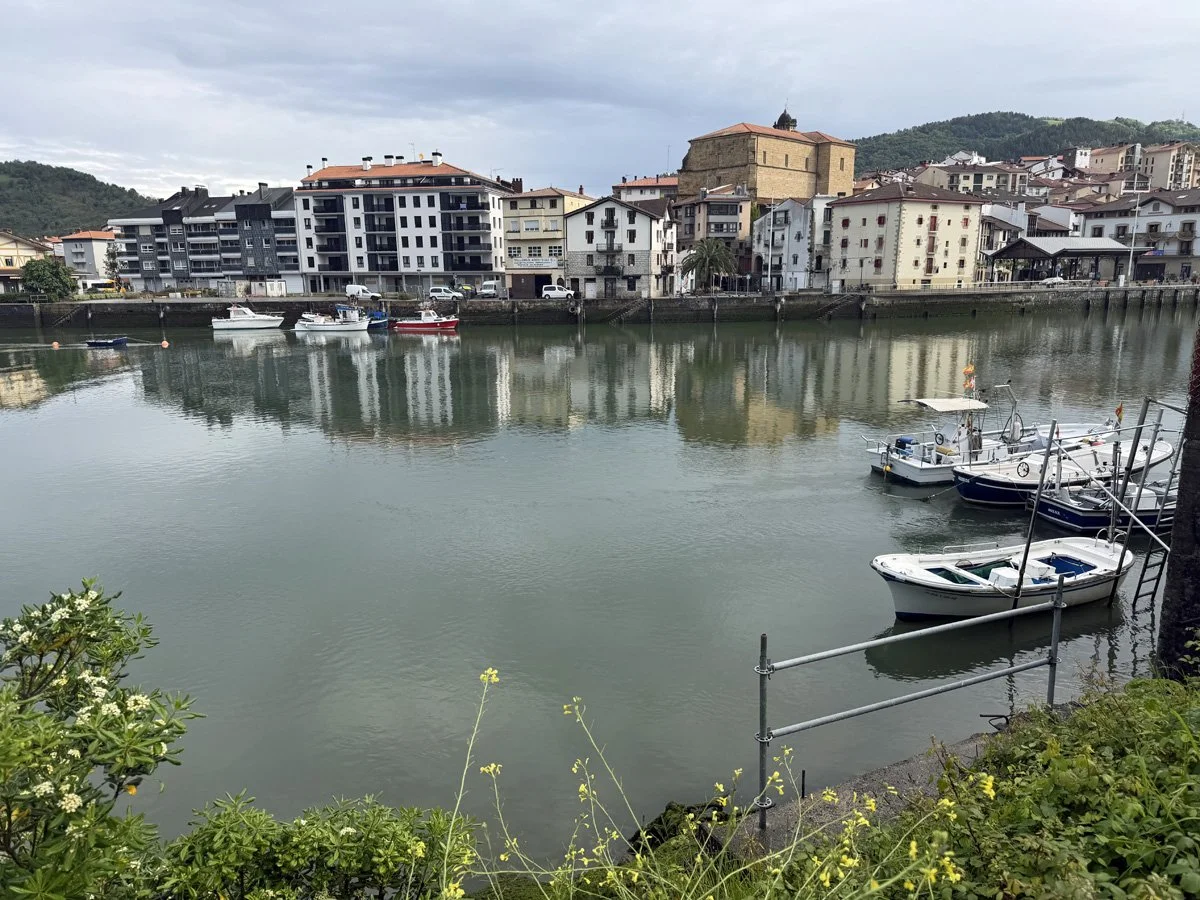

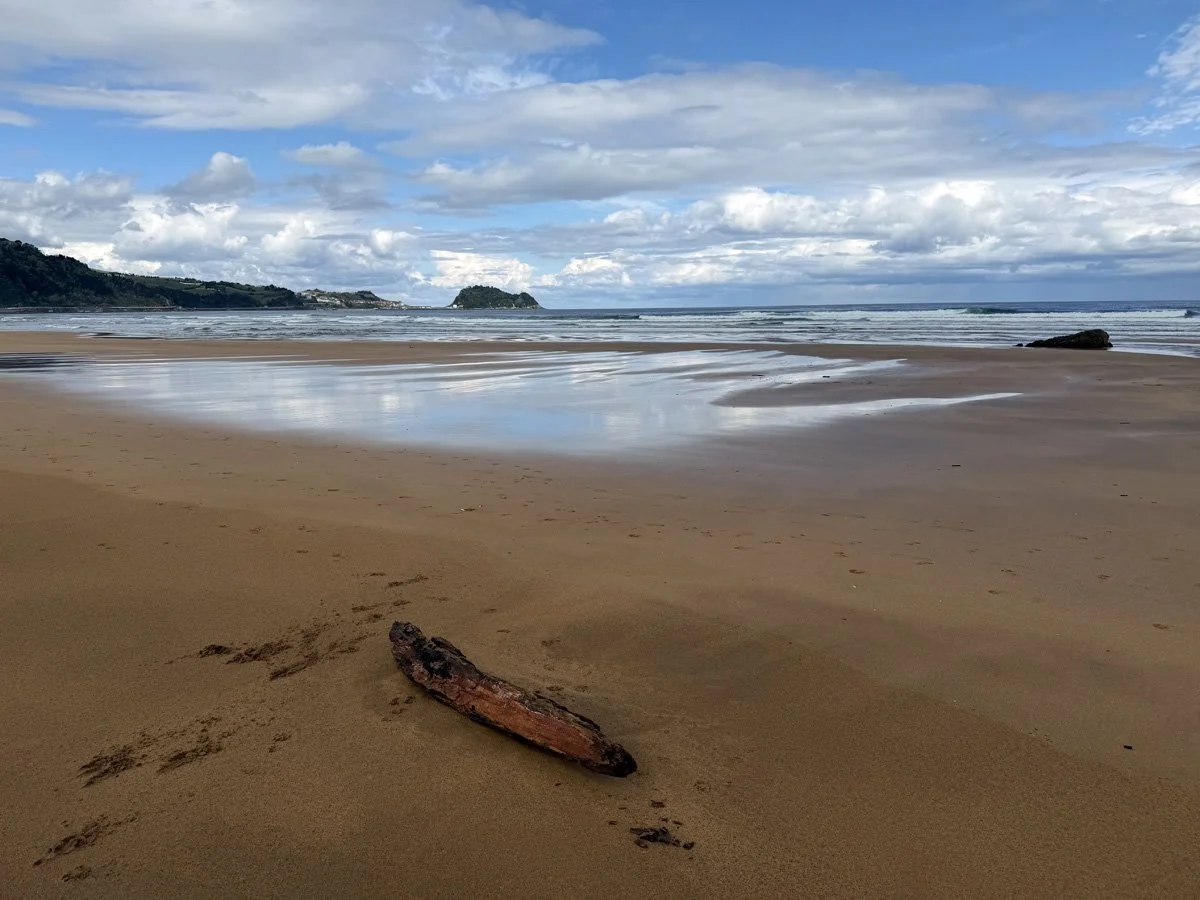
As I arrived in Zarautz, the path followed the beach. It was time for lunch in a small pintxos bar, accompanied by the customary glass of cider. I considered having these few pintxos as a before lunch, but when I found a restaurant it looked a little too fancy for my hiking clothes, which I had been wearing for the third day in a row. On a whim, I walked in anyway and reserved a table for lunch the following day—I also wanted to take a break from walking and do something else. They accepted the reservation, and I continued on toward Zumaia.
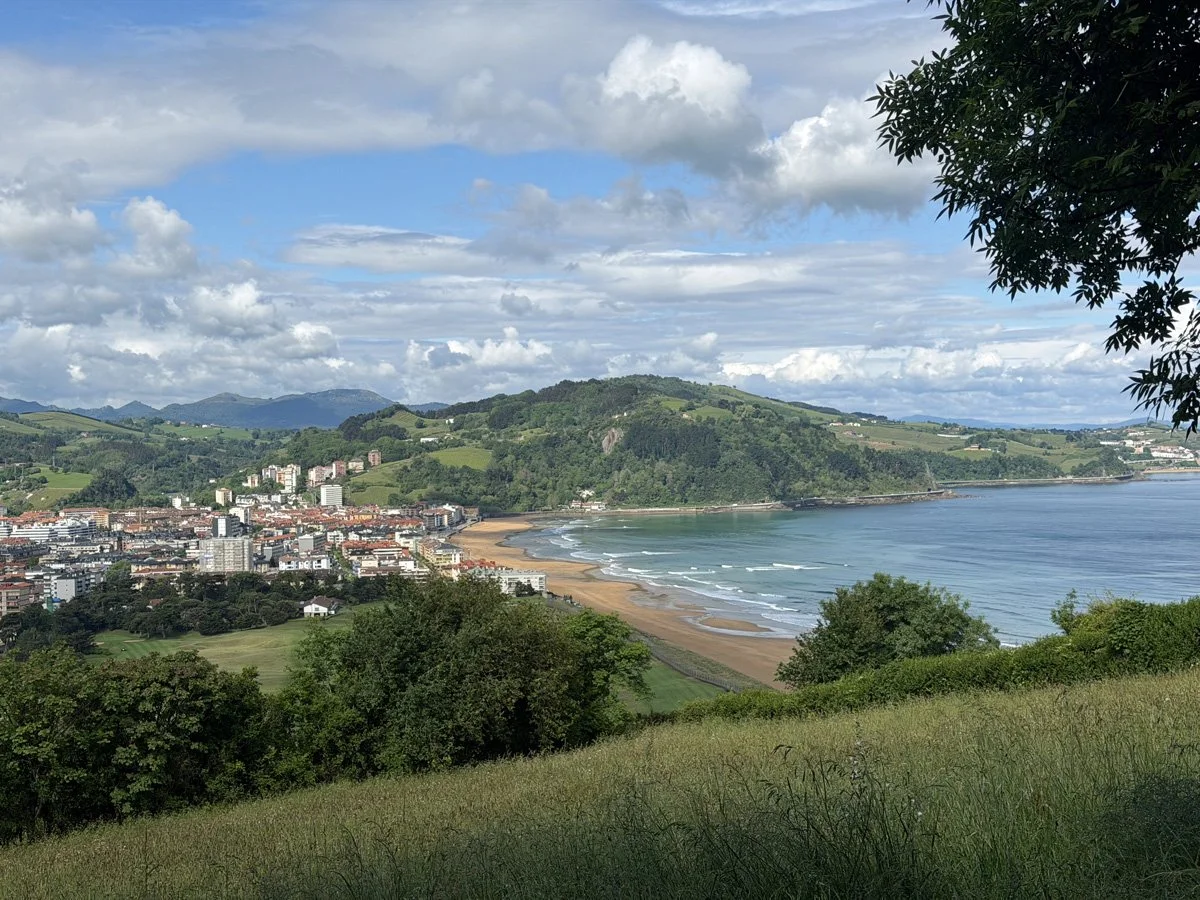
Zarautz in the distance
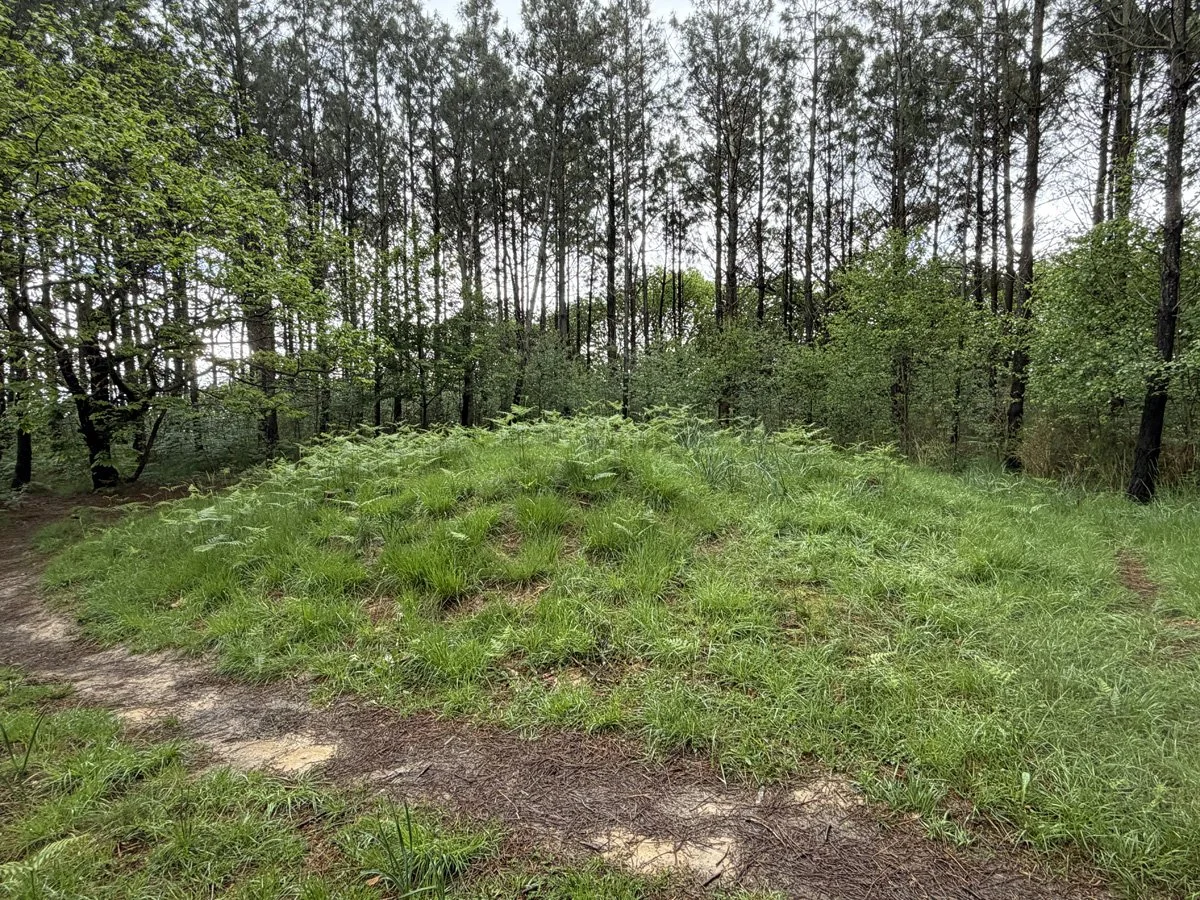
More vineyards appeared along the way, but also a large thunderstorm rolled in. At one point, I counted only two seconds between lightning and thunder—about 600 meters away, and I was completely exposed. Nearby was a Bronze Age burial mound. If I had been struck by lightning, they could have just buried me there.
Below the megalithic funerary structure, known as jentiletxeak, erected by pastoral groups during the Copper and Bronze Ages, approximately 5,000 to 3,000 years ago.
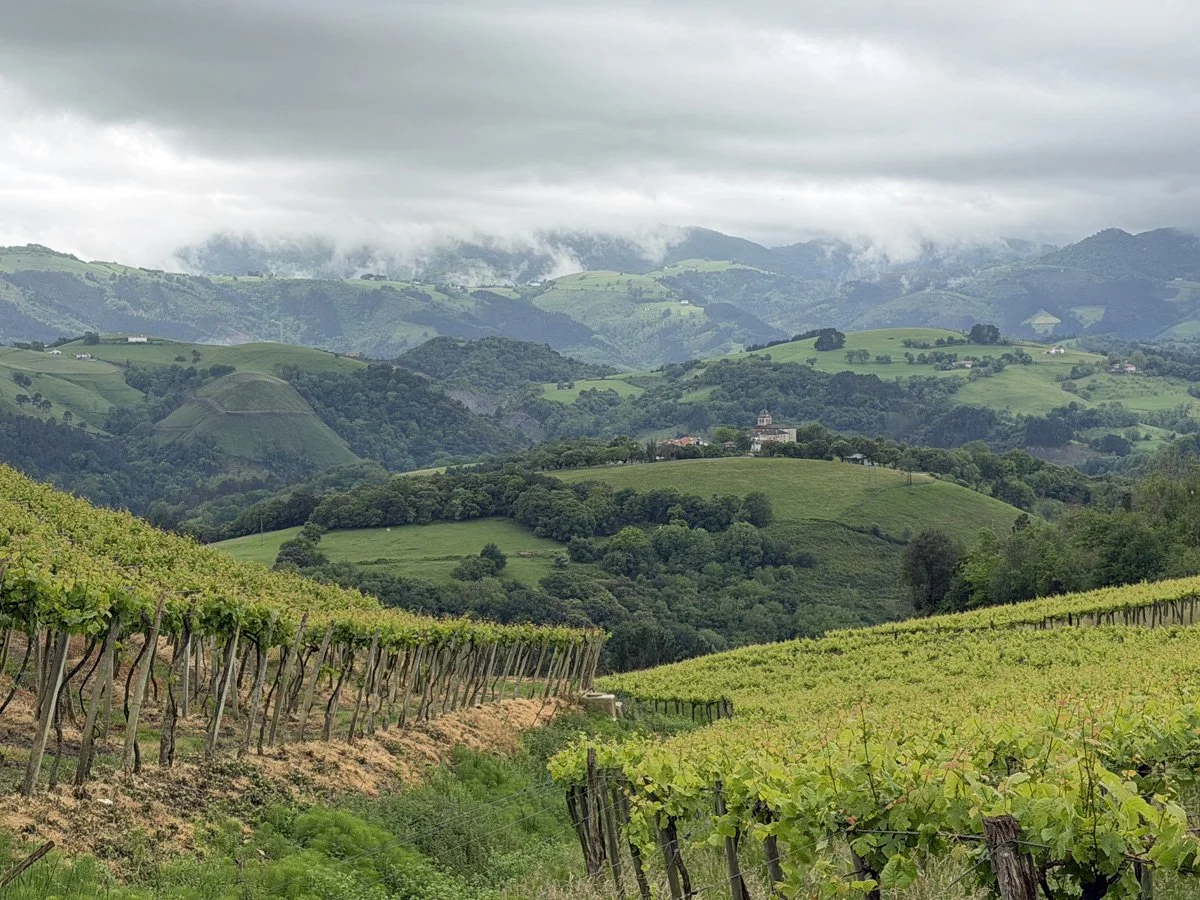
When I arrived in Zumaia, it was still raining. The place looked a bit dull, though that may have been because I was cold. I had my raincoat, but I hadn’t packed a warm sweater—just a thin hiking shirt underneath.
After some pintxos and cider (I’m not going to publish a photo of every pintxo I ate—that would get boring), I took the train back to San Sebastián. There were no more photos that day, so I must have ended up back in my hotel room watching YouTube.