Man with No Name
The Man With No Name is a cultural archetype of the eternal wanderer: a man who lives by his own rules, bound by neither convention nor allegiance. In cinema, the archetype finds an early expression in Akira Kurosawa’s Yojimbo (用心棒), which helped popularize the wandering rōnin trope, embodied by Toshiro Mifune.
When asked his name, he replies, Kuwabatake Sanjuro (桑畑三十郎). The name is improvised: kuwabatake (桑畑) means “mulberry field,” while sanjuro (三十郎) suggests a man of thirty. He happens to glance out of a window, see a mulberry field, and adopts it as his name.
The Man With No Name is condemned to wander alone. But beneath this image of the solitary, self-determined outsider lies a more fundamental question: What is his morality?
When the rōnin first enters the frame, he encounters a crossroads. Rather than deliberate over which direction to take, he picks up a stick, tosses it into the air, and follows the road in the direction it points when it lands.
What does this gesture reveal about him? Is he an absurdist, embracing the randomness and contingency of existence, or a nihilist, indifferent to meaning and purpose? The distinction is worth exploring.
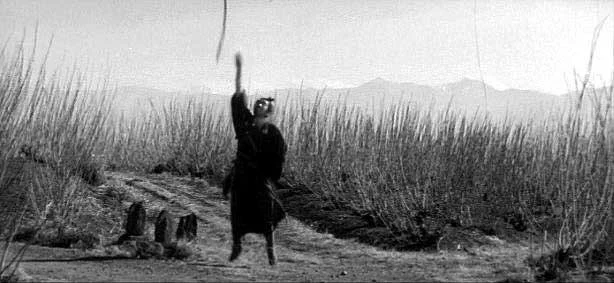
Opening scene of Yojimbo, 1961.
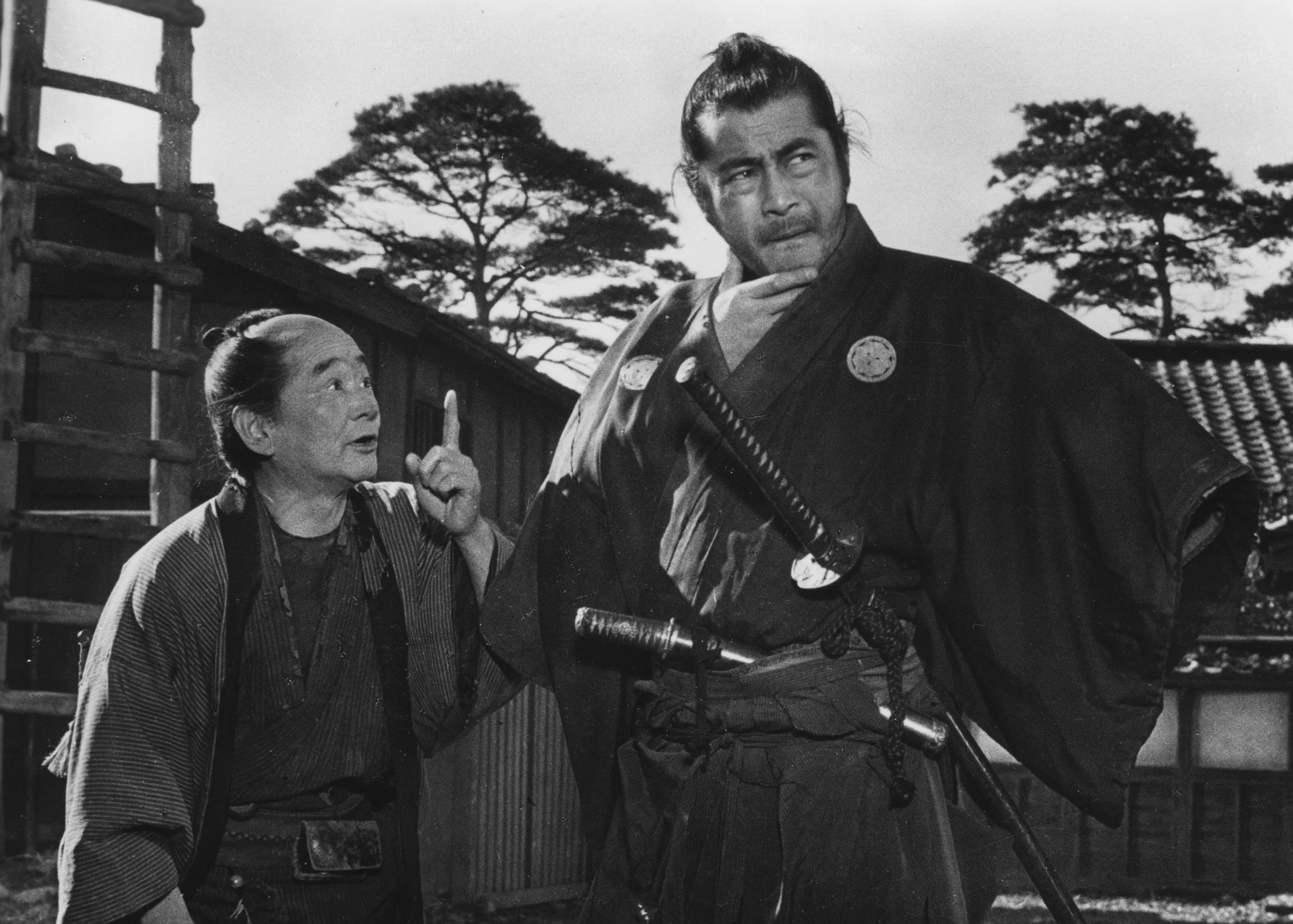
On the right: Toshiro Mifune 船 敏郎 (1920 - 1997)
Man With No Name
The film that gave the archetype its name was Sergio Leone’s Per un pugno di dollari (1964), starring Clint Eastwood as the Man With No Name. The name itself was coined for the character when the film was released in the United States by its American distributor, United Artists.
The Man With No Name is a bounty hunter. By definition, he is a free agent: he works for himself, answers to no one, and appears to have no goal beyond his own survival and personal gain. Throughout the Dollars Trilogy, we learn almost nothing about his past. He has no discernible history, no allegiances, and no clearly articulated moral code.
Yet, in the final scene of the trilogy’s third instalment, The Good, the Bad and the Ugly (Il buono, il brutto, il cattivo, 1966), he shows mercy. The reason is never explained. We are given no insight into his motives or inner life. In the absence of a backstory, the audience is left to interpret the gesture for itself. Is it an expression of an underlying moral code, an instinctive act of compassion, or simply a personal choice? Perhaps the mystery is precisely the point.
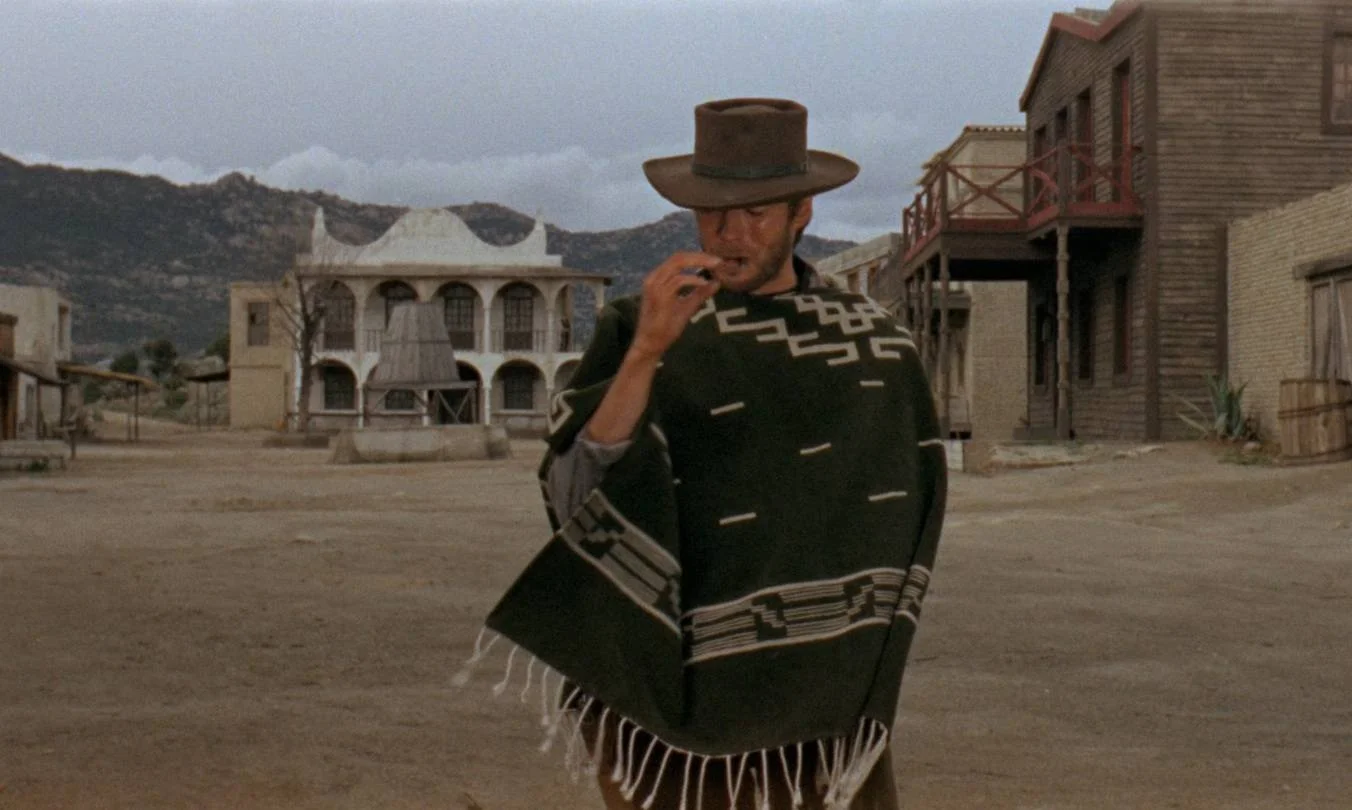
Per un pugno di dollari, 1964. Clint Eastwood as the Man With No Name called Joe.
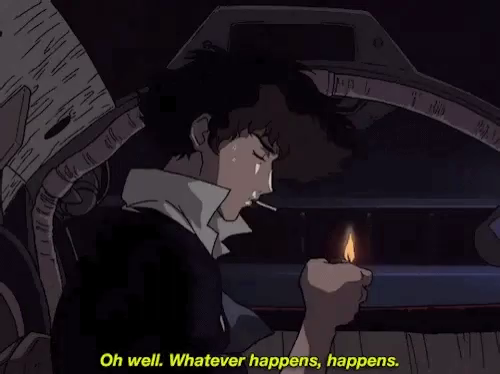
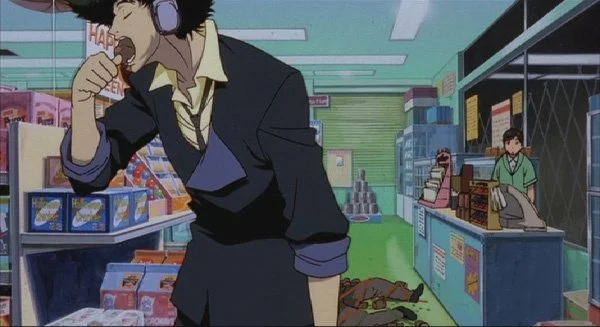
“Look at my eyes, Faye. One of them is a fake because I lost it in an accident. Since then, I’ve been seeing the past in one eye and the present in the other. So, I thought I could only see patches of reality, never the whole picture.”
Cowboy Bebop
In a different time and place, we encounter another bounty hunter on the Bebop, a converted interplanetary fishing trawler: a twenty-first-century rōnin with an equally dark past. Spike Spiegel is a man on the run, not only from his enemies but from his own history. This is a recurring theme of the Man With No Name archetype: he renounces his past and reinvents himself, assuming a new identity in an attempt to escape his former life. In doing so, he becomes a hḗrōs (ἥρως), a hero in the Ancient Greek sense, elevated beyond the ordinary mortal. Yet no mortal can truly escape his destiny.
Spike's past catches up with him when he falls in love with Julia, the girlfriend of another member of the Red Dragon Crime Syndicate. Their relationship forces him to fake his own death and flee the Syndicate. They arrange to meet again, but when the moment comes, Julia never shows up.
On the surface, Spike appears indifferent, almost detached from the world around him. But beneath that exterior lies a philosophy that has affinities with Bushidō (武士道), the traditional samurai code of honour and conduct. One passage from Yamamoto Tsunetomo's Hagakure offers an intriguing lens through which to understand his outlook:
“If a warrior is not unattached to life and death, he will be of no use whatsoever. The saying that ‘All abilities come from one mind’ sounds as though it has to do with sentient matters, but it is in fact a matter of being unattached to life and death. With such non-attachment one can accomplish any feat.”
— Yamamoto Tsunetomo, Hagakure
Corto Maltese
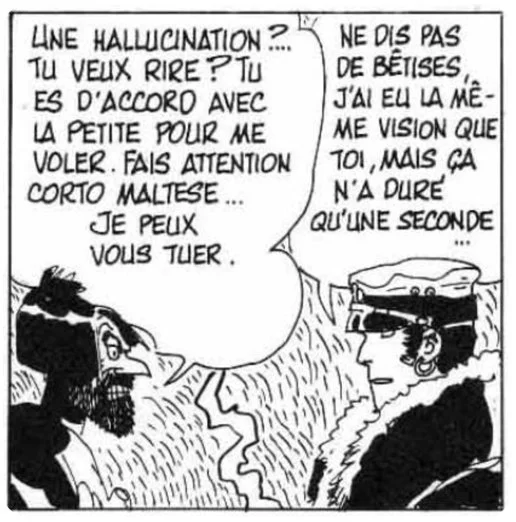
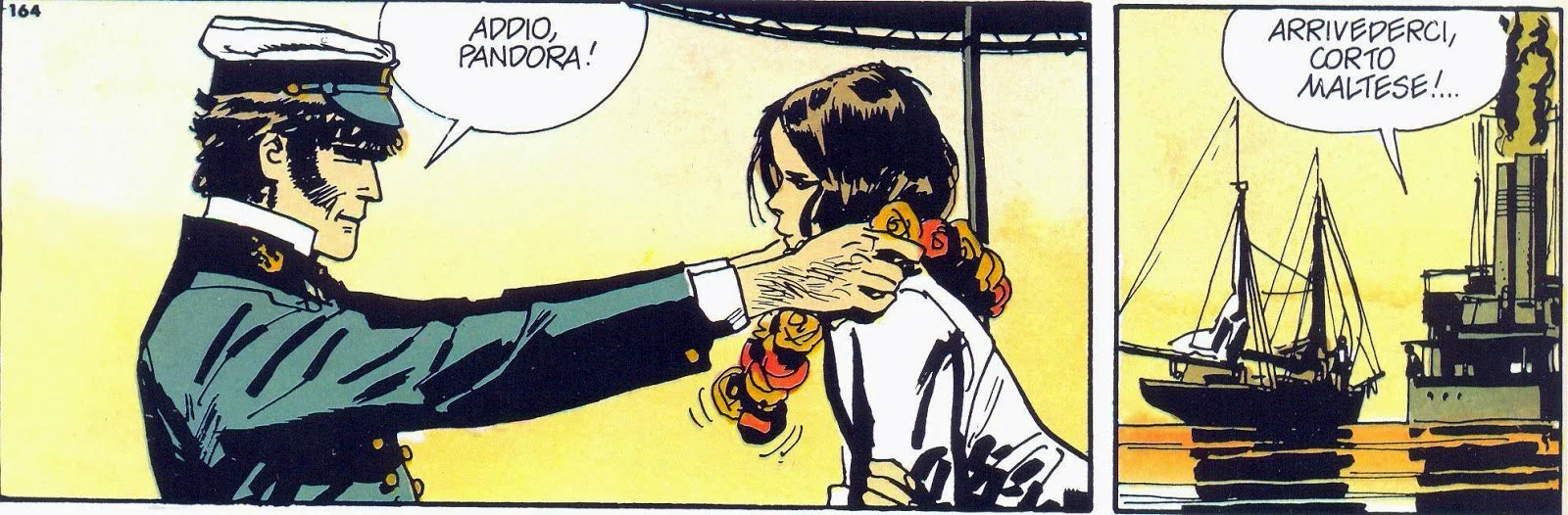
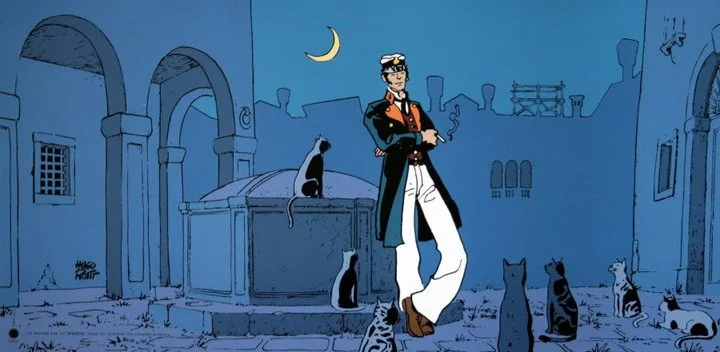
But these characters are by no means the only expressions of this archetype. Consider Corto Maltese, the romantic sailor without a ship, who claims that his name reflects his origins. Whether this is true, however, is another matter. We have only his word for it.
Corto is perhaps the quintessential antihero: an adventurer who lives by his own code, moves between worlds, and remains an outsider wherever he goes. There are clear parallels between Corto, Kuwabatake Sanjuro, and the Man With No Name. Despite their different origins and philosophical backgrounds, they share an essential characteristic: they are men who resist belonging, follow their own rules, and remain difficult to define or understand.
Santōka 山頭火
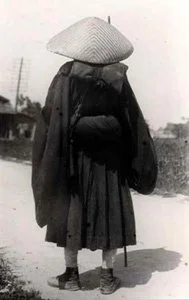
It is difficult not to think of Taneda Santōka, the wandering poet and Buddhist monk. Unlike these fictional characters, Santōka was a real person with a documented past. Born Shoichi Taneda in 1882, he later adopted the pen name Santōka (山頭火). When he was eleven years old, his mother took her own life by throwing herself into the family well. His marriage to a woman from a neighbouring village eventually fell apart, in part because he remained haunted by the image of his mother's body being raised from the water.
Like the wandering rōnin, Santōka seemed condemned to a life of perpetual wandering. He travelled on foot through the mountains and countryside of Japan, composing his free-form haiku and drinking sake. His journey was as much an inward pilgrimage as a physical one.
Why am I drawn to this archetype of the eternal wanderer? Perhaps the answer lies in my own biography. But I will leave that unexplained.
どうしようもない私が歩いている
Dō shiyō mo nai watashi ga aruite iru
There is nothing else I can do;
I walk on and on.
(Santōka, translation John Stevens)